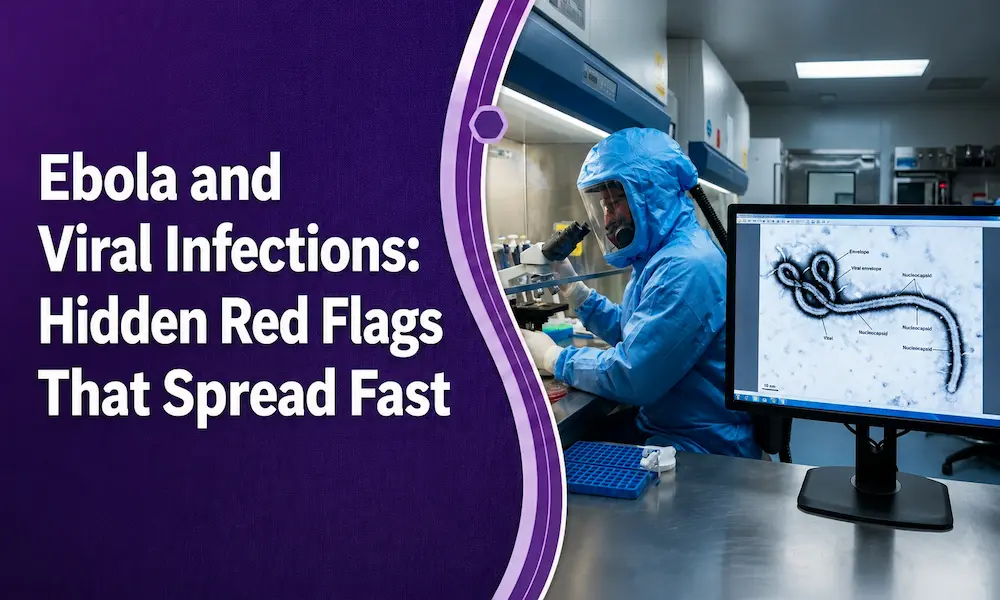
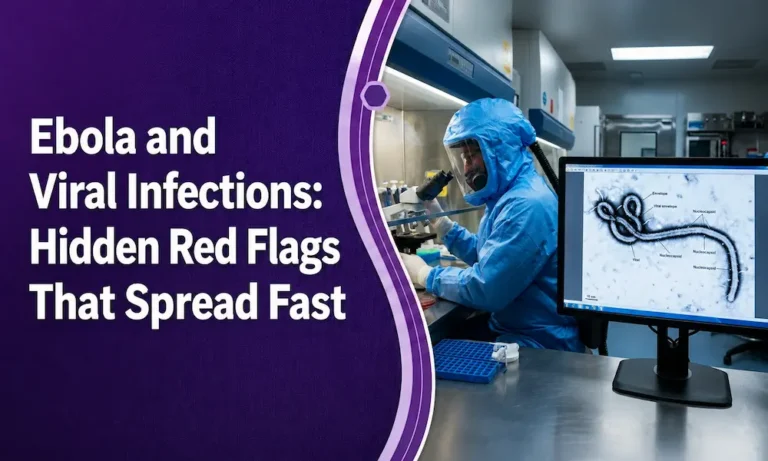
Ebola and Viral Infections: Serious Signs Your Body May Show First
Viral infections can start quietly. A person may first notice fever, body pain, cough, sore throat, vomiting, diarrhea, or unusual tiredness.
Many people ignore these symptoms because they think it may be a normal cold, flu, or stomach infection.
However, some viruses can affect the body faster than expected and create serious health problems when patients delay care.
Ebola often creates fear because it can cause severe illness during outbreaks. After a person comes in contact with Ebola, symptoms may take a few days to three weeks to appear.
Early signs may include fever, weakness, tiredness, body aches, headache, and sore throat. As the infection becomes worse, a patient may develop vomiting, diarrhea, stomach pain, rash, red eyes, or unusual bleeding.
Still, patients should not focus only on Ebola. Flu, COVID-19, RSV, norovirus, dengue, measles, hepatitis, and many other viral infections can also affect health.
Some infections may improve with rest and medical advice. Others may become risky for children, older adults, and patients with diabetes, asthma, heart disease, kidney disease, weak immunity, or long-term health problems.
Book an appointment with Passion Health Advanced Primary Care for timely evaluation and trusted care.
Why Ebola and Viral Infections Need Attention
Many viral infections begin with similar symptoms. Fever, body pain, headache, chills, and tiredness can happen with several illnesses.
Because of this, patients may not know whether the infection needs simple home care or urgent medical help.
Ebola needs special attention because it can spread through direct contact with infected body fluids.
It can also cause severe dehydration, bleeding, shock, and organ stress when a patient does not get timely care.
However, fear does not protect health. Awareness does. When patients understand how viruses spread and which symptoms need attention, they should know four important things:
How viruses enter and affect the body
How different viruses spread
Which symptoms need medical care
What safety steps can protect the family
What Is Ebola?
This virus is a high-risk viral infection that can affect the whole body and may become life-threatening without timely medical care.
This infection can affect many body systems. It may cause fever, severe weakness, vomiting, diarrhea, dehydration, bleeding, and shock in serious cases. Patients with possible exposure should not wait at home when symptoms appear.
Early Ebola symptoms may look like flu symptoms. A patient may notice:
As the illness progresses, symptoms may become stronger. A patient may develop stomach pain, vomiting, diarrhea, rash, red eyes, or unusual bleeding.
Ebola symptoms after possible exposure need urgent medical guidance. A patient should not try to self-diagnose serious symptoms or take random medicine without medical advice.
How Does Ebola Spread?
Ebola spreads differently from everyday cold and flu viruses. It usually spreads through direct contact with infected body fluids, contaminated items, or unsafe exposure while caring for a sick person.
Infected body fluids may include:
Ebola may also spread when a person touches objects that have infected fluids on them. These objects may include bedding, clothing, needles, medical tools, or surfaces.
Risk increases when someone cares for a sick person without protection, touches infected fluids, handles contaminated items, or takes part in unsafe burial practices.
Other Viral Infections Patients Should Know About
Ebola receives attention during outbreaks, but many other viruses affect patients every year. Each virus spreads differently. Some spread through air droplets. Some spread through food or water. Some spread through mosquitoes. Some spread through blood or body fluids.
Flu
The flu can cause fever, chills, cough, sore throat, headache, body pain, and tiredness. Some patients may develop pneumonia, dehydration, or worsening of asthma, diabetes, or heart disease.
COVID-19
COVID-19 may cause fever, cough, sore throat, body pain, tiredness, breathing trouble, or loss of smell or taste. Some patients may also feel tired or unwell for weeks after the infection.
RSV
RSV may look like a common cold in healthy adults. However, it can cause serious breathing problems in babies, older adults, and patients with lung or heart disease.
Norovirus
The Norovirus spreads easily and often causes vomiting, diarrhea, nausea, stomach cramps, and dehydration. It may spread through contaminated food, water, surfaces, or close contact with an infected person.
Dengue
Dengue spreads through mosquito bites. It can cause high fever, severe body pain, headache, rash, and weakness. Severe dengue may cause bleeding, severe stomach pain, low blood pressure, or shock.
Hepatitis Viruses
The hepatitis viruses can affect the liver. Symptoms may include yellow eyes, dark urine, stomach pain, nausea, tiredness, and loss of appetite.
How Viral Infections Affect Patient Health
Viruses enter the body and multiply inside cells. Then the immune system starts fighting the infection. This immune response can cause fever, pain, swelling, cough, weakness, stomach upset, or tiredness.
Some patients recover with rest, fluids, and medical advice. However, viral infections can become dangerous when they affect breathing, hydration, blood pressure, liver function, kidney function, or the nervous system.
1. Viral Infections Can Cause Dehydration
Fever, sweating, vomiting, and diarrhea can reduce water and salt in the body. Children and older adults can lose fluids quickly during illness, so dehydration may become dangerous faster for them.
Warning signs of dehydration include:
Dizziness
Less urination
Fast heartbeat
Extreme weakness
Confusion
Sunken eyes in children
Patients should not ignore dehydration. The body needs enough fluids to support blood pressure, kidney function, and recovery.
2. Viral Infections Can Affect Breathing
Flu, COVID-19, RSV, and other respiratory viruses can affect the lungs. Patients may develop cough, wheezing, chest tightness, shortness of breath, or low oxygen levels.
Breathing trouble needs urgent medical care, especially for children, older adults, asthma patients, COPD patients, and heart disease patients.
3. Viral Infections Can Worsen Long-Term Health Problems
A viral infection can make existing health conditions harder to control. For example, patients with diabetes may notice blood sugar changes during illness.
Asthma patients may experience more wheezing. Heart patients may feel chest pressure, weakness, or shortness of breath. Kidney patients may face fluid and electrolyte problems.
Patients with chronic health conditions should contact a healthcare provider early when viral symptoms start.
4. Viral Infections Can Cause Severe Weakness
Many viral infections cause body pain and tiredness. However, sudden extreme weakness, fainting, confusion, or inability to drink fluids may point to a serious problem.
Patients should take symptoms seriously when the illness feels stronger than a normal cold or stomach bug.
5. Some Viruses Can Affect Blood and Organs
Ebola, severe dengue, and some other viral illnesses can affect blood clotting, blood pressure, liver function, kidneys, and other organs. Warning signs such as unusual bleeding, severe stomach pain, confusion, dizziness, or low blood pressure need urgent care.
Warning Signs You Should Not Ignore
Patients often ask, “When should I worry?” The answer depends on symptoms, exposure, age, and medical history.
See a doctor quickly if you notice:
High fever that does not improve
Fever after travel to an outbreak area
Fever after contact with a very sick person
Breathing difficulty
Severe weakness
Repeated vomiting
Watery diarrhea
Signs of dehydration
Confusion or fainting
Blood in vomit, stool, urine, or cough
Yellow eyes or dark urine
Severe headache with neck stiffness
Rash with fever
Symptoms that get worse after 2 to 3 days
How Viruses Spread in Daily Life
Viruses spread in different ways. That is why one safety habit cannot protect against every infection.
Respiratory viruses such as flu, COVID-19, and RSV may spread through coughing, sneezing, close contact, poor airflow, and contaminated hands.
Stomach viruses such as norovirus may spread through contaminated food, water, hands, and surfaces.
Body-fluid viruses such as Ebola spread through direct contact with infected fluids.
Mosquito-borne viruses such as dengue spread through mosquito bites.
A strong prevention plan includes hygiene, vaccination when recommended, clean surroundings, safe food habits, mosquito control, travel safety, and early medical care.
Safety Tips to Protect Yourself and Your Family
Wash Hands Often
Wash your hands with soap and water for at least 20 seconds. Clean your hands before eating, after using the restroom, after coughing, after touching public surfaces, and after caring for a sick person.
Avoid Touching Your Face
Viruses can enter through the eyes, nose, and mouth. Clean hands can lower this risk.
Stay Home When Sick
Do not go to work, school, events, or public places with a fever, vomiting, diarrhea, or heavy cough. Staying home helps protect family members, coworkers, and the community.
Cover Coughs and Sneezes
Use a tissue or your elbow when you cough or sneeze. Throw tissues away and wash your hands after.
Clean High-Touch Surfaces
Clean phones, door handles, tables, keyboards, remote controls, bathroom surfaces, and shared objects often.
Keep Vaccines Updated
Vaccines can lower the risk of severe illness from flu, COVID-19, measles, hepatitis, and other vaccine-preventable diseases. Ask your healthcare provider which vaccines fit your age, health condition, and risk level.
Use Masks in High-Risk Places
A mask may help in crowded areas, clinics, airports, or while caring for someone with respiratory symptoms.
Drink Fluids During Illness
Fever, vomiting, and diarrhea can reduce body fluids. Drink water, oral rehydration fluids, soups, or electrolyte drinks as advised by your healthcare provider.
Avoid Sharing Personal Items
Do not share cups, spoons, towels, razors, or toothbrushes when someone feels sick.
Prevent Mosquito Bites
Use mosquito repellent, wear long sleeves, use window screens, and remove standing water around the home.
Take Travel Precautions
Check travel health alerts before international travel. After travel, watch for fever, vomiting, diarrhea, rash, weakness, or unusual symptoms.
Avoid Unsafe Contact With Body Fluids
For Ebola and other serious infections, do not touch blood, vomit, stool, urine, saliva, or contaminated items without proper protection.
What Patients Should Do When Symptoms Start
First, stay calm. Then check your symptoms and risk level.
Ask these questions:
Do I have a fever?
Do I have breathing trouble?
Am I vomiting repeatedly?
Do I have diarrhea?
Did I travel recently?
Was I near someone very sick?
Do I have diabetes, asthma, heart disease, kidney disease, or weak immunity?
Are symptoms getting worse?
If symptoms feel mild, rest, drink fluids, and monitor the condition. However, if symptoms worsen or risk factors exist, contact a healthcare provider.
Do not take antibiotics without medical advice. Antibiotics do not treat viral infections. A doctor can decide whether testing, antiviral medicine, hydration support, fever control, or urgent care can help.
Why Early Medical Care Matters
Early medical care can prevent complications. It can also reduce the chance of spreading infection to family members, coworkers, and other people.
A healthcare provider can check symptoms, medical history, travel history, oxygen level, hydration status, and risk factors. This helps the provider decide whether the patient needs home care, testing, medicine, or emergency care.
For serious infections like Ebola, early reporting also helps health teams trace contacts, guide safe isolation, and stop further spread.
Final Thoughts
Ebola and Viral Infections: Warning Signs and Safety Tips is an important topic because viral infections can affect anyone. Ebola can become dangerous without timely care.
Flu, COVID-19, RSV, norovirus, dengue, hepatitis, and other viruses also cause real health problems every year.
The best protection is awareness, hygiene, vaccination when recommended, safe travel habits, mosquito prevention, and early medical care.
If fever, cough, vomiting, diarrhea, breathing trouble, severe weakness, dehydration, or symptoms after travel occur, do not ignore them. Early action can protect health and reduce complications.
Need help with fever, viral symptoms, cough, weakness, stomach infection, travel-related illness, or preventive care? Book an appointment with Passion Health Advanced Primary Care for trusted medical evaluation and patient-focused guidance.