Key Takeaways
- A child can develop a fever before other illness symptoms appear.
- Babies under 3 months with a fever of 100.4°F (38°C) or higher need immediate medical evaluation.
- Your child's behavior, hydration and breathing matter more than temperature alone.
- Offer age-appropriate fluids, encourage rest and monitor temperature regularly.
- Seek emergency care for breathing problems, seizures or difficulty waking your child.
- Contact a pediatrician if fever persists, symptoms worsen or your child seems unwell.
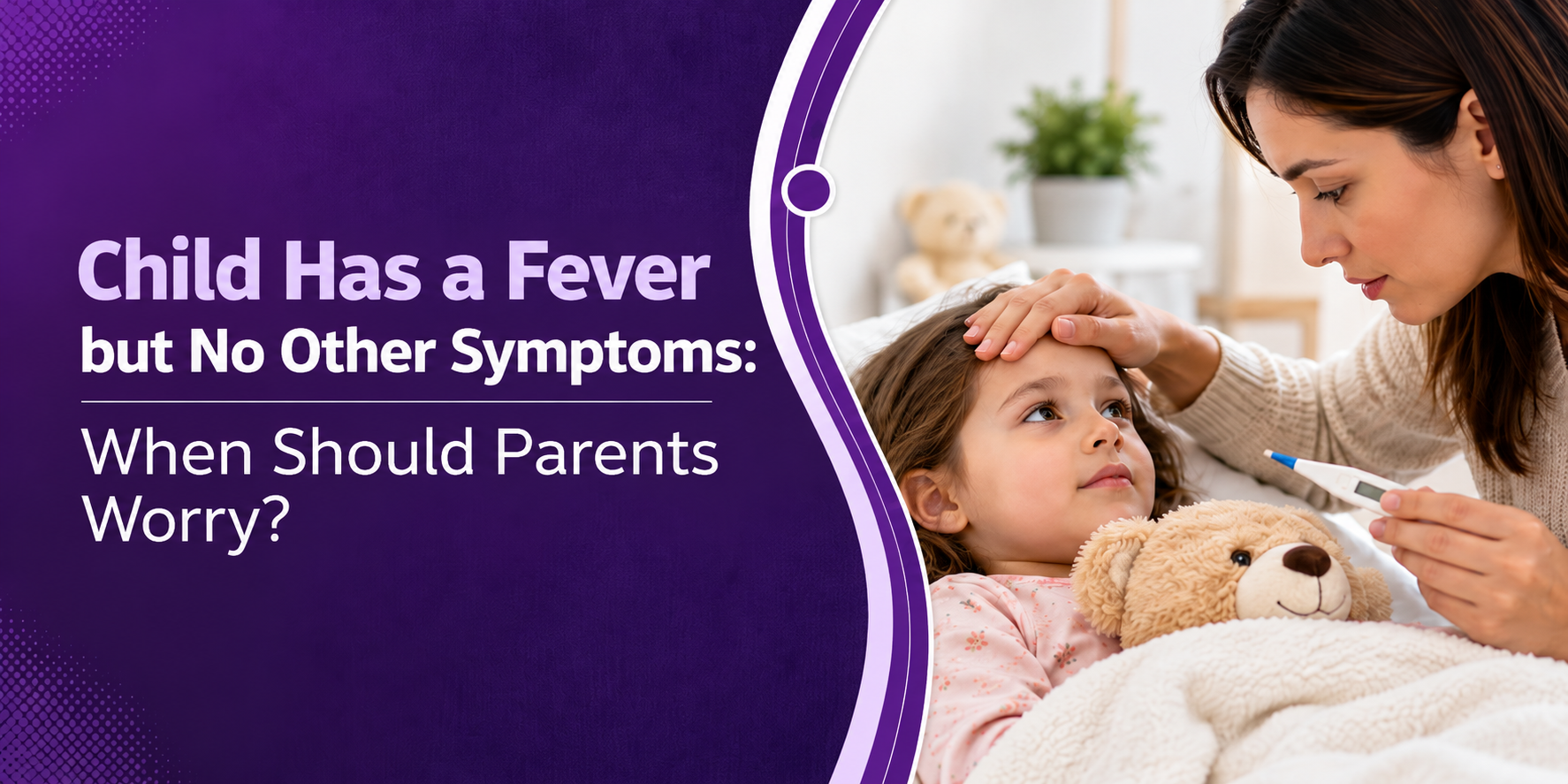
Your child wakes up feeling unusually warm. You check the temperature and see 101°F. However, there is no runny nose, cough, vomiting, or obvious discomfort. Your child might even ask for breakfast or start playing as usual.
Naturally, the situation raises questions. Can a fever appear without other signs of illness? Should you monitor your child at home or contact a pediatrician?
A child’s fever with no other symptoms often occurs during the early stages of an infection. Sometimes, other symptoms appear later. However, your child’s age, behavior, hydration, and temperature pattern help determine the safest response.
Most importantly, babies younger than three months need immediate medical evaluation if their temperature is 100.4°F (38°C) or higher, even if they seem comfortable.
For older children, understanding the warning signs can help parents make informed decisions.
Why Does a Child Have a Fever Without Other Symptoms?
A fever generally means the body has increased its temperature while responding to an illness or another trigger. Healthcare professionals typically consider 100.4°F (38°C) or higher a fever, although interpretation also depends on how you measure it.
A fever signals that something has changed, but it does not identify the cause by itself.
Several conditions can explain a child’s fever without symptoms.
Early stages of a viral infection
Viruses frequently cause childhood fevers. During the first day, a child may show little more than an elevated temperature.
Later, a sore throat, cough, congestion, or digestive symptoms might develop. Occasionally, fever remains the main symptom throughout the illness.
Urinary tract infections
A urinary tract infection can cause fever without obvious urinary complaints, particularly in infants and younger children.
Unlike older children, babies cannot explain burning or discomfort during urination. Therefore, a pediatrician may consider a urine test when a fever has no clear source.
Recent vaccinations
Certain childhood vaccines can trigger a temporary fever as the immune system responds.
However, parents should not automatically attribute every fever to vaccination. The child’s age, temperature, timing, and overall condition still matter.
Other infections
Ear infections, throat infections, and certain bacterial illnesses can begin without clear symptoms. Consequently, a pediatric examination may help identify a problem that parents cannot see at home.
When Is a Fever More Concerning Based on Your Child’s Age?
Age changes how healthcare professionals evaluate fever. A temperature that requires urgent attention in a newborn may allow careful home observation in an otherwise healthy school-age child.
Child’s Age | What Parents Should Know |
Under 3 months | Fever ≥100.4°F (38°C) needs immediate medical care. |
3–6 months | Call a pediatrician for fever, especially ≥102°F, poor feeding, or unusual behavior. |
6–24 months | Monitor fluids and activity. Call if a fever lasts over 24 hours or symptoms worsen. |
2 years and older | Monitor if comfortable and hydrated. Call if a fever lasts over 72 hours or symptoms worsen. |
Important: These timeframes never override serious symptoms. A child of any age may need immediate medical attention if breathing, alertness, or circulation changes.
Why a fever in a newborn needs immediate attention
Young infants have developing immune defenses. As a result, potentially serious infections may produce few obvious warning signs.
If your baby is younger than three months and has a rectal temperature of 100.4°F (38°C) or higher, seek immediate medical evaluation, typically in an emergency department. Contact your pediatrician immediately, but do not delay evaluation while waiting for a routine appointment.
Do not give fever medicine before receiving medical guidance.
How Can Parents Tell Whether a Fever Needs Medical Attention?
A thermometer provides one useful measurement. Your child’s behavior provides another important clue.
Consider how your child responds throughout the day rather than concentrating only on a single temperature reading.
Ask yourself:
Does my child wake easily and respond normally?
Can my child drink fluids comfortably?
Is my child urinating close to their usual pattern?
Does my child breathe comfortably?
Does my child become more active when the fever decreases?
Have any new symptoms appeared?
For example, an older child with a temperature of 101°F who drinks water and plays quietly may need observation rather than immediate emergency care.
However, a child with a lower temperature who appears unusually weak, confused, or difficult to wake needs prompt medical attention.
The child’s overall condition matters more than the fever number alone.
What Should Parents Do at Home When a Child Has Only a Fever?
Home care focuses on comfort, hydration, and monitoring. Parents should also remain alert for changes that could indicate a developing illness.
1. Measure temperature accurately.
Use a reliable digital thermometer and follow the manufacturer’s instructions.
For young infants, a rectal thermometer provides the most accurate measurement. Older children’s temperature-measurement methods vary according to age.
Record the temperature, measurement method, and time. Additionally, note whether your child recently received fever-reducing medicine.
2. Encourage regular fluids.
Fever increases fluid requirements and may reduce appetite.
Continue breast milk or formula for infants. Do not offer plain water to babies younger than six months unless a clinician specifically advises it.
For older children, offer frequent small drinks. Water and appropriate oral rehydration solutions can help, depending on their age and symptoms.
Watch for dehydration signs, including dry mouth, fewer wet diapers, reduced urination, or fewer tears.
Hydration matters more than encouraging a child to finish a full meal during a short illness.
3. Help your child stay comfortable.
Choose lightweight clothing and maintain a comfortable room temperature. Allow extra rest without forcing prolonged bed rest when your child feels energetic.
Avoid ice baths, alcohol rubs, and aggressive cooling methods. They may create discomfort without addressing the illness.
4. Use fever medicine carefully.
Some children benefit from acetaminophen or ibuprofen when fever causes discomfort.
However, medication choice depends on age, weight, medical history, and hydration.
Never give ibuprofen to a baby younger than six months unless a clinician specifically directs it. Ask a pediatrician before giving fever medicine to a young infant, and never give aspirin to children unless a specialist specifically prescribes it.
The goal is comfort, not forcing the temperature back to 98.6°F.
Child Fever: When Should You See a Doctor?
Parents often search for child fever when they see a doctor because the timing feels unclear.
Contact a pediatrician promptly when:
Fever continues longer than 24 hours in a child younger than two years.
Fever lasts longer than three days in a child aged two or older.
Your child’s temperature repeatedly exceeds 104°F (40°C).
Your child develops ear pain, painful urination, worsening cough, or unusual discomfort.
Your child has a weakened immune system or a significant underlying medical condition.
Your child continues to look unwell even after the fever decreases.
Do not wait for these time limits if your child appears to be getting worse.
When should parents seek emergency care?
Seek emergency medical care immediately if a child has a fever along with:
Difficulty breathing, blue lips, or severe respiratory distress.
Extreme sleepiness, confusion, or difficulty waking.
A seizure.
A stiff neck accompanied by significant illness.
A new purple or bruise-like rash that does not fade with pressure.
Severe dehydration, inability to drink, or signs of poor circulation.
A baby younger than three months with a temperature of 100.4°F (38°C) or higher also needs immediate evaluation.
Call 911 for life-threatening symptoms.
When Can a Pediatrician Help With an Unexplained Fever?
A pediatric visit can help when a fever continues without a recognizable cause or your child’s condition changes.
During the appointment, your pediatrician may discuss when the fever began, recent illnesses, vaccination history, fluid intake, and urine output.
Next, the clinician may examine the ears, throat, lungs, abdomen, and other relevant areas.
Sometimes, the examination provides enough information to guide care. In other cases, the pediatrician may recommend a urine test or another investigation.
Not every child with a fever needs antibiotics or laboratory testing. The appropriate approach depends on clinical findings.
Pediatric Fever Care in Frisco and Aubrey, TX
Parents in North Texas can turn to Passion Health Pediatrics for concerns involving fever, common childhood illnesses, growth, and preventive care.
Dr. Nishath Farhad, DO, FAAP, is a board-certified pediatrician who cares for infants, children, and adolescents at Passion Health.
Her published pediatric clinic schedule includes the following:
Frisco, TX: Monday and Tuesday, 8:00 AM–5:00 PM.
Aubrey, TX: Wednesday and Thursday, 8:00 AM–5:00 PM.
Families searching for a pediatric sick visit in Frisco or a pediatrician in Aubrey, TX can request an appointment to discuss their child’s symptoms and appropriate next steps.
For urgent warning signs, seek immediate medical care rather than waiting for clinic availability.
Request a pediatric appointment with Dr. Farhad.
Final Thoughts: Pay Attention to Your Child, Not Just the Thermometer
A child fever with no other symptoms can feel unsettling, particularly when the cause remains unclear.
However, careful observation often helps parents identify the next appropriate step. Check temperature accurately, encourage fluids, watch your child’s behavior, and recognize warning signs.
Above all, remember that a newborn with fever needs immediate medical evaluation, even without other symptoms.
Need guidance about your child's fever?
Schedule an evaluation at Passion Health provides pediatric care for families in Frisco and Aubrey. Book a pediatric appointment to discuss symptoms and treatment options.
Frequently Asked Questions
1. Can a child have a fever without other symptoms?
Yes. Viral infections can initially cause fever alone. Monitor your child’s behavior, temperature, and hydration.
2. Can teething cause a fever of 102°F?
No. Teething does not typically cause a true fever. A temperature of 102°F may indicate an illness that needs evaluation.
3. Should I wake my child to check their fever?
Usually, no. Let a comfortably sleeping older child rest, but monitor breathing and responsiveness.
4. How long can a child have a fever without symptoms?
Contact a pediatrician if fever lasts over 24 hours in a child younger than two or over three days in an older child. Infants under three months with a fever of 100.4°F or higher need immediate medical evaluation.
5. Does a fever of 101°F always require medicine?
No. An older child who feels comfortable and drinks fluids may not need medication. Focus on comfort and hydration.

About the Author
Dr. Anantha Chentha is a board-certified internal medicine physician with extensive experience in primary care and chronic disease management. He provides comprehensive, patient-centered care with a focus on prevention, accurate diagnosis, and long-term health management.
View Provider Profile →