Worried About Symptoms After a Tick Bite?
A tick bite can look small at first. However, symptoms after the bite can create real confusion. Some people notice only mild redness or itching. Others develop fever, headache, body aches, nausea, weakness, or a rash days later.
Most tick bites do not lead to serious illness. Still, some infected ticks can spread germs, including rare viruses. Because early symptoms may look like the flu, a stomach bug, or a summer infection, timing matters.
Worried about a bite, rash, fever, or flu-like symptoms after outdoor exposure? Passion Health Advanced Primary Care can check your symptoms and guide the next step.
Patients looking for primary care in Frisco, Irving, Plano, Prosper, Anna, Aubrey, Flower Mound, Ennis, Kaufman, Kemp, or Mesquite, McKinney, TX
Tick-Borne Virus Cases Are Rising: Why This News Matters
Recent news reports have raised concern about rare tick-related viruses, especially Powassan virus, after U.S. cases reached a record high in 2025.
Still, this does not mean every bite causes a dangerous infection. The smarter message is simple: watch symptoms after outdoor exposure and get checked when warning signs appear.
Many tick illnesses begin with common symptoms. For example, fever, chills, headache, fatigue, muscle aches, joint pain, and rash can happen with tick-borne diseases, according to the CDC.
Therefore, patients should tell their provider about any recent hiking, camping, yard work, pet exposure, or time in tall grass.
What Is a Tick-Borne Virus?
A tick-borne virus is a virus that can spread through the bite of an infected tick. The tick attaches to skin and feeds on blood. During that time, it may pass germs into the body.
A tick bite is the skin event. A virus is a possible infection after the bite.
Not every tick carries a virus. Also, not every bite causes illness. However, symptoms after a bite deserve attention, especially when fever, headache, vomiting, weakness, rash, or unusual tiredness starts.
At Passion Health Advanced Primary Care, a provider can review your symptoms, the timing of the bite, the appearance of the skin, and your recent outdoor exposure. That visit helps you avoid guessing at home.
Tick Bite vs Tick-Borne Virus: What Is the Difference?
A tick bite may cause a small bump, itching, redness, swelling, or irritation. In many cases, the skin calms down after proper removal and cleaning.
A virus-related illness works differently. Instead of only skin irritation, the body may develop symptoms such as fever, headache, weakness, nausea, vomiting, diarrhea, or body aches.
This difference matters because a skin bite and a body-wide illness need different decisions. For that reason, do not focus only on how the bite looks. Pay attention to how you feel during the next days and weeks.
Tick Bite Symptoms You Should Not Ignore
Some symptoms should prompt a clinic visit, especially when they begin after outdoor exposure. Watch for:
Fever or chills
Fatigue
Muscle aches
Nausea
Swollen lymph nodes
Skin irritation
Spreading redness
Some viral illnesses from ticks can start like a routine infection. Powassan symptoms may include fever, headache, vomiting, and weakness. Symptoms can appear from 1 week to 1 month after a bite.
Heartland virus can also cause fever, fatigue, low appetite, headache, nausea, diarrhea, and muscle or joint pain. CDC says no vaccine or direct medicine treats Heartland virus infection.
Because these symptoms sound common, patients may delay care. However, a primary care visit can connect your symptoms with your recent exposure and help decide whether monitoring, lab testing, or further evaluation makes sense.
What Does a Tick Bite Look Like?
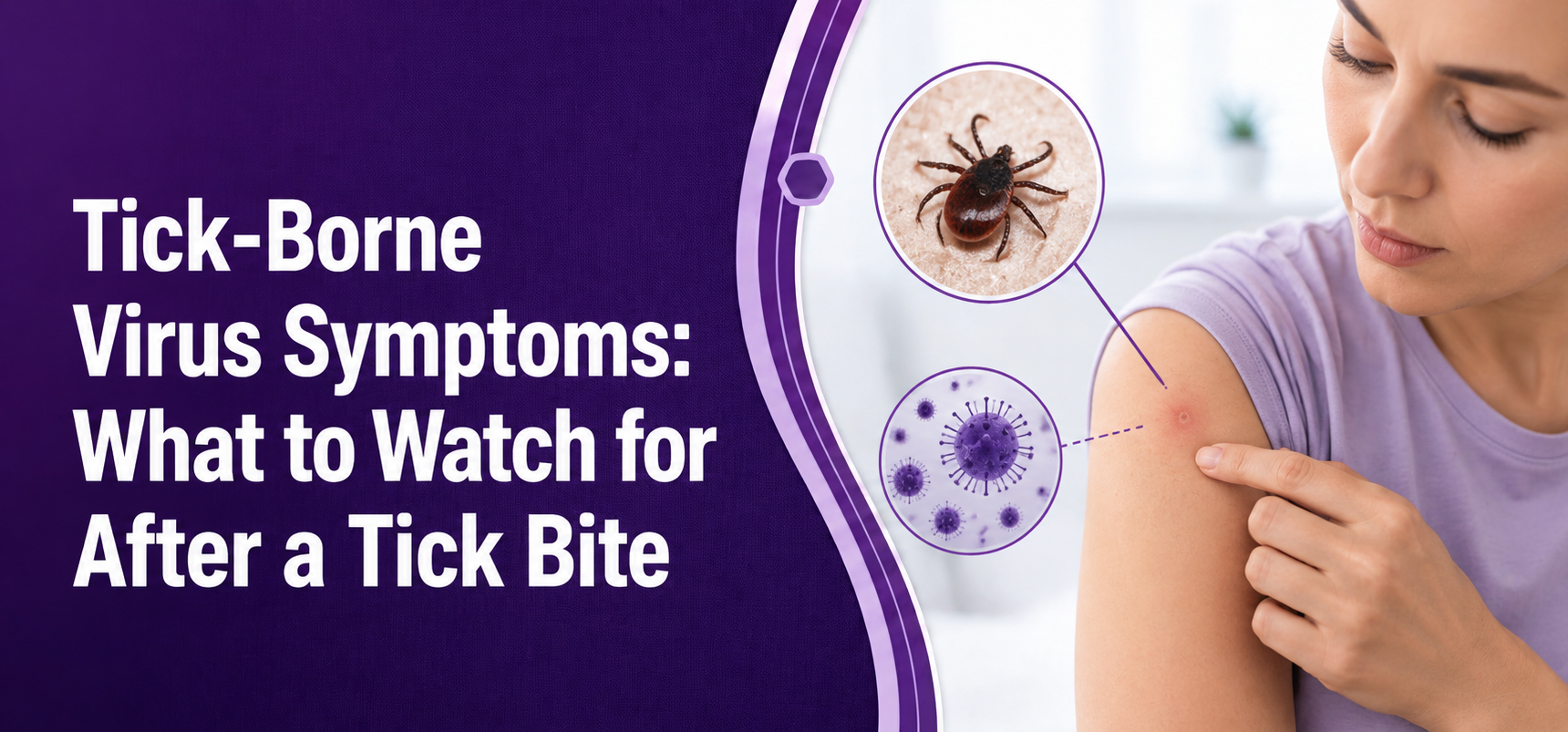
A bite may look different from person to person. It can appear as a small red bump, mild swelling, itching, redness, or a rash.
Sometimes, the skin may show a bullseye-like circle or small red or purple spots. In other cases, the mark may look minor or may barely show.
Take a photo if the rash changes. Also, note the date. These small steps can help your provider compare the skin over time.
Do not scratch the area. Instead, clean it gently and watch for pain, warmth, swelling, drainage, blisters, or spreading redness.
Serious Warning Signs After a Tick Bite
Some symptoms need faster attention. Watch closely for confusion, trouble speaking, loss of coordination, seizures, neck stiffness, severe weakness, worsening headache, or trouble walking.
Powassan illness can involve inflammation of the brain or the membranes around the brain and spinal cord.
Severe symptoms may include confusion, loss of coordination, difficulty speaking, and seizures.
If confusion, trouble walking, severe weakness, neck stiffness, seizures, or a worsening headache show up after a tick bite, do not wait and hope it goes away. These symptoms should be checked right away.
How to Remove a Tick Safely
Remove the tick as soon as you see it. Use clean, fine-tipped tweezers and grip the tick close to the skin. Pull upward with slow, steady pressure.
Try not to twist, crush, or squeeze the tick while removing it. Once it comes out, wash the bite area with soap and water.
Wash the area with soap and water. Then clean your hands well. A quick photo of the tick can also help if symptoms start later.
Write down the day you found the tick and where the bite happened. That detail can help later, especially after hiking, camping, yard work, or time in tall grass.
Skip home tricks like petroleum jelly, nail polish, kerosene, heat, or a match. They can irritate the skin and make removal harder.
When to See a Doctor After a Tick Bite
Call your doctor if the tick looked swollen, stayed attached for a long time, or did not come out all the way.
Do not ignore new symptoms after the bite. Fever, body aches, rash, flu-like feelings, blisters, pain, warmth, swelling, or redness that keeps spreading should be checked.
During the visit, your provider will want to know a few details: when you found the tick, where you were outside, how the bite looked, and when symptoms began.
Those details help your provider decide whether you should watch it at home, get testing, start treatment, or come back for follow-up.
If you are not sure what to do after a tick bite, Passion Health Advanced Primary Care can help you sort out what looks normal and what needs medical attention.
Tick-Borne Diseases Doctors May Check For
Doctors may consider several conditions after a tick bite. These can include Lyme disease, Rocky Mountain spotted fever, ehrlichiosis, anaplasmosis, babesiosis, tularemia, Powassan virus, Heartland virus, STARI, and alpha-gal syndrome.
Testing depends on symptoms, location, rash pattern, bite timing, and travel history. Therefore, your provider needs the full story, not just a photo of the bite.
Why Antibiotics May Not Treat a Tick-Borne Virus
Some tick illnesses come from bacteria, and doctors may use antibiotics for those infections. Viruses work differently. Antibiotics do not kill viruses. this clearly for Heartland virus.
That is why the right diagnosis matters. A clinic visit helps separate simple irritation, possible bacterial illness, viral illness, allergic reaction, or another health problem.
How Passion Health Primary Care Can Help
At Passion Health Advanced Primary Care, patients can get help when symptoms after a bite feel unclear. A provider can review your fever, rash, headache, weakness, nausea, body aches, swollen lymph nodes, or fatigue.
The visit also gives you a safer plan for follow-up. You can ask what symptoms need urgent care, what to track at home, and what steps may reduce future bites.
Final Takeaway
A tick bite may look like a small skin problem, but symptoms after the bite deserve attention. Most bites do not cause serious illness. However, fever, rash, headache, body aches, vomiting, weakness, swollen lymph nodes, or unusual tiredness after outdoor exposure should not be ignored.
A tick-borne virus is different from a simple bite. The bite happens on the skin, while the virus can affect the body after an infected tick feeds.
If you had a recent tick bite or spent time outdoors and now feel unwell, do not guess at home. Passion Health Advanced Primary Care can review your symptoms, check your risk, and guide the safest next step.
FAQs
1. What is a tick-borne virus?
A tick-borne virus is a virus that can spread through the bite of an infected tick.
2. Does every tick bite cause disease?
No. Most tick bites do not cause serious illness, but symptoms after a bite should be watched.
3. What symptoms should I watch for after a tick bite?
Watch for fever, rash, headache, body aches, weakness, nausea, vomiting, or unusual tiredness.
4. When should I see a doctor after a tick bite?
See a doctor if the tick stayed attached for hours, the bite gets worse, or fever, rash, or flu-like symptoms appear.
5. Can antibiotics treat a tick-borne virus?
No. Antibiotics do not treat viruses. A doctor can check your symptoms and guide the right next step.