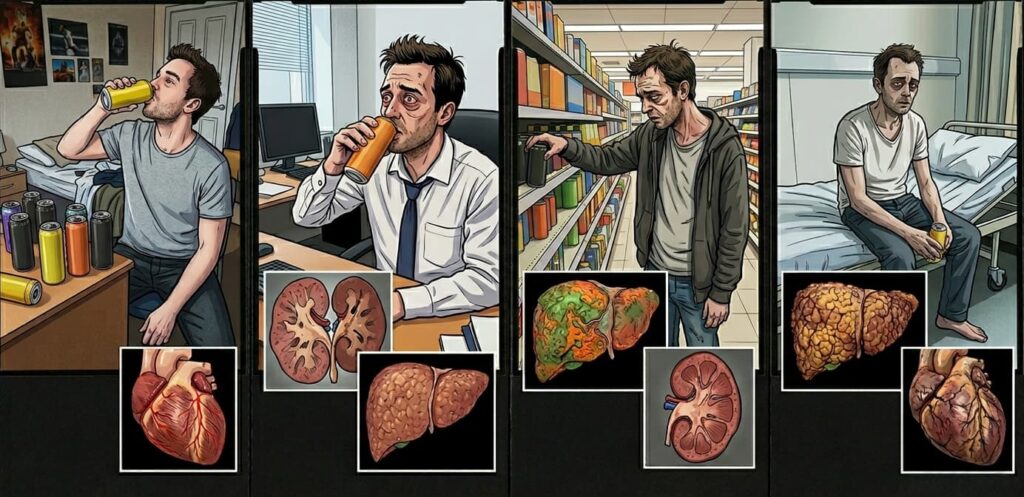
Energy drinks promise instant focus, sharp concentration, and nonstop energy.
Brands such as Red Bull, Monster, 5-hour ENERGY, and Celsius are widely sold. Their popularity has grown quickly in recent years.
But popularity does not mean safety. These drinks may give a quick boost, yet the long-term effects can quietly harm your body.
High caffeine and sugar levels can do more damage than many people realize.
How Do Energy Drinks Compare With Coffee?
Key takeaways
- Energy drinks can deliver large amounts of caffeine and sugar, which may affect heart rate, sleep, and mood.
- Regular use may contribute to tooth enamel erosion, weight gain, and blood sugar changes over time.
- Pregnant women, children, and people with heart or blood pressure conditions should be especially cautious.
- Quitting gradually can help reduce withdrawal headaches and fatigue.
- Persistent palpitations, anxiety, or sleep problems are reasons to speak with a clinician.
On this page
Coffee remains a common source of caffeine. In moderate amounts, it is generally considered safe for most healthy adults. The problem starts when intake rises beyond recommended limits.
A large coffee can contain 400 mg or more of caffeine, which is around the FDA’s general daily guidance for healthy adults. Regularly exceeding this amount can lead to health problems.
Caffeine content varies widely. A single energy drink may contain about 80 mg, similar to a cup of coffee, but many contain much more.
What Makes Energy Drinks So Harmful?
Energy drinks are more than just sugary beverages. They contain a powerful mix of caffeine, artificial sweeteners, preservatives, and stimulants like taurine and guarana. This combination delivers a fast high followed by a hard crash — leaving your body struggling to recover.
The Hidden Danger of Too Much Caffeine
One can of a popular energy drink contains 80mg to 300mg of caffeine.
Compare that with a standard cup of coffee at about 95 mg. Drinking several cans a day can push total caffeine intake past common recommended limits.
Excess caffeine can raise cortisol and adrenaline levels. Many people feel alert at first, followed by a crash marked by anxiety, shakiness, a racing heart, and poor sleep.
Over time, this pattern may weaken the body’s natural stress response.
High Sugar Levels and Long-Term Risk
Many energy drinks contain a large amount of sugar per can, which can exceed recommended daily added sugar limits.
Repeated sugar spikes can strain insulin regulation over time. Insulin resistance can develop and is a major risk factor for type 2 diabetes. Research links sugary drink consumption to higher diabetes risk.
Excess sugar can contribute to fat storage, including fat around organs, which is linked to obesity, fatty liver, and heart strain.
How Energy Drinks Affect the Heart, Brain, and Gut
Cardiovascular Effects
Energy drinks can raise blood pressure and heart rate, and in some people they have been linked to irregular heartbeats and stroke.
Reports of cardiac events in young people after energy drink use have drawn public attention.
Caffeine and other stimulants can temporarily raise blood pressure and make the heart work harder.
Over time, repeated strain may affect artery walls and heart muscle.
Brain Function and Mental Health
Many people use energy drinks to focus, but regular use may not improve focus over time.
Regular caffeine use can lead to tolerance and dependence, so people may need more to feel normally alert.
Some research links regular energy drink use with higher rates of anxiety and depression.
Caffeine swings can contribute to mood changes and emotional fatigue for some people.
Effects on the Gut
The acidity of energy drinks may irritate the lining of the stomach and gut, especially with frequent use.
Frequent consumption may also affect the gut microbiome, the bacteria that help control digestion, immunity, and mood. Changes in gut health can influence immunity over time.
Need care for this?
A Passion Health clinician can see you in person or online.

In person
Book an in-person visit with a Passion Health Primary Care provider if you have palpitations, anxiety, or sleep problems linked to energy drinks. You can book at any of our locations.
Choose your clinic and clinician across North Texas
Book an appointment in person at Passion Health clinics
Online
Keep a log of your energy drink intake, sleep, and symptoms for two weeks, and bring it along with your current medications. For non-emergency questions, you can get care online through Passion Health Online Care.
Adults 18 and older in Texas · Texas-licensed clinicians
Get the right care in a few steps
Blood work
Blood tests can check blood sugar, cholesterol, and kidney and liver function, which may help assess the effects of regular energy drink use.
Essential Blood Work · $59
Get Passion Health Blood WorkVisible Effects on Teeth, Skin, and Weight
Tooth Enamel Erosion
Tooth enamel does not regrow once lost. Energy drinks are acidic, which can wear away enamel.
Sipping them throughout the day exposes teeth to acid for longer, which can lead to sensitivity and discoloration.
Skin Aging
Excess sugar can contribute to glycation, a process in which sugar molecules attach to collagen. Collagen helps keep skin firm.
Some researchers link high sugar intake with collagen changes that may contribute to wrinkles and slower healing.
Weight Gain From Liquid Calories
Liquid calories are easy to overlook, and drinks generally do not produce the same fullness as solid food. A large soda can add about 300 calories.
Daily extra calories can contribute to weight gain, and excess weight is linked to joint stress and certain cancers.
Who Is Most at Risk?
Some groups may face greater risk:
- Children and teenagers: Their developing nervous and cardiovascular systems may be more sensitive to stimulants, and energy drinks are often marketed to younger audiences
- Pregnant women: Caffeine intake is generally advised to be limited during pregnancy, and energy drinks are not recommended
- People with existing conditions: Heart disease, anxiety, high blood pressure, or diabetes may be worsened by stimulants
Healthier Alternatives
Fatigue can have many causes. Some alternatives people use include:
- Coconut water: provides electrolytes and potassium for hydration
- Green tea: contains caffeine along with L-theanine, which may support calmer alertness for some people
- Water with lemon: supports hydration; ask a clinician before adding salt if you have a condition that affects sodium
- Balanced meals and good sleep: the foundation of steady energy
Is Your Habit Already Affecting You?
Headaches when skipping your usual drink, unexplained anxiety, poor sleep, or irregular heartbeats may be signs that caffeine use is affecting you.
A simple checkup can catch early cardiovascular strain, blood sugar issues, or gut problems before they turn chronic.
How to Quit Energy Drinks Safely
Quitting abruptly can cause withdrawal headaches and fatigue. Many people find it easier to reduce gradually over several weeks.
Replace one drink at a time with a healthier option. Support the transition with consistent sleep, exercise, and water.
Work With a Doctor
If you drink three or more cans daily, medical supervision helps. A primary care provider can monitor your blood pressure, check heart function, and offer nutritional support for a smoother recovery.
Track Your Progress
Write down your energy, sleep quality, mood, and physical symptoms each week. Tracking patterns can help you and your clinician see how your body responds.
Final Takeaway
Regular energy drink use can add up over time. Possible effects include heart strain, metabolic changes, poor sleep, and mood changes. The short-term focus boost is real, but so are the potential long-term risks.
Your body thrives on whole foods, clean water, and rest — not lab-made stimulants.
Reducing energy drinks may support physical health, mental clarity, and emotional balance.