
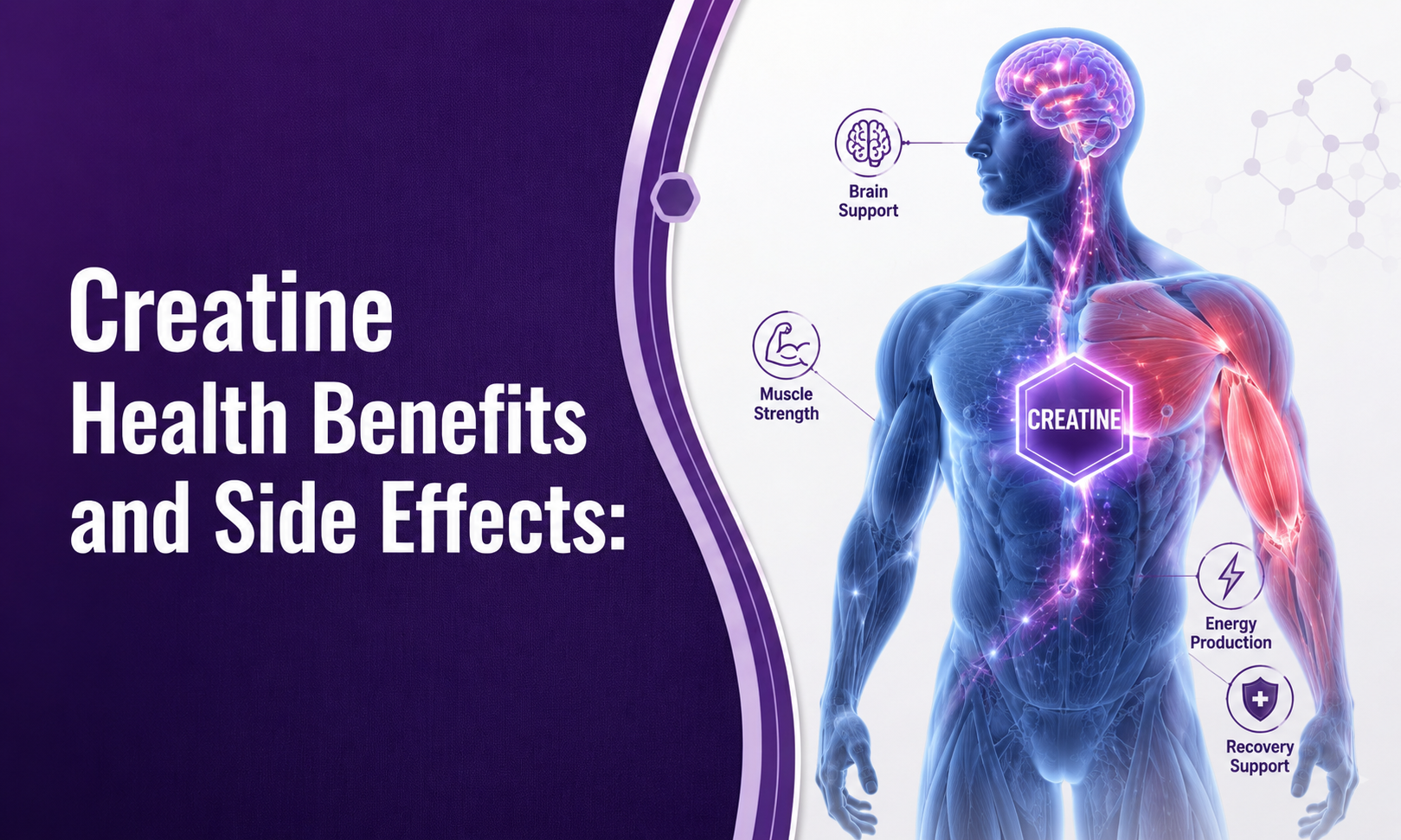
Creatine Health Benefits and Side Effects: What Happens Inside Your Body?
Creatine is one of the most talked-about supplements in fitness, sports, and wellness.
Many adults use it for strength, energy, and muscle support. However, the real question is not just, “Does it work?” The bigger question is, “Is it safe for your body?”
Creatine Health Benefits and Side Effects matter because supplements can affect weight, digestion, hydration, kidney health, workout performance, and daily energy.
Creatine may help with muscle strength, short bursts of exercise, recovery, and possibly brain function. Still, some people may notice bloating, stomach discomfort, water weight, or weight gain.
Before starting creatine, talk with your Passion Health Primary Care. A primary care provider can review your health history, medications, kidney function, and fitness goals before you add a supplement to your routine.
Creatine Health Benefits and Side Effects: What Is Creatine?
Creatine is a natural compound made from amino acids. Your body breaks it down in the liver, kidneys, and pancreas.
You also get small amounts from foods such as red meat and seafood.
Most creatine stays in the muscles. A smaller amount stays in the brain.
During short, intense exercise, your muscles need quick energy. Creatine helps restore ATP, which supports activities like lifting weights, sprinting, jumping, or fast training bursts.
Because of that, many adults use creatine for:
Strength training
Sports performance
Muscle growth
Workout recovery
Short-burst energy
Healthy aging support
However, creatine does not replace sleep, protein, hydration, exercise, or medical care.
Creatine Benefits for Body and Brain
The phrase Creatine Benefits for Body and Brain fits this topic well because creatine may support more than gym performance.
In the body, creatine may help muscles work harder during short bursts of effort. As a result, some people notice better training volume, better strength progress, or improved workout tolerance.
In the brain, researchers continue to study creatine for memory and thinking support.
Early research suggests creatine may help memory and thinking skills, especially in older adults, but more research needs to confirm those effects.
Therefore, adults should avoid treating creatine like a miracle supplement. It may help certain goals, but results depend on diet, training, age, health status, and consistency.
Creatine Benefits for Muscle and Brain Health
Creatine Benefits for Muscle and Brain Health often attract adults who want better strength and sharper energy. For muscles, creatine works best when you pair it with resistance training.
Creatine, especially with resistance exercise, may improve muscle strength, muscle size, and athletic performance.
For older adults, this matters because muscle loss can affect balance, stamina, and daily function.
Creatine with strength training may help improve strength in older adults, although research does not show a clear benefit for total bone mineral density.
However, brain health claims need caution. Creatine may support thinking in some groups, yet it should not replace medical evaluation for memory loss, confusion, fatigue, or neurological symptoms.
What are the Benefits of Taking Creatine?
Many patients ask, What are the Benefits of Taking Creatine? The answer depends on the person, but creatine may offer several possible benefits when used correctly.
Possible creatine benefits include:
Helps improve strength during short, intense exercise
Supports muscle growth with consistent resistance training
May improve workout performance
Helps muscles recover after exercise
May support exercise tolerance
May help older adults maintain strength
May support brain energy in some groups
May reduce cramping or dehydration risk in some active people
However, creatine does not work like a magic powder. Poor sleep, low protein intake, dehydration, high stress, and irregular workouts can reduce results.
Creatine Supplement Benefits and Safety
Creatine Supplement Benefits and Safety should always stay together. Creatine may help performance, but safe use depends on dose, supplement quality, medical history, and medication use.
Before buying creatine, check these safety points:
Choose creatine monohydrate when possible
Look for third-party testing
Avoid unknown supplement brands
Avoid high-dose blends with stimulants
Follow label directions
Drink enough water
Do not mix many supplements without medical advice
Talk to a doctor if you have kidney or liver concerns
This step matters because supplements do not go through the same approval process as prescription medicines. As a result, product quality can vary.
Common Side Effects
Creatine Health Benefits and Side Effects should include both the good and the risky parts. Many healthy adults tolerate creatine well when they use recommended doses. However, some people may notice side effects, especially with high doses or loading phases.
Common creatine side effects may include:
Weight gain
Bloating
Stomach cramps
Nausea
Diarrhea
Water retention
Muscle cramping
Dehydration symptoms
Digestive discomfort
Weight gain does not always mean fat gain. Creatine often pulls water into muscle tissue, so the scale may increase.
However, sudden swelling, severe cramps, dark urine, chest pain, or major weakness needs medical attention.
People with kidney disease should not guess. They should speak with a healthcare provider before taking creatine.
Is Creatine Safe for Adults?
The question Is Creatine Safe for Adults? has a practical answer: for many healthy adults, creatine appears safe when used correctly. However, “safe” does not mean “right for everyone.”
Adults should talk with a doctor before taking creatine if they have kidney disease, liver disease, high blood pressure, diabetes, pregnancy, dehydration risk, or regular prescription medication use.
In addition, anyone with a history of abnormal kidney labs should avoid guessing.
Caffeine may also reduce how well creatine works, although more research continues. Caffeine as a possible interaction.
How Much Creatine Do People Usually Take?
Many adults use 3 to 5 grams of creatine monohydrate daily. Some people use a loading method, but not everyone needs it.
Common creatine dosing methods include:
Simple daily method: 3 to 5 grams daily
Loading method: 20 grams daily for 5 to 7 days, split into smaller doses
Maintenance method: around 5 grams daily after loading
More does not always mean better. Higher doses may increase stomach upset, bloating, or water retention. For safety, follow product directions and ask a healthcare provider if medical conditions exist.
When Should You Talk to a Primary Care Doctor?
Talk to a primary care doctor before starting creatine if you take daily medication, have kidney concerns, feel unexplained fatigue, or want to use creatine for weight, strength, or aging goals. Also, ask for guidance if you notice stomach pain, swelling, cramps, dehydration symptoms, or sudden weight changes after starting it.
A doctor may check kidney function, review medication interactions, and help decide whether creatine supports your goals. This step protects your health and prevents risky supplement mistakes.
Final Takeaway
Creatine Health Benefits and Side Effects should not scare adults, but they should encourage smart decisions. Creatine may help muscle strength, short-burst exercise, workout recovery, and possibly brain health.
However, side effects like weight gain, bloating, stomach discomfort, water retention, and kidney concerns in higher-risk people need attention.
For the best result, choose a quality creatine monohydrate product, stay hydrated, train consistently, and avoid random high-dose use. Most importantly, match the supplement to your real health needs.
Thinking about creatine, fitness, weight loss, fatigue, or muscle health?. The Passion Health Primary Care team can help you build a safer plan for your body, your goals, and your long-term health.
FAQs
1. What are the main creatine health benefits?
Creatine may support muscle strength, short-burst energy, workout performance, recovery, and possible brain support.
2. What are common creatine side effects?
Common side effects may include weight gain, bloating, stomach cramps, nausea, diarrhea, and water retention.
3. Is creatine safe for adults?
Creatine is generally safe for many healthy adults when used correctly. People with kidney disease should ask a doctor first.
4. How much creatine should adults take daily?
Many adults take 3 to 5 grams of creatine monohydrate daily. Higher doses may increase stomach discomfort.
5. Should I talk to a doctor before taking creatine?
Yes, especially if you take medicines, have kidney issues, diabetes, liver problems, high blood pressure, or ongoing health symptoms.