
What Should You Eat When Cyclosporiasis Causes Ongoing Diarrhea?
Cyclosporiasis can cause frequent watery diarrhea, nausea, stomach cramps, appetite loss, fatigue, and weight loss. During recovery, the right foods can support hydration and reduce digestive discomfort. However, diet alone cannot remove the Cyclospora parasite.
Persistent or returning diarrhea needs medical attention. Schedule a visit with Passion Health Advanced Primary Care for stool testing, hydration guidance, and an appropriate treatment plan.
Patients looking for primary care in Frisco, Irving, Plano, Prosper, Aubrey, Flower Mound, Ennis, Kaufman, Kemp, McKinney, TX
Cyclosporiasis Highlights
Cases came from 34 states, 141 patients required hospitalization, and officials reported no deaths at the time of the advisory.
Public health teams continue to investigate the source or sources. The actual case count likely exceeds the confirmed total because some patients recover without testing, while recent cases may take several weeks to reach outbreak reports.
What Is Cyclosporiasis?
Cyclosporiasis is an intestinal infection caused by the microscopic parasite Cyclospora cayetanensis. People can develop the illness after consuming food or water contaminated with the parasite.
Cyclospora mainly affects the small intestine. Direct person-to-person spread rarely occurs because the parasite needs at least one to two weeks outside the body before it can infect another person.
Main Cyclosporiasis Health Information
Symptoms usually begin about one week after exposure. However, they may appear between two days and two weeks or longer after a person consumes contaminated food or water.
Common symptoms include:
• Frequent watery diarrhea
• Stomach cramps and bloating
• Increased gas
• Nausea
• Appetite loss
• Fatigue and weakness
• Unplanned weight loss
• Low-grade fever
• Occasional vomiting
Symptoms may improve and then return several days later. Without treatment, cyclosporiasis may continue for a few days, one month, or longer.
Best Foods to Eat During Cyclosporiasis Recovery
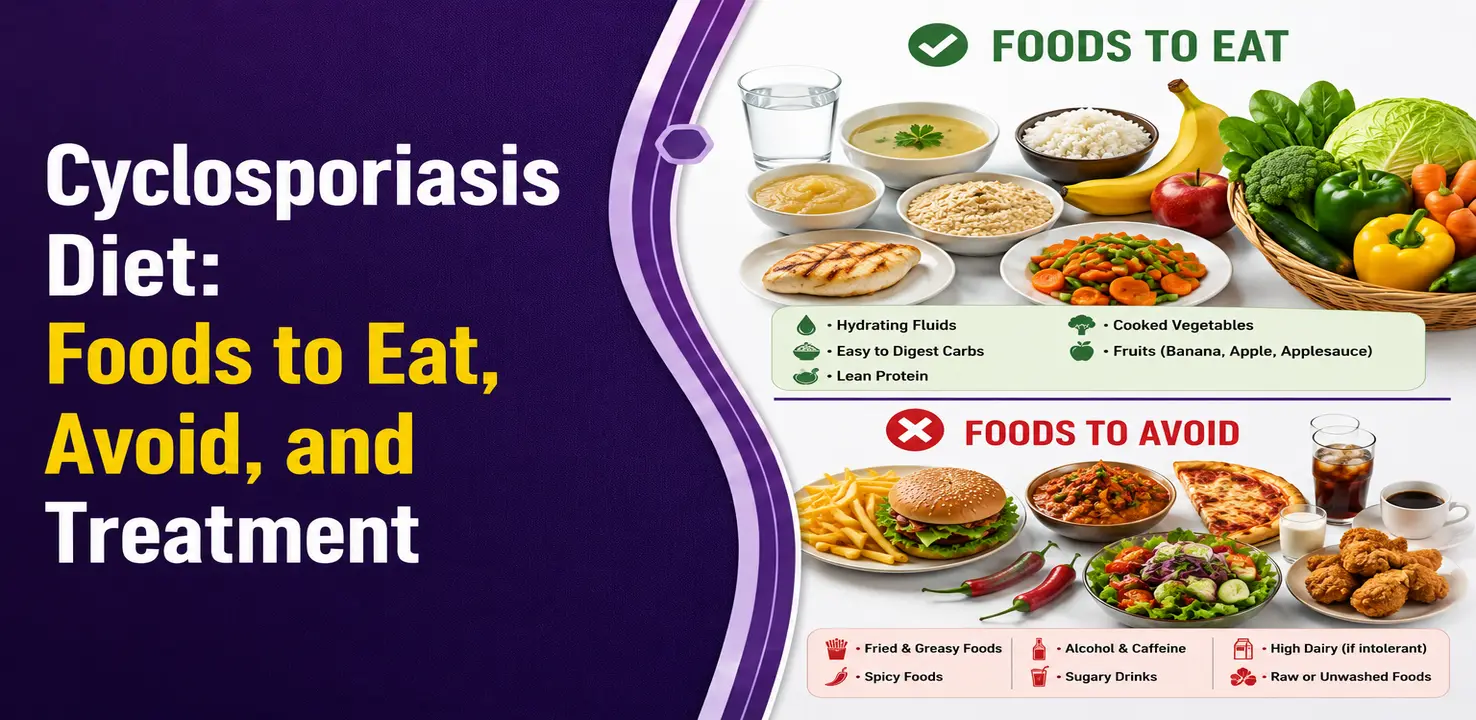
The best foods replace lost fluids, provide gentle energy, and avoid overwhelming an irritated digestive system. Start with small portions and increase the amount as diarrhea and nausea improve.
1. Oral Rehydration Solutions
Oral rehydration solutions contain water, glucose, and electrolytes. They can replace sodium and other minerals lost through frequent watery diarrhea.
Water, clear broth, and electrolyte drinks may also support hydration. People with kidney disease, diabetes, heart failure, or fluid restrictions should ask a clinician which drinks and amounts suit their needs.
2. Gentle Carbohydrates
Plain rice, toast, crackers, oatmeal, and boiled potatoes provide energy without adding heavy fats or strong seasonings.
Bananas and applesauce may also feel easier to tolerate than raw, high-fiber fruit. Increase portion sizes slowly when appetite returns.
3. Cooked Fruits and Vegetables
Cooked carrots, squash, peeled potatoes, green beans, and apples can provide vitamins and minerals while remaining easier to digest than large raw salads.
Cooking also reduces food-safety risks because adequate heat kills Cyclospora. Washing fresh produce helps, but it may not remove every parasite from folds, crevices, or rough surfaces.
4. Lean Protein
Eggs, skinless chicken, turkey, and baked fish provide protein that supports strength during recovery. Choose boiled, baked, steamed, or grilled options instead of fried versions.
Plain yogurt may work for some patients. However, intestinal infections can temporarily make lactose harder to digest, so stop dairy products when they worsen gas, cramping, or diarrhea.
The 1 + 1 + 1 + 1 Recovery Meal Formula
Use this simple formula to create a small, balanced recovery meal:
1 gentle carbohydrate + 1 lean protein + 1 cooked produce item + 1 hydrating drink |
For example:
Plain rice + baked chicken + cooked carrots + oral rehydration drink |
Another option includes the following:
Toast + boiled egg + applesauce + clear broth |
This formula offers a practical meal-building guide, not a medical prescription. Adjust foods according to personal tolerance and the clinician’s recommendations.
Foods and Drinks to Avoid
Certain foods may increase stomach cramps, bowel urgency, gas, or watery stools. Limit these choices until symptoms settle, then reintroduce foods gradually.
• Fried, greasy, or high-fat meals
• Hot peppers and heavily spiced foods
• Alcohol
• Coffee and energy drinks
• Drinks with large amounts of caffeine
• Concentrated fruit juice
• Very sweet drinks and desserts
• Milk, cream, or ice cream when lactose worsens diarrhea
• Raw or undercooked meat, eggs, seafood, or sprouts
• Unwashed fruits, vegetables, and herbs
• Products listed in an official food recall
Do not avoid every fruit and vegetable unless public health officials recommend it. Instead, follow current recall information and use careful food-preparation practices.
Fresh Produce Safety During an Outbreak
Wash hands with soap and water before handling food. Rinse fruits and vegetables thoroughly under running water before eating, cutting, or cooking them.
Scrub firm produce, such as cucumbers and melons, with a clean produce brush. Remove bruised or damaged areas and refrigerate peeled, cut, or cooked produce within two hours.
Never wash produce with soap, detergent, bleach, or household cleaners. Produce can absorb these substances and may become unsafe to eat.
Washing can lower surface contamination, but it cannot guarantee complete removal of Cyclospora. Cooking produce thoroughly provides stronger protection.
Simple Cyclosporiasis Recovery Graph
Highest priority: Fluids and electrolytes |
Move back one step when a food increases diarrhea, nausea, or cramping. Keep a short food-and-symptom record to show the primary care clinician.
Digestive Health & Primary Care Support
Still Dealing With Ongoing Watery Diarrhea?
Passion Health Advanced Primary Care can review your symptoms, hydration needs, recent food exposure, medications, and health history. A provider can also order the appropriate stool test and recommend the right treatment.
How Doctors Diagnose Cyclosporiasis
A healthcare professional can diagnose cyclosporiasis through stool testing. Routine stool tests may not automatically check for Cyclospora, so the clinician may need to request the test specifically.
Cyclospora can prove difficult to detect in one stool sample. The healthcare team may request samples from several different days when symptoms and food-exposure history suggest infection.
How to Treat Cyclosporiasis
The CDC identifies trimethoprim-sulfamethoxazole, commonly called TMP-SMX, as the preferred treatment for cyclosporiasis.
A clinician must determine whether this medicine fits the patient’s allergy history, current medications, kidney function, age, and overall health. People with a sulfa allergy need direct medical guidance because no equally effective standard alternative currently exists.
Do not use leftover antibiotics or another person’s medication. Several antibiotics that treat other intestinal infections do not reliably work against Cyclospora.
Rest, fluids, and electrolyte replacement remain important throughout treatment. Severe dehydration may require intravenous fluids and hospital care.
When to See a Primary Care Doctor
Contact a primary care doctor when watery diarrhea lasts more than a few days, improves and returns, or occurs with severe fatigue or appetite loss.
Seek prompt medical help for:
• Dizziness or faintness
• Very little or dark urine
• Trouble drinking or keeping fluids down
• Worsening weakness
• Significant abdominal pain
• Blood or pus in the stool
• High fever
• Rapid or unexplained weight loss
Older adults and people with weakened immune systems or chronic medical conditions may face a greater risk of severe or prolonged illness.
Takeaways
• Choose fluids, electrolytes, gentle carbohydrates, lean protein, and cooked produce.
• Temporarily avoid greasy, spicy, alcoholic, highly caffeinated, or very sugary choices.
• Wash produce under running water, never with soap, and cook it when practical.
• Food supports hydration and recovery, but it does not kill Cyclospora.
• Persistent or returning watery diarrhea requires stool testing and medical guidance.
Ongoing diarrhea can lead to dehydration, weakness, and unwanted weight loss. Passion Health Advanced Primary Care can evaluate symptoms, order appropriate stool testing, review possible food exposures, and develop a safe treatment and hydration plan.
Our Primary Care Locations
FAQS
1. Can bananas help during cyclosporiasis recovery?
Bananas provide easy carbohydrates and potassium, but they do not cure the infection.
2. Should I stop eating all fresh produce?
No. Follow official recall alerts, wash produce carefully, and choose cooked options when practical.
3. Can cyclosporiasis improve without antibiotics?
Some healthy people recover without medicine, but symptoms may last or return. Ask a clinician about testing and treatment.
4. What drink works best for dehydration?
An oral rehydration solution can replace both fluids and electrolytes lost through diarrhea.
5. How long can cyclosporiasis symptoms last?
Untreated symptoms may last for several days to more than a month. They may disappear and return later.