Rabies: Causes, Animal Bite First Aid, Injection Use, and Prevention
What Is Rabies?
Rabies is a dangerous but preventable viral disease. It spreads from infected animals to humans through bites, scratches, or saliva entering broken skin, the mouth, nose, or eyes. Rabies mainly affects the brain and nervous system. Without fast medical care after exposure, rabies can become fatal once symptoms start.
The most important thing to remember is simple: rabies can be prevented if treatment starts quickly after an animal bite or scratch. Wash the wound immediately with soap and running water for at least 15 minutes, then visit a doctor right away.
Dogs are the most common source of human rabies cases worldwide. However, bats, raccoons, foxes, skunks, cats, monkeys, cows, goats, sheep, horses, and other mammals can also carry rabies. Never ignore an animal bite, even if the wound looks small.
Causes of Rabies
Rabies is caused by the rabies virus. A person may get rabies when the virus enters the body through infected animal saliva.
Common causes include:
Animal Bite
An animal bite is the most common way rabies spreads. Dog bites are a major cause of rabies in many parts of the world.
Animal Scratch
A scratch can also spread rabies if infected saliva enters broken skin.
Saliva Touching a Wound
Rabies can spread if saliva from an infected animal touches an open wound, cut, eyes, mouth, or nose.
Bat or Wild Animal Exposure
Bats and wild animals can carry rabies. Bat bites can be very small and may go unnoticed, so any possible bat exposure should be taken seriously.
How Rabies Does Not Spread
Rabies does not usually spread through:
Touching animal fur
Petting or holding an animal
Sitting near an infected person
Sharing food or drinks
Breathing the same air
Blood, urine, or feces
Hugging or handshakes
Touching objects used by an infected person or animal
Rabies mainly spreads when infected saliva enters the body through a bite, scratch, open wound, mouth, nose, or eyes.
First Aid After an Animal Bite
1. Wash the Wound Immediately
Wash the bite or scratch with soap and running water for at least 15 minutes. This is one of the most important first-aid steps after possible rabies exposure.
2. Do Not Use Home Remedies
Do not apply chili powder, turmeric, oil, soil, herbal paste, ash, or toothpaste to the wound. These can irritate the skin and delay proper care.
3. Apply Antiseptic
After washing, apply povidone iodine or another antiseptic if available.
4. Visit a Doctor Immediately
Do not wait for symptoms. A doctor may recommend rabies vaccine, tetanus injection, antibiotics, or rabies immunoglobulin depending on the exposure risk.
Animal-Wise Rabies Risk
Dog Bite and Rabies
Dogs are the most common source of human rabies cases worldwide. A dog bite can spread rabies if the dog is infected and its saliva enters the wound.
What to Do After a Dog Bite
Wash the wound with soap and running water for 15 minutes.
Do not apply home remedies.
Visit a doctor immediately.
Ask whether rabies vaccine, tetanus injection, antibiotics, or rabies immunoglobulin is needed.
If possible, safely note whether the dog is stray, vaccinated, sick, or behaving strangely.
Cat Bite and Rabies
Cats can also get rabies, especially if they are unvaccinated or exposed to infected animals. A cat bite or scratch may be risky if saliva enters broken skin.
What to Do After a Cat Bite or Scratch
Wash the area immediately with soap and water.
Do not ignore scratches, especially if they bleed.
Visit a doctor to check rabies risk.
Keep pet cats vaccinated.
Bat Bite and Rabies
Bats are an important source of rabies in some countries, including the United States. Bat bites can be tiny and difficult to see. CDC guidance says possible bat exposure should be assessed carefully, especially when a bat is found near a sleeping person, child, or someone unable to report a bite.
What to Do After Bat Contact
Do not touch a bat with your bare hands.
Seek medical care if a bat bites, scratches, or touches broken skin.
Get medical advice if a bat is found in a room with a sleeping person, child, or unconscious person.
A doctor may recommend rabies post-exposure treatment.
Cow, Buffalo, Goat, Sheep, or Horse Bite and Rabies
Many people think only dogs spread rabies, but any mammal can get rabies. This includes cows, buffaloes, goats, sheep, and horses.
Rabies in livestock may look different from rabies in dogs. A sick cow may drool, struggle to swallow, act nervous, become weak, or look like something is stuck in its throat. Do not put your hand inside the animal’s mouth because saliva exposure can be dangerous.
What to Do After a Livestock Bite
Wash the wound for 15 minutes with soap and water.
Do not put your hand inside the animal’s mouth.
Do not try to treat a sick animal without a veterinarian.
Visit a doctor quickly.
Call a veterinarian if the animal is drooling, behaving strangely, or unable to swallow.
Monkey Bite and Rabies
Monkey bites can be risky because monkeys are mammals and can carry infections. A monkey bite or scratch should never be ignored.
What to Do After a Monkey Bite
Wash the wound immediately.
Visit a doctor as soon as possible.
Ask about rabies vaccine, tetanus injection, and wound infection prevention.
Do not feed or touch monkeys in temples, tourist areas, roadsides, or public places.
Wild Animal Bite and Rabies
Wild animals such as bats, raccoons, foxes, skunks, and other mammals can carry rabies.
What to Do After a Wild Animal Bite
Wash the wound immediately.
Do not try to catch or kill the animal yourself.
Call animal control or local health authorities if available.
Visit a doctor immediately.
Rabies vaccine may be needed depending on exposure risk.
How to Identify Rabies in Animals
You cannot confirm rabies just by looking at an animal. Laboratory testing is needed for confirmation. However, some signs may suggest rabies risk.
Warning signs include:
Sudden behavior change
Unusual aggression
Excessive drooling
Difficulty swallowing
Weakness or paralysis
Staggering or poor coordination
Wild animals acting unusually friendly
Night animals moving during daytime
Animals biting without reason
Unusual sounds
A calm animal suddenly becomes violent
How to Identify Rabies in Dogs
A rabid dog may show:
Sudden aggression
Excessive barking or unusual quietness
Drooling
Difficulty swallowing
Biting without reason
Restlessness
Weakness or paralysis
Sudden change in behavior
Do not touch the dog’s mouth or saliva. Contact animal control or a veterinarian.
How to Identify Rabies in Bats
A bat may be risky if it:
Is found inside a room
Is lying on the ground
Cannot fly properly
Allows people to touch it
Is active in unusual situations
Never handle a bat with your bare hands.
How to Identify Rabies in Cows or Livestock
A rabid cow or livestock animal may show:
Excessive drooling
Strange bellowing or unusual sounds
Difficulty swallowing
Choking-like behavior
Staggering or weakness
Sudden aggression
Nervousness
Lameness
Paralysis
Cattle with rabies may look like they are choking. This can tempt owners to put a hand in the mouth, but that can expose them to infected saliva.
Rabies Injection Use After an Animal Bite
What Is Rabies Post-Exposure Treatment?
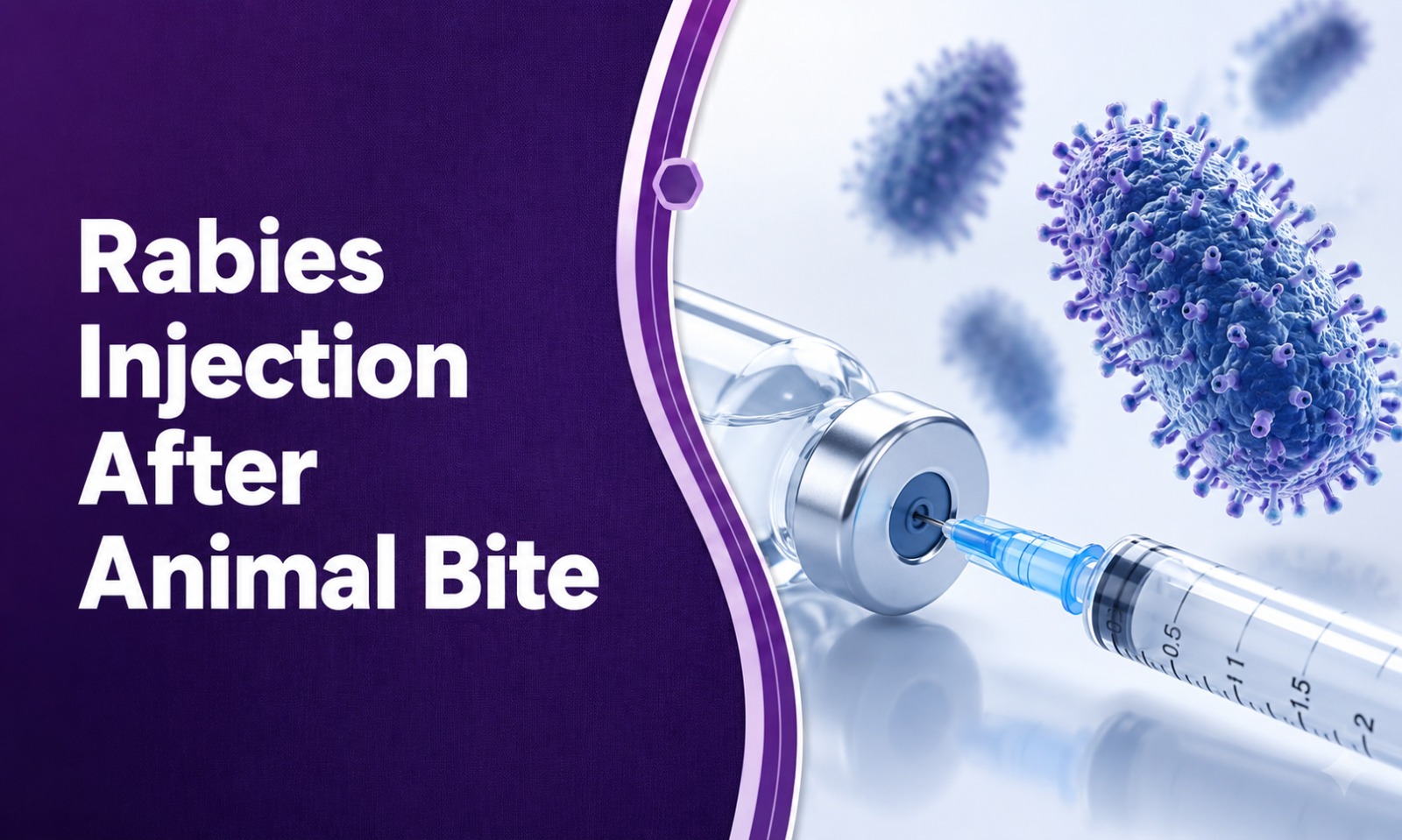
Rabies treatment after possible exposure is called post-exposure prophylaxis, or PEP. It may include wound cleaning, rabies vaccine, and rabies immunoglobulin depending on the bite risk and vaccination history. CDC guidance states that PEP includes wound care, human rabies immune globulin when needed, and a vaccine series.
Rabies Vaccine
Rabies vaccine helps the body build protection against the rabies virus. For people who have never received a rabies vaccine before, CDC guidance describes vaccine doses on days 0, 3, 7, and 14 after the first medical visit. People with immune problems may need an extra dose on day 28.
Rabies Immunoglobulin
Rabies immunoglobulin gives immediate protection before the vaccine starts working. It is usually given once at the beginning of treatment for people who were not previously vaccinated and have a higher-risk exposure.
CDC guidance says rabies immunoglobulin should not be given in the same syringe or same body site as the first rabies vaccine dose.
When Is Rabies Injection Needed?
WHO groups rabies exposure into three categories. Category I includes touching or feeding animals, or licking on intact skin. Category II includes minor scratches or nibbling without bleeding. Category III includes deep bites, bleeding scratches, saliva on broken skin or mucous membranes, and direct bat exposure.
Category I
Touching or feeding animals, or licking on intact skin. Rabies injection is usually not needed, but washing exposed skin is advised.
Category II
Minor scratches or nibbling without bleeding. Rabies vaccine is usually recommended.
Category III
Deep bites, bleeding scratches, saliva on broken skin, saliva entering the eyes or mouth, or bat exposure. Rabies vaccine plus rabies immunoglobulin is usually recommended.
A doctor should decide the correct treatment based on the animal, bite depth, wound type, vaccination history, and local rabies risk.
When Should You See a Doctor?
Visit a doctor immediately if:
A dog bites you
A cat scratches or bites you
A bat touches, bites, or scratches you
A monkey bites you
A cow, buffalo, goat, sheep, or horse bites you
Saliva touches your open wound
Saliva enters your eyes, mouth, or nose
The animal is stray, wild, sick, aggressive, or behaving strangely
You do not know the animal’s vaccination history
Important Precautions to Prevent Rabies
Keep Pets Vaccinated
Vaccinating dogs and cats is one of the best ways to prevent rabies. It also helps protect families and communities.
Avoid Stray Animals
Do not touch or feed stray dogs, cats, monkeys, or wild animals.
Teach Children Animal Safety
Children should not tease, hit, chase, or feed unknown animals.
Do Not Touch Sick Animals
If an animal is drooling, weak, aggressive, paralyzed, or behaving unusually, avoid contact and call a veterinarian or animal control.
Be Careful Around Livestock
Do not put your hand in the mouth of a sick cow, buffalo, goat, sheep, or horse. Call a veterinarian for help.
Final Takeaway
Rabies is serious, but it is preventable. After any risky animal bite or scratch, wash the wound with soap and running water for at least 15 minutes and visit a doctor immediately.
Do not wait for symptoms. Rabies prevention works best before symptoms begin. Early medical care can save your life.
Book an appointment with Passion Health Primary Care today for prompt animal bite evaluation and rabies prevention guidance.
FAQs About Rabies
1. Can a dog bite cause rabies?
Yes. A bite from an infected dog can spread rabies if saliva enters the wound.
2. Can a bat bite spread rabies?
Yes. Bat bites can spread rabies, and the bite mark may be very small. Seek medical care after possible bat exposure.
3. Can cows get rabies?
Yes. Cows and other mammals can get rabies, although it is less common than dog rabies in many areas.
4. What are the rabies signs in cows?
A rabid cow may show drooling, strange sounds, difficulty swallowing, choking-like behavior, weakness, aggression, or paralysis.
5. What is the first thing to do after an animal bite?
Wash the wound with soap and running water for at least 15 minutes. Then visit a doctor immediately.
6. Is the rabies injection painful?
Rabies injections are usually given like other vaccines. Some people may feel mild pain, redness, or swelling at the injection site.
7. Do I need a rabies injection after every animal bite?
Not always. A doctor decides based on the animal, wound type, bite depth, vaccination history, and rabies risk in your area.
8. Can rabies spread by touching animal fur?
No. Rabies does not spread by simply touching fur. The main risk is infected saliva entering a bite, scratch, open wound, mouth, nose, or eyes.
9. Can rabies be treated after symptoms start?
Rabies is almost always fatal once symptoms begin. That is why urgent medical care after exposure is extremely important.
10. Should I use home remedies after a bite?
No. Do not apply home remedies. Wash the wound with soap and water, then seek medical care immediately.