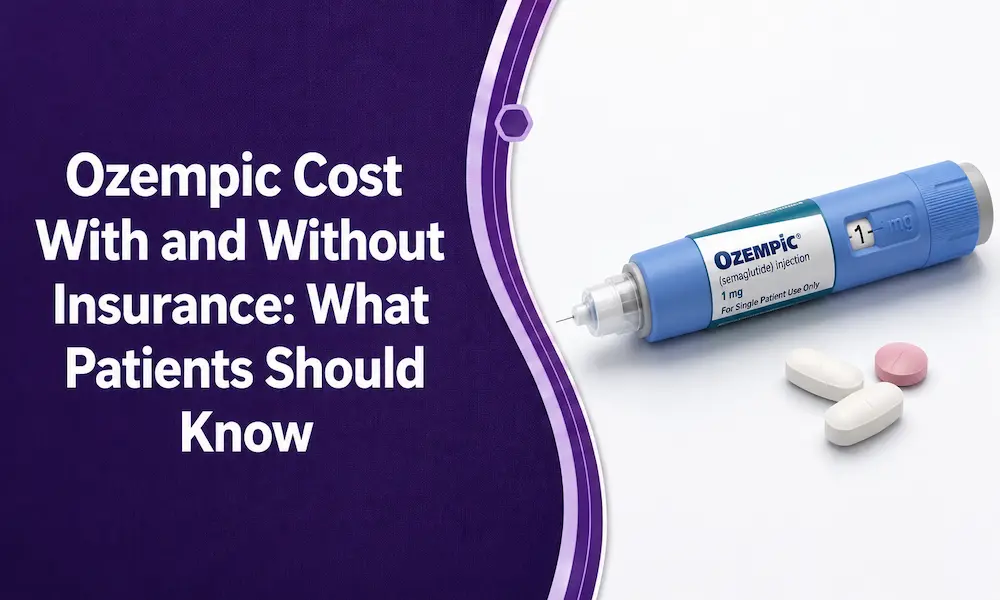
Ozempic Cost With and Without Insurance: Is It an Affordable Price?
Ozempic has become one of the most searched prescription medicines in the United States, especially among adults looking for help with type 2 diabetes, blood sugar control, and weight-related health concerns.
But one question comes up again and again: How much does Ozempic cost with and without insurance?
The answer is not the same for every patient. Your final cost may depend on your insurance plan, pharmacy, dosage, savings card eligibility, prior authorization, and whether Ozempic is being prescribed for an FDA-approved use.
According to Healthline, Ozempic cost can vary based on dosage, insurance coverage, pharmacy, and available savings programs.
At Passion Health Advanced Primary Care, patients often need help understanding not only the price but also whether Ozempic is safe, appropriate, and covered by insurance.
This guide explains the latest cost details, insurance factors, safety points, and why doctor guidance matters before starting this medication.
What Is Ozempic Used For?
Ozempic is a prescription medication that contains semaglutide. It is mainly prescribed for adults with type 2 diabetes to help manage blood sugar along with diet and exercise.
Ozempic may help reduce certain heart-related risks and kidney-related risks in some adults with type 2 diabetes.
Many people hear about Ozempic because of weight loss discussions online. However, Ozempic is not FDA-approved specifically for weight loss. if a doctor prescribes Ozempic for weight loss, that may be considered off-label use, and insurance may not cover it.
That is why a primary care visit matters. A doctor can review your A1C, weight history, medical conditions, current medications, and insurance requirements before deciding whether Ozempic is the right option.
Latest Ozempic Cost Without Insurance
According to Drugs.com, updated on May 8, 2026, the standard Ozempic injection cost without insurance is listed as $349 per month for 0.25 mg, 0.5 mg, or 1 mg doses, and $499 per month for the 2 mg dose through the listed participating options.
Drugs.com also states that new self-pay patients may pay $199 per month for the first two months for the 0.25 mg and 0.5 mg doses as a limited-time offer.
Drugs.com also lists the Ozempic injection list price as $1,027.51 per pen, but explains that most people do not pay the full list price after discounts, insurance, or rebates.
GoodRx shows that retail pricing can be much higher without savings, with average retail prices around the $1,000 to $1,200+ range per month in some listings, while coupons or special offers may reduce costs for eligible users.
Ozempic Price Table
Ozempic Cost Situation | Estimated Price |
New self-pay patient introductory offer | $199/month for first 2 months |
Standard self-pay, 0.25 mg, 0.5 mg, or 1 mg | $349/month |
Standard self-pay, 2 mg | $499/month |
Manufacturer/list price before discounts | $1,027.51 per pen |
Possible insured copay with savings card | As low as $25/month |
Average retail range without discounts | Around $1,000–$1,200+ per month |
Prices can change by date, pharmacy, plan, and eligibility. Patients should confirm the final amount with their pharmacy, insurance company, or doctor’s office before filling the prescription.
Ozempic Cost With Insurance
Ozempic cost with insurance can be much lower, but coverage is not guaranteed.
Some insurance plans may cover Ozempic, while others may require prior authorization. Cost can also depend on plan benefits, copay amount, dosage, and savings card eligibility.
For patients with commercial insurance, the Ozempic savings card may lower the cost to as little as $25 per month if the plan covers the medication and the patient qualifies.
However, insurance may deny coverage if Ozempic is prescribed mainly for weight loss instead of type 2 diabetes.
Some plans may ask for medical records, lab results, diagnosis codes, previous medication history, or proof that other treatments were tried first.
Why Ozempic Prices Change So Much
Ozempic prices can feel confusing because many factors affect the final cost.
Common reasons include:
Different pharmacy prices
Insurance plan rules
Prior authorization requirements
Dose strength
Savings card eligibility
Manufacturer assistance programs
Medicare or Medicaid restrictions
Whether the prescription is for diabetes or off-label weight loss
Healthline notes that the actual amount a patient pays may depend on treatment plan, insurance coverage, and pharmacy choice.
Can Medicare or Medicaid Cover Ozempic?
Medicare and Medicaid may cover Ozempic in some cases, but coverage depends on the specific plan.
Patients should contact their plan provider because benefits and requirements vary. Some plans may also require prior authorization before approving Ozempic.
One important point: manufacturer copay cards usually cannot be used with government insurance such as Medicare or Medicaid.
Ozempic’s manufacturer savings card is generally for eligible patients with commercial insurance, not government-issued insurance.
Safety Points Before Starting Ozempic
Cost is important, but safety matters more. Ozempic should not be started just because it is popular online. A doctor should review your full health history first.
Before using Ozempic, patients should discuss:
Type 2 diabetes diagnosis and latest A1C
Current medications
History of stomach or digestive problems
Kidney concerns
Gallbladder issues
Pancreatitis history
Low blood sugar risk
Other GLP-1 medications
Weight changes and nutrition habits
Ozempic can also cause side effects, especially when starting or increasing the dose. Some patients may have nausea, vomiting, diarrhea, constipation, stomach discomfort, appetite changes, or dehydration risk.
A primary care doctor can help monitor symptoms and adjust the treatment plan safely.
How a Primary Care Doctor Can Help With Ozempic
A primary care doctor does more than write a prescription. At Passion Health Advanced Primary Care, the goal is to help patients understand whether Ozempic is medically appropriate, financially realistic, and safe for long-term care.
Doctor guidance may help with:
Checking whether Ozempic fits your diagnosis
Reviewing A1C, blood sugar, weight, blood pressure, and cholesterol
Preparing insurance prior authorization documents
Discussing savings cards or assistance programs
Monitoring side effects
Adjusting dosage when needed
Building a nutrition and exercise plan
Considering other medication options if Ozempic is not covered
This is important because the cheapest option is not always the safest option. Also, the most popular medication is not always the best medication for every patient.
Ways to Lower Ozempic Cost
Patients may be able to reduce Ozempic costs by checking several options.
Helpful steps include:
Ask your insurance company if Ozempic is covered
Check whether prior authorization is required
Ask the pharmacy to compare the cash price and the insurance price
Review the manufacturer savings card eligibility
Ask about patient assistance programs
Compare pharmacy prices
Ask your doctor if a 90-day supply is allowed
Discuss alternative medications if Ozempic is not affordable
Healthline recommends talking with your doctor, pharmacist, or insurance provider to understand your actual cost and savings options.
Latest Weight Loss News: Ozempic vs Surgery
Price is important, but Ozempic is not the only medical option for weight-related health concerns. A recent study also compared GLP-1 medicines with bariatric surgery.
ScienceAlert reported on May 28, 2026, that a 2025 NYU study found that a bariatric surgery may lead to greater real-world weight loss than GLP-1 medicines like Ozempic.
Patients who had surgery lost 25.7% body weight in two years, while medication users lost 5.3%. Still, surgery is invasive, so doctor guidance matters.
Key points:
Surgery showed stronger results
Ozempic still helps many patients
Cost and safety affect treatment choice
When Should You Talk to Passion Health Advanced Primary Care?
You should talk to a primary care doctor if you are considering Ozempic, already using it, or struggling with insurance approval.
A visit is also helpful if you have type 2 diabetes, rising A1C, weight-related health risks, high blood pressure, high cholesterol, or confusion about GLP-1 medications.
Bring your insurance card, medication list, recent lab reports, and any pharmacy price quote if available. This helps the doctor understand your medical needs and cost concerns at the same time.
Final Thoughts
Ozempic Cost With and Without Insurance can vary widely. Some patients may pay a low copay with insurance and a savings card, while others may face hundreds or even over a thousand dollars per month without coverage.
The latest Drugs.com pricing lists self-pay options from $349 to $499 per month, with a limited introductory offer of $199 per month for the first two months for eligible new self-pay patients.
Before starting Ozempic, do not focus on price alone. Safety, diagnosis, insurance approval, long-term monitoring, and lifestyle support all matter.
Confused about Ozempic cost, insurance coverage, or whether it is right for you? Contact Passion Health Advanced Primary Care for doctor-guided support and a personalized treatment plan.
5 FAQs for Ozempic Cost With and Without Insurance
1. How much does Ozempic cost without insurance?
Ozempic can cost several hundred dollars per month without insurance, and retail prices may be higher depending on the pharmacy. The final price depends on dose, location, pharmacy discounts, and available savings programs.
2. Does insurance cover Ozempic?
Some insurance plans cover Ozempic, especially when it is prescribed for type 2 diabetes. Coverage may require prior authorization, lab results, diagnosis details, or proof that other medications were tried first.
3. Why is Ozempic so expensive?
Ozempic is a brand-name prescription medication, and the cost can change based on insurance coverage, pharmacy pricing, dose strength, manufacturer discounts, and whether the patient qualifies for savings programs.
4. Can I use an Ozempic savings card?
Eligible patients with commercial insurance may qualify for an Ozempic savings card. People with Medicare, Medicaid, or other government insurance usually may not qualify for manufacturer copay cards.
5. Should I ask a doctor before starting Ozempic?
Yes. A primary care doctor can check your A1C, medical history, current medications, side effect risks, and insurance requirements before deciding if Ozempic is safe and appropriate for you.