New Alzheimer’s Treatments Targeting Tau and Amyloid
Learn how new Alzheimer’s treatments target amyloid plaques and tau tangles, how blood tests may support earlier diagnosis, and what patients and families should know about benefits, risks, eligibility, and medical monitoring.
Why Alzheimer’s Treatment Research Is Changing
Alzheimer’s research has entered a more hopeful stage. Instead of only managing memory symptoms, scientists now target biological changes that damage brain cells, especially amyloid plaques and abnormal tau tangles.
Recent AAIC research highlights a wider strategy. Approved anti-amyloid medicines may slow decline in selected patients, while tau-directed therapies and blood tests could shape future care.
Concerned about new memory or thinking changes? Book an appointment with Passion Health Advanced Primary Care for an initial assessment, medication review, and referral guidance.
Amyloid and Tau: Two Important Alzheimer’s Targets
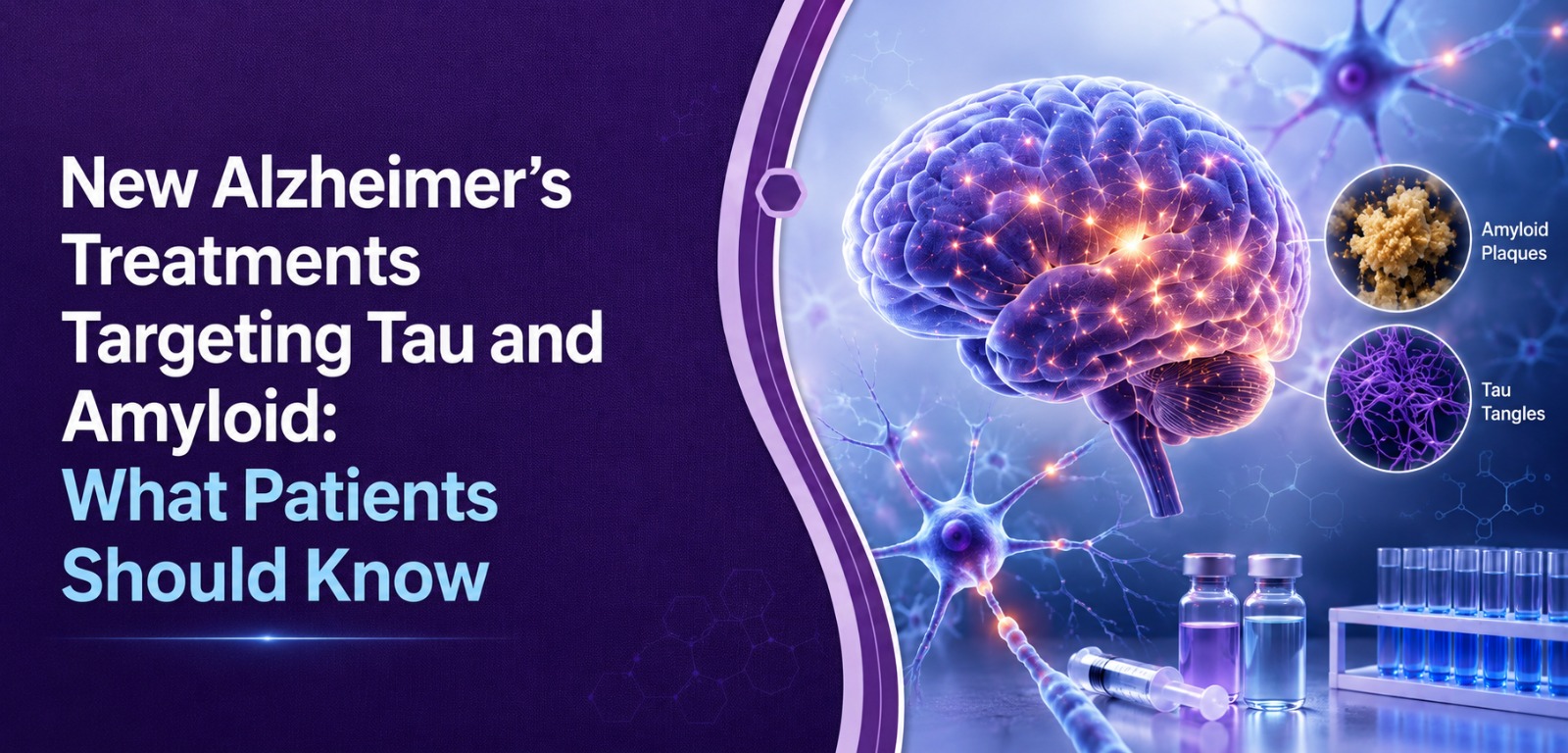
Amyloid and tau occur naturally in the brain. However, Alzheimer’s disease changes the way these proteins behave, allowing harmful deposits to interfere with healthy nerve-cell activity.
Amyloid beta can collect between brain cells and create plaques. These deposits often begin years before noticeable memory symptoms and may disrupt communication between nerve cells.
Tau normally supports the inner structure of nerve cells. Abnormal tau can form tangles inside those cells, interfere with nutrient transport, and spread through areas connected with memory and thinking.
• Amyloid often appears earlier in the disease process.
• Tau closely tracks nerve-cell injury and cognitive decline.
• Both proteins matter at different stages of Alzheimer’s disease.
How Current Anti-Amyloid Treatments Work
Anti-amyloid medicines use antibodies that recognize and reduce amyloid deposits. The FDA has approved Leqembi, or lecanemab, and Kisunla, or donanemab, for people with mild cognitive impairment or mild dementia due to Alzheimer’s disease.
These medicines do not cure Alzheimer’s or restore lost memory. However, trials show that they can slow decline in some selected patients.
Before treatment, a specialist confirms amyloid pathology and reviews MRI findings, current medicines, disease stage, and genetic risk.
Doctors do not recommend treatment based on forgetfulness alone. They usually consider it when testing confirms early symptomatic Alzheimer’s disease and amyloid buildup.
A specialist may review:
• Cognitive testing and symptom severity
• Amyloid blood, spinal fluid, or PET results
• MRI findings and previous brain bleeding
• Blood thinners and other medicines
• APOE4 status and treatment risks
What Is ARIA?
Anti-amyloid medicines can cause amyloid-related imaging abnormalities, known as ARIA. ARIA may cause temporary brain swelling or small areas of bleeding that appear on an MRI.
Many cases cause no symptoms. Still, serious cases can occur, so doctors use MRI monitoring.
Warning symptoms may include headache, confusion, dizziness, nausea, vision changes, trouble walking, or seizures. Sudden neurological symptoms during treatment need prompt medical attention.
• Two APOE4 copies may raise ARIA risk.
• Blood thinners may increase bleeding concerns.
• MRI monitoring supports safer treatment decisions.
Why Tau-Targeted Treatments Are Gaining Attention
Tau has become a leading target in Alzheimer’s drug development. Researchers want to reduce tau production, prevent its spread, or remove harmful forms from brain cells.
Some investigational treatments use antisense technology to interrupt the instructions that cells use to produce tau. Other programs explore gene therapy and engineered delivery systems.
Most tau treatments remain experimental. A promising biomarker change does not guarantee better memory or function. Researchers still need larger trials.
Why the Blood-Brain Barrier Matters
The blood-brain barrier protects the brain from harmful substances in the bloodstream. Unfortunately, it also blocks many medicines from reaching brain tissue in useful amounts.
Researchers study delivery systems that may carry treatments across this barrier. Every new method still needs careful safety testing.
Could Future Treatment Target Both Proteins?
Many researchers expect Alzheimer’s care to follow a stage-based model. A doctor might target amyloid earlier and consider a tau-directed treatment as tau spreads and cognitive problems progress.
No approved amyloid-and-tau combination plan exists today. Still, the approach makes sense because Alzheimer’s involves several biological processes rather than one isolated protein.
Possible Future Care Pathway
Memory concern |
This process also helps doctors identify other causes. Sleep problems, depression, thyroid disease, vitamin deficiencies, medicines, and hearing loss can affect memory.
Noticing Changes in Memory or Thinking?
Memory changes can have many causes. A primary care visit can help review symptoms, medications, medical conditions, and the need for cognitive testing or specialist care.
How Alzheimer’s Blood Tests May Help
Blood-based biomarkers may offer a less invasive way to evaluate Alzheimer’s disease. The FDA cleared a blood test that measures a ratio involving p-tau217 and beta-amyloid to help identify amyloid pathology in adults with cognitive symptoms.
The test may reduce the need for some PET scans or spinal fluid tests. However, doctors must interpret the result with symptoms, cognitive testing, examination findings, and other clinical information.
• The test supports diagnosis; it does not confirm Alzheimer’s alone.
• Doctors should not use it for routine screening without symptoms.
• False-positive and false-negative results remain possible.
Lilly also announced research comparing p-tau217 blood tests with amyloid PET in cognitively unimpaired people. That research may support future testing, but it does not justify routine screening in symptom-free adults today.
When Should Someone See a Doctor?
Occasional forgetfulness can happen with stress, poor sleep, or ageing. However, worsening changes deserve attention when they interfere with daily life.
Schedule an evaluation when someone repeats questions, gets lost in familiar places, struggles with medicines or bills, forgets important appointments, or shows noticeable judgment changes.
A primary care clinician can review symptoms, check medicines, order laboratory tests, perform an initial cognitive screen, and coordinate specialist care.
What Patients and Families Should Remember
New Alzheimer’s treatments targeting tau and amyloid show meaningful progress. However, current amyloid medicines only suit selected patients with early symptomatic disease, while most tau treatments remain in clinical trials.
Early evaluation gives patients and families more time to understand symptoms, discuss options, and plan care.
Take the Next Step for Memory Concerns
Do not ignore worsening memory or thinking changes. An early medical evaluation can identify treatable causes and clarify whether further testing makes sense.
Our Primary Care Locations
FAQs
1. Can Amyloid Medicines Cure Alzheimer’s?
No. They may slow decline in some patients with early Alzheimer’s, but they do not cure the condition or restore lost memory.
2. Are Tau Treatments Available Now?
Most remain experimental. Researchers still need larger trials to confirm safety and meaningful clinical benefits.
3. Can a Blood Test Diagnose Alzheimer’s Alone?
No. Doctors combine the result with symptoms, cognitive testing, medical history, and other evaluations.
4. Does Every Patient With Memory Loss Need Amyloid Treatment?
No. Many conditions cause memory problems, and amyloid medicines only suit selected patients with confirmed early Alzheimer’s disease.
5. Why Start With Primary Care?
Primary care can identify reversible causes, review medicines, begin cognitive testing, and arrange the right specialist referral.