
Is Rectal Bleeding or Anal Pain a Sign of Hemorrhoids?
Bright-red blood after a bowel movement can feel alarming. Anal itching, swelling, or a painful lump can also cause discomfort. Hemorrhoids often cause these symptoms, but other conditions can look similar.
A primary care visit can help confirm the cause and guide safe treatment. Not sure whether your symptoms are hemorrhoids? Book an appointment with Passion Health Advanced Primary Care for a private, respectful evaluation.
Patients looking for primary care in Frisco, Irving, Plano, Prosper, Anna, Aubrey, Flower Mound, Ennis, Kaufman, Kemp, Mesquite, McKinney, TX
Key Takeaways
- ✓ Hemorrhoids may cause bright-red bleeding, itching, swelling, pain, or a tender lump near the anus.
- ✓ Constipation, straining, prolonged toilet sitting, pregnancy, and a low-fiber diet may increase the risk.
- ✓ Fiber, fluids, warm sitz baths, regular activity, and better toilet habits may relieve mild symptoms.
- ✓ See a primary care doctor for rectal bleeding, severe pain, recurring symptoms, or symptoms lasting longer than one week.
What Are Hemorrhoids?
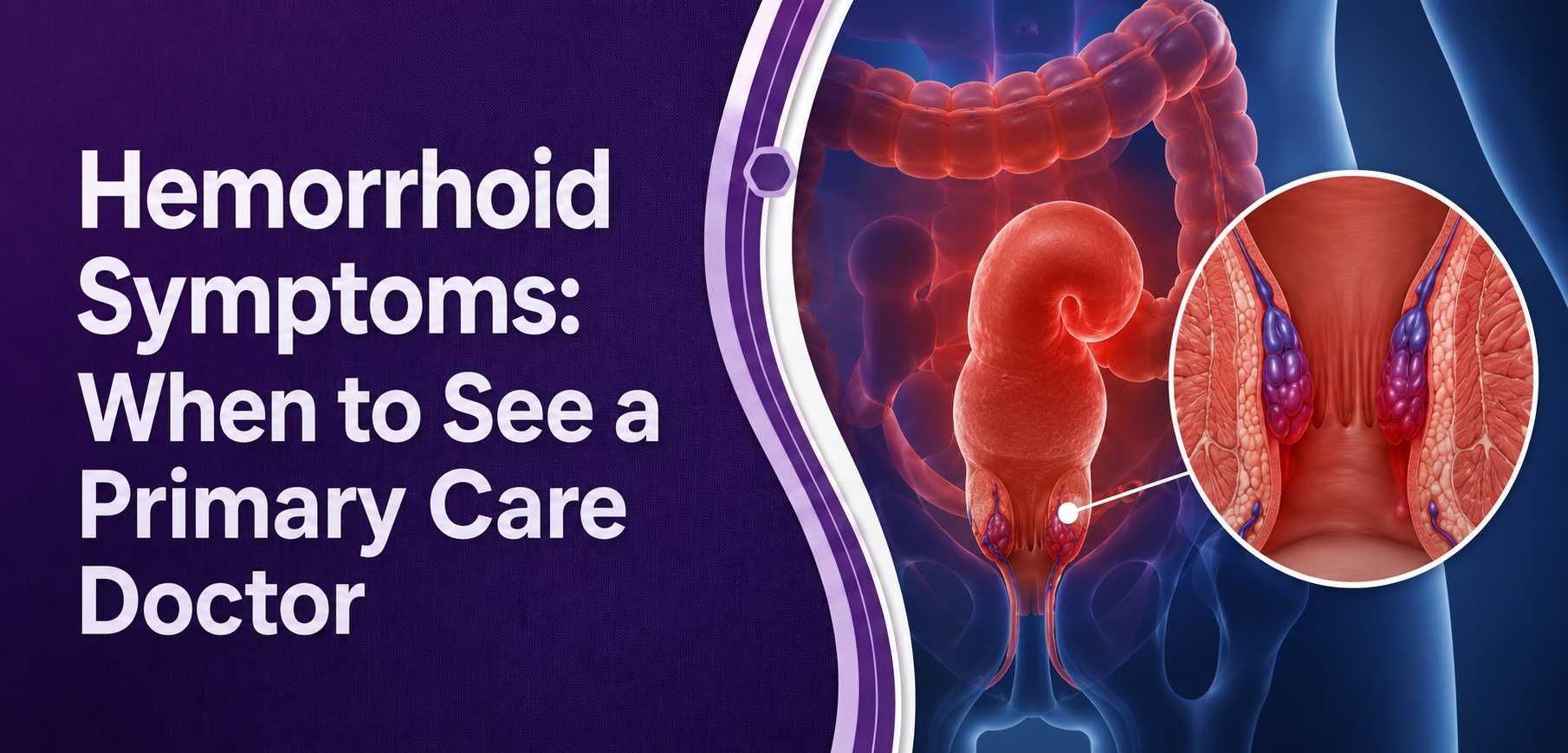
Hemorrhoids, sometimes called piles, are swollen veins in the anus or lower rectum. They may form inside the rectum or under the skin around the anus. Their location affects the symptoms they cause.
Internal hemorrhoids often cause painless, bright-red bleeding. External hemorrhoids may cause itching, swelling, tenderness, pain, or bleeding. A prolapsed internal hemorrhoid may extend through the anal opening and cause irritation.
Common Hemorrhoid Symptoms
Symptoms can range from mild irritation to sudden pain. Some people notice blood once, while others have repeated discomfort.
• Bright-red blood on toilet paper, stool, or in the toilet
• Itching or irritation around the anus
• Swelling or a tender lump near the anus
• Pain while sitting or passing stool
• A bulge through the anal opening
A hard, discolored lump with sudden, intense pain may point to a thrombosed external hemorrhoid. This happens when blood collects and forms a clot inside an external hemorrhoid.
Internal, External, and Thrombosed Hemorrhoids
Type | Location | Common signs |
Internal | Inside the rectum | Usually painless bleeding; possible prolapse |
External | Under the skin around the anus | Itching, swelling, soreness, pain, or bleeding |
Thrombosed | Clotted external hemorrhoid | Sudden severe pain and a firm, discolored lump |
Prolapsed | Internal hemorrhoid extending outside | Bulging, irritation, bleeding, or discomfort |
This table cannot confirm a diagnosis. Anal fissures, infections, polyps, and other digestive conditions may cause similar symptoms.
What Causes Hemorrhoids?
Hemorrhoids develop when pressure stretches and irritates veins in the lower rectum or anus. Repeated straining can increase that pressure and make swollen veins more likely.
Common contributors include constipation, ongoing diarrhea, prolonged toilet sitting, a low-fiber diet, pregnancy, excess body weight, anal intercourse, and heavy lifting. Risk also rises with age.
• Do not ignore the urge to have a bowel movement.
• Avoid holding your breath and pushing hard.
• Limit unnecessary time on the toilet.
• Get help for ongoing constipation or diarrhea.
Rectal Bleeding, Pain, or
Swelling That Won’t Improve?
A primary care doctor can evaluate your symptoms, identify the likely cause, recommend treatment, and arrange specialist care when needed.
Book an Appointment →Hemorrhoid Symptoms and When to See a Primary Care Doctor
Contact a primary care doctor for rectal bleeding, even when you suspect hemorrhoids. A clinician should consider other possible causes.
Schedule a visit when symptoms do not improve after about one week, keep returning, disturb sleep, or affect daily life. Changes in bowel habits or stool appearance also need attention.
Arrange a prompt evaluation for:
• Repeated or unexplained rectal bleeding
• A painful or enlarging anal lump
• Symptoms lasting longer than one week
• Ongoing constipation or diarrhea
• New changes in bowel habits
• Fever, vomiting, or abdominal pain
Seek emergency care for heavy rectal bleeding, severe pain with significant bleeding, dizziness, lightheadedness, or fainting. These signs may require urgent assessment.
What Happens During a Primary Care Visit?
Your doctor will ask when symptoms started, how often bleeding occurs, whether bowel habits changed, and what treatments you tried.
The examination may include an external check and digital rectal exam. Depending on your history, the clinician may recommend anoscopy, sigmoidoscopy, colon evaluation, tests, or a specialist referral.
Your doctor can also review medicines or conditions that affect constipation, diarrhea, or bleeding.
Home Care for Mild Hemorrhoid Symptoms
Many mild hemorrhoids improve with fiber, fluids, better toilet habits, and time. Pain and bleeding may last about a week or slightly longer.
• Soak in a warm sitz bath for 10 to 20 minutes.
• Drink enough fluids to support softer stools.
• Add fruits, vegetables, beans, and whole grains gradually.
• Stay active to encourage regular bowel movements.
• Clean gently and avoid aggressive wiping.
Short-term over-the-counter products may ease itching. Ask a clinician or pharmacist which product fits your health history, especially with ongoing bleeding.
A Simple Daily Fiber Calculation
Generally, the daily fiber range is about 25 to 38 grams for most adults. Increase fiber gradually because a sudden jump may cause gas or bloating, and drink enough fluid when adding fiber.
Three meals × about 7 grams = 21 grams |
Two snacks × about 3 grams = 6 grams |
Estimated daily total = 27 grams |
This example shows how fiber can add up. Ask your doctor for personal advice if you have digestive disease, fluid restrictions, or prior bowel blockage.
When to See a Primary Care Doctor for Hemorrhoid Symptoms
See a primary care doctor if hemorrhoid symptoms last longer than one week, repeatedly return, disturb sleep, or affect daily activities. Rectal bleeding should always be evaluated, even when you think hemorrhoids are the cause.
Schedule an appointment for:
Repeated or unexplained rectal bleeding
A painful, swollen, or enlarging anal lump
Persistent itching, swelling, or discomfort
Ongoing constipation or diarrhea
New changes in bowel habits or stool appearance
Abdominal pain, fever, or vomiting
Seek emergency care for heavy bleeding, fainting, dizziness, lightheadedness, or severe pain accompanied by significant bleeding.
How Primary Care Helps Treat Hemorrhoids?
Persistent, prolapsed, bleeding, or very painful hemorrhoids may need an office procedure. Options include rubber band ligation, infrared coagulation, electrocoagulation, or sclerotherapy.
Large external or severe prolapsed hemorrhoids may require surgery. The right option depends on type, severity, health, and response to home care.
A primary care doctor can identify the likely cause, start conservative treatment, and refer you to a gastroenterologist or colorectal specialist when advanced care becomes necessary.
How to Reduce Future Hemorrhoid Flare-Ups
Prevention focuses on making stools easier to pass and reducing pressure on rectal veins. Small, consistent changes often work better than extreme diet changes.
• Eat fiber-rich foods throughout the day.
• Drink fluids according to your healthcare needs.
• Exercise regularly and break up long sitting periods.
• Go when you feel the urge.
• Avoid straining and prolonged toilet sitting.
Why a Proper Diagnosis Matters
Clinicians evaluate hemorrhoid symptoms routinely. A respectful visit can reduce uncertainty and help you avoid the wrong treatment.
Most hemorrhoids do not cause serious complications. Still, ongoing blood loss can rarely cause anemia, while thrombosed or strangulated hemorrhoids may cause intense pain.
More importantly, do not automatically assume that rectal bleeding comes from hemorrhoids. Colorectal conditions, anal conditions, digestive inflammation, and other health problems may cause similar signs.
Your primary care doctor can assess your symptoms in the context of your age, health history, medicines, family history, and recent bowel changes. This complete evaluation supports a safer diagnosis.
Final Takeaway
Hemorrhoid symptoms can feel uncomfortable to discuss, but early evaluation can provide answers. Do not ignore rectal bleeding, persistent pain, or a new lump.
Book an appointment with Passion Health Advanced Primary Care for a confidential evaluation, personalized treatment plan, and guidance on preventing future flare-ups.
Our Primary Care Locations
FAQS
1. Can hemorrhoids heal on their own?
Mild hemorrhoids often improve with fiber, fluids, warm baths, and less straining. Seek care when symptoms continue beyond one week.
2. Is bright-red blood always from hemorrhoids?
No. Hemorrhoids commonly cause bright-red bleeding, but other digestive or colorectal conditions can also cause it.
3. Can a primary care doctor diagnose hemorrhoids?
Yes. A primary care doctor can examine you, begin treatment, and arrange specialist testing when needed.
4. What does a thrombosed hemorrhoid feel like?
It often causes sudden, severe pain with swelling and a firm, dark, or discolored lump near the anus.
5. When is hemorrhoid bleeding an emergency?
Seek emergency care for heavy bleeding, dizziness, lightheadedness, fainting, or severe pain with significant bleeding.

About the Author
Dr. Anantha Chentha is a board-certified internal medicine physician with extensive experience in primary care and chronic disease management. He provides comprehensive, patient-centered care with a focus on prevention, accurate diagnosis, and long-term health management.
View Provider Profile →Related Post

Probiotics for Gut Health: What They Really Do Inside Your BodyProbiotics for Gut Health: What They Really Do Inside Your Body
Book an Appointment Call Us +1 214 666 6259 Can Probiotics Really Improve Gut Health? Probiotics for gut health may support digestion, bowel balance, and healthy gut bacteria. Many people
Hantavirus Survival Rate: Symptoms, Stages & Recovery ChancesHantavirus Survival Rate: Symptoms, Stages & Recovery Chances
To Book an Appointment Call Us +1 214 666 6259 Hantavirus Symptoms After Rodent Exposure Many people first hear about hantavirus after reports of severe lung infections linked to exposure
Buspirone Side Effects: Is It Safe for Anxiety?Buspirone Side Effects: Is It Safe for Anxiety?
Medically reviewed by Dr. Anantha Chentha, MD, FACP, CHCQM-PHY ADV Internal Medicine Book an Appointment Call Us +1 (214) 666-6259 Key Takeaways Dementia describes cognitive symptoms, not one specific disease.