Chagas Disease Symptoms and Kissing Bug Bite
A suspicious kissing bug bite, swelling near one eye, fever, rash, or unusual fatigue may need more than simple bite care. Click any section below to move directly to that part of the article.
Worried about a kissing bug bite?
Passion Health Advanced Primary Care can review symptoms, exposure history, and testing options.
Chagas Disease Symptoms and Kissing Bug Bite: When to See Primary Care
A tiny bite near the face can feel like a simple skin irritation. Then the news mentions “kissing bugs,” Chagas disease, and silent infection. Suddenly, that small bite starts to feel more serious.
Recent reports about a locally acquired Chagas disease case in San Diego have raised public concern. The case appeared during routine blood donor screening, and the person had no symptoms.
Health experts still describe the risk as low, but the story reminds patients to understand exposure, symptoms, and testing.
Chagas disease symptoms and kissing bug bite concerns need a calm medical review, not panic. Passion Health Advanced Primary Care can help patients discuss a suspicious bite, fever, swelling, travel history, and testing needs.
Patients looking for primary care in Frisco, Irving, Plano, Prosper, Aubrey, Flower Mound, Ennis, Kaufman, Kemp, McKinney, TX
News Update: Local Chagas Case Raises Awareness
San Diego County recently reported its first locally acquired Chagas disease case. The infection came to attention through blood donation screening, not through obvious illness. That detail matters because Chagas disease can stay quiet in the body for years.
Kissing bugs, also called triatomine bugs, can carry the parasite Trypanosoma cruzi. The infection does not usually spread from the bite alone. The bigger risk comes when infected bug droppings enter the body through the bite area, eyes, mouth, or broken skin.
This news does not mean every bug bite needs emergency care. However, it does show why patients should take unusual swelling, fever after outdoor exposure, or a suspicious insect inside the home seriously.
What Is Chagas Disease?
Chagas disease is a parasitic infection. The parasite can affect the body in two main stages: an early stage and a long-term stage.
During the early stage, some people notice mild symptoms. Others feel completely normal. That makes the infection hard to recognize without the right history and testing.
The long-term stage can become more serious for some patients. Over time, Chagas disease may affect the heart or digestive system. A person may not connect those later problems to a bite from many years ago.
How Does a Kissing Bug Bite Become a Risk?
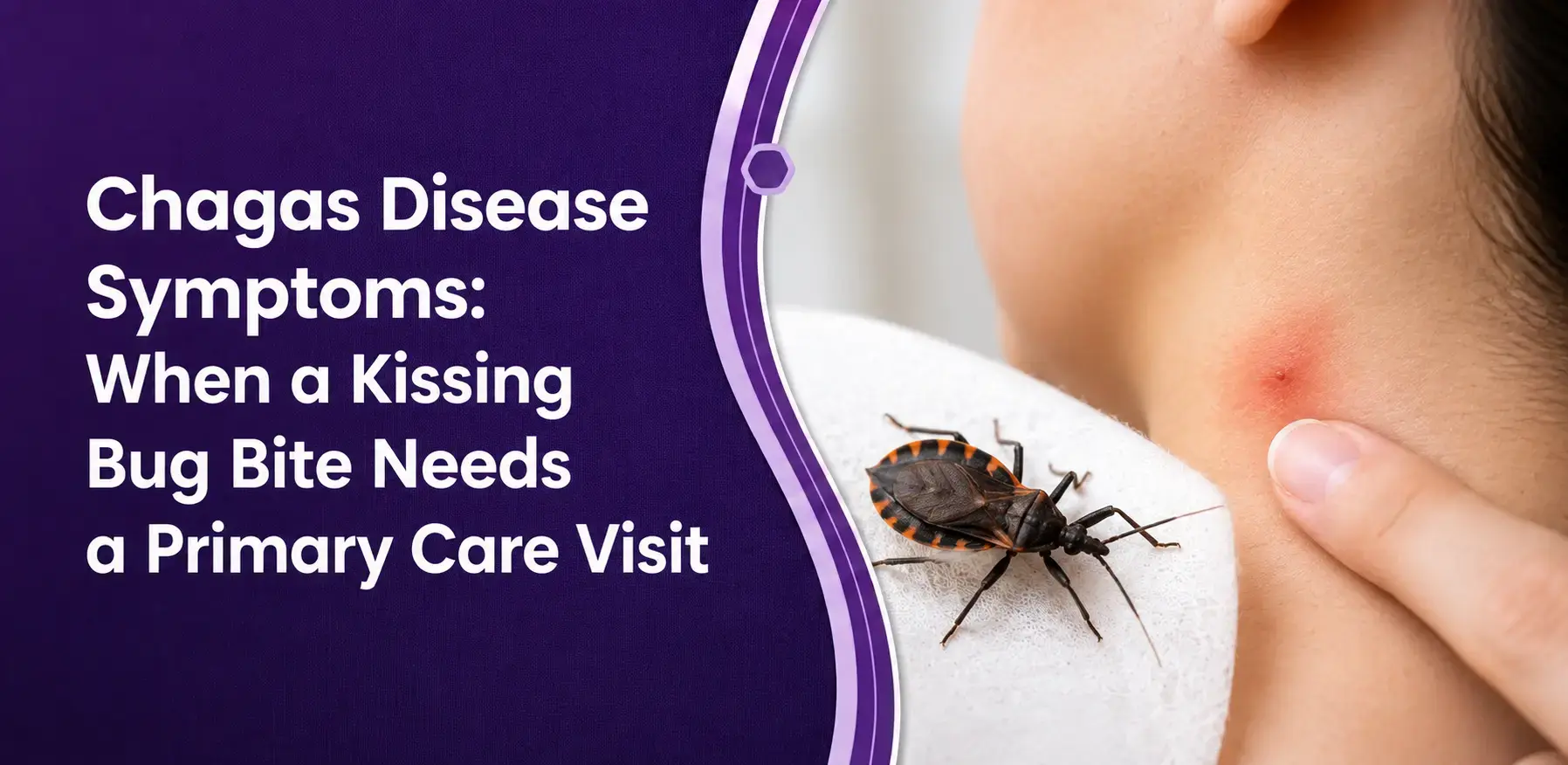
Kissing bugs often feed at night. They may bite near the lips, eyes, or face, which explains the name. The bite may look like a small red bump, similar to many other insect bites.
The parasite usually spreads when infected bug feces reach the skin and enter the body. Scratching can move the parasite into the bite wound. Touching the eye or mouth after contact with the bug can also increase risk.
This is why the full story matters. A provider may ask where the bite happened, whether the bug appeared indoors, whether travel occurred, and whether symptoms followed.
Early Symptoms Patients Should Watch
Early Chagas disease may not look dramatic. It can feel like a common viral illness or a simple skin reaction.
Possible symptoms include:
Tiredness
Body aches
Headache
Skin rash
Swelling near the bite
Swelling around one eye
Loss of appetite
Nausea
Vomiting
Diarrhea
A swollen eyelid after possible kissing bug exposure needs attention. Doctors sometimes call this eye swelling Romaña’s sign when it is linked to Chagas disease.
Chagas Disease Symptoms and Kissing Bug Bite: When It Needs a Doctor
Most bug bites improve with basic care. Still, certain warning signs deserve a medical visit.
See a primary care provider if a bite comes with fever, body aches, eye swelling, rash, or unusual fatigue. Also schedule a visit if you found a kissing bug inside the home, recently stayed in a rural area, camped outdoors, or traveled to a region where Chagas disease occurs more often.
Heart-related symptoms need prompt review. Irregular heartbeat, chest discomfort, shortness of breath, dizziness, or fainting should not be ignored. Digestive symptoms such as trouble swallowing, ongoing constipation, or stomach pain also deserve medical attention when risk factors exist.
A visit does not mean you have Chagas disease. It means your symptoms and exposure history need a careful check.
How Primary Care Helps With Testing
Primary care plays an important role because many patients start with vague symptoms. A provider can review the bite, ask about travel, check the skin, listen to the heart, and decide whether lab testing makes sense.
Testing depends on the timing of the illness. Early infection may need one type of blood evaluation. Long-term infection often needs antibody testing. Sometimes more than one test helps confirm the diagnosis.
Primary care can also rule out other common causes. Fever, rash, fatigue, and stomach symptoms can come from many conditions. A careful review helps avoid wrong assumptions.
Why Early Diagnosis Matters
Early care gives patients better options. Treatment works best when the infection gets identified early. Doctors may use antiparasitic medicine for certain patients, especially during early infection.
Long-term Chagas disease needs a different approach. If heart or digestive problems appear, the provider may recommend additional testing, monitoring, or referral to a specialist.
Do not try to diagnose Chagas disease from a photo. Many insect bites look similar. A medical provider can connect the bite, symptoms, location, and risk factors.
Chagas Disease Treatment Options
Chagas disease treatment depends on the stage of infection, age, symptoms, and overall health. A doctor first confirms the diagnosis with blood testing, then decides whether antiparasitic medicine, symptom care, or specialist referral makes sense.
Antiparasitic Medicines
The two main medicines used for Chagas disease are benznidazole and nifurtimox. These medicines target the parasite that causes the infection.
Treatment works best during the early, acute stage. Mayo Clinic explains that Chagas disease treatment aims to kill the parasite and ease symptoms, and medicines such as benznidazole and nifurtimox may help during the acute phase.
Treatment for Chronic Chagas Disease
Chronic Chagas disease needs a careful plan. Some patients may still benefit from antiparasitic treatment, but others may need care focused on heart or digestive problems.
A provider may recommend heart testing if symptoms include irregular heartbeat, chest discomfort, shortness of breath, fainting, or dizziness. Digestive symptoms such as trouble swallowing, stomach pain, or ongoing constipation may also need further evaluation.
Symptom-Based Care
Not every patient has the same symptoms. Treatment may include care for fever, fatigue, rash, swelling, stomach symptoms, or heart rhythm concerns. If the heart or digestive system shows signs of damage, the provider may refer the patient to a cardiologist, gastroenterologist, or infectious disease specialist.
Worried About a Kissing Bug Bite?
Passion Health Advanced Primary Care can review your symptoms, exposure history, and testing options.
How to Lower Kissing Bug Risk at Home
Simple prevention steps can reduce exposure.
Seal cracks around doors and windows.
Repair torn screens.
Clear brush, wood piles, and clutter near the home.
Avoid contact with rodent nests.
Keep pet sleeping areas clean.
Use caution when handling unknown insects
Place a suspected kissing bug in a sealed container for identification when safe.
Contact local public health or pest control for guidance if bugs appear indoors.
These steps help patients who live near wooded, rural, or outdoor areas. They also help families who spend time camping, gardening, or working outside.
Final Takeaway
Chagas disease can sound frightening because it may stay silent and later affect the heart or digestive system. Still, fear should not guide your next step. A proper medical review gives clarity.
If you noticed a suspicious insect bite, swelling near one eye, fever after outdoor exposure, or concern about Chagas disease, Passion Health Advanced Primary Care can help review your symptoms and testing options.
Our Primary Care Locations
FAQs
1. What is Chagas disease?
Chagas disease is an infection caused by a parasite called Trypanosoma cruzi. It can spread through infected kissing bugs, also called triatomine bugs.
2. Can a kissing bug bite cause Chagas disease?
The bite itself usually does not spread the infection. The risk happens when infected bug droppings enter the body through the bite, eyes, mouth, or broken skin.
3. What are early Chagas disease symptoms?
Early symptoms may include fever, tiredness, body aches, rash, headache, nausea, diarrhea, swollen glands, or swelling near one eye.
4. Can Chagas disease stay silent?
Yes. Some people have no symptoms for years. In some cases, long-term infection may affect the heart or digestive system.
5. When should I see a doctor after a kissing bug bite?
See a primary care provider if you notice fever, swelling near one eye, rash, unusual fatigue, or heart rhythm changes, or if you find a kissing bug inside your home.