
Key Takeaways
- Recognize sudden changes: NAION symptoms often begin without pain.
- Act immediately: New vision loss needs urgent assessment.
- Avoid self-diagnosis: Several eye conditions share similar symptoms.
- Review health conditions: Diabetes, hypertension, and sleep apnea matter.
- Discuss medications: Let your clinicians guide treatment changes.
- Keep follow-up appointments: Specialist care and visual support can help you adapt.
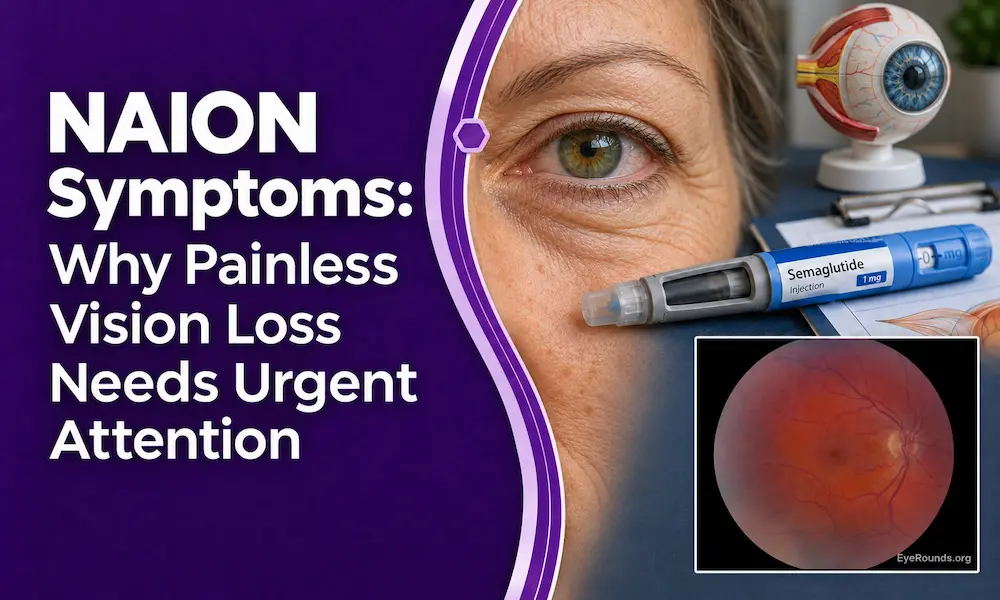
Waking up with a dark shadow or blurred vision in one eye can feel frightening. Although several conditions cause these changes, NAION symptoms deserve immediate attention—even when your eye feels comfortable.
NAION affects the optic nerve, which carries visual information to your brain. Understanding the warning signs can help you recognize when to seek care.
Important warning: Seek immediate eye care for sudden vision loss, a new blind spot, or rapidly worsening sight. If you cannot reach an eye specialist promptly, go to an emergency department. Do not wait for pain or a routine appointment.
What Is NAION?
Nonarteritic anterior ischemic optic neuropathy, or NAION, occurs when inadequate blood flow damages the front of the optic nerve. It commonly affects adults over 50, although younger people can also develop it.
People sometimes call NAION an “eye stroke.” However, that informal term also describes other conditions, including retinal artery blockages. An eye specialist must identify the actual cause of sudden vision loss.
Importantly, researchers still do not fully understand what triggers each NAION episode. Optic nerve anatomy and several health conditions can contribute.
What Are the Most Common NAION Symptoms?
NAION symptoms usually include sudden, painless vision loss in one eye, blurred or dim sight, missing areas of vision, and changes in color perception. Some people first notice the problem upon waking. Nevertheless, symptoms alone cannot confirm the diagnosis. [FDA]
Sudden Vision Loss Without Pain
Vision may change abruptly while the eye feels normal. Consequently, some people underestimate the problem or assume they simply need new glasses.
The amount of vision loss varies. For example, someone might still read individual letters while struggling to see part of the surrounding scene.
A Dark Shadow or Missing Visual Area
NAION can affect the upper or lower half of the visual field. As a result, part of a face, doorway, or page may seem missing.
Blurred Vision and Faded Colors
Objects may look dim, cloudy, or less sharp. Additionally, colors may appear less vivid.
Vision change | What someone might notice |
Sudden loss of sharpness | Familiar print becomes difficult to read. |
Missing visual field | The upper or lower part of a scene disappears. |
Dim or cloudy sight | One eye seems darker than the other. |
Altered color perception | Colors look faded or different. |
These descriptions explain possible NAION symptoms; they do not provide a home diagnostic test.
When Do Vision Changes Need Emergency Evaluation?
Any sudden loss of sight needs immediate assessment. Other urgent conditions, including retinal problems, can resemble NAION.
Furthermore, tell the clinician about a new headache, scalp tenderness, jaw pain while chewing, fever, or unexplained weight loss. These symptoms can raise concern for giant cell arteritis, an inflammatory condition that can threaten vision.
Doctors must distinguish arteritic optic nerve damage from NAION because treatment differs substantially. Therefore, never assume that painless vision loss can safely wait. [glaucomatoday.com]
What Causes NAION, and Who Faces Greater Risk?
NAION risk factors include optic nerve structure and conditions that affect circulation.
A Crowded Optic Nerve
Some people naturally have limited space within the optic nerve head. Specialists call this a “disc at risk.” Swelling within this crowded area may contribute to further damage.
Diabetes and Cardiovascular Risk Factors
Diabetes, hypertension, high cholesterol, and smoking can accompany NAION. However, having one of these factors does not mean you will develop it.
Obstructive Sleep Apnea
Sleep apnea repeatedly interrupts breathing during sleep. It also has an association with NAION. Discuss loud snoring, witnessed breathing pauses, and daytime sleepiness with your clinician. [American Academy of Ophthalmology]
Can Blood Pressure That Drops Too Low Contribute to NAION?
Possibly, although researchers continue to debate the role of nighttime blood pressure changes.
Blood pressure normally falls during sleep. However, an excessive reduction could potentially compromise optic nerve circulation in susceptible individuals. Studies have produced differing findings, so doctors cannot assume that bedtime medication caused an episode.
Likewise, a case report about “overtreated hypertension” cannot establish that blood pressure treatment generally causes NAION.
Instead, ask your clinician to review:
Your home blood pressure readings.
Medication doses and timing.
Dizziness, fainting, or unusually low readings.
Whether 24-hour blood pressure monitoring would help.
Do not stop blood pressure medicine or change its timing yourself. Your care team must balance eye concerns with protection against stroke, heart disease, and kidney damage.
Which Medicines Have an Association With NAION?
Give your eye specialist a complete medication list, including nonprescription products.
Some reports associate NAION with PDE-5 inhibitors, such as sildenafil. Nevertheless, an association does not prove that a particular medicine caused an individual episode.
What Does the FDA Say About GLP-1 Medicines?
On November 9, 2026, the FDA announced required warnings about a potential increased risk of rare NAION with GLP-1 medicines. Its communication includes semaglutide products and tirzepatide products, including Mounjaro and Zepbound.
If NAION symptoms develop during treatment, seek immediate assessment. Afterward, discuss medication decisions with your prescriber. The FDA advises clinicians to consider discontinuation when NAION develops unless treatment benefits clearly outweigh the risk.
How Do Eye Specialists Diagnose NAION?
A specialist reviews the onset of symptoms, medical history, and eye examination findings. In particular, the clinician looks for optic nerve swelling.
Optic disc swelling is an examination finding, rather than something you can reliably identify in a mirror.
Additional NAION diagnostic tools may include
Visual field testing: Maps missing areas of sight.
Optical coherence tomography: Measures optic nerve and retinal structures.
Blood tests: Help evaluate concern for giant cell arteritis.
Imaging: Helps investigate unusual findings or alternative diagnoses.
However, not every patient needs every test. Your symptoms and examination guide the evaluation.
Can NAION Treatment Restore Vision?
Currently, no medical or surgical NAION treatment reliably reverses established damage. Some people experience improvement over time; others have lasting visual limitations.
Consequently, follow-up focuses on associated health conditions, medication review, and practical support. Low-vision services can help with reading, lighting, magnification, and daily activities.
NAION can also affect the other eye later. Specialists describe this as sequential involvement. However, it does not happen to everyone, and managing risk factors cannot guarantee prevention.
How Passion Health Can Help Manage Associated Risk Factors
Primary care complements specialist eye care by addressing diabetes, blood pressure, cholesterol, and sleep concerns. Additionally, a medication review can help your clinicians coordinate an individualized plan.
For people in Irving, Plano, Frisco, Flower Mound, and surrounding North Texas communities, ongoing follow-up offers an opportunity to discuss readings, symptoms, and treatment questions.
Schedule a visit with Passion Health for ongoing health management. For sudden vision loss, seek immediate eye care.
Final Takeaway
NAION symptoms can appear suddenly and without pain. Seek immediate eye care for new vision loss, blurred sight, or missing areas of vision. For ongoing management of blood pressure, diabetes, and other associated health conditions, connect with Passion Health.
Medical disclaimer: This article provides general education and does not replace professional medical advice, diagnosis, or treatment. Sudden vision loss requires immediate medical assessment. Consult your prescriber before stopping or changing any medication.
Schedule your Passion Health visit to review your blood pressure, diabetes, and medications.
Sudden vision loss needs immediate eye care.
Frequently Asked Questions
1. What are the first NAION symptoms?
The first change often involves sudden, painless vision loss in one eye. You may notice blurred vision, dimness, or a missing visual area, sometimes upon waking.
2. Can NAION happen without pain?
Yes. Painless vision loss is typical. Therefore, the absence of discomfort should never delay an urgent eye assessment.
3. Can blood pressure medicine cause NAION?
Excessively low blood pressure may contribute in some circumstances. However, evidence does not support blaming every episode on treatment. Ask your clinician to review your medication plan.
4. Does NAION always cause complete blindness?
No. Severity varies, and some people retain useful central vision. Nevertheless, lasting visual field loss can affect everyday activities.
5. Can NAION affect both eyes?
Yes, the other eye can develop NAION later. Any new vision change requires immediate assessment, even after a previous diagnosis.
References

About the Author
Dr. Anantha Chentha is a board-certified internal medicine physician with extensive experience in primary care and chronic disease management. He provides comprehensive, patient-centered care with a focus on prevention, accurate diagnosis, and long-term health management.
View Provider Profile →