Key Takeaways
- High TSH while taking levothyroxine may mean your body is not getting enough thyroid hormone.
- Missed doses or an inconsistent medication schedule can raise TSH levels.
- Food may reduce absorption, so take levothyroxine exactly as your healthcare professional directs.
- Calcium, iron, antacids and some medications can interfere with levothyroxine absorption.
- Weight changes, pregnancy, digestive conditions or a new manufacturer may affect thyroid levels.
- Never change your dose yourself; review your TSH, free T4, symptoms and medication routine with your clinician.
Why Is Your TSH Still High Despite Taking Thyroid Medication?
You take levothyroxine every day, yet your latest thyroid test still shows a high TSH. That result can feel confusing, especially when you expect treatment to keep your thyroid levels within your target range.
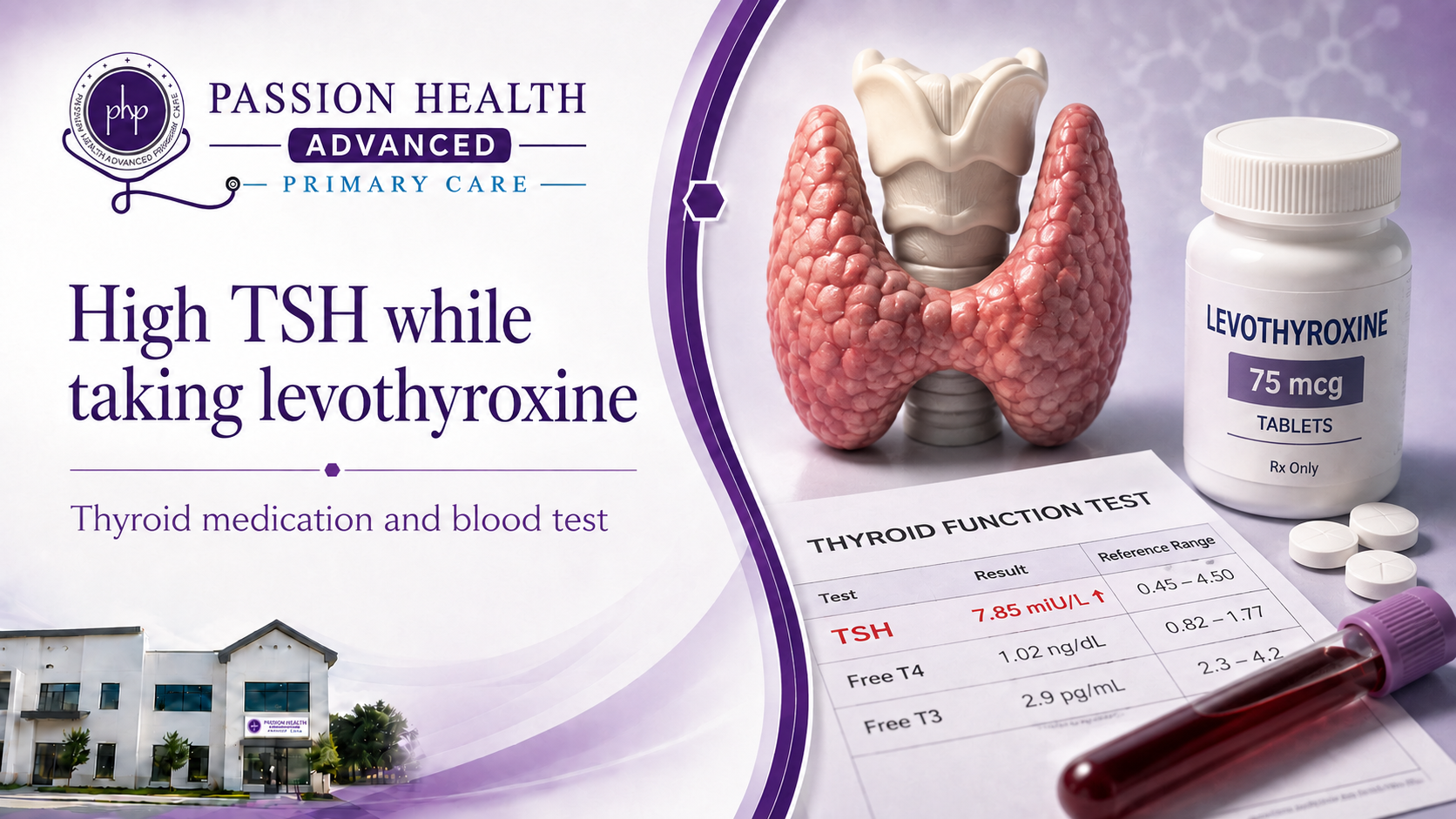
High TSH while taking levothyroxine can happen for several reasons. Your dose, medication timing, missed tablets, food, supplements, other medicines, absorption changes, pregnancy, and changing thyroid needs can all influence your test results.
A single TSH result does not tell the whole story. Your healthcare professional may also review free T4, symptoms, medication habits, medical history, and recent health changes before recommending the next step.
What Does a High TSH Level Actually Mean?
Understanding the TSH–Thyroid Connection
The pituitary gland produces thyroid-stimulating hormone, or TSH. TSH tells the thyroid gland how much thyroid hormone the body needs.
When thyroid hormone levels run too low, the pituitary gland often releases more TSH. As a result, a high TSH level may suggest that your body needs more thyroid hormone activity.
Where Does Levothyroxine Fit In?
Levothyroxine provides a synthetic form of thyroxine, also called T4. Doctors commonly prescribe it to replace thyroid hormone in people with hypothyroidism.
When your treatment matches your body’s needs, TSH usually moves toward your individual target range. However, several factors can prevent that from happening.
Why Can TSH Stay High While Taking Levothyroxine?
The answer often involves more than simply increasing the dose.
Here are some of the most important possibilities to review.
1. Your Levothyroxine Dose May No Longer Match Your Needs
Thyroid Needs Can Change Over Time
A dose that worked well several months or years ago may not always remain appropriate.
Several factors can influence levothyroxine requirements, including:
Body-weight changes
Age
Pregnancy
Changes in thyroid function
New medications
Digestive conditions
Other medical conditions
Your healthcare professional can compare current and previous thyroid tests before deciding whether a dose adjustment makes sense.
Avoid Changing the Dose Yourself
Taking extra levothyroxine to lower TSH quickly can create another problem.
Too much thyroid hormone may cause symptoms such as a racing heartbeat, shakiness, sweating, sleep difficulty, or other complications. Always discuss dose changes with your healthcare professional.
2. Missing Levothyroxine Doses Can Raise TSH
Consistency Matters
Levothyroxine works best when you take it consistently. Frequently missing tablets can reduce the amount of thyroid hormone available to your body.
Even an inconsistent schedule can make thyroid test results harder to interpret.
Be Open About Missed Doses
Tell your healthcare professional if you recently missed several doses.
This information helps them distinguish between a dose problem and a medication-routine problem before changing your prescription.
3. Taking Levothyroxine With Food Can Affect Absorption
Timing Can Make a Difference
Food can reduce how much levothyroxine your digestive system absorbs.
Many people take levothyroxine on an empty stomach and wait about 30 to 60 minutes before breakfast, according to their clinician’s instructions.
Build a Consistent Routine
Try to take your tablet the same way each day.
For example:
Levothyroxine → Wait as directed → Breakfast |
Changing between an empty-stomach routine and taking the tablet with meals can contribute to inconsistent thyroid levels.
4. Calcium, Iron, and Other Products Can Interfere
Supplements May Affect Your Thyroid Medicine
Some common supplements and medications can interfere with levothyroxine absorption.
Important examples include:
Product | Why It Matters |
Calcium supplements | May reduce levothyroxine absorption |
Iron supplements | Can bind with levothyroxine |
Some antacids | May affect absorption |
Certain cholesterol medicines | Can interfere with thyroid medication |
Some stomach-acid medicines | May change levothyroxine absorption |
Multivitamins | May contain calcium or iron |
Many clinicians recommend separating levothyroxine from certain interacting products by several hours.
Review Everything You Take
Bring a complete list of medications and supplements to your thyroid visit.
Include vitamins, minerals, antacids, prescription medicines, over-the-counter products, and herbal products. Your healthcare professional or pharmacist can help you plan appropriate timing.
5. A Levothyroxine Brand or Manufacturer Change May Matter
Check Your Pharmacy Refill
Have you noticed a different tablet color, shape, imprint, brand, or manufacturer after your latest refill?
Different levothyroxine products contain the same active hormone, but formulation differences may affect consistency for some people.
Mention the Change at Your Appointment
Tell your healthcare professional if your pharmacy switched the product.
They may decide to monitor your thyroid levels after the change, especially if your TSH changed unexpectedly.
6. Your Digestive System May Not Absorb Levothyroxine Well
Absorption Problems Can Affect Treatment
Sometimes a person takes levothyroxine correctly but still develops high TSH while taking levothyroxine.
Digestive conditions may affect how well the body absorbs the medication. Food timing, medication interactions, supplements, and gastrointestinal disorders can all play a role.
Look Beyond the Dose
Increasing levothyroxine does not always solve the underlying issue.
Your healthcare professional may first review your routine, medications, supplements, symptoms, and medical history before deciding whether the dose truly needs to change.
7. Pregnancy Can Change Thyroid Hormone Needs
Thyroid Needs Often Increase During Pregnancy
Pregnancy can increase the body’s thyroid hormone requirements.
People who already take levothyroxine may need closer TSH and free T4 monitoring during pregnancy.
Contact Your Healthcare Professional Early
Tell your healthcare professional if you become pregnant or plan a pregnancy.
Early thyroid monitoring can help guide treatment decisions throughout pregnancy. Do not stop or change levothyroxine on your own.
Could High TSH Cause Symptoms?
Some people with elevated TSH and low thyroid hormone activity notice symptoms, while others may notice very little.
Possible hypothyroidism symptoms include:
Persistent fatigue
Feeling unusually cold
Constipation
Dry skin
Difficulty concentrating
Muscle aches
Weakness
Weight changes
Hair changes
Menstrual changes
These symptoms do not confirm that your levothyroxine dose needs adjustment.
Many other conditions can cause similar symptoms, so blood tests and a clinical evaluation remain important.
High TSH Despite Levothyroxine: What Should You Check First?
Use this simple thyroid medication review checklist before your next appointment:
Medication
What levothyroxine dose do you currently take?
Have you missed any tablets?
Has your pharmacy changed the manufacturer?
Timing
Do you take levothyroxine at the same time each day?
Do you take it before eating?
How long do you wait before breakfast?
Supplements and Medicines
Do you take calcium?
Do you take iron?
Do you use antacids?
Did you recently start a new prescription?
Health Changes
Have you gained or lost significant weight?
Have your symptoms changed?
Are you pregnant or planning a pregnancy?
Have you developed digestive problems?
These details can help your healthcare professional understand why TSH changed.
When Should You Recheck TSH After Changing Levothyroxine?
Give Your Body Time to Respond
Levothyroxine does not change TSH immediately.
Healthcare professionals often recheck TSH around 6 to 8 weeks after a levothyroxine dose adjustment in adults with primary hypothyroidism.
Testing too soon may not show the medication’s full effect.
After Your Levels Stabilize
Once you reach a stable dose, your clinician may check thyroid levels periodically.
They may recommend earlier testing when symptoms change, medications change, pregnancy begins, or another health condition affects thyroid management.
Should You Increase Levothyroxine Because Your TSH Is High?
Not automatically.
High TSH while taking levothyroxine can result from an insufficient dose, but it can also result from missed medication, food interactions, supplements, poor absorption, or other changes.
A healthcare professional may review the following:
TSH + Free T4 + Symptoms + Medication Timing + Interactions + Health History |
This combination gives a clearer picture than TSH alone.
Do not increase, decrease, stop, or restart levothyroxine without discussing the change with the clinician managing your thyroid condition.
When Should You Schedule a Thyroid Follow-Up?
Consider scheduling a review if:
Your TSH remains above your target range
Your hypothyroidism symptoms return
Your levothyroxine dose recently changed
Your pharmacy changed the manufacturer
You frequently miss doses
You started calcium, iron, or another medicine
You continue to feel tired despite treatment
Your weight changes significantly
You become pregnant
Your thyroid results changed unexpectedly
Early evaluation can help identify the cause instead of relying on guesswork.
Take Control of Your Thyroid Health
High TSH while taking levothyroxine does not always point to one simple cause. Medication timing, missed doses, food, supplements, drug interactions, absorption changes, pregnancy, and changing thyroid hormone needs can all influence your results.
A careful thyroid review can help determine whether you need a medication adjustment, repeat laboratory testing, a change in medication timing, or further evaluation.
Concerned about your TSH or thyroid medication?
Book an appointment with Passion Health Advanced Primary Care today. Our primary care team can review your TSH and free T4 results, symptoms, medications, supplements, and treatment routine and help you develop a personalized next-step plan.
FAQs
1. Why is my TSH high even though I take levothyroxine?
Several factors can contribute, including an insufficient dose, missed tablets, food, medication interactions, supplements, absorption problems, or changing thyroid hormone needs.
2. Does high TSH mean I need more levothyroxine?
Not always. Your clinician should review your TSH, free T4, medication routine, symptoms, and possible interactions before changing the dose.
3. How long should I wait to eat after taking levothyroxine?
Many people take levothyroxine on an empty stomach and wait about 30 to 60 minutes before breakfast. Follow the specific instructions from your healthcare professional.
4. Can calcium and iron affect levothyroxine?
Yes. Calcium and iron can reduce levothyroxine absorption when you take them too close together. Ask your clinician or pharmacist how to separate your medications safely.
5. When should TSH be checked after changing a levothyroxine dose?
Clinicians commonly check TSH about 6 to 8 weeks after a dose adjustment in adults with primary hypothyroidism.
6. Can changing levothyroxine manufacturers affect TSH?
A product change may affect thyroid levels in some people. Tell your healthcare professional if your pharmacy changes the brand or manufacturer.

About the Author
Dr. Anantha Chentha is a board-certified internal medicine physician with extensive experience in primary care and chronic disease management. He provides comprehensive, patient-centered care with a focus on prevention, accurate diagnosis, and long-term health management.
View Provider Profile →