
Key Takeaways
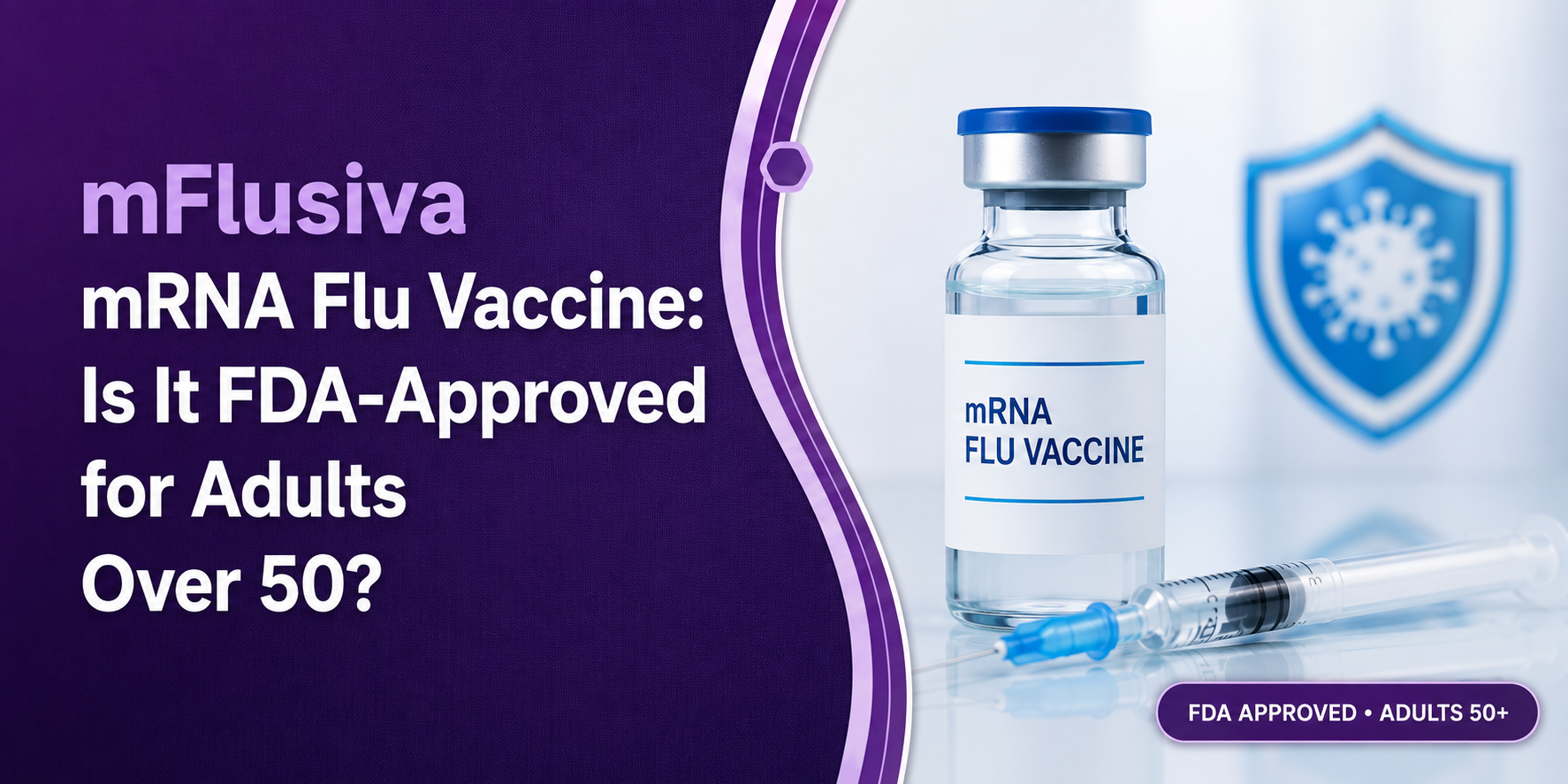
- The FDA approved mFlusiva on August 5, 2026, for adults aged 50 and older.
- Adults ages 50–64 received traditional approval; adults 65 and older received accelerated approval.
- In a Phase 3 trial, mFlusiva showed 26.6% greater relative efficacy than a standard-dose flu vaccine.
- Common reactions include injection-site pain, fatigue, headache, muscle aches, joint pain, and chills.
- Adults 65 and older should discuss CDC-preferred flu vaccine options with their healthcare provider.
mFlusiva mRNA Flu Vaccine: Effectiveness and Side Effects
Influenza can cause more than a few uncomfortable days at home. Adults over 50 face a greater chance of complications, especially when diabetes, heart disease, asthma, or another chronic condition affects their health. Therefore, annual vaccination remains an important part of preventive care.
The FDA’s approval of the mFlusiva mRNA flu vaccine gives older adults another seasonal vaccination option. Moderna developed this first-in-class flu shot using technology similar to that used in some COVID-19 vaccines. However, the approval pathway, clinical results and current vaccine recommendations require careful explanation.
What Is mFlusiva?
The mFlusiva mRNA flu vaccine, also called mRNA-1010, helps prevent influenza disease caused by the strains represented in the seasonal formula. The FDA authorized it for people aged 50 and older on August 5, 2026.
Unlike traditional egg-based flu vaccines, mFlusiva uses messenger RNA. This mRNA gives cells temporary instructions to produce harmless copies of influenza hemagglutinin proteins.
In response, the immune system learns to recognize those proteins and prepares antibodies that can respond after future exposure.
The vaccine cannot cause influenza because its mRNA does not contain a whole flu virus. Additionally, the mRNA breaks down after delivering its instructions.
Healthcare professionals give mFlusiva as one 0.38 mL injection into a muscle once during each flu season. The formula contains no egg protein, preservatives, or antibiotics, according to the FDA prescribing information.
Quick Facts About mFlusiva
Feature | Details |
Vaccine type | Trivalent mRNA seasonal influenza vaccine |
Manufacturer | Moderna |
FDA approval date | August 5, 2026 |
Eligible age | 50 years and older |
Dose | One 0.38 mL intramuscular injection |
Frequency | Once each flu season |
Flu components | Two influenza A strains and one influenza B strain |
Egg protein | None |
Preservatives or antibiotics | None |
Is mFlusiva FDA-approved for adults over 50?
Yes. However, the FDA used two approval pathways for different age groups.
Approval for adults ages 50–64
The FDA granted traditional approval for adults ages 50–64. Clinical efficacy data from a large Phase 3 trial supported this decision.
In this age group, researchers found fewer cases of laboratory-confirmed influenza-like illness among mFlusiva recipients than among people who received a standard-dose inactivated vaccine. Consequently, the FDA concluded that the benefits outweighed the known risks.
Accelerated approval for adults 65 and older
Adults 65 and older received accelerated FDA approval based mainly on immune-response data compared with a high-dose flu vaccine. Moderna must complete a Phase 4 study to confirm clinical benefit and support continued approval for this age group, according to the FDA approval letter.
How Does the Vaccine Work?
The shot contains three mRNA sequences. Each sequence provides instructions for producing the hemagglutinin protein from one targeted influenza strain.
After vaccination, cells briefly create harmless copies of these proteins. The immune system then recognizes them as foreign and develops a protective response. If the vaccinated person later encounters a matching flu virus, the immune system can respond more quickly.
However, influenza viruses change through a process called antigenic drift. For that reason, health authorities review circulating strains and update seasonal vaccine formulas when needed. Protection also depends on how closely the selected vaccine strains match the viruses circulating during a particular season.
Which Flu Strains Does mFlusiva Cover for 2026–2027?
The FDA prescribing information lists three components for the 2026–2027 formula:
A/Missouri/11/2025 (H1N1)pdm09-like virus
A/Michigan/105/2025, an A/Darwin/1415/2025 (H3N2)-like virus
B/Pennsylvania/19/2025, a B/Pennsylvania/14/2025-like virus
Together, these components target two influenza A subtypes and one influenza B lineage. Still, the formula may change in future seasons. Patients should confirm that they receive the current seasonal formulation.
mFlusiva mRNA Flu Vaccine: Effectiveness and Side Effects
How effective was it in clinical trials?
In a Phase 3 trial of more than 40,000 adults aged 50 and older, laboratory-confirmed flu-like illness occurred in 2.0% of mFlusiva recipients versus 2.8% of standard-dose vaccine recipients.
This equals 26.6% greater relative efficacy—not 26.6% absolute protection. Relative efficacy reached 26.1% for adults ages 50–64 and 27.4% for adults 65 and older; however, the FDA based accelerated approval for the older group mainly on immune-response data.
What did the study find in adults 65 and older?
A second study evaluated an earlier quadrivalent Moderna mRNA flu vaccine made with the same manufacturing process. Researchers compared it with a high-dose inactivated vaccine in 2,991 adults aged 65 and older.
The mRNA vaccine produced stronger measured antibody responses against the included strains. However, antibody levels do not always guarantee better protection against illness. Therefore, the required post-approval study must confirm the clinical benefit.
What are the common side effects?
The most frequently reported reactions included:
Pain at the injection site
Fatigue
Muscle pain
Joint pain
Chills
Underarm swelling or tenderness
Nausea or vomiting
Injection-site swelling or redness
Most reactions remained mild or moderate and lasted a median of approximately two days. Furthermore, adults aged 65 and older generally reported these reactions less often than adults aged 50–64.
Were serious adverse events reported?
Serious events occurred at similar rates in the mFlusiva and standard-vaccine groups, with no clear pattern linking them to mFlusiva.
Although rare, severe allergic reactions can occur. Seek emergency care for trouble breathing, facial or throat swelling, hives, or severe dizziness.
How Does mFlusiva Compare With Traditional Flu Vaccines?
The mFlusiva mRNA flu vaccine uses genetic instructions rather than growing influenza viruses in eggs or cell culture. Its manufacturing platform may also allow researchers to update targeted strains more quickly. Nevertheless, potential manufacturing speed does not automatically make one vaccine the best option for every patient.
Feature | mFlusiva | Traditional flu vaccines |
Technology | mRNA | Inactivated, recombinant, adjuvanted, or live attenuated |
Contains whole flu virus | No | Depends on vaccine type |
Egg-free | Yes | Some, but not all |
Approved ages | 50 and older | Varies by product |
Seasonal dose | One injection | Usually one dose for adults |
Strain coverage | Trivalent | Trivalent for current U.S. seasonal vaccines |
For adults 65 and older, the CDC prefers high-dose, recombinant or adjuvanted flu vaccines. If unavailable, another age-appropriate option may be used. Review the latest CDC flu vaccine guidance with your healthcare provider.
Who Can Receive mFlusiva?
mFlusiva offers an egg-free flu vaccine option for adults aged 50 and older.
Vaccine choice depends on age, allergies, health conditions, previous reactions, and current recommendations.
Adults under 50 should choose another age-appropriate flu vaccine.
Who Should Not Receive mFlusiva?
Do not receive mFlusiva if a previous dose or any ingredient caused a severe allergic reaction.
Tell your healthcare provider about previous vaccine reactions or Guillain-Barré syndrome.
Mention a weakened immune system or immunosuppressive medication.
Report any moderate or severe current illness.
Discuss any history of fainting after injections.
Tell your provider if you are pregnant, planning pregnancy, or breastfeeding.
Your provider may delay vaccination during a moderate or severe acute illness.
Can Pregnant or Breastfeeding Adults Receive It?
Pregnancy safety data for mFlusiva remain limited.
Researchers do not know whether its components enter breast milk or affect a breastfed infant.
The FDA approves mFlusiva only for adults aged 50 and older.
Pregnant or breastfeeding adults should discuss appropriate flu vaccine options with their healthcare provider.
What Are the Vaccine’s Limitations?
The mFlusiva mRNA flu vaccine may not protect everyone and only targets included influenza strains—not COVID-19, RSV, colds, or other infections. Data also remain limited for immunocompromised and very frail older adults.
Why Primary Care Guidance Matters
Choosing a flu vaccine requires more than checking age. A primary care provider reviews health conditions, medications, allergies, immune status, and previous vaccine reactions to identify an appropriate option.
How Primary Care Helps
A primary care provider can:
Compare age-appropriate flu vaccine options.
Apply current CDC recommendations to individual health needs.
Review chronic conditions that may increase the risk of flu complications.
Discuss previous allergic reactions or Guillain-Barré syndrome.
Check for medication or immune-system concerns.
Recommend the best vaccination timing.
Review other vaccines, including pneumonia, shingles, COVID-19, and RSV.
The mFlusiva mRNA flu vaccine expands the available options, but personalized primary care guidance can help patients make an informed vaccination decision.
Final Takeaway
The FDA-approved mFlusiva mRNA flu vaccine offers adults 50 and older a new egg-free option, while further research must confirm its clinical benefit for adults 65 and older.
Patients should consider current CDC recommendations alongside age, health history, and vaccine availability. A primary care consultation can help each person choose an appropriate flu vaccine and prepare for the coming season.
Protect your health before flu season begins.
Schedule an appointment at Passion Health Advanced Primary Care to discuss influenza vaccination and other preventive-care recommendations based on your age and medical history.
Frequently Asked Questions
1. Is mFlusiva the first FDA-approved mRNA flu vaccine?
Yes. The FDA approved mFlusiva on August 5, 2026, making it the first mRNA-based seasonal influenza vaccine approved in the United States.
2. Is it fully approved for adults over 65?
The FDA granted accelerated approval for adults 65 and older based on immune-response evidence. Moderna must complete a confirmatory study to verify clinical benefit in this group.
3. Is it more effective than a standard flu vaccine?
In one Phase 3 trial, mFlusiva produced 26.6% fewer laboratory-confirmed influenza-like illness cases relative to a standard-dose comparator. Results may vary by season and circulating strain.
4. Can the vaccine cause influenza?
No. It does not contain a whole influenza virus and cannot cause flu.
5. Does it contain egg protein?
No. The FDA prescribing information identifies mFlusiva as an egg-free product.
6. When should adults get a seasonal flu vaccine?
The CDC generally identifies September and October as suitable vaccination months for most adults who need one seasonal dose. However, timing may depend on age, pregnancy, travel plans, and the ability to return later.

About the Author
Dr. Anantha Chentha is a board-certified internal medicine physician with extensive experience in primary care and chronic disease management. He provides comprehensive, patient-centered care with a focus on prevention, accurate diagnosis, and long-term health management.
View Provider Profile →