Key Takeaways
A clinician may briefly recommend clear liquids during a flare-up.
Low-fiber foods can support the gradual return to solid meals.
Long-term eating usually emphasizes fiber, fluids, and balanced nutrition.
Nuts, seeds, and popcorn do not trigger flare-ups in most people.
Worsening pain, fever, vomiting, or inability to drink requires medical care.
Diverticulitis Diet Foods Change With Each Stage
Diverticulitis can turn an ordinary meal into a difficult decision. Lower abdominal pain, fever, nausea, constipation, or diarrhea may leave you wondering what your digestive system can safely handle. However, the right food choices depend on whether symptoms remain active, have started improving, or have fully resolved.
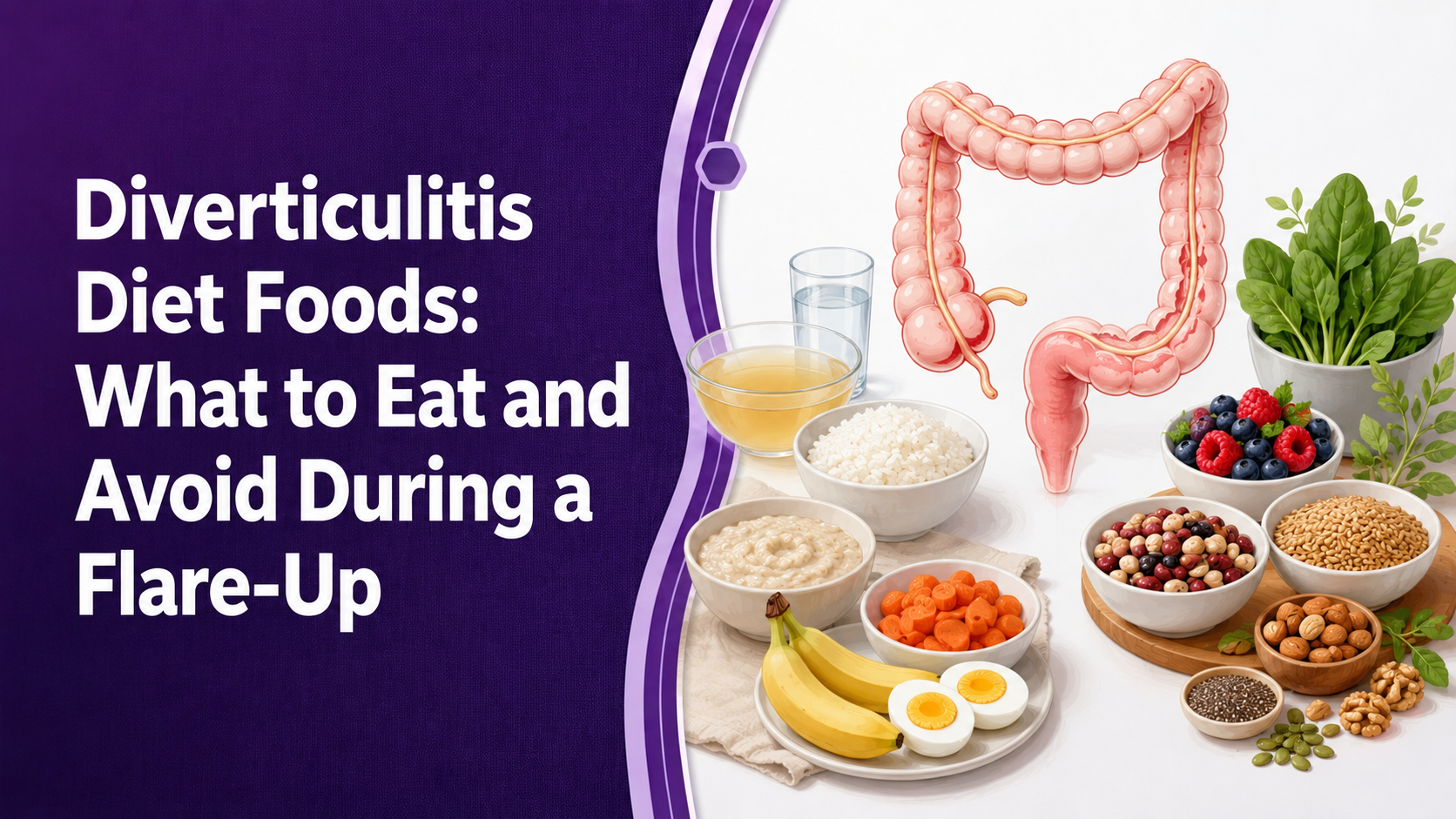
Diverticulitis diet foods generally follow three stages: clear liquids during an acute flare-up, low-fiber foods during early recovery, and fiber-rich foods after healing. A healthcare professional should guide each transition because symptoms, medical history, medications, and nutritional needs vary.
Why Does Diet Change During Diverticulitis?
Diverticulitis develops when small pouches in the colon become inflamed or infected. During a flare-up, the colon may need temporary rest. Therefore, a clinician may recommend reducing fiber and solid foods for a short time.
As symptoms improve, nutritional goals change. The body needs calories, protein, fluids, vitamins, and minerals to recover. Consequently, patients often add low-fiber solid foods before gradually returning to their usual diet.
After recovery, fiber may help stool move through the colon and reduce pressure. Fruits, vegetables, beans, and whole grains can also support heart health, blood sugar management, and healthy weight goals. Still, adding too much fiber quickly may cause gas and bloating.
Can Primary Care Help With Diverticulitis Symptoms?
Yes. Primary care often provides the first evaluation for persistent abdominal pain, fever, nausea, constipation, or diarrhea. Since several medical conditions can produce similar symptoms, your provider will not assume that every episode comes from diverticulitis.
During your appointment, the provider may ask:
Where does the pain occur?
When did the symptoms begin?
Does the pain remain constant?
Do you have fever, nausea, or vomiting?
Have your bowel habits changed?
Have you experienced diverticulitis before?
Which medicines and supplements do you use?
Your provider may also examine your abdomen and order bloodwork, urine testing, or imaging when necessary. This evaluation can help distinguish diverticulitis from appendicitis, kidney stones, urinary infections, bowel obstruction, and other digestive problems.
Diverticulitis Diet Foods During an Active Flare-Up
A healthcare professional may recommend a clear-liquid diet for mild diverticulitis symptoms. However, this eating plan should generally last only a few days because it cannot provide complete nutrition.
Clear-liquid options may include:
Water
Clear chicken, beef, or vegetable broth
Pulp-free apple, cranberry, or grape juice
Plain gelatin
Ice chips
Ice pops without fruit pieces
Tea or coffee without milk or cream
Drink small amounts regularly if your clinician allows fluids. Contact a healthcare professional if you cannot keep liquids down, develop a fever, or notice worsening abdominal pain. These symptoms may signal a need for medication, testing, imaging, or hospital treatment.
Do not diagnose severe abdominal pain or begin a prolonged liquid diet on your own. A medical evaluation can identify whether diverticulitis or another condition has caused the symptoms.
How Does Primary Care Choose the Right Diet Stage?
You may wonder, “Should I drink clear liquids, or can I eat solid food?” Your symptoms, examination findings, medical history, and recovery progress determine the answer.
A primary care provider can help decide whether you need:
A brief clear-liquid diet
A temporary low-fiber eating plan
A gradual return to solid foods
A long-term high-fiber diet
Additional testing or specialist care
Your provider may also consider diabetes, kidney disease, pregnancy, food allergies, medication use, and other health conditions. Therefore, an online food list cannot replace personalized guidance.
Low-Fiber Foods During Early Recovery
Once pain and other symptoms begin improving, your clinician may recommend low-fiber foods. These choices produce less stool and may feel easier to digest while the colon recovers.
Suitable diverticulitis diet foods during early recovery may include:
White bread, white rice, or refined pasta
Eggs, tofu, fish, or tender poultry
Smooth peanut or nut butter
Low-fat milk, yogurt, or mild cheese, if tolerated
Applesauce or canned peaches without skins
Bananas or melon
Well-cooked carrots, potatoes, or green beans
Low-fiber cereals
Strained vegetable or pulp-free fruit juice
Start with small meals instead of one large plate. For example, pair an egg with white toast or serve tender chicken with white rice and cooked carrots. In addition, drink enough water unless your provider has restricted your fluid intake.
Keep track of foods that repeatedly cause discomfort. This record can help your provider identify patterns and adjust the recovery plan.
Foods to Limit During Active Symptoms
During a flare-up or early recovery, a clinician may temporarily recommend limiting foods that contain large amounts of fiber. Examples include:
Raw vegetables
Fruit peels and skins
Beans and lentils
Bran cereals
Whole grains
Dried fruit
Nuts, seeds, and popcorn
This temporary restriction does not mean these foods cause diverticulitis. Instead, they can increase stool volume while an inflamed colon needs time to recover. Many of these foods become valuable parts of a healthy eating pattern after symptoms resolve.
How to Add Fiber Back Safely
Your healthcare professional can tell you when to move from low-fiber choices toward regular meals. Add one fiber-rich item at a time and increase portions gradually. This approach can reduce sudden gas or bloating and help identify your individual tolerance.
Long-term diverticulitis diet foods may include:
Oatmeal and whole-grain bread
Brown rice, barley, and quinoa
Beans, chickpeas, and lentils
Apples and pears with their skins
Berries, oranges, and avocados
Broccoli, leafy greens, and carrots
Almonds, pistachios, flaxseed, and chia seeds
Fiber needs water to work effectively. Therefore, drink fluids throughout the day unless a healthcare professional advises otherwise. Regular physical activity can also promote bowel regularity and support overall digestive health.
If you cannot obtain enough fiber through food, ask your provider whether a supplement may help. Do not start large amounts suddenly because they may worsen gas, bloating, or abdominal discomfort.
Do Nuts, Seeds, and Popcorn Cause Diverticulitis?
Current evidence does not show that nuts, seeds, or popcorn cause diverticulitis in most people.
These foods provide fiber that may support bowel regularity after recovery.
During a flare-up, a clinician may temporarily limit them as part of a low-fiber diet.
Track any food that repeatedly causes discomfort and discuss it with your provider.
What Happens at a Primary Care Follow-Up?
A follow-up visit focuses on recovery and prevention. Your provider can review your progress, answer diet questions, and help you develop realistic habits.
The plan may include:
Adding fiber gradually
Drinking adequate water
Increasing physical activity
Managing constipation
Maintaining a healthy weight
Limiting smoking and heavy alcohol use
Reviewing medicines that may affect the colon
Tracking recurring abdominal symptoms
Primary care can also support related conditions, including diabetes, high cholesterol, high blood pressure, and weight concerns. A balanced, fiber-rich diet may support several of these health goals after the flare-up resolves.
When Does Primary Care Recommend Specialist Care?
Primary care can evaluate many mild or stable digestive concerns. However, your provider may refer you to a gastroenterologist when you experience:
Repeated diverticulitis flare-ups
Symptoms that do not improve
Unexplained weight loss
Rectal bleeding
Persistent bowel changes
Suspected complications
Questions about colonoscopy
Uncertainty about the diagnosis
Your primary care provider can coordinate the referral and share relevant medical records with the specialist. This process helps you receive appropriate care without unnecessary delays.
When Should You Seek Urgent Medical Care?
Contact a healthcare professional when lower abdominal pain remains constant, worsens, or occurs with fever, nausea, vomiting, constipation, diarrhea, or significant stool changes.
Seek immediate care for:
Severe or rapidly worsening abdominal pain
A hard or swollen abdomen
Repeated vomiting
Inability to keep liquids down
Blood in the stool
Fainting, confusion, or severe weakness
High fever with abdominal pain
Diverticulitis can sometimes cause an abscess, blockage, fistula, colon perforation, or peritonitis. Diet changes cannot treat these complications. Early evaluation helps identify serious problems and separates diverticulitis from other abdominal conditions.
Final Takeaway
Talk With a Primary Care Provider About Your Diet
Online food lists offer general guidance, but they cannot account for your symptoms, medications, medical history, or nutritional needs.
The best diverticulitis diet foods depend on your stage of illness and overall health. A clinician may recommend clear liquids briefly during a flare-up, low-fiber meals during early recovery, and fiber-rich foods after symptoms resolve.
People with diabetes, kidney disease, pregnancy, food allergies, or another digestive condition may need a personalized eating plan.
However, diet should never replace medical care for severe or worsening abdominal pain. Seek guidance, follow a gradual eating plan, stay hydrated, and report warning signs promptly.
If abdominal pain or bowel changes concern you
schedule an appointment at Passion Health Advanced Primary Care. A provider can evaluate your symptoms and explain which foods are best for a diverticulitis die
Frequently Asked Questions
1. What foods are best during a diverticulitis flare-up?
A clinician may briefly recommend clear liquids before introducing low-fiber foods as symptoms improve. The correct eating plan depends on symptom severity and overall health.
2. How long should I follow a clear-liquid diet?
A clear-liquid diet should generally last only a few days because it lacks essential nutrients. Follow your healthcare professional’s instructions and call if symptoms do not improve.
3. Can I eat eggs with diverticulitis?
Eggs provide protein with little fiber, so many people can tolerate them during early recovery. Choose a simple preparation and avoid excessive grease.
4. When can I resume high-fiber foods?
Your clinician may recommend adding fiber gradually after the pain and inflammation improve. Introduce one food at a time, drink enough water, and monitor your symptoms.
5. Can diet cure diverticulitis?
Diet can support recovery and long-term colon health, but it cannot cure diverticulitis or replace necessary treatment. Persistent pain, fever, vomiting, or worsening symptoms require prompt medical care.

About the Author
Dr. Anantha Chentha is a board-certified internal medicine physician with extensive experience in primary care and chronic disease management. He provides comprehensive, patient-centered care with a focus on prevention, accurate diagnosis, and long-term health management.
View Provider Profile →