
Key Takeaways
- Kidney stones may cause no pain or noticeable symptoms.
- A CT scan can identify a kidney stone's size and location.
- Small, non-obstructing stones may only need regular monitoring.
- Stone size, location, growth, and kidney health guide treatment decisions.
- Proper hydration and dietary changes may help prevent future stones.
- Consult a primary care provider to review results and plan follow-up care.
You had a CT scan for something else. Then one line in the report caught your eye: kidney stone. You feel fine, but you’re wondering whether you need treatment or another scan.
If you have a kidney stone found on CT with no symptoms, ask the clinician who ordered the scan or your primary care doctor to review the report.
Some stones that stay in the kidney without blocking urine flow can be monitored.
If the report mentions possible blockage, contact the ordering clinician promptly, even if you feel well.
Important warning: Seek emergency care if you develop fever or chills with new side or back pain, cannot urinate, have severe pain, or keep vomiting and cannot keep fluids down.
A blocked urinary tract with signs of infection needs emergency treatment. www.niddk.nih.gov
What does a nonobstructing kidney stone mean on a CT scan?
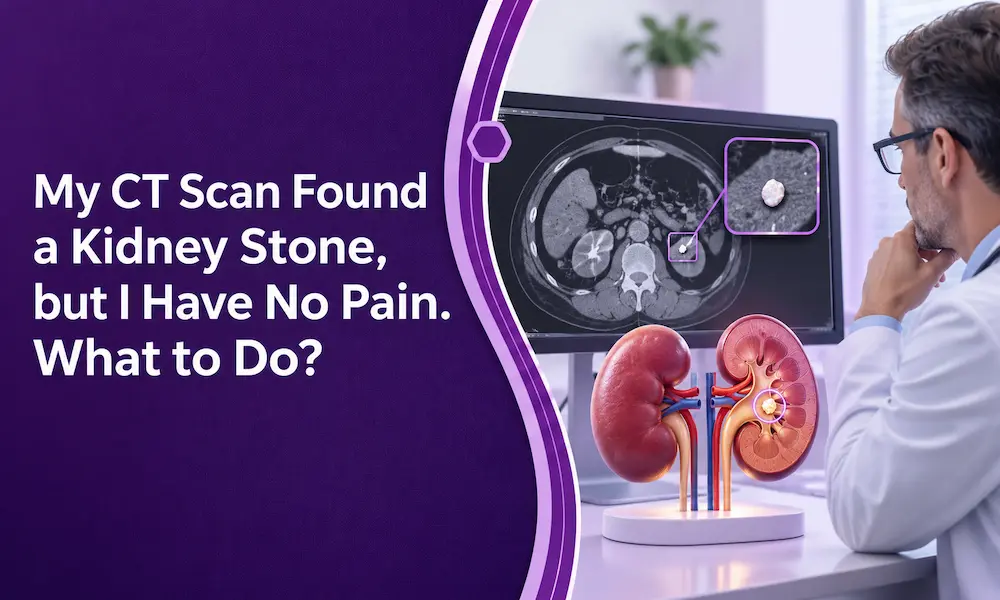
A nonobstructing kidney stone means the scan shows a stone in the kidney without evidence that it blocks urine flow at the time of imaging. An incidental kidney stone means the scan found it while looking for something else. Your report can describe the same stone both ways.
For example, your report might say, “Small nonobstructing stone in the right kidney.” That line tells your doctor where the stone sits and whether the radiologist saw signs of blockage. The full report may also list the size in millimeters or mention other findings that affect follow-up.
Wording in your CT report | What it means for your next conversation |
Nonobstructing renal calculus | The scan shows a stone in the kidney without signs of blocked urine flow. Ask whether monitoring makes sense for you. |
Ureteral stone | The stone sits in the tube that carries urine from the kidney to the bladder. Ask whether the scan shows blockage and how soon you need follow-up. |
Hydronephrosis | The kidney’s urine-collecting area looks enlarged. Contact the ordering clinician promptly to ask whether the scan suggests blockage or another cause. |
Multiple calculi | The scan shows more than one stone. Ask about their size, location, and whether older scans show any change. |
The radiologist’s impression section usually summarizes the main findings. Bring the entire report so your clinician can read that summary alongside the detailed findings.
What will my primary care doctor check if I feel fine?
When you bring in a report showing a kidney stone found on CT with no symptoms, your primary care doctor can put the result in context.
They’ll look at the size and location, check the report for signs of blockage, and ask whether you’ve had kidney stones, urinary infections, or kidney problems before.
Mention any blood in your urine, burning when you pee, or recent side pain, even if it went away.
Depending on what the report and your history show, your clinician may review earlier scans, order a urine test, or check kidney function with a blood test.
If an older scan shows the same stone, comparing the reports may help establish whether it has changed.
Your doctor can then explain whether you need monitoring, additional testing, or a urology referral. www.niddk.nih.gov
Bring these to your visit if you have them.
Your complete CT report and access to the images.
Previous kidney imaging or stone test results.
A list of medications, vitamins, and supplements.
Notes on prior stones, urinary infections, or recent symptoms.
How Can Passion Health Help After a CT Scan Finds a Kidney Stone?
At Passion Health, a primary care clinician can review your CT report with you and explain terms like nonobstructing kidney stone. Bring the full report and any prior scans you can access. Your clinician can consider the stone’s size and location alongside your medical history. Then discuss whether monitoring, additional tests, or a urology referral makes sense.
Can I monitor a painless kidney stone, or do I need a urologist?
If the CT shows a stone inside the kidney without blockage and you feel well, your clinician may recommend monitoring.
A monitoring plan should answer three questions: Who will follow the stone? When should I check in? What symptoms should prompt me to seek care sooner? Your clinician may recommend repeat imaging based on the stone’s location, size, and whether it changes over time.
Your doctor may recommend a urology referral if the stone grows, the scan suggests blockage, or you develop symptoms or infections that may relate to the stone.
If you have one functioning kidney or known kidney disease, tell the clinician reviewing your report so they can factor that into the timing and plan.
What can I do while waiting for my follow-up?
Start with the scan report. Check whether it mentions a nonobstructing ureteral stone or hydronephrosis, and look for any follow-up instructions from the ordering clinician.
If you can’t tell whether the report describes blockage, call their office and ask how soon they want to review it with you.
Next, write down one or two questions you want answered. For example, “Does the stone affect urine flow?” or “If I need repeat imaging, who will arrange it?”
If you want to discuss prevention, ask whether your stone history or other health conditions affect your fluid or diet advice. For more background, read Passion Health’s guide to kidney stones in young adults.
Final takeaway: Leave your visit with a clear follow-up plan
If a CT finds a kidney stone and you have no symptoms, the most useful question is whether it affects urine flow and what follow-up you need. Bring the report to your visit and ask who will track the finding, whether you need another scan, and when to call if symptoms change
A painless stone can turn up on a scan you had for another reason.
Nonobstructing describes urine flow at the time of imaging.
Size and location help guide follow-up. Bring the full report and any prior scans you can access.
Primary care can review the findings and decide whether tests, monitoring, or a referral make sense.
Possible blockage deserves prompt review, even when you feel well.
Fever or chills with side pain, inability to urinate, severe pain, or vomiting that prevents you from keeping fluids down needs emergency evaluation.
Have a CT report you’d like help understanding?
Book a primary care visit with Passion Health in North Texas to review the finding and make a follow-up plan.
Frequently asked questions
1. Can a kidney stone stay in the kidney without causing pain?
Yes. A stone can sit in the kidney and cause no symptoms. Your clinician can review where it sits, whether the scan shows blockage, and whether follow-up imaging makes sense.
2. Does every nonobstructing kidney stone need removal?
No. Clinicians can monitor some stones that cause no symptoms or blockage. Growth, new symptoms, infection, or obstruction can change the plan.
3. Will I need another CT scan?
Your clinician will decide whether another scan would help answer a specific question, such as whether the stone has grown or affects urine flow. If you need imaging, ask whether an ultrasound could answer that question in your case.
4. Can the CT report tell me what type of stone I have?
Imaging can provide clues. If you pass a stone and collect it, your clinician may send it for analysis to identify what it contains. That information can help guide prevention advice.

About the Author
Dr. Anantha Chentha is a board-certified internal medicine physician with extensive experience in primary care and chronic disease management. He provides comprehensive, patient-centered care with a focus on prevention, accurate diagnosis, and long-term health management.
View Provider Profile →