Could Your Daily Coffee Habit Affect Your Heart?
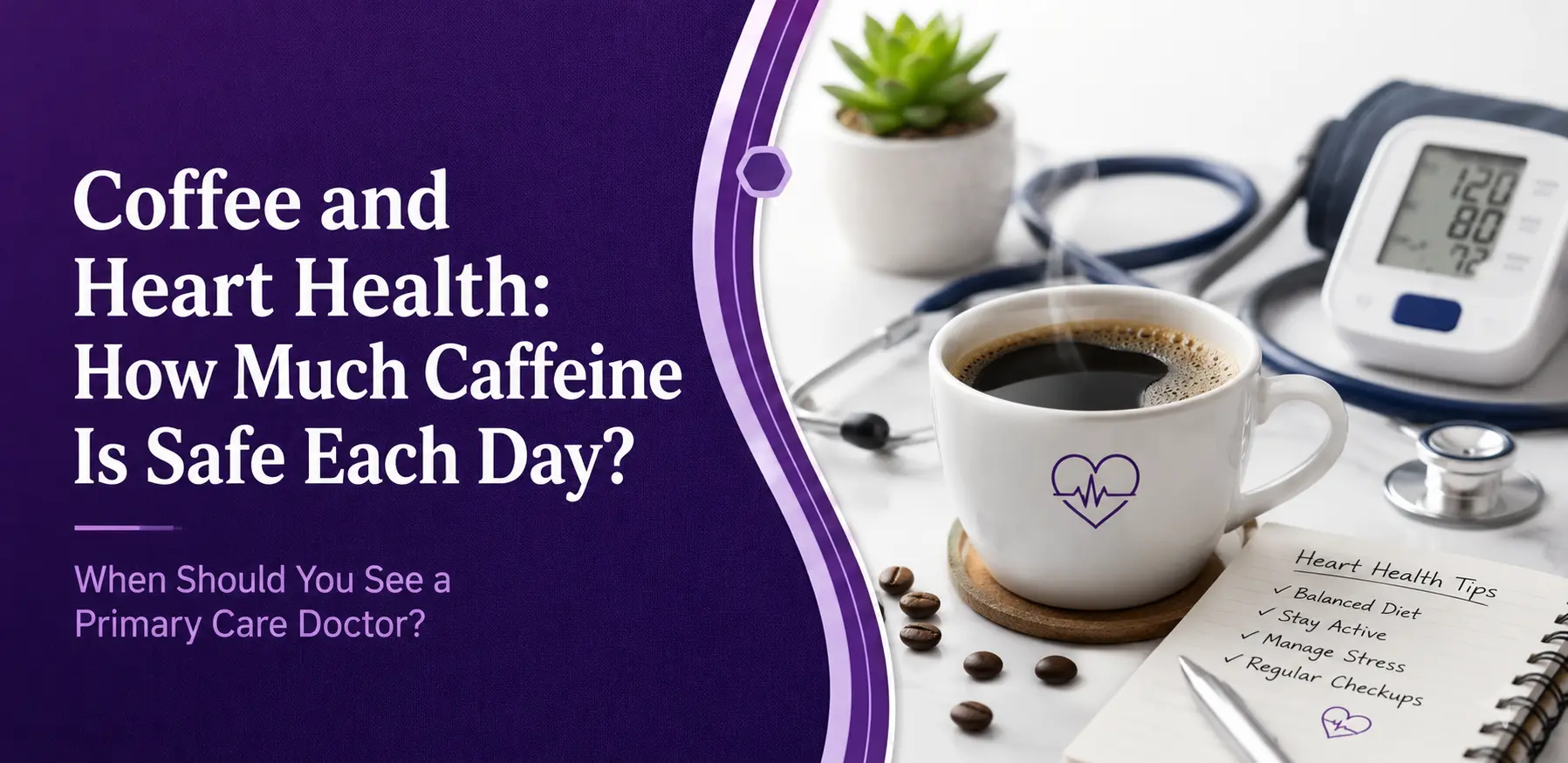
Coffee can support alertness and enjoyment, but it can also affect heart rate, blood pressure, sleep, and anxiety. The right amount depends on serving size, health history, and personal sensitivity.
The American Heart Association reports that most adults can consume up to 400 milligrams of caffeine daily. This may equal three to five 8-ounce cups of regular coffee, although large café drinks can contain much more caffeine.
A general caffeine limit does not replace personal medical advice.
Have coffee-related palpitations, dizziness, blood pressure concerns, or sleep problems? Book an appointment at Passion Health Advanced Primary Care for a personalized evaluation.
Patients looking for primary care in Frisco, Irving, Plano, Prosper, Anna, Aubrey, Flower Mound, Ennis, Kaufman, Kemp, McKinney, TX
Key Takeaways
- Most adults can tolerate up to 400 mg of caffeine daily, but individual sensitivity varies.
- Moderate coffee intake has links with a lower risk of coronary heart disease, stroke, and heart failure. However, current research does not prove that coffee prevents these conditions.
- Energy drinks and concentrated caffeine products do not have the same safety profile as regular coffee.
- Contact a primary care doctor when coffee repeatedly causes heart palpitations, dizziness, poor sleep, or higher blood pressure.
How Does Coffee Affect the Heart?
Caffeine blocks adenosine receptors and stimulates the nervous system. It may temporarily increase alertness, heart rate, and blood pressure, especially in people who rarely consume caffeine.
Coffee also contains compounds other than caffeine. Therefore, researchers cannot always separate caffeine’s effects from the effects of the complete drink.
A 2023 cardiovascular review found associations between moderate coffee intake and lower cardiovascular mortality and cardiovascular risk. However, most coffee studies use observational data, which cannot prove that coffee prevents heart disease.
How Much Coffee Is Generally Safe?
The AHA’s 2026 scientific statement supports up to 400 mg of caffeine daily for most adults. It describes this amount as roughly three to five standard 8-ounce cups of regular caffeinated coffee.
However, cup size matters. A large café drink may contain several espresso shots, so counting only the number of cups can underestimate total caffeine intake.
The AHA also reports links between two to four daily cups and lower risks of heart disease, stroke, and heart failure. More than four cups may not provide the same heart-failure benefit and may increase risk for some people.
How to Calculate Your Daily Caffeine Intake
Use this simple formula:
Caffeine per serving × number of servings = total daily caffeine |
For example, two cups of coffee containing 95 mg each provide:
95 mg × 2 = 190 mg of caffeine |
Now consider someone who drinks one coffee containing 180 mg and one energy drink containing 160 mg:
180 mg + 160 mg = 340 mg of caffeine |
Although 340 mg falls below the general 400 mg limit, an energy drink may affect the heart differently. Energy products can deliver caffeine quickly and may contain other stimulants.
Always check the product label and serving size. A container may hold more than one serving, which can quickly increase the total amount.
Coffee, Blood Pressure, and Heart Rate
Caffeine can briefly raise blood pressure and heart rate. Some people notice only a mild change, while others develop a strong response after a small amount.
Track your blood pressure before and after drinking coffee on several different days. Bring those readings to a primary care visit rather than relying on one measurement.
A clinician can review your average readings, caffeine intake, medications, stress, sleep, and cardiovascular risks. This approach helps distinguish a temporary caffeine response from ongoing high blood pressure.
Can Coffee Cause Heart Palpitations?
Some people notice pounding, fluttering, skipped beats, or a racing heartbeat after drinking coffee. These sensations may appear within a short time or develop after several caffeinated drinks.
The AHA reports that moderate coffee intake does not appear to increase atrial fibrillation risk for most adults. However, caffeinated coffee may increase premature ventricular contractions in some people.
Brief palpitations without other symptoms may not indicate a serious heart problem. However, repeated episodes, long episodes, or symptoms that disrupt normal activities deserve medical evaluation.
Record the drink, serving size, symptoms, duration, and any related dizziness or shortness of breath. A clinician can then decide whether an electrocardiogram, blood test, or heart monitor may help.
Does the Coffee Brewing Method Matter?
Unfiltered coffee, including French press, Turkish coffee, boiled coffee, and some espresso-based drinks, contains cafestol. Research links cafestol with higher LDL, or “bad,” cholesterol.
Paper-filtered and instant coffees generally contain less cafestol. People with high LDL cholesterol can ask a primary care clinician whether changing the brewing method may support their treatment plan.
Sugar, flavored syrups, sweetened creamers, and high-calorie toppings also matter. These additions may reduce coffee’s potential benefits and work against broader goals for blood sugar, weight, and heart health.
Who May Need Less Caffeine?
Some people develop symptoms well below 400 mg. Genetics, age, caffeine habits, medications, sleep, anxiety, pregnancy, heart rhythm conditions, and other health concerns can change caffeine tolerance.
People with uncontrolled high blood pressure, recurring palpitations, known arrhythmias, or cardiovascular disease should discuss caffeine with their healthcare team.
A clinician may recommend a lower daily limit, gradual reduction, decaffeinated coffee, or symptom tracking. The safest amount should reflect the person’s health rather than a general population limit.
Coffee Versus Energy Drinks
Evidence about regular coffee should not guide decisions about energy drinks, energy shots, caffeine powders, or concentrated caffeine supplements.
These products may contain high caffeine doses and additional stimulants. The AHA links high-dose caffeine and energy products with higher blood pressure and irregular heart rhythms.
Do not treat energy drinks as equal substitutes for ordinary coffee.
Energy products should not replace sleep or hydration. People who develop symptoms after using one should stop taking it and contact a healthcare professional.
When Do Symptoms Need Emergency Care?
Chest pressure or pain, severe breathing difficulty, fainting, sudden weakness, or symptoms that suggest a heart attack or stroke. Do not assume coffee caused severe symptoms.
Palpitations with chest pain, severe dizziness, shortness of breath, or fainting also need urgent care. These combinations may signal a serious heart rhythm problem or another medical emergency.
CAFFEINE AND HEART HEALTH EVALUATION
Heart Symptoms After Drinking Coffee?
A primary care provider can evaluate heart palpitations, dizziness, sleep problems, or higher blood pressure and determine whether an examination, ECG, laboratory testing, or caffeine adjustment may help.
Book an Appointment ⟶When Should You See a Primary Care Doctor?
Schedule a primary care visit when caffeine repeatedly causes a racing heartbeat, skipped beats, shakiness, anxiety, headaches, stomach upset, or disrupted sleep.
You should also seek guidance when blood pressure rises after coffee or remains high throughout the day. Recurring symptoms may have another cause that happens to appear after caffeine intake.
Primary care can review symptoms, medicines, supplements, hydration, thyroid, anemia, and electrolyte concerns. A clinician may recommend an ECG, laboratory testing, or additional heart monitoring.
Bring a three- to seven-day caffeine diary to the appointment. Include coffee, tea, soda, chocolate, energy products, pre-workout supplements, and medicines that contain caffeine.
How Primary Care Supports Heart Health
Primary care connects coffee habits with the complete health picture. A clinician can assess blood pressure, cholesterol, blood sugar, sleep, nutrition, activity, family history, and medication interactions.
A personalized plan may include a safe caffeine target, fewer added sugars, better hydration, a different brewing method, or further testing.
Regular follow-up can also show whether these changes improve symptoms. Primary care provides a practical starting point when someone does not know whether coffee or another health issue causes the problem.
Make Coffee Choices That Fit Your Health
Moderate coffee intake can fit safely into many adults’ routines. However, symptoms and medical history matter more than a general daily caffeine limit.
Pay attention to serving size, caffeine concentration, brewing method, added ingredients, and how your body responds.
For help with palpitations, blood pressure, cholesterol, disrupted sleep, or caffeine sensitivity, book an appointment at Passion Health Advanced Primary Care. Our primary care team can evaluate your concerns and help you create a practical heart-health plan.
Our Primary Care Locations
FAQS
1. Is coffee good for the heart?
Moderate intake has links with lower cardiovascular risk, but coffee does not prevent heart disease.
2. Is 400 mg of caffeine safe every day?
Most adults can tolerate it, but some people develop symptoms at much lower amounts.
3. Can coffee raise blood pressure?
Yes. Caffeine may cause a temporary increase, particularly in people who rarely consume it.
4. Can decaf coffee raise cholesterol?
Unfiltered decaf may contain cafestol, which can raise LDL cholesterol.
5. Should people with palpitations stop drinking coffee?
Not always. Track the symptoms and ask a primary care clinician for individualized guidance.

About the Author
Dr. Anantha Chentha is a board-certified internal medicine physician with extensive experience in primary care and chronic disease management. He provides comprehensive, patient-centered care with a focus on prevention, accurate diagnosis, and long-term health management.
View Provider Profile →