
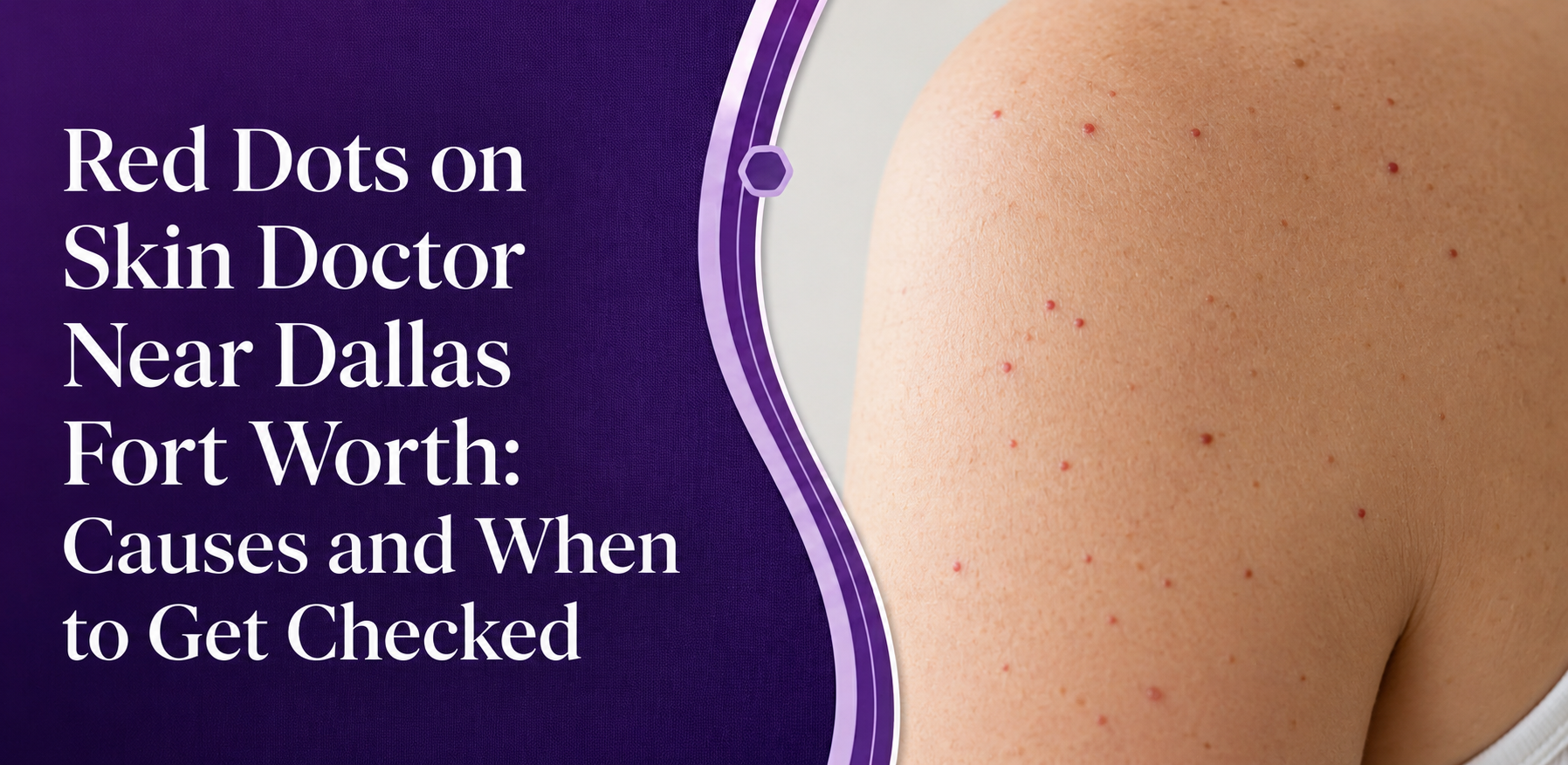
Noticing Red Dots on Your Skin? Here’s When to Get Checked
A sudden skin change can make anyone pause.
You may notice them after a shower, a hot day, a new lotion, a bug bite, or a random itch that will not stop. Sometimes the dots look flat. Sometimes they look raised. Some itch. Some do not.
Take a breath. Most red dots on skin trace back to something simple like heat, friction, or a mild allergic reaction. A smaller number point to something your body needs help with.
The trick is knowing which category you’re in, and that’s exactly what this guide walks you through. That is why the safest next step is not guessing. It is looking at the full picture.
At Passion Health Advanced Primary Care, our primary care team helps patients check skin concerns such as red dots, red spots, rash, itching, irritation, bumps, and skin changes.
Red dots on your skin and not sure why? Book a skin problem visit with Passion Health Advanced Primary Care →
Patients looking for primary care in Frisco, Irving, Plano, Prosper, Anna, Aubrey, Flower Mound, Ennis, Kaufman, Kemp, or Mesquite.
What Do Red Dots on Skin Mean?
These spots are not one single condition. They are a visible sign that something may be irritating the skin or affecting tiny blood vessels near the surface.
They may show up on the arms, legs, chest, back, face, stomach, or hands. Some appear suddenly. Others build slowly over a few days.
A provider may do a simple check by pressing on the spot. If the color fades, the cause may be less concerning. If the color does not fade, especially with fever, bruising, or fast-spreading dots, it is better to get checked.
If the color stays put, that’s a different conversation — one worth having with a doctor.
For example, itchy red dots after a new soap may point toward irritation or an allergic reaction. Red spots after heat and sweating may point toward heat rash. Tiny pinpoint dots that spread quickly may need more careful review.
Common Causes of Red Dots on Skin
Several common skin problems can cause red dots.
Possible causes include:
Skin irritation
Allergic reaction
Contact dermatitis
Eczema flare
Hives
Viral rash
Scratching or friction
Minor skin injury
Pinpoint bleeding spots under the skin
Cherry Angiomas
Keratosis Pilaris
Contact dermatitis can happen when the skin reacts to something it touches, such as soaps, lotions, cosmetics, detergents, plants, or workplace products.
Your provider may ask what changed before the rash appeared — new soap, lotion, detergent, outdoor exposure, work products, or a recent activity. These details can help find the trigger.
That is why small details matter. A new laundry detergent, gym mat, sunscreen, pet exposure, or outdoor activity can give your provider helpful clues.
Red Dots on Skin With Itching
Itchy red dots often make people think of allergy, rash, bites, or irritation.
Ask yourself:
During a skin problem visit, your provider may ask about:
When the red dots started
Where they appeared first
Itching, pain, burning, or spreading
Fever or recent illness
New medicines
New lotion, soap, detergent, or sunscreen
Bug bites or outdoor exposure
Similar rashes in your home
Itching can also cause scratching, which can make the skin more red, swollen, and irritated. It may also increase the chance of infection if the skin breaks open.
A primary care provider can examine the rash and decide whether you need simple skin care advice, medicine, allergy guidance, or another next step.
Red Dots on Skin Without Itching
Not all red dots itch.
Some red dots may look flat and feel painless. Others may not bother you at all, but they still look unusual.
Non-itchy red dots can happen after pressure, friction, straining, coughing, vomiting, exercise, or minor trauma. In some cases, tiny red or purple pinpoint dots may be petechiae, which the Cleveland Clinic describes as small spots of bleeding under the skin.
Cleveland Clinic also advises medical attention when pinpoint red dots spread quickly or appear with other symptoms.
A simple way to think about it is this: if the red dots are new, spreading, unusual, or not improving, get them checked.
Red Dots That Need Medical Attention
Petechiae
These pinpoint red or purple dots don’t fade when pressed and often signal bleeding under the skin from low platelets, an infection, or another underlying condition. If you notice flat, non-blanching red dots that appeared suddenly, this is the moment to search for a red dots on skin doctor near Dallas Fort Worth rather than waiting it out.
Viral Rashes and Infections
Conditions like measles, scarlet fever, or other viral illnesses can cause clusters of red dots alongside fever or fatigue. A primary care doctor can quickly tell the difference between a passing virus and something requiring closer monitoring.
Rosacea
This chronic condition causes persistent red dots and flushing, usually on the face. Left untreated, it tends to worsen over time, but it responds well to the right treatment plan.
When Red Dots on Skin Need a Doctor
Book a medical visit if red dots on skin:
Spread quickly
Come with fever
Feel painful
Look infected
Form blisters
Open or drain fluid
Appear with swelling
Come with bruising
Do not improve
Keep coming back
Cover a large area
Look worse after scratching
When Red Dots on Skin Are a Medical Emergency
Some symptom combinations call for urgent care, not a wait-and-see approach. Seek same-day medical attention if red dots show up alongside any of the following:
Rapidly spreading dots
Unexplained bruising
Extreme fatigue or weakness
Joint pain or swelling
These combinations can point toward meningitis, sepsis, or a blood disorder. None of these are conditions to manage from home.
The American Academy of Dermatology says signs of an infected rash can include pus, yellow or golden crusts, pain, swelling, warmth, unpleasant smell, fever, or swollen lymph nodes.
Do not wait too long if the rash changes fast or comes with body symptoms. A provider can check whether the skin problem needs treatment or further testing.
What a Primary Care Provider May Check
During a skin problem visit, your provider may ask:
During a skin problem visit, your provider may ask about:
When the red dots started
The first area where they appeared
Itching, pain, burning, or spreading
Fever or a recent illness
Any new medicine you started
Recent use of a new lotion, soap, detergent, or sunscreen
Bug bites, plant contact, or outdoor exposure
Similar rashes in your home
Your provider may also check your skin closely, review your medical history, and decide if you need treatment, testing, or a dermatology referral. Mayo Clinic notes that skin evaluation often includes looking at the skin and asking about symptoms and medical history.
Primary care helps because many skin problems connect with allergies, infection, medicines, chronic conditions, or immune response.
Looking for a Red Dots on Skin Doctor Near Dallas Fort Worth?
Passion Health Advanced Primary Care helps patients with skin concerns near Frisco, Irving, Plano, Prosper, Anna, Aubrey, Flower Mound, Ennis, Kaufman, Kemp, or Mesquite and nearby Dallas Fort Worth areas.
Patients visit us for red dots on skin, red spots, itching, rash, bumps, dry patches, allergic reactions, and skin irritation.
Our goal is simple. We check the concern, explain possible next steps, and help you decide what care makes sense.
Book a Skin Problem Visit Near You
Red dots on skin can come from many causes. Some are mild. Some need treatment. A few need quick medical review.
If the dots spread, itch badly, hurt, blister, look infected, or do not improve, a primary care visit can help you stop guessing.
Passion Health Advanced Primary Care offers skin problem visits near Dallas Fort Worth.
Our team can help if you are searching for a red dots on skin doctor near Dallas Fort Worth and want clear next steps for your skin concern.
FAQs
1. Are red dots on skin serious?
Sometimes they are mild. Red dots that spread quickly, come with fever, pain, bruising, swelling, or infection signs should be checked.
2. Why do I have red dots on skin that itch?
Itchy red dots may come from irritation, allergy, bug bites, hives, eczema, or contact with a trigger.
3. What if red dots on skin do not itch?
Non-itchy red dots can still have several causes. Pinpoint dots that spread quickly or do not fade need medical review.
4. Can primary care treat red dots on skin?
Yes. A primary care provider can examine the skin, review symptoms, treat common skin problems, and refer when needed.
5. When should I book an appointment?
Book a visit if red dots last several days, spread, itch badly, hurt, blister, look infected, or keep coming back.