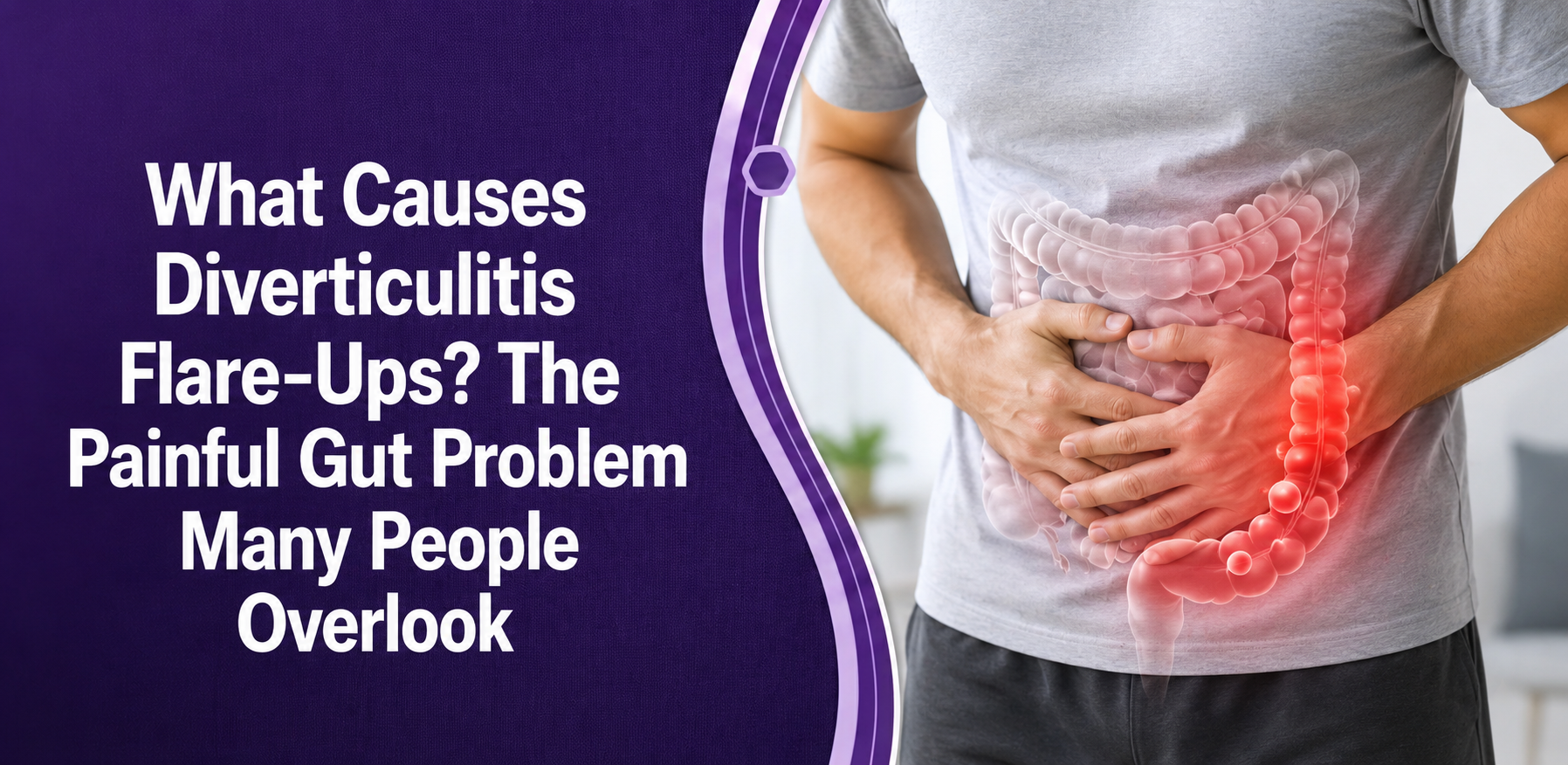
What Causes Diverticulitis Gut Pain That Should Not Be Ignored
A sharp pain in the lower belly can feel confusing at first. One moment, the day feels normal, and then stomach pain, fever, nausea, or bowel changes can make every movement uncomfortable.
Many people blame gas, constipation, or something they ate. However, pain that stays, worsens, or comes with fever may point to something more serious.
Diverticulitis happens when small colon pouches become inflamed or infected. These pouches may stay quiet for years, but a flare-up can cause sudden digestive pain and discomfort.
If symptoms do not feel normal, book an appointment at Passion Health Advanced Primary Care to check warning signs and guide the safest next step.
What Causes Diverticulitis Flare-Ups?
Diverticulitis flare-ups happen when small colon pouches become inflamed or infected.
Bacteria, trapped stool, irritation, and colon pressure may all play a role.
Pressure can push against weak spots in the colon wall and form small pouches.
These pouches may stay quiet for years without symptoms.
A flare-up can start when one pouch becomes irritated or infected.
The cause is not always one single trigger.
Several risk factors can work together and lead to pain, fever, nausea, or bowel changes.
Diverticulosis vs. Diverticulitis: Know the Difference
Condition | What It Means | What May Happen |
Diverticulosis | Small pouches, called diverticula, are present in the colon wall. | Many people feel no symptoms. A doctor may find it during a colonoscopy or imaging test. |
Diverticulitis | One or more diverticula become inflamed or infected. | It may cause sudden lower abdominal pain, fever, nausea, tenderness, constipation, or diarrhea. |
Diverticular Disease | Diverticula cause symptoms or complications. | Symptoms may need medical evaluation because they can look like other digestive problems. |
What Causes Diverticulitis Flare-Ups After Diverticulosis?
Key Point | Simple Explanation |
Diverticulosis can stay silent | Many people have colon pouches without pain or clear symptoms. |
A flare-up starts with inflammation. | Diverticulitis begins when a pouch becomes irritated, inflamed, or infected. |
Pain can feel different from normal stomach upset | Lower left belly pain, fever, nausea, or stool changes may suggest a flare-up. |
Medical care helps avoid guessing. | Diverticulitis symptoms can overlap with other digestive problems, so a provider can check the cause. |
Why Do Colon Pouches Form?
Colon pouches can form when pressure builds inside the colon. This may happen when stool moves slowly, becomes hard, or causes straining.
Low fiber intake can make stool harder to pass, which may increase colon pressure. Over time, that pressure can push against weak spots in the colon wall and create small pouches.
Age also matters. Diverticula become more common after 50, but diet, activity level, weight, smoking, alcohol use, and certain medicines can also raise risk.
Common Symptoms During a Diverticulitis Flare-Up
What Causes Diverticulitis Flare-Ups to Feel So Painful?
Inflammation causes pain because the body sends immune cells, fluid, and blood flow to the irritated area. When this happens in the colon, the abdomen can feel sore, tight, or tender. A flare-up can feel sudden and intense, or it can start mild and grow worse over time.
Common symptoms include:
Lower abdominal pain, often on the left side
Fever or chills
Nausea
Tenderness when touching the belly
Sudden constipation
Sudden diarrhea
Bloating or pressure
Loss of appetite
Pain deserves attention when it does not pass. A short cramp after a meal may not mean diverticulitis. Constant pain with fever or stool changes needs medical care.
What Causes Diverticulitis Flare-Ups? Key Triggers to Know
Possible Trigger | How It May Affect the Colon |
Low-fiber diet | Low fiber can make stool harder to pass. This may increase pressure inside the colon and irritate diverticula. |
Straining during bowel movements may add pressure to weak areas in the colon wall. | |
Excess weight | Extra body weight may increase inflammation and raise the risk of digestive problems. |
Smoking | Smoking can affect healing, blood flow, and inflammation, which may increase flare-up risk. |
Lack of exercise | Less movement can slow digestion and make constipation more likely. |
High red meat intake | Eating red meat often may increase the risk of diverticulitis in some people. |
Certain medicines | Steroids, opioids, ibuprofen, and naproxen may raise the risk for some patients. |
Heavy alcohol use | Too much alcohol may irritate the body and affect digestive health. |
Risk Factors for Diverticulitis
What Causes Diverticulitis Flare-Ups in High-Risk Patients?
Some people face a higher chance of flare-ups because several risk factors build pressure and inflammation in the digestive system.
Important risk factors include:
Low-fiber diet: Low fiber can slow stool movement and increase the constipation risk.
High red meat intake: Frequent red meat intake may raise risk in some people.
Obesity: Extra body weight can increase inflammation and digestive stress.
Smoking: Smoking affects blood flow, healing, and inflammation.
Heavy alcohol use: Too much alcohol may irritate the body and raise digestive risk.
Lack of exercise: Movement helps bowel function and supports healthy digestion.
Low vitamin D: Low levels may be associated with higher diverticulitis risk.
Certain medicines: Steroids, opioids, ibuprofen, naproxen, and other NSAIDs may increase risk for some patients.
These factors do not guarantee a flare-up. However, they can increase the chance that diverticula become irritated or infected.
Can Constipation Trigger Diverticulitis Symptoms?
Constipation may add pressure inside the colon.
Hard stool moves slowly and can make straining worse.
Straining may press against weak spots in the colon wall.
Fiber helps stool stay softer and easier to pass.
Water helps fiber work better.
Add fiber slowly to avoid gas or bloating.
Eat fruits, vegetables, beans, and whole grains.
Walk after meals to support digestion.
Do not hold stool for long periods.
Ask a clinician before using laxatives often.
Get medical care if constipation comes with severe pain, fever, vomiting, or belly pain.
Do Nuts, Seeds, and Popcorn Cause Diverticulitis?
Old advice said to avoid nuts, seeds, and popcorn.
Current guidance does not show that these foods raise diverticulitis risk for most people.
Some nuts and seeds contain fiber, which supports bowel regularity.
Every person’s digestion can react differently.
Track any food that repeatedly causes discomfort.
Do not remove large food groups without medical advice.
Focus on balanced meals, enough water, and symptom tracking.
What Foods May Increase Diverticulitis Risk?
What Causes Diverticulitis Flare-Ups From Diet?
Diet can influence stool movement, inflammation, and colon pressure. A low-fiber eating pattern may allow stool to become firm and slow. High intake of processed foods, sweets, and red meat may also affect digestive health.
Helpful food choices include:
Oatmeal
Brown rice
Whole-grain bread
Lentils
Beans
Apples
Berries
Leafy greens
Carrots
Broccoli
Chia or flax seeds, if tolerated
Water-rich fruits and vegetables
During an active flare-up, diet advice may change. Some people need temporary diet changes until the colon calms down.
When Diverticulitis Becomes Dangerous
Most mild cases improve with proper care, rest, and medical guidance. Still, diverticulitis can sometimes lead to complications. This is where urgency matters.
Possible complications include:
Abscess, which means a pocket of pus
Colon blockage
A fistula, or an abnormal passage between organs
Tear in the colon wall
Peritonitis, a serious infection inside the abdomen
Bleeding from damaged blood vessels
These problems can become serious quickly. Seek medical care when abdominal pain stays constant, especially with fever, vomiting, weakness, blood in stool, or major stool changes.
How Doctors Check Diverticulitis Symptoms
A provider may review symptoms, medical history, medicines, diet, and bowel habits. They may also check the abdomen for tenderness and order tests if needed.
Do not self-diagnose severe belly pain. Appendicitis, kidney stones, UTIs, bowel blockage, inflammatory bowel disease, and other conditions can look like diverticulitis. A correct diagnosis helps avoid delays and risk.
What Helps Prevent Diverticulitis Flare-Ups?
What Causes Diverticulitis Flare-Ups to Return?
Flare-ups may return when risk factors stay active. Low fiber intake, constipation, smoking, high red meat intake, heavy alcohol use, low activity, and certain medications can all keep the colon under stress.
Prevention focuses on daily habits:
Eat more fiber-rich foods.
Drink enough fluids.
Exercise regularly.
Maintain a healthy weight.
Avoid smoking.
Limit alcohol.
Cut back on high-fat processed foods.
Discuss NSAID use with a healthcare provider.
Track symptoms after meals.
Keep regular primary care visits.
Start slowly with fiber. A sudden jump can cause gas and bloating. Add one fiber-rich food at a time and increase water intake.
What To Do During Suspected Diverticulitis Symptoms
Nuts, seeds, and popcorn do not raise diverticulitis risk for most people.
Old advice told patients to avoid them, but current guidance has changed.
Some nuts and seeds add fiber, which may support regular bowel movements.
Track foods that cause repeated discomfort.
Avoid cutting out food groups without medical advice.
Focus on fiber, water, balanced meals, and symptom tracking.
Living With Diverticulosis Without Fear
Diverticulosis does not mean life has to change overnight. Many people with diverticula never develop symptoms.
Still, the diagnosis can serve as a wake-up call to protect colon health.
Better bowel habits can make a real difference. Fiber, water, exercise, and weight control support smoother stool movement.
Regular checkups help identify warning signs early. A primary care provider can also review medicines that may increase risk.
Final Takeaway
Diverticulitis flare-ups happen when small pouches in the colon become inflamed or infected.
Pressure, trapped stool, bacteria, constipation, low fiber intake, smoking, obesity, alcohol use, low activity, and certain medicines may raise the risk.
Diverticulosis can stay silent, but diverticulitis may cause strong belly pain, fever, nausea, or sudden stool changes.
Early medical care helps find the cause and prevent complications.
Passion Health Advanced Primary Care can review symptoms, risk factors, and prevention steps for safer digestive health.
FAQs
1. What causes diverticulitis flare-ups?
Diverticulitis flare-ups happen when small pouches in the colon become inflamed or infected. Pressure, trapped stool, bacteria, constipation, and low fiber intake may raise the risk.
2. What does diverticulitis pain feel like?
Diverticulitis pain often feels like steady lower belly pain, usually on the left side. It may come with fever, nausea, constipation, or diarrhea.
3. Can constipation cause diverticulitis flare-ups?
Constipation may increase pressure inside the colon. Hard stool and straining can irritate weak areas and may raise flare-up risk in some people.
4. Should I avoid nuts, seeds, and popcorn?
Most people do not need to avoid nuts, seeds, or popcorn. Current guidance does not show that these foods increase diverticulitis risk for most patients.
5. When should I see a doctor for diverticulitis symptoms?
See a doctor if belly pain stays, worsens, or comes with fever, vomiting, nausea, constipation, diarrhea, or unusual stool changes.