Primary Care vs Urgent Care vs Immediate Care: Key Differences
A health concern can create stress fast. One minute you feel fine, and the next you have a fever, stomach pain, a painful cough, a cut, or a symptom that makes you wonder, “Should I wait, call my doctor, visit urgent care, or go somewhere right now?”
That decision matters. Choosing the wrong place may delay care, increase cost, or send you to a clinic that cannot handle your needs. Choosing the right place helps you get the right treatment faster.
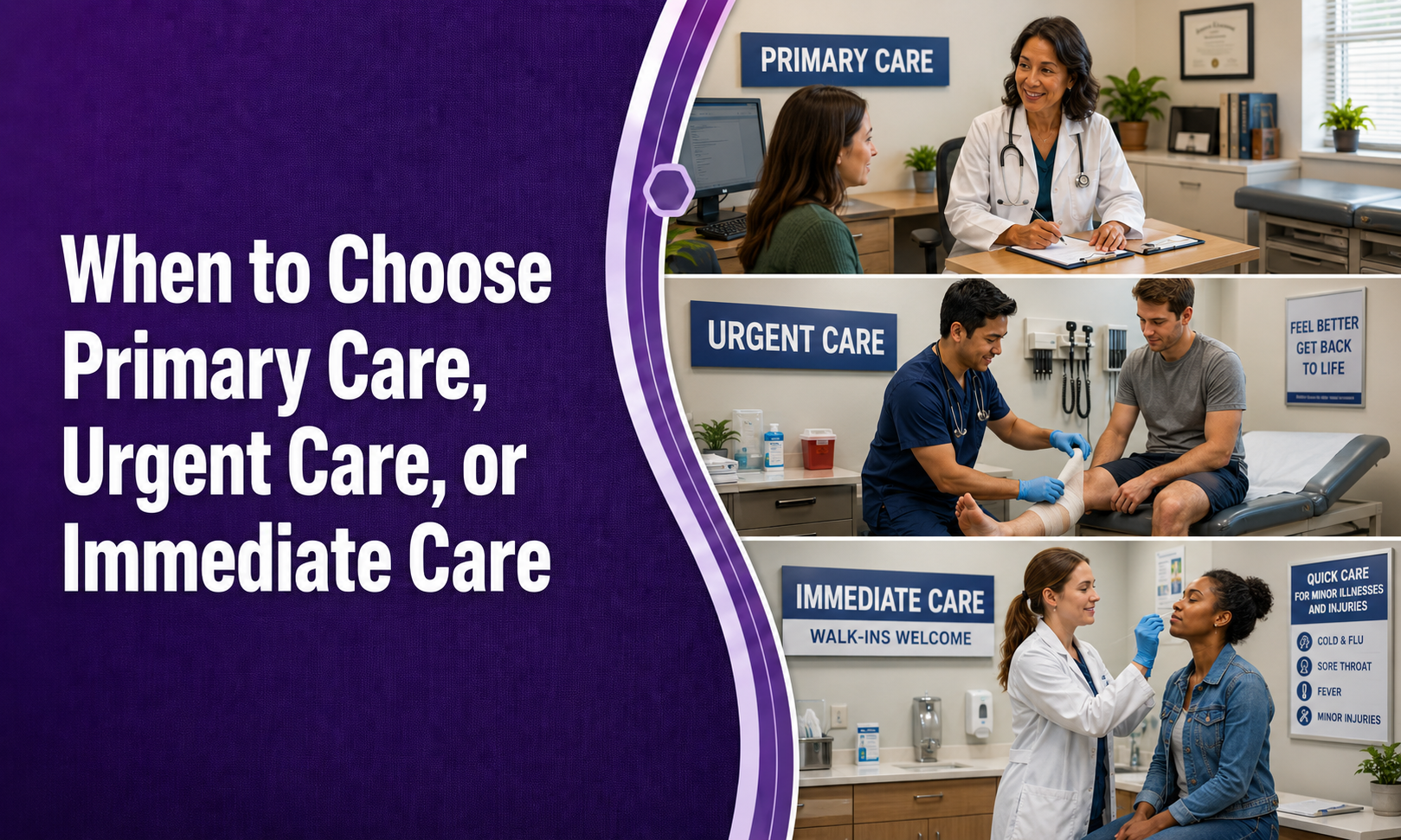
When to Choose Primary Care, Urgent Care, or Immediate Care depends on three simple questions: How serious are the symptoms? How quickly do you need help? Do you need ongoing care or same-day treatment?
Primary care usually supports routine visits, preventive care, long-term health concerns, medication management, and follow-ups.
Urgent care helps with sudden, non-life-threatening problems that need quick attention.
Immediate care often handles similar same-day concerns and may offer broader walk-in services depending on the clinic.
Emergency care remains the safest choice for life-threatening warning signs such as chest pain, severe breathing trouble, stroke symptoms, heavy bleeding, or loss of consciousness.
Need help deciding where to start? Book an appointment with Passion Health Primary Care for trusted, patient-centered care.
Why Knowing When to Choose Primary Care, Urgent Care, or Immediate Care Matters
Many patients wait too long because they hope symptoms will pass. Others rush to the emergency room for a problem that a primary care or urgent care provider could treat. Both situations create problems.
Delayed care can allow symptoms to worsen. Unnecessary emergency visits can cost more and take longer.
On the other hand, urgent care cannot replace long-term medical care because it usually focuses on the immediate problem, not the full health picture.
That is why When to Choose Primary Care, Urgent Care, or Immediate Care is not just a healthcare topic. It is a practical decision guide for everyday life.
What Is Primary Care?
Primary care acts as your health foundation. Your primary care provider helps with routine checkups, preventive screenings, physical exams, medication refills, lab reviews, chronic care follow-ups, and new symptoms that do not require emergency attention.
A primary care provider often knows your health history, risk factors, medications, allergies, lifestyle, and past test results. There fore, MedlinePlus explains that a primary care provider is often involved in a person’s care for a long time, which makes that relationship important for long-term health decisions.
When to Choose Primary Care, Urgent Care, or Immediate Care for Routine Needs
Choose primary care when your concern can wait for a scheduled visit and needs careful follow-up.
Primary care works best for:
Annual wellness visits
Preventive screenings
Blood pressure checks
Medication refills
Ongoing fatigue
Mild digestive issues
Lab result reviews
Specialist referrals
Primary care also helps when symptoms keep coming back. For example, repeated headaches, frequent stomach discomfort, ongoing tiredness, sleep trouble, or recurring cough should not always be treated as one-time problems. In these cases, a primary care provider can look for patterns and guide the next steps.
What Is Urgent Care?
Urgent care treats sudden medical problems that need attention soon but do not appear life-threatening. It can help when your primary care office is closed, your symptoms cannot wait several days, or you need same-day help.
Urgent care centers commonly treat minor injuries, mild infections, sore throat, flu-like symptoms, ear pain, minor burns, sprains, simple cuts, and similar concerns. Many urgent care clinics also offer lab testing or X-rays, depending on the facility. The original reference summary also describes urgent care as a middle option between primary care and the emergency room for acute but non-emergency concerns.
When Urgent Care Makes Sense
Choose urgent care when symptoms feel uncomfortable, sudden, or inconvenient, but you do not have emergency warning signs.
Urgent care may help with:
Fever without severe symptoms
Sore throat
Ear infection symptoms
Minor cuts
Mild burns
Sprains
Minor fractures
Cough or cold symptoms
Flu-like illness
Mild dehydration
Skin rashes
Minor allergic reactions
Urgent care can give faster access for short-term problems. However, it does not replace primary care. After urgent care treatment, schedule a follow-up with your regular provider if symptoms continue, return, or connect to a larger health concern.
What Is Immediate Care?
Immediate care can mean different things depending on the clinic. In many places, immediate care works much like urgent care. It offers walk-in or same-day care for medical problems that need quick attention but do not require an emergency room.
Some immediate care clinics may offer broader services, such as lab testing, imaging, vaccinations, screenings, minor injury treatment, and basic primary care services. For this reason, immediate care may help bridge the gap between urgent care access and basic ongoing care..
When to Choose Immediate Care
Choose immediate care when you need prompt help for a non-life-threatening concern, and the clinic offers the service you need.
Immediate care may fit:
Sudden illness
Minor injury
Same-day testing
Walk-in medical care
Mild infection symptoms
Minor wound care
Vaccines or basic screenings
Quick medical evaluation
Because services vary, check the clinic before going. Some immediate care centers handle X-rays and labs. Others focus only on basic same-day concerns.
When to Choose Primary Care, Urgent Care, or Immediate Care Based on Symptoms
Here is a simple way to decide:
Start with primary care when symptoms are mild, ongoing, recurring, or connected to your long-term health.
For sudden symptoms that need same-day attention but do not feel life-threatening, urgent care may be the right choice.
Meanwhile, immediate care works well when you need quick walk-in help and the clinic offers the service you need.
However, call 911 or go to the emergency room when symptoms could threaten breathing, brain function, major organs, or cause severe blood loss.
Do Not Use Primary Care, Urgent Care, or Immediate Care for These Emergency Signs
Some symptoms should never wait for a regular appointment. Go to the emergency room or call 911 for serious warning signs.
Emergency warning signs include:
Chest pain or pressure
Severe shortness of breath
Stroke symptoms, such as face drooping, arm weakness, speech trouble, or sudden confusion
Loss of consciousness
Seizure
Severe head injury
Heavy or uncontrolled bleeding
Severe allergic reaction
Sudden severe abdominal pain
Severe burns
Poisoning
Major trauma
Sudden vision changes
Severe weakness or dizziness
In addition, warning signs such as trouble breathing, chest or upper abdominal pain, fainting, sudden dizziness, weakness, vision changes, choking, serious injury, poisoning, trouble speaking, confusion, and difficulty waking need emergency care.
List of emergency medicine conditions such as breathing difficulty, chest pain, severe infection, acute abdominal pain, heavy bleeding, loss of consciousness, fractures, head or neck injuries, stroke symptoms, and dehydration.
Cost and Time: Why the Right Choice Matters
Cost often changes based on where you go. Primary care usually costs less for routine and preventive visits.
Urgent care and immediate care may cost more than a scheduled office visit, but usually less than an emergency room visit.
Emergency care costs more because hospitals need advanced staff, equipment, and rapid response for severe conditions.
The right choice can save time, too. If you go to the emergency room for a mild concern, you may wait while life-threatening cases receive priority.
On the other hand, urgent care may send you to the ER if your symptoms look serious. In addition, relying only on walk-in clinics without seeing a primary care provider may cause you to miss the bigger picture behind recurring symptoms.
Primary Care Helps You Prevent Problems Before They Become Urgent
Many people think primary care only matters when they feel sick. That is a mistake. Primary care helps catch risks early through screenings, blood work, physical exams, and regular conversations about changes in your health.
Your provider may notice rising blood pressure, abnormal labs, weight changes, sleep problems, medication issues, or symptoms that deserve deeper evaluation. Early action may prevent a small concern from turning into an urgent one.
This is one of the biggest reasons to understand when to Choose Primary Care, Urgent Care, or Immediate Care. Primary care does more than treat symptoms. It helps you stay ahead of them.
Urgent Care Helps When Symptoms Cannot Wait
Urgent care plays an important role when life interrupts your schedule. A sudden sore throat, painful sprain, fever, minor cut, or worsening cough may need attention before your next primary care appointment.
Urgent care can help with the immediate problem. But after the visit, do not ignore follow-up. If the same issue returns, worsens, or does not improve, contact your primary care provider.
Immediate Care Can Fill the Same-Day Gap
Immediate care gives patients another option when they need quick help. It can reduce delays for minor illnesses and injuries. It can also help patients who do not know whether their issue needs urgent care or routine care.
However, immediate care works best when symptoms are not severe. For chest pain, stroke symptoms, severe breathing trouble, major injury, or uncontrolled bleeding, go directly to emergency care.
Questions to Ask Before Choosing Care
Before deciding where to go, ask yourself:
How severe are my symptoms?
Did symptoms start suddenly?
Are symptoms getting worse?
Can I safely wait for an appointment?
Do I need ongoing care or only quick treatment?
Do I have chest pain, breathing trouble, severe weakness, confusion, or heavy bleeding?
Your answers can guide your decision. If symptoms feel dangerous, do not spend time comparing clinics. Call 911 or go to the ER.
Final Thoughts: When to Choose Primary Care, Urgent Care, or Immediate Care
Knowing when to Choose Primary Care, Urgent Care, or Immediate Care helps you make faster, safer decisions when symptoms appear. Primary care supports long-term health, prevention, follow-ups, and ongoing concerns.
Urgent care helps with sudden non-emergency problems that need same-day attention.
Immediate care can offer quick walk-in support for minor illnesses, injuries, and basic medical needs.
The key is not to guess when symptoms feel serious. Emergency warning signs need emergency care.
But for routine concerns, recurring symptoms, preventive care, and health planning, primary care gives you the strongest long-term support.
Take control of your health before symptoms become stressful. Book an appointment with Passion Health Primary Care today for trusted care, preventive support, and personalized medical guidance
FAQs
1. When should I choose primary care instead of urgent care?
Choose primary care for routine checkups, preventive screenings, medication refills, chronic care follow-ups, lab reviews, and symptoms that are mild, ongoing, or recurring.
2. When should I go to urgent care?
Go to urgent care for sudden, non-life-threatening problems that need same-day attention, such as minor cuts, sprains, sore throat, ear pain, fever, mild burns, or flu-like symptoms.
3. Is immediate care the same as urgent care?
Immediate care and urgent care are very similar. Both usually treat non-emergency health concerns that need quick attention. Services may vary by clinic, so it is best to check before visiting.
4. When should I go to the emergency room instead?
Go to the ER or call 911 for chest pain, severe breathing trouble, stroke symptoms, heavy bleeding, loss of consciousness, severe injury, severe abdominal pain, or serious allergic reactions.
5. Can primary care help after an urgent care visit?
Yes. Primary care helps with follow-up, ongoing symptoms, medication review, test result discussion, and long-term health planning after an urgent care or immediate care visit.
6. Which is cheaper: primary care, urgent care, or emergency care?
Primary care is usually the best option for routine and preventive visits. Urgent care may cost more than a regular visit but often less than the emergency room. ER care is usually the most expensive because it handles serious and life-threatening conditions.
7. What is the best choice for recurring symptoms?
Primary care is usually the best choice for recurring symptoms because your provider can review your history, check patterns, order tests if needed, and create a long-term care plan.
8. Can I book primary care even if I am not sure what I need?
Yes. If your symptoms are not life-threatening, primary care is a good place to start. A provider can evaluate your concern and guide you to the right next step.