Flea-Borne Typhus in 2026: The Silent Infection Spreading Faster Than You Think
Quick Verdict:
Flea-borne typhus is a bacterial infection caused by Rickettsia typhi or Rickettsia felis, transmitted through infected flea feces rather than flea bites themselves.
Doxycycline remains the first-line treatment, and most patients recover fully within a week of starting antibiotics. The single most effective prevention strategy is controlling flea populations on pets and around the home.
Flea-borne typhus remains one of the most underdiagnosed febrile illnesses in the southern United States, and recent data from the Centers for Disease Control and Prevention shows rising case counts in states like Texas, California, and Hawaii.
What makes this infection particularly dangerous is how closely it mimics common viral illnesses like the flu. Many patients initially dismiss symptoms—until a rash or worsening condition forces medical attention. This guide delivers clear, evidence-based insights to help you recognize symptoms early, understand treatment, and act quickly.
Concerned about symptoms? Book an appointment with Passion Health Primary Care for fast evaluation and treatment.
Understanding Flea- Borne Typhus in the 2026 Landscape
Flea- borne typhus( also called murine typhus or aboriginal typhus) has historically been considered a tropical or tropical complaint, but surveillance data from the Texas Department of State Health Services shows a steady increase in reported cases across civic and suburban counties over the past decade.
Warmer layoffs, expanding opossum and feral cat populations, and increased mortality- wildlife imbrication in domestic Areas each contribute to this trend.
Important:
This disease is not spread person-to-person
Transmission depends on flea exposure in your environment
The part of Rickettsia typhi and Rickettsia felis
Two nearly affiliated bacteria beget flea- borne typhus. Rickettsia typhi is the classic pathogen, historically associated with the rat flea( Xenopsylla cheopis).
Rickettsia felis, linked more recently, is carried primarily by the cat flea( Ctenocephalides felis), which is the most common flea species found on domestic tykes and pussycats in the United States.
Once inside the mortal body, these bacteria foray the endothelial cells lining blood vessels. This vascular infection triggers inflammation throughout the body, which explains the hallmark symptoms of fever, headache, and rash.
The vulnerable system mounts a response, but without antibiotic intervention, the bacteria can continue replicating and cause damage to organs, including the liver, spleen, and brain.
Transmission Pathways: From Urban Pests to Humans
You don’t get typhus directly from a flea bite.
Real transmission pathway:
Flea bites and leave infected feces on the skin
Scratching pushes bacteria into the skin or eyes
Infection enters the bloodstream
Common animal carriers:
Opossums
Feral cats
Rats
Pets can bring infected fleas into your home, making flea control critical. Recognizing Symptoms and Early Warning Signs
Common Clinical Presentations: Fever, Rash, and Headache
Symptoms generally appear 6 to 14 days after exposure. The classic trio is fever, headache, and rash, but not every case presents with all three contemporaneously.
A typical illness timeline looks like this.
Days 1- 3: unforeseen onset of high fever( frequently 103- 105 °F), severe headache, body aches, and fatigue. Numerous cases assume they have influenza or a viral illness.
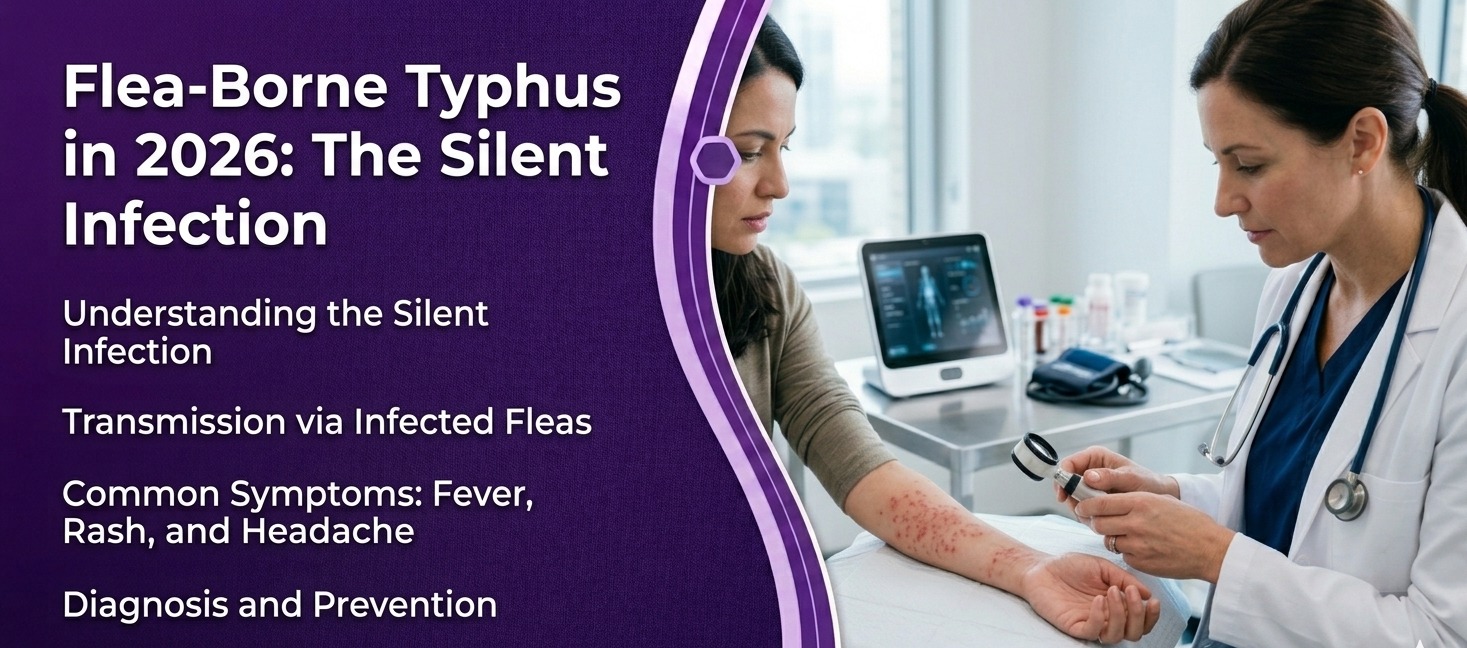
Days 3- 7: A maculopapular rash may appear, generally starting on the trunk and spreading outward. The rash is frequently faint and can be missed on darker skin tones.
Days 5- 14: Without treatment, the fever persists, and symptoms may worsen. Nausea, puking, abdominal pain,
and common pain are common during this phase.
About 50percent of cases develop the characteristic rash, according to CDC estimates. This means counting on rash.
Alone for opinion will miss a significant number of cases.
Severe Cases & Complications
Without early treatment, complications may include:
Liver inflammation
Lung infection (pneumonitis)
Brain inflammation (meningitis)
Kidney failure
High-risk groups:
Older adults
Immunocompromised individuals
People with chronic illnesses
Studies (including research in the American Journal of Tropical Medicine and Hygiene) show early treatment significantly reduces hospital stays.
Modern Diagnostic Approaches
Advancements in Rapid Molecular Testing
Opinion has historically been a weak point in managing this complaint. Clinicians are advised to start treatment based on clinical doubt rather than relying on lab evidence, because delays bring cases, time, and health.
PCR- grounded molecular testing can detect Rickettsia DNA in blood samples during the acute phase of illness.
Several reference laboratories now offer reversal times of 24 to 48 hours, a significant enhancement over the week-long delays common just a few times ago.
Some sanitarium systems in Aboriginal areas have begun incorporating Rickettsia PCR panels into their standard workup for undifferentiated febrile illness, which is helping catch cases before.
Antibiotic Efficacy: Doxycycline and Alternatives
Doxycycline is the first-line treatment for flea-borne typhus in all age groups. The usual adult dose is 100 mg twice daily for 7–10 days, continued for at least 3 days after fever subsides.
For patients with an allergy, Chloramphenicol may be used, though side effects limit its use. Azithromycin has limited supporting evidence, and fluoroquinolones are not recommended.
Key point: Start treatment early—don’t wait for lab confirmation. Prompt doxycycline therapy can prevent severe complications.
Book now with Passion Health Primary Care for fast, evidence-based treatment.
Supportive Care and Recovery Timelines
Most patients begin to feel better within 24 to 48 hours of starting doxycycline. Complete recovery typically takes one to two weeks, though fatigue may linger for several weeks in some individuals.
Supportive care includes adequate hydration, acetaminophen for fever and pain management, and rest. Hospitalized patients may require IV fluids and monitoring for organ complications. There is no specific antiviral or immune therapy: antibiotics targeting the Rickettsia bacteria are the definitive treatment.
Prevention and Public Health Strategies
Vector Control: Managing Flea Populations in Domestic Settings
Flea control is the cornerstone of typhus prevention. A practical approach includes:
Treating all household pets with veterinarian-recommended flea prevention products year-round, not just during the summer months
Keeping yards trimmed and removing brush piles, woodpiles, and debris where opossums and feral cats may shelter
Securing pet food indoors and sealing trash cans to avoid attracting wildlife
Treating indoor environments with EPA-registered flea control products if an infestation is identified
Check with your local animal control office about opossum and feral cat management programs in your neighborhood
When to See a Doctor
Seek medical care immediately if you have:
Unexplained fever
Severe headache
Rash (even mild)
Recent flea exposure or pet contact
Same-day appointments available at Passion Health Primary Care — Book now for fast, expert care.
Key Takeaways
Flea-borne typhus is rising in the U.S. in 2026
Often misdiagnosed as flu → delays treatment
Rash may be absent → don’t rely on it
Doxycycline is highly effective when started early
Prevention = flea control + awareness
Why Choose Passion Health Primary Care?
Physician-led, evidence-based care
Early diagnosis focus
Same-day appointments available
Experienced in managing infectious diseases
Don’t ignore symptoms—Book an appointment with Passion Health Primary Care and get treated early.