What Hantavirus Does to the Body and How to Stay Protected
Every spring, I treat patients who thought they had the flu — until their oxygen levels dropped and their lungs began to fill with fluid. That is hantavirus pulmonary syndrome (HPS), and most patients never saw it coming.
Hantavirus is rare but deadly. The CDC records roughly 700 confirmed HPS cases since 1993, with a fatality rate of around 36%. What makes it dangerous is not how common it is — it’s how fast it can kill a healthy adult once the cardiopulmonary phase begins.
This guide covers three things every person in a How Hantavirus Affects the body, how to prevent exposure at home, and what the survival data actually means for you.
Seek Preventive Care Immediately If You Have Fever, muscle aches, or any shortness of breath — especially after recent contact with rodents or dusty rural spaces. Book an appointment at Passion Health primary care
What Hantavirus Does to Your Body — Stage by Stage
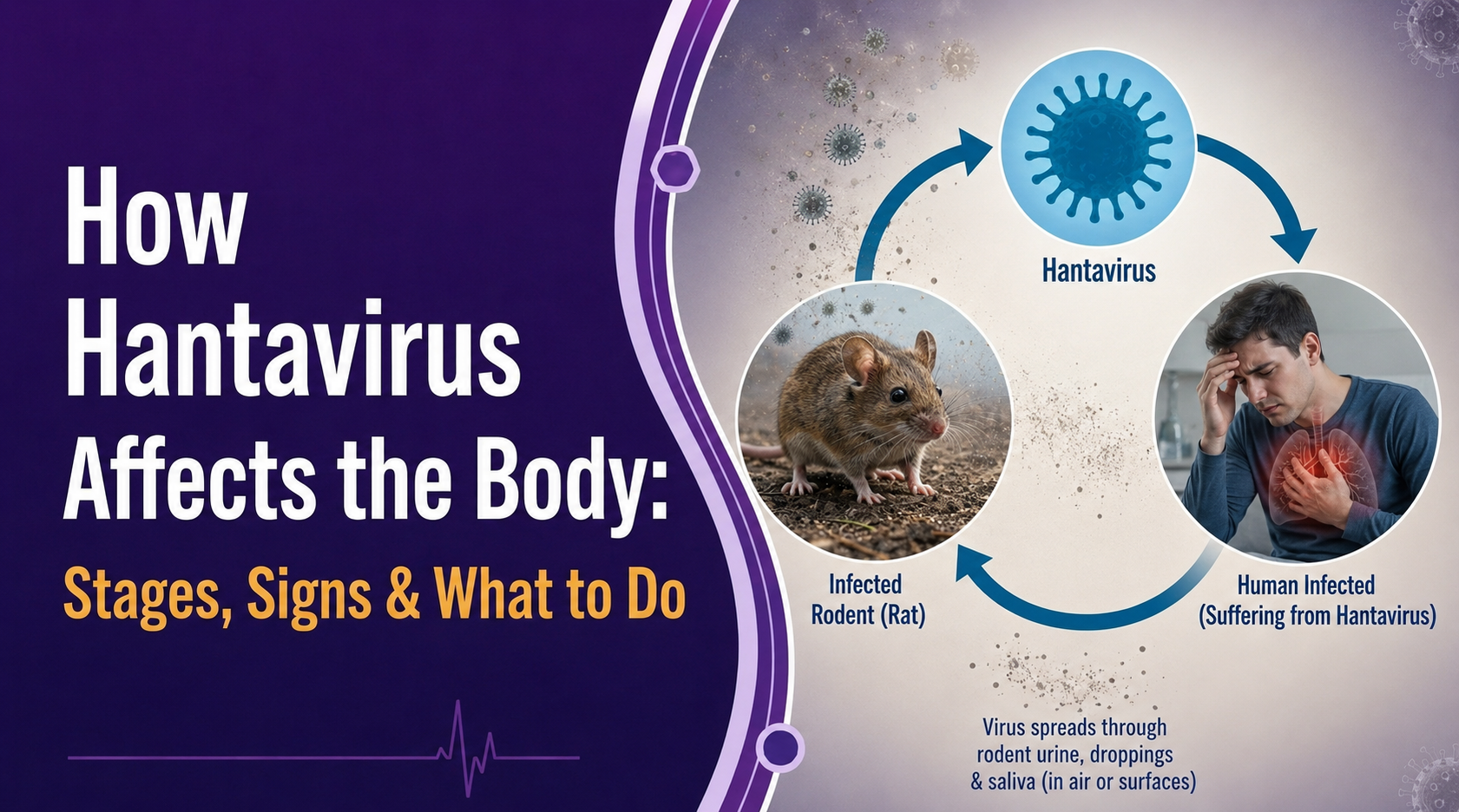
Hantavirus enters the body almost exclusively through inhaled particles — dried rodent urine, droppings, or saliva disturbed into the air. Once inside, it targets the cells lining your blood vessels and lungs. The destruction is not immediate. It unfolds in three clinical stages.
Prodromal Phase (Days 1–5)
Feels exactly like the flu — fever, muscle aches, fatigue, headache. There are no respiratory symptoms yet. This is the window where most patients are misdiagnosed and sent home. If you have a rodent exposure history, tell your doctor immediately.
Stage 2
Cardiopulmonary Phase (Days 5–10) — The Critical Window
This is where hantavirus becomes life-threatening. Fluid floods the lungs. Blood pressure drops. The heart struggles to pump. Patients deteriorate from mild shortness of breath to ICU-level respiratory failure within hours. Most deaths occur here.
Stage 3
Diuretic Phase (Days 10+) — The Turning Point
In patients who survive Stage 2, the body begins expelling excess fluid through the kidneys. Lung function starts to recover. Survivors who reach this phase often recover fully, though fatigue and mild pulmonary symptoms can persist for months.
What Happens at the Cellular Level
Hantavirus binds to integrin receptors on the cells lining your blood vessels. This disrupts the vessel wall, causing plasma to leak into surrounding tissue — especially the lungs. The immune system overreacts with a cytokine storm, worsening the inflammation rather than controlling it.
What I Tell My Patients
The scariest thing about hantavirus is that patients feel relatively okay on Day 4 — and are in the ICU on Day 6. If you’ve been in a cabin, barn, or dusty rural space and you develop flu-like symptoms within 8 weeks, you should mention hantavirus to your doctor. That sentence could save your life.
Who Is at Higher Risk of Severe Disease?
Adults over 60 with cardiovascular disease
People with diabetes or immunocompromising conditions
Anyone with a delayed hospital presentation (Day 7+ before seeking care)
Patients in areas without ECMO-capable ICU facilities
According to the CDC, there is no evidence that children are disproportionately affected, but a delay in diagnosis in any age group dramatically worsens outcomes.
How to Prevent Hantavirus at Home: A Doctor’s Step-by-Step Guide
There is no approved vaccine for hantavirus in the United States. Prevention is everything. The good news: hantavirus exposure is almost entirely preventable with the right protocol.
Step 1 — Identify If Rodents Have Been Present
Before entering any space that has been closed for weeks or months, look for these signs:
Dark, rice-grain-sized droppings along walls or in drawers
Gnaw marks on wood, plastic, or food packaging
Shredded material (paper, fabric, insulation) used for nesting
Greasy rub marks along walls from repeated rodent travel paths
Step 2 — Before You Enter: The 30-Minute Ventilation Rule
Open all windows and doors. Leave the space for at least 30 minutes. Let cross-ventilation dilute any airborne virus particles before you walk in. This single step costs nothing and significantly reduces inhalation risk.
Step 3 — Personal Protective Equipment (What Actually Works)
Protection Level | What to Use | Works Against Hantavirus? |
Minimal | Surgical mask | No — particles too small |
Adequate | N95 respirator | Yes — filters 95% Of particles |
Full | N100 + nitrile gloves + disposable coverall | Yes — for heavy infestations |
Step 4 — Safe Cleaning Protocol (The Rule: Wet, Never Sweep)
Spray droppings and nesting material with a 10% bleach solution or EPA-registered disinfectant. Wait 5 minutes.
Wipe up with paper towels. Never sweep or vacuum — this aerosolizes the virus.
Seal contaminated material in a plastic bag. Double-bag it. Dispose of in an outdoor bin.
Disinfect all surfaces, gloves, and tools. Wash your hands thoroughly.
Never use a leaf blower, shop vac without HEPA, or compressed air in contaminated spaces.
High-Risk Spaces to Always Check First
Vacation cabins, hunting sheds, storage units, barns, camper vans, crawlspaces, and garages that have been sealed over winter are the highest-risk environments. Deer mice — the primary hantavirus carrier in North America — are most active in these spaces.
Step 5 — Rodent-Proof the Structure
Seal any gap wider than a pencil. A deer mouse can enter through a hole the size of a dime. Common entry points include:
Gaps around pipes, vents, and utility lines
Cracks in foundation walls or window frames
Spaces under exterior doors (add door sweeps)
Use steel wool packed into gaps, then seal with caulk or expanding foam. Rodents cannot chew through steel wool.
What I Tell My Patients
The 3-question rule before entering any closed space: Has it been sealed for more than 4 weeks? Have I seen rodent signs? Am I wearing an N95? If the answer to any of the first two is yes and the third is no, stay out until you are ready.
Hantavirus Survival Rate: What the Real Data Shows
Families in my ICU waiting room always ask the same question: “What are the odds?” I owe them an honest answer — not reassurance, not fear. Here is what the data actually says.
36%- Overall case fatality rate (CDC, 2024)
~850- Total US cases reported since 1993
70%- Survival rate with early ICU care
What Improves Your Survival Odds
Early hospitalization — presenting before respiratory failure begins- is the single biggest factor
ECMO access — extracorporeal membrane oxygenation can support the heart and lungs while the body fights back; it has saved lives in Stage 2
Age under 50, no cardiac comorbidities — younger, healthier patients recover more frequently
ICU in a tertiary care center — rural hospitals without pulmonary specialists face worse outcomes
What Worsens the Prognosis
Presenting to the hospital in Stage 2 rather than Stage 1 (delayed diagnosis)
Existing heart disease, diabetes, or obesity
Remote location with no rapid ICU transfer pathway
Misdiagnosis as influenza without an exposure history being taken
Is There an Antiviral? (The Honest Answer)
No antiviral drug is FDA-approved for hantavirus. Ribavirin has been studied and used in some cases, but the evidence is mixed, and it is not standard of care for HPS in the United States. Treatment is entirely supportive — oxygen, ventilation, fluid management, and ECMO when indicated.
What Recovery Looks Like for Survivors
Patients who reach the diuretic phase typically recover lung function over 2–6 weeks. Most return to normal activity within 3–6 months. Some survivors report lingering fatigue and reduced exercise tolerance for up to a year. There are no well-documented long-term sequelae in the majority of survivors.
Conclusion: What I Tell Patients
The statistics are what they are — 36% fatality. But statistics describe populations, not individuals. The patients who survive are often the ones whose families pushed for early hospitalization, asked for ECMO consultation, and demanded that a full exposure history be taken. Your advocacy matters inside these walls.
Book an appointment now and get trusted primary care before symptoms become severe.
Frequently Asked Questions
Is hantavirus always fatal?
No. Approximately 64% of patients survive HPS. Survival is strongly linked to how early care is received and whether the patient has access to an ECMO-capable ICU. Young, healthy adults without comorbidities have the best outcomes.
Can hantavirus spread from person to person?
In North America, no. The strains found in the US and Canada — primarily the Sin Nombre virus — are not known to spread between humans. The Andes virus in South America is the only known strain with documented person-to-person transmission, according to the WHO.
How long does hantavirus survive in the environment?
The CDC states that hantavirus is generally fragile outside a host. Under indoor conditions — shaded, humid, cool environments — it may remain infectious for several days. Direct sunlight rapidly degrades the virus. However, old droppings in sealed dark spaces like sheds or cabins should always be treated as potentially infectious.
Should I see a doctor after cleaning a rodent-infested area?
Yes — if you had unprotected exposure (no N95, no gloves), monitor yourself for symptoms for up to 8 weeks. Fever, muscle aches, or any shortness of breath during this window warrants immediate medical evaluation with disclosure of your exposure history.