
Key Takeaways
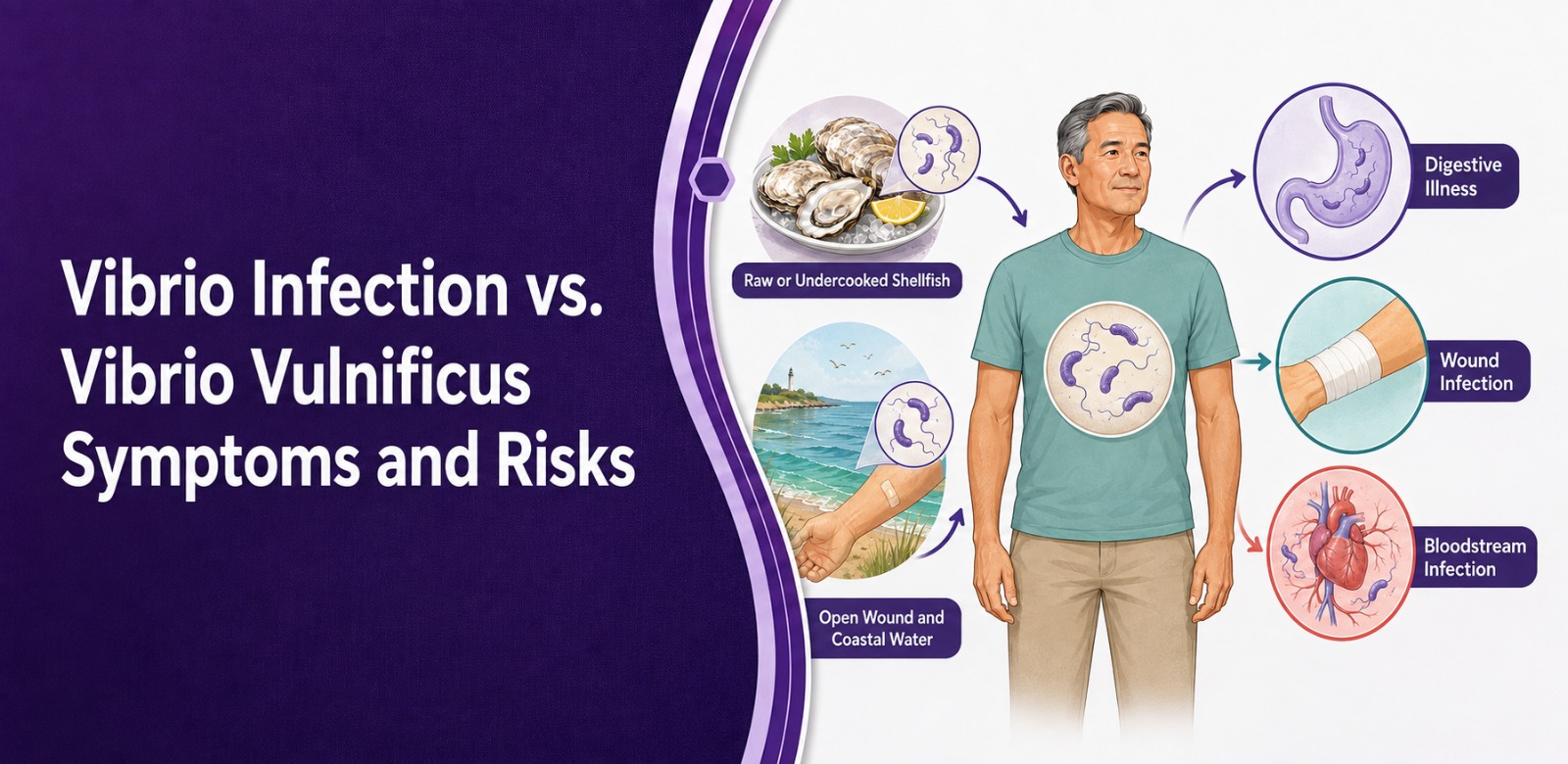
Vibrio infection describes illness caused by several Vibrio species.
Vibrio vulnificus can cause severe wound or bloodstream infections.
Raw shellfish and coastal water can expose people to Vibrio bacteria.
Symptoms may include diarrhea, cramps, fever, redness, pain, and swelling.
Cook seafood, protect open wounds, and seek prompt care for serious symptoms.
Eating raw oysters or entering coastal water with an open wound can expose the body to Vibrio bacteria. Some infections cause short-term digestive symptoms. Others progress rapidly and damage the skin, soft tissue, or bloodstream.
The comparison of Vibrio infection vs Vibrio vulnificus is often confusing because these terms do not identify two unrelated conditions. “Vibrio infection” describes an illness caused by one of several harmful Vibrio species. Vibrio vulnificus identifies one specific species that can cause severe and potentially fatal infections.
Understanding the distinction can help a person recognize exposure risks, identify warning signs, and seek appropriate medical care.
What Is a Vibrio Infection?
A Vibrio infection, also known as vibriosis, develops when harmful Vibrio bacteria enter the digestive system, wound, or bloodstream. These gram-negative bacteria naturally live in warm marine environments, including saltwater and brackish water. Brackish water contains both freshwater and saltwater and often occurs where a river meets the ocean.
Several Vibrio species can cause human illness. The species most commonly linked to vibriosis in the United States include the following:
Vibrio parahaemolyticus
Vibrio alginolyticus
Most people contract vibriosis after eating raw or undercooked shellfish, especially oysters. Others develop an infection after an open wound touches coastal water, raw seafood, or seafood juices.
What Is Vibrio Vulnificus?
Vibrio vulnificus belongs to the larger Vibrio bacterial group. It can cause intestinal illness, serious wound infections, and life-threatening bloodstream infections.
A person may encounter this bacterium through raw or undercooked shellfish. The bacterium can also enter through a cut, scrape, surgical wound, piercing, or tattoo after exposure to coastal water or raw seafood.
Vibrio Infection vs Vibrio Vulnificus: Key Differences
Feature | Vibrio infection | Vibrio vulnificus |
Meaning | Illness caused by a harmful Vibrio species | One specific species of Vibrio |
Other names | Vibriosis | V. vulnificus infection |
Common effects | Diarrhea, vomiting, fever, wound or ear infection | Severe wound infection, tissue damage, sepsis |
Main exposure | Raw seafood or coastal water | Raw oysters or wound exposure to coastal water |
Severity | Ranges from mild to severe | Can become life-threatening quickly |
Treatment | Fluids may help mild intestinal illness | Severe cases require immediate hospital treatment |
Major risk group | Anyone can contract it | Liver disease and weakened immunity increase danger |
The most important distinction remains straightforward:
Vibrio infection describes the broader illness, while Vibrio vulnificus describes one dangerous bacterial species that can cause that illness.
How Do the Symptoms Compare?
Symptoms vary according to the bacterial species, infection location, exposure route, and existing health conditions.
General Vibrio infection symptoms
An intestinal Vibrio infection commonly causes:
Nausea
Vomiting
Chills
These symptoms often begin after a person eats contaminated seafood. Persistent vomiting and diarrhea can lead to dehydration, especially among older adults and people with chronic medical conditions.
Some species cause wound or ear infections instead of digestive illness.
Vibrio vulnificus symptoms
A Vibrio vulnificus wound infection may produce the following:
Rapidly increasing pain
Redness and swelling
Warm skin
Skin discoloration
Fluid discharge
Blisters or fluid-filled lesions
Fever
A bloodstream infection may cause fever, chills, dangerously low blood pressure, severe weakness, confusion, blistering skin lesions, or septic shock.
Symptoms alone cannot confirm the bacterial species. A healthcare professional may need laboratory testing to identify the cause.
Who Faces a Higher Risk of Severe Infection?
Anyone can develop vibriosis. However, certain conditions increase the chance that Vibrio bacteria will enter the bloodstream or cause serious complications.
Higher-risk factors include:
Thalassemia
Immune-suppressing therapy
Recent stomach surgery
Medication that reduces stomach acid
Liver disease creates a particularly high risk for severe Vibrio vulnificus infection. A person with any of these factors should avoid raw oysters and protect open wounds from saltwater, brackish water, and seafood juices.
How Healthcare Professionals Diagnose the Infection
A healthcare professional will review the symptoms and ask about recent exposures. Important details include eating raw oysters, handling raw seafood, swimming, fishing, exposure to stormwater, or entering coastal waters with an open wound.
Laboratory testing can find Vibrio bacteria in stool, wound fluid, or blood. The healthcare professional may order blood cultures when a patient has fever, blistering lesions, low blood pressure, or signs of sepsis.
Mention every seafood and seawater exposure during the medical visit. This information can help the clinical team select suitable tests and begin treatment quickly.
How Does Treatment Differ?
Mild intestinal vibriosis may improve with hydration and medical monitoring. Fluids replace water lost through diarrhea and vomiting. A person with persistent symptoms, dehydration, or a chronic medical condition should contact a healthcare professional.
Severe or prolonged infections may require antibiotics. A suspected Vibrio vulnificus wound infection requires immediate treatment. Hospital teams may provide intravenous antibiotics, supportive care, and surgery to remove infected or dead tissue.
A rapidly progressing infection may require intensive care, extensive surgery, or amputation. Early antibiotic therapy and early surgical care improve survival. Never use leftover antibiotics or attempt to manage a rapidly worsening wound at home.
When Should a Person Seek Emergency Care?
Go to an emergency room immediately when seafood or coastal-water exposure precedes any of these signs:
Severe or rapidly increasing wound pain
Spreading redness or swelling
Dark skin discoloration
Blisters or leaking fluid
Fever with an infected wound
Dizziness, fainting, or confusion
Severe weakness or chills
Breathing difficulty
Signs of dangerously low blood pressure
Do not wait for a routine primary-care appointment when these symptoms appear. A severe Vibrio vulnificus infection can progress within hours.
How Can a Person Prevent Vibrio Infection?
Prevention starts with seafood safety and wound protection:
Avoid raw or undercooked oysters and other shellfish.
Cook seafood thoroughly before eating it.
Prevent raw seafood juices from touching cooked foods.
Wash hands after handling raw shellfish.
Wear protective gloves when handling raw seafood.
Keep open wounds away from saltwater and brackish water.
Cover a wound with a waterproof bandage when exposure may occur.
Wash exposed cuts immediately with soap and clean running water.
Wear protective footwear during coastal activities.
Freezing, hot sauce, alcohol, or lemon juice cannot reliably kill Vibrio bacteria in raw oysters. Proper cooking provides the most dependable protection.
Final Takeaway
Understanding Vibrio infection s Vibrio vulnificus helps distinguish a broad bacterial illness from one particularly dangerous species. Raw shellfish and coastal-water exposure create the main risks. Quick recognition matters because a Vibrio vulnificus wound or bloodstream infection can become life-threatening within a short period.
Concerned about mild symptoms or a recent seafood or coastal-water exposure?
Schedule a primary care visit to discuss your diabetes risk, A1C testing and personalized next steps. Contact your preferred office to confirm testing availability.
Frequently Asked Questions
1. Is Vibrio vulnificus the same as a Vibrio infection?
No. “Vibrio infection” describes illness caused by several Vibrio species. Vibrio vulnificus represents one specific species that can cause severe wound and bloodstream infections.
2. Can Vibrio vulnificus cause flesh-eating disease?
Yes. It can cause necrotizing fasciitis, a serious infection that destroys tissue around a wound. However, other bacteria can also cause this condition.
3. Can cooked oysters carry Vibrio bacteria?
Thorough cooking kills harmful Vibrio bacteria and greatly reduces the risk. Raw and undercooked oysters present a much greater concern.
4. Does every Vibrio infection require antibiotics?
No. Mild intestinal infections may only require fluids and monitoring. Severe, prolonged wound or bloodstream infections may require antibiotics and hospital care.
5. Can a person identify Vibrio vulnificus by looking at a wound?
No. Several infections cause redness, swelling, pain, and discharge. Laboratory testing helps identify the bacterium. Rapid progression after coastal-water exposure requires emergency evaluation.

About the Author
Dr. Anantha Chentha is a board-certified internal medicine physician with extensive experience in primary care and chronic disease management. He provides comprehensive, patient-centered care with a focus on prevention, accurate diagnosis, and long-term health management.
View Provider Profile →