Key Takeaways
- Start with an evaluation: New symptoms deserve a clinical review.
- Look beyond symptoms: Blood tests help clarify thyroid function.
- Use primary care: Many uncomplicated cases fit primary care management.
- Recognize specialist needs: Complex findings may require endocrinology input.
- Prepare your records: Bring test results and supplement details.
- Keep follow-up appointments: Your clinician can track progress and adjust care.
Feeling unusually tired, noticing weight changes, or questioning a thyroid result? Choosing primary care or endocrinologist for thyroid concerns can feel confusing. However, a clear starting point helps you move from worrying about symptoms to understanding your options.
At Passion Health Advanced Primary Care, request a thyroid evaluation to discuss your concerns.
Should You Start With Primary Care or an Endocrinologist?
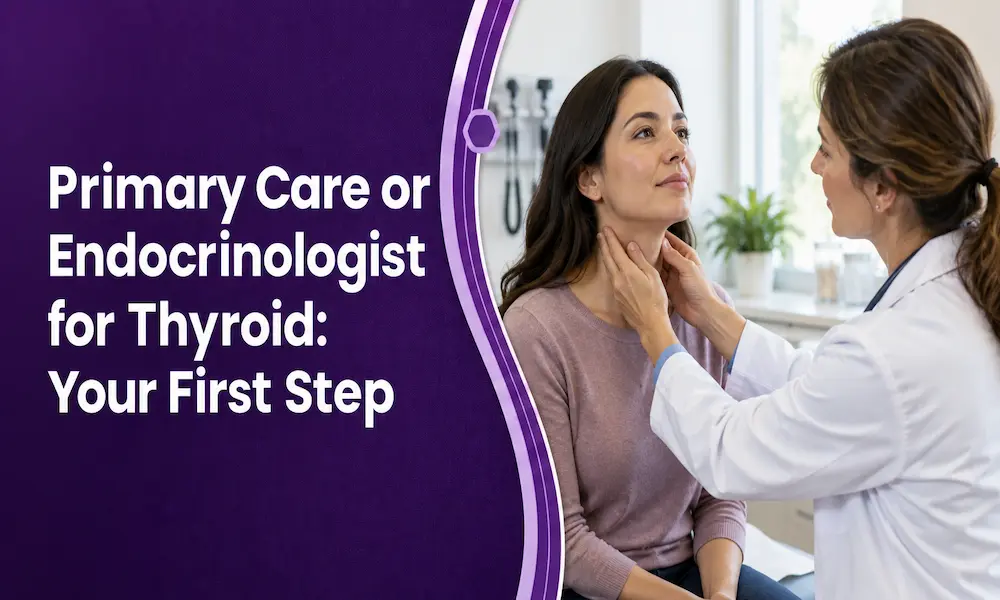
For many adults with new thyroid concerns, a primary care doctor offers a practical first step. Your clinician can review symptoms, order appropriate tests, and manage many cases of uncomplicated hypothyroidism. However, complex findings, difficult treatment decisions, or suspected specialist-level conditions may call for endocrinology care.
Your clinician can help determine whether you need monitoring, treatment, or referral. Therefore, choosing primary care or endocrinologist for thyroid concerns does not mean choosing one permanently.
What Symptoms Should You Discuss With a Doctor?
An underactive thyroid may contribute to fatigue, constipation, cold sensitivity, dry skin, or weight gain. In contrast, an overactive thyroid may cause heat intolerance, shaky hands, unexplained weight loss, or a racing heartbeat.
Symptoms alone cannot confirm thyroid disease. For example, poor sleep, anemia, medication effects, and other conditions can also affect energy or weight.
Write down when symptoms started. Additionally, mention neck swelling, family thyroid history, or previous abnormal results.
Can a Primary Care Doctor Treat Thyroid Problems?
Yes. Primary care doctors can diagnose and treat many common thyroid problems, including uncomplicated hypothyroidism. However, your diagnosis, medical history, and response to treatment guide the care plan.
Your clinician may:
Review symptoms, medications, and supplements.
Examine your neck and discuss relevant health changes.
Order thyroid blood tests when appropriate.
Prescribe and adjust medication for suitable conditions.
Monitor results and arrange specialist care when needed.
For hypothyroidism treatment, clinicians commonly use levothyroxine to replace missing thyroid hormone. Meanwhile, follow-up testing helps them check whether the dose meets your needs.
Keep taking medication according to your clinician’s instructions. Also, discuss persistent symptoms before changing your dose or adding thyroid supplements.
When Should You See an Endocrinologist?
An endocrinologist specializes in hormone disorders, including thyroid disease. When you compare primary care or endocrinologist for thyroid care, the complexity of your condition matters more than the label alone.
Your clinician may recommend specialist input for:
Suspected or confirmed hyperthyroidism, including Graves’ disease.
Thyroid levels that remain difficult to manage despite treatment adjustments.
A thyroid nodule, enlarged gland, or concerning structural finding.
Possible pituitary disease or unclear test patterns.
Thyroid disease during pregnancy when your care team needs additional expertise.
However, a referral does not automatically signal cancer or a severe problem. Specialist assessment can clarify uncertainty and help your care team choose an appropriate treatment.
If you already see an endocrinologist, continue that relationship.
Primary Care vs. Endocrinology: How Do Their Roles Compare?
Care need | Primary care role | Endocrinology role |
New symptoms | Evaluate possible thyroid and non-thyroid causes | Assess complex or unclear hormonal concerns |
Uncomplicated hypothyroidism | Often provide treatment and monitoring | Help when management becomes difficult |
Hyperthyroidism | Identify concerns and coordinate next steps | Guide specialized evaluation and treatment |
Nodules or neck swelling | Examine and arrange appropriate evaluation | Assess thyroid-specific findings and coordinate additional care |
Ultimately, primary care or endocrinologist for thyroid concerns depends on your findings. Both clinicians can contribute to your plan.
Ready to discuss your symptoms? Book a Passion Health appointment and bring any previous thyroid results.
Which Thyroid Tests Might Your Clinician Order?
Clinicians commonly begin with thyroid-stimulating hormone, or TSH. Depending on the results and clinical situation, they may add free T4 to understand thyroid function more clearly.
Additionally, selected situations may require T3 or thyroid antibody tests. These tests answer different questions; everyone does not need the same panel.
An ultrasound examines thyroid structure rather than hormone production. Therefore, clinicians usually reserve it for findings such as a palpable nodule instead of ordering it for every thyroid concern.
How Can Passion Health Help You Prepare for a Thyroid Visit?
At Passion Health Advanced Primary Care, your thyroid visit starts with a conversation about your symptoms, health history, and concerns. Bring previous thyroid results and a list of medications, vitamins, and supplements to help your clinician understand your needs.
Before testing, ask your care team whether you need any special preparation. Also, mention biotin supplements because they can affect some thyroid test results.
Whether you need an initial evaluation or ongoing monitoring, explore our thyroid care services and request an appointment at your preferred North Texas location.
Final Takeaway: Choose a Clear Starting Point
Choosing primary care or endocrinologist for thyroid concerns starts with understanding your needs. Instead of guessing, talk with a clinician. Request an appointment at Passion Health Advanced Primary Care and move toward a clearer plan.
Take the first step toward understanding your thyroid concerns.
Schedule an evaluation at Passion Health Advanced Primary Care to discuss possible causes and receive personalized next steps.
FAQs: What Do Patients Commonly Ask About Thyroid Care?
1. Do I need a specialist for every abnormal TSH result?
No. Your clinician interprets TSH alongside your history and other results. Sometimes repeat testing or primary care management provides the next step.
2. Can I have thyroid symptoms with normal results?
Yes, similar symptoms can come from other conditions. Therefore, discuss ongoing concerns rather than assuming your thyroid causes them.
3. Does every thyroid nodule mean cancer?
No. Many nodules are benign. However, a clinician should evaluate a new lump and decide whether you need imaging or further testing.
4. When should I seek emergency care?
Call 911 for severe chest pain, serious breathing difficulty, fainting, or confusion. Do not wait for a routine thyroid appointment.
5. How do I choose my first appointment?
If you feel unsure about primary care or don’t have an endocrinologist for thyroid concerns, start by discussing your symptoms with a primary care clinician. Existing specialist instructions may point you in a different direction.

About the Author
Dr. Anantha Chentha is a board-certified internal medicine physician with extensive experience in primary care and chronic disease management. He provides comprehensive, patient-centered care with a focus on prevention, accurate diagnosis, and long-term health management.
View Provider Profile →