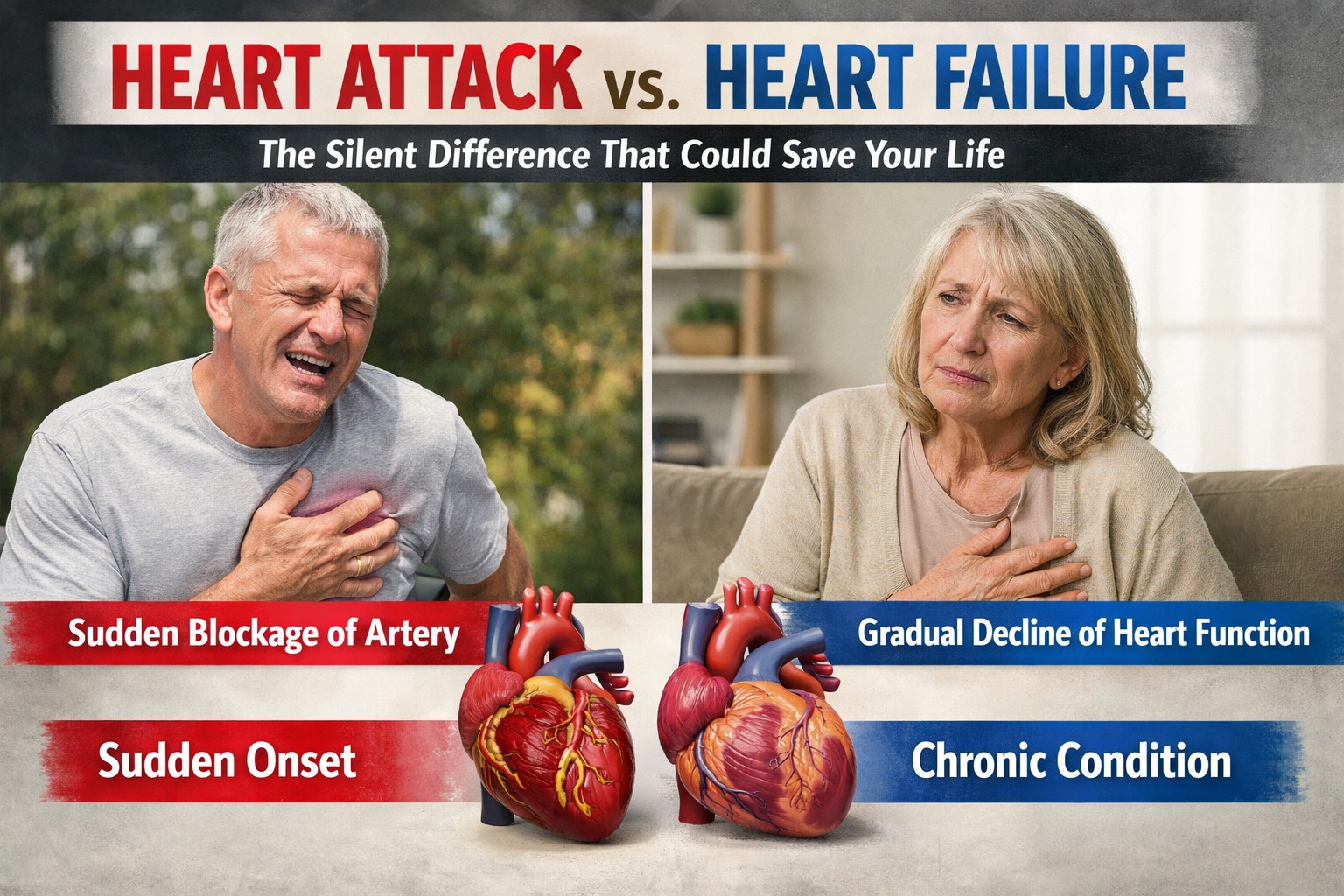
Heart Attack vs Heart Failure: The Silent Difference That Could Save Your Life
Introduction: The Hidden Danger You Can’t Afford to Ignore
Imagine this: you’re sitting at home, feeling a little short of breath, maybe some chest discomfort, but you brush it off as stress or fatigue. Hours later, that “minor” symptom could turn into a life-threatening emergency. Heart disease doesn’t always announce itself loudly—it often whispers. And those whispers can be the difference between a heart attack and heart failure.
Here’s the scary part: confusing one for the other — or ignoring the symptoms altogether — can cost you your life.
At Passion Health Primary Care, we believe that understanding your heart is the first step to protecting it. That’s why we’re breaking this down in plain English so you can recognize the signs, take action, and get the right care at the right time.
Concerned about chest pain or unusual symptoms? Don’t wait. Book an appointment with Passion Health Primary Care today and get answers from a doctor you can trust.
What Is a Heart Attack?
A heart attack is an emergency, and it happens fast.
Your heart needs a constant supply of oxygen-rich blood to function. When one of the arteries supplying that blood gets blocked — usually by a blood clot — the heart muscle starts to die. The longer the blockage lasts, the more damage is done.
This is why heart attacks demand immediate medical attention. Every minute counts.
Think of it like this: a heart attack is a plumbing problem. The pipes get blocked, and blood can’t flow through.
What Is Heart Failure?
Heart failure sounds terrifying, but it doesn’t mean your heart has stopped beating.
What it does mean is that your heart has become too weak or too stiff to pump blood efficiently throughout your body. It’s not an emergency event; it’s a chronic, long-term condition that gradually gets worse over time.
Think of heart failure like a pump that’s losing its power. It’s still working, but it can’t keep up with the demand.
The tricky thing about heart failure? It can develop slowly and quietly, sometimes over years, before you even notice something is wrong.
Heart Failure and Heart Attack: What’s the Connection?
Here’s what most people don’t realize: a heart attack can actually cause heart failure.
When a heart attack damages the heart muscle, it weakens the heart’s ability to pump blood. Over time, that weakened heart can slip into heart failure. Sometimes it happens suddenly after a major attack; this is called acute heart failure. Other times, the damage builds silently over the years.
This is exactly why treating a heart attack quickly and properly, and following up with a primary care physician, is so critical.
Heart Attack Symptoms: Warning Signs You Should Never Ignore
Heart attack symptoms can vary from person to person, and they’re often different in men versus women. But here are the most common red flags:
Chest pain or pressure — a squeezing, heavy, or burning sensation in the center of your chest
Pain that spreads to your arms, jaw, neck, back, or upper stomach
Shortness of breath, even without chest pain
Nausea or vomiting
Breaking out in a cold sweat
Sudden dizziness or lightheadedness
Extreme, unexplained fatigue — especially in women
Women are more likely to experience subtle symptoms like nausea, back pain, or just a vague sense that something is “off.” Don’t dismiss these. If something feels wrong, it probably is.
Heart Failure Symptoms: The Slow Creep You Might Be Ignoring
Heart failure symptoms tend to build gradually. Many people chalk them up to “just getting older” or “being out of shape.” That’s a dangerous mistake.
Watch out for:
Shortness of breath — especially when lying down flat or after mild activity
Persistent coughing or wheezing
Swelling in your ankles, legs, or stomach from fluid buildup
Unexplained weight gain — from retaining excess fluid
Fatigue and weakness that doesn’t go away with rest
Rapid or irregular heartbeat
Confusion or difficulty concentrating
If you’re noticing more than one of these symptoms regularly, your heart may be sending you a message. Please listen to it.
Not sure if what you’re feeling is something serious? Don’t guess. Talk to a physician at Passion Health Primary Care — we’re here to help you figure it out.
What Causes Heart Failure and Heart Attack?
Both conditions often share the same root cause: coronary artery disease.
This happens when fatty plaque builds up in your arteries over time, making them narrow and stiff. For a heart attack, a piece of that plaque breaks off, forms a clot, and blocks blood flow suddenly. For heart failure, the heart is slowly overworked, pushing blood through those narrowed arteries until it can no longer keep up.
Additional causes of heart failure include:
High blood pressure (hypertension)
Damaged or diseased heart valves
Cardiomyopathy (heart muscle disease)
Irregular heartbeats (arrhythmia)
Lung disease
Heavy alcohol use
Certain medications, including some chemotherapy drugs
Risk factors that raise your chances of both conditions:
Smoking
Obesity
Sedentary lifestyle
Family history of heart disease
Age (risk increases over 55)
Stress and poor sleep
Why Both Conditions Are Dangerous — And Why You Can’t Afford to Wait
Heart disease is the 1 cause of death in the United States. Heart failure and heart attack together account for hundreds of thousands of deaths every year.
The real danger? Most people don’t know they’re at risk until something goes terribly wrong.
Heart attacks can cause permanent heart muscle damage within minutes. Heart failure, if left untreated, progressively worsens, making it harder and harder to breathe, move, or live normally. Both conditions are manageable with the right care. But they require early detection and consistent treatment.
Waiting to see a doctor because you’re not sure your symptoms are “serious enough” is one of the most common and most avoidable mistakes we see
When Should You See a Doctor?
You have sudden chest pain, pressure, or tightness
You experience pain spreading to your arm, jaw, or back
You feel sudden, severe shortness of breath
You lose consciousness or feel faint
How Passion Health Primary Care Diagnoses Heart Conditions
At Passion Health Primary Care, our physicians take a thorough, whole-patient approach to evaluating your heart health. We don’t just treat symptoms — we look for the root cause.
Your evaluation may include:
Complete medical history and physical exam
Electrocardiogram (EKG/ECG) — measures your heart’s electrical activity
Blood tests — including markers that indicate heart stress or damage
Chest X-ray — to check heart size and lung fluid
Echocardiogram — an ultrasound of the heart showing how well it pumps
Stress testing — to evaluate how your heart performs under exertion
Our doctors will walk you through every step, explain what we find in plain language, and create a personalized plan that fits your life — not a one-size-fits-all protocol.
For heart failure:
Medications to reduce strain on the heart and manage fluid buildup
Blood pressure and heart rate medications
Implanted devices like pacemakers or defibrillators for advanced cases
Lifestyle changes: low-sodium diet, regular gentle exercise, quitting smoking
In severe cases, advanced therapies, including a ventricular assist device or heart transplant evaluation
The earlier you start treatment, the better your outcomes. Many people are surprised by how much better they feel once they have the right plan in place
What This Means for You
You don’t need a medical degree to protect your heart. You just need to pay attention and take action when something feels wrong.
Here’s what we want you to walk away knowing:
A heart attack is a sudden, life-threatening emergency caused by a blocked artery
Heart failure is a chronic condition where the heart gradually loses its pumping strength
Both can be related, both are serious, and both are manageable with proper care
Early detection and ongoing monitoring are your greatest protection
You do not have to figure this out alone — that’s exactly what Passion Health Primary Care is here for
Don’t ignore early warning signs. Book your appointment with Passion Health Primary Care today and take control of your health.
Frequently Asked Questions
Q: Can you have a heart attack without knowing it? Yes. These are called “silent heart attacks” and are more common than most people think, especially in people with diabetes or women. You may experience mild or no chest pain, but damage still occurs. Regular checkups are the best way to catch these.
Q: Is heart failure fatal?
Heart failure is a serious, progressive condition, but it is manageable. With proper treatment, medication, and lifestyle changes, many people with heart failure live for years or even decades. Early diagnosis makes a major difference in outcomes.
Q: Can young people get heart failure or have a heart attack?
Yes. While both conditions are more common in older adults, they can occur at any age, particularly if you have risk factors like obesity, high blood pressure, or a family history of heart disease.
Q: How do I know if my shortness of breath is heart-related?
Shortness of breath alone has many causes, but when combined with swelling, fatigue, or a rapid heartbeat, it could indicate heart failure. The only way to know for sure is to see a doctor. Don’t self-diagnose — let a physician evaluate you properly.
Q: What’s the difference between chest pain from a heart attack and regular chest pain?
Heart attack chest pain is typically a heavy pressure, squeezing, or tightness that may spread to the arm or jaw, lasts more than a few minutes, and is often accompanied by sweating or nausea. Regular chest pain (like from acid reflux or muscle strain) is usually more localized and positional. When in doubt, always get it checked.