Key Takeaways
- Higher blood xylitol levels have been linked with greater cardiovascular event risk.
- Research suggests xylitol may increase platelet activity and blood clot formation.
- Recent studies found associations with heart attack, stroke and other major heart events.
- Current evidence shows an association, but does not prove xylitol directly causes heart disease.
- Blood xylitol levels can also reflect the body’s own metabolism, not just dietary intake.
- People with cardiovascular risk factors may benefit from reviewing frequent xylitol use with their healthcare provider.
Xylitol appears in chewing gum, mints, candies, baked foods, and many “sugar-free” products. People often choose it because it tastes sweet, contains fewer calories than table sugar, and usually causes a smaller rise in blood glucose.
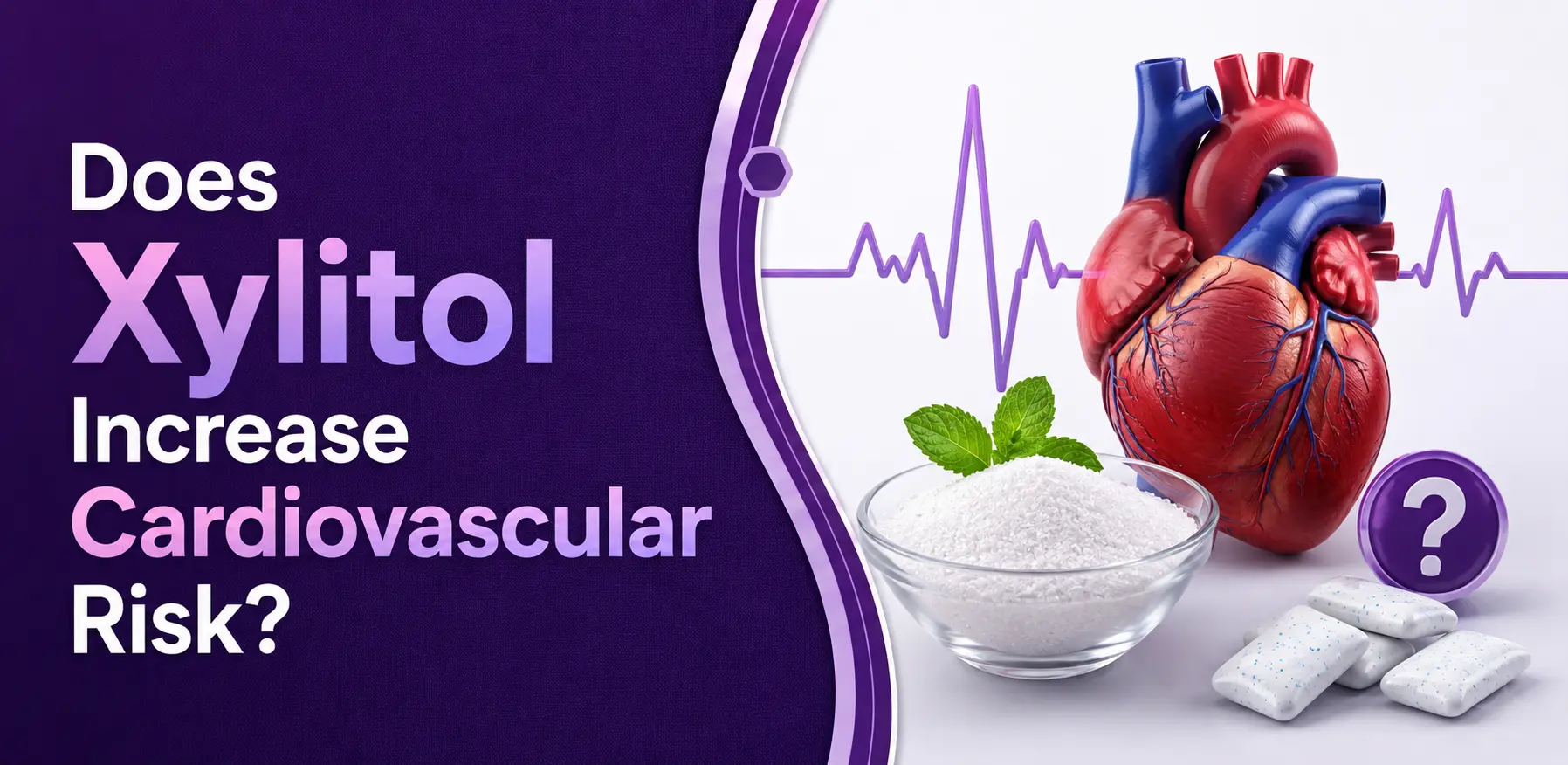
Recent research has raised an important question: Does xylitol increase cardiovascular risk? Studies have linked higher blood xylitol levels with heart attack, stroke, and blood clot risk, but researchers have not proven that normal dietary xylitol directly causes cardiovascular disease.
What Is Xylitol?
Xylitol is a sugar alcohol, also called a polyol. Manufacturers often use it in foods labeled “sugar-free,” “reduced sugar,” or “no added sugar.”
You may find xylitol in chewing gum, mints, candies, desserts, baked goods, drink mixes, and some oral-care products.
The FDA currently permits sugar alcohols, including xylitol, as sugar substitutes in foods. These sweeteners generally contain slightly fewer calories than sugar and cause a smaller immediate increase in blood glucose.
Why Are Researchers Studying Xylitol and Heart Risk?
Researchers became interested after studies found more major cardiovascular events among people with higher circulating xylitol levels.
These events included heart attack and stroke. Scientists also found evidence that xylitol may increase platelet activity and support conditions that make blood clots more likely.
The concern goes beyond blood xylitol levels. Researchers have also identified a possible clotting mechanism.
What Did the 2024 Xylitol Study Find?
A major 2024 study published in the European Heart Journal brought attention to the relationship between xylitol and cardiovascular health.
Researchers first examined 1,157 adults and later evaluated a separate group of more than 2,000 people.
Participants with the highest circulating xylitol levels had a greater risk of major adverse cardiovascular events during the following three years.
The validation analysis reported an adjusted hazard ratio of 1.57 when researchers compared the highest xylitol group with the lowest group. That represents approximately a 57% higher relative risk.
However, this number needs context.
The study found an association. It did not prove that eating xylitol caused heart attacks or strokes.
Why Does the Blood-Clot Finding Matter?
Scientists also investigated how xylitol might influence clot formation.
Laboratory studies found that xylitol increased several measures of platelet reactivity. Animal experiments also showed increased thrombosis potential.
A clot that blocks blood flow to the heart can trigger a heart attack. A clot that interrupts blood supply to part of the brain can cause an ischemic stroke.
The biological findings make the association more important, but they still cannot tell us exactly what happens after years of typical dietary xylitol intake.
What Happened in the Human Xylitol Experiment?
Researchers also studied 10 healthy volunteers who consumed a xylitol-sweetened drink.
Blood xylitol concentrations rose sharply after consumption. Researchers then observed increased platelet responsiveness while xylitol levels remained high.
NIH reported that blood xylitol concentrations rose roughly 1,000-fold within 30 minutes and later returned toward baseline.
This small experiment supports a possible short-term biological effect.
However, a study involving only 10 people cannot determine whether regular xylitol consumption over months or years causes cardiovascular disease.
What Did the 2026 Xylitol Research Add?
New research presented at the ESC Congress 2026 added a much larger population analysis.
Researchers studied 17,710 people across two long-term cohorts and compared cardiovascular outcomes according to circulating xylitol levels.
In a Canadian cohort, people with the highest xylitol levels had a 57% higher adjusted risk of major cardiovascular events over six years compared with people in the lowest group.
In the EPIC-Norfolk cohort, the highest group had an approximately 18% higher risk over 30 years.
Researchers also reported that cardiovascular-event rates tended to increase as blood xylitol concentrations increased.
The larger 2026 analysis strengthens the safety signal, but it still does not establish direct cause and effect.
So, Does Xylitol Increase Cardiovascular Risk?
Current evidence points toward a possible cardiovascular concern, but scientists cannot answer the question with a simple yes or no.
Researchers have repeatedly found that people with higher blood xylitol levels experience more cardiovascular events. Laboratory, animal, and small human experiments also suggest that xylitol may increase platelet activity and clotting potential.
However, researchers have not proven that normal dietary xylitol intake directly causes cardiovascular disease.
Long-term studies that carefully measure dietary exposure and cardiovascular outcomes will help answer that question more clearly.
High Blood Xylitol Does Not Always Mean High Xylitol Intake
This point represents one of the most important limitations of current research.
The human body naturally produces xylitol as part of glucose metabolism. Therefore, a high circulating xylitol level does not automatically mean someone consumed a large quantity of xylitol.
Metabolic health, kidney function, and other biological factors may also influence circulating levels.
Researchers must separate dietary xylitol exposure from naturally produced xylitol before they can determine how much risk comes directly from food.
Should You Stop Eating Xylitol?
Current evidence does not support panic or a blanket recommendation that everyone eliminate every product containing xylitol.
Instead, check ingredient labels and consider how frequently you consume highly processed sugar-free products.
People who regularly consume larger amounts of xylitol may want to discuss that habit with a healthcare professional, particularly when they already have cardiovascular risk factors.
The FDA continues to permit xylitol as a sugar substitute in foods. Current research raises an important safety question, but it has not established that every xylitol-containing product causes cardiovascular harm.
Who Should Pay Closer Attention?
Consider discussing your overall diet and cardiovascular risk with your clinician if you have
High LDL cholesterol
Obesity
A history of smoking
Previous heart disease
Previous stroke
A strong family history of cardiovascular disease
Xylitol represents only one possible factor.
Blood pressure, cholesterol, blood sugar, tobacco exposure, physical activity, kidney health, weight, sleep, and medication use have much stronger established links with cardiovascular health.
What Can You Do Right Now?
Start by reading ingredient lists on sugar-free foods. Notice how often xylitol appears in products you regularly consume.
At the same time, do not respond to xylitol concerns by adding large amounts of regular sugar to your diet.
If you have several cardiovascular risk factors, ask your primary care clinician whether you need updated cholesterol testing, blood pressure monitoring, diabetes screening, kidney-function testing, or a broader cardiovascular assessment.
The Bottom Line
So, does xylitol increase cardiovascular risk?
Research shows a meaningful association between higher circulating xylitol levels and cardiovascular events. Scientists have also identified a possible biological connection involving platelet activation and blood-clot formation.
The 2024 European Heart Journal study and the larger 2026 population research make this signal important enough to investigate further.
However, current evidence still does not prove that normal dietary xylitol directly causes heart attack or stroke.
For most people, awareness and moderation make more sense than fear.
Protect Your Heart With a Personalized Risk Review
Your cardiovascular health depends on many factors, including blood pressure, cholesterol, blood sugar, kidney function, family history, nutrition, physical activity, and medications.
Take the Next Step for Better Heart Health
Book an appointment with Passion Health Advanced Primary Care today for a personalized cardiovascular risk assessment and prevention plan.
Frequently Asked Questions
1. Does xylitol cause heart attacks?
Current research does not prove that xylitol directly causes heart attacks. Studies have found an association between higher blood xylitol levels and cardiovascular events.
2. Can xylitol increase stroke risk?
Researchers have linked higher circulating xylitol levels with cardiovascular events that include stroke, but scientists have not confirmed direct causation.
3. Should I avoid all sugar-free products?
No. Check the ingredients, frequency of use, and your overall diet rather than treating every sugar-free product the same way.
4. Is xylitol safe for people with diabetes?
Xylitol generally causes a smaller immediate rise in blood glucose than regular sugar. People with diabetes should still consider their complete cardiovascular and metabolic risk profile.
5. Should people with heart disease avoid xylitol?
No universal guideline currently tells every person with heart disease to avoid xylitol. Discuss frequent intake with your healthcare professional based on your overall cardiovascular risk.

About the Author
Dr. Anantha Chentha is a board-certified internal medicine physician with extensive experience in primary care and chronic disease management. He provides comprehensive, patient-centered care with a focus on prevention, accurate diagnosis, and long-term health management.
View Provider Profile →