Key Takeaways
- Morning blood sugar may rise overnight even without eating.
- The dawn phenomenon can increase glucose before waking.
- Insulin resistance, late meals, and medication timing may affect readings.
- Poor sleep, illness, and stress can influence morning glucose levels.
- Tracking bedtime and fasting glucose helps identify recurring patterns.
- Repeated high readings deserve a primary care evaluation.
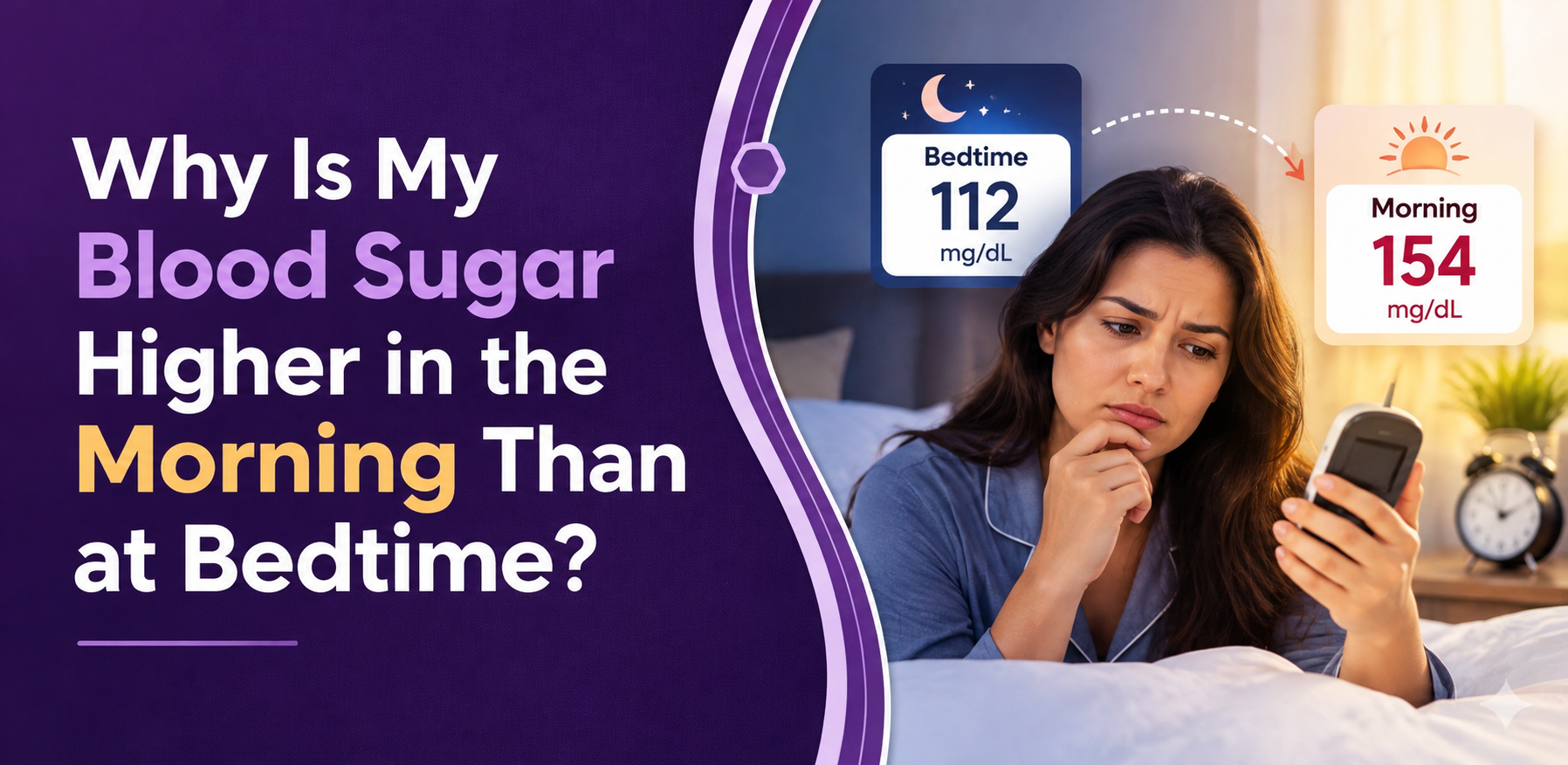
Imagine checking your glucose at 10 p.m. and seeing 112 mg/dL. You finish your evening, sleep through the night, and check again at 7 a.m. This time, your meter shows 154 mg/dL. You haven’t eaten breakfast, so where did the extra sugar come from?
This situation raises an important question: Why is my blood sugar higher in the morning than at bedtime?
Your liver, daily hormone rhythm, insulin activity, and evening habits may all influence the difference. Sometimes, several factors work together. Instead of judging one reading, look at how your glucose changes over several nights.
What Makes Your Glucose Change Between Night and Morning?
Your Body Needs Energy Even When You Don’t Eat
Sleep doesn’t switch off your body’s need for energy. While you rest, your liver supplies glucose to help your organs function.
Meanwhile, insulin helps move glucose from your bloodstream into your cells.
The timing of this rise offers an important clue.
Could Your Body Clock Explain the Morning Increase?
The Dawn Phenomenon Changes Early Morning Glucose
Your internal clock prepares you to wake up before your alarm sounds.
During the early morning hours, hormones such as cortisol and growth hormone influence how your body uses glucose. Your liver may release additional sugar, while your cells temporarily respond less effectively to insulin.
Doctors call this pattern the dawn phenomenon.
However, not every high fasting reading comes from the dawn phenomenon.
Three Overnight Patterns Worth Recognizing
Pattern One: Glucose Climbs Near Wake-Up Time
Your bedtime reading falls within your personal target. Glucose remains relatively steady overnight, then increases shortly before you wake.
This pattern may suggest the dawn phenomenon.
Pattern Two: Glucose Stays High for Hours
Your reading starts high after dinner and remains elevated during sleep.
Dinner composition, medication coverage, and other factors may contribute.
Pattern Three: Readings Change Unexpectedly
Your measurements vary significantly from one morning to another.
Irregular sleep, illness, stress, medication changes, or monitoring errors may explain some variation.
These patterns provide clues rather than diagnoses.
Could Your Glucose Monitor Explain Unexpected Readings?
Small Testing Mistakes Can Change Your Results
Before assuming your blood sugar increased overnight, consider whether your testing routine affected the numbers. Even a small amount of food or moisture on your fingertips can influence a glucose reading.
Old test strips, improper storage, or problems with your meter may also lead to unexpected results.
For more reliable blood sugar checks:
Keep your glucose meter and strips under the storage conditions the manufacturer recommends.
Make sure your test strips remain within their expiration date.
Note when you test and whether you notice unusual symptoms.
If a number seems unusually high or low, check again with proper technique and follow your diabetes care plan.
Keep in mind: Home glucose monitors provide useful information, but every device has measurement limitations. Look at repeated results rather than relying on a single number.
Could Dinner Affect Tomorrow Morning’s Reading?
Pay Attention to Timing, Not Just Food Choices
A late restaurant meal may influence your glucose differently from an earlier dinner.
Portion size, carbohydrate intake, alcohol, and evening activity can affect what happens overnight.
However, avoiding dinner altogether isn’t a reliable solution.
People who take insulin or certain diabetes medications may experience low glucose when they skip meals.
Instead, discuss meal patterns with your healthcare professional and develop a plan that fits your treatment.
What Role Do Sleep and Medication Play?
Rest and Treatment Timing Can Change the Picture
Poor sleep may make your body less responsive to insulin. Additionally, some diabetes medications may not provide sufficient coverage throughout the night.
Your doctor may review when you take medication, how consistently you follow your plan, and whether other factors affect your readings.
Never change insulin amounts or medication schedules independently.
Try a Simple Morning Glucose Tracking Routine
Collect Information Your Doctor Can Actually Use
A short record may help your care team identify recurring patterns.
Track | What to write down |
Before bedtime | Glucose reading and time |
Evening meal | Dinner time and main foods |
Medication | Name, dose, and timing |
Morning | Glucose before breakfast |
Daily changes | Illness, stress, sleep, or unusual activity |
Follow your clinician’s recommended testing schedule. Don’t add overnight finger-prick checks without discussing whether you need them.
A continuous glucose monitor may provide more detailed information for some patients.
When Does Morning Glucose Need Medical Attention?
Repeated Results Matter More Than an Isolated Surprise
One unexpected reading doesn’t establish a diagnosis.
However, repeatedly elevated fasting glucose deserves evaluation, especially when you experience unusual thirst, frequent urination, fatigue, or blurry vision.
Your clinician may consider laboratory tests, your medical history, and your current treatment plan.
Seek urgent medical guidance for very high readings or concerning symptoms. Vomiting, confusion, deep or difficult breathing, or severe weakness can indicate a medical emergency, particularly with diabetes.
How Can Primary Care Help You Understand the Pattern?
Turn Glucose Numbers Into a Practical Care Plan
Your primary care provider can compare glucose trends with your A1C, medications, nutrition, health history, and individual treatment goals.
This evaluation helps distinguish a recurring morning pattern from other glucose-management concerns.
Passion Health provides primary care and diabetes management services across North Texas, including Irving, Plano, Frisco, McKinney, Kaufman, and other clinic communities.
Make Your Morning Readings More Meaningful
A higher waking glucose reading doesn’t tell the whole story. Your overnight pattern, medications, meals, sleep, and health history help explain what may be happening.
Instead of guessing or changing treatment yourself, share your measurements with a healthcare professional.
Ready to understand your blood sugar changes?
Book an appointment at Passion Health Primary Care for individualized diabetes guidance and ongoing care.
Frequently Asked Questions
1. Why does my sugar rise without breakfast?
Your liver releases glucose overnight. Early morning hormone changes may increase this release.
2. Does a normal bedtime reading guarantee normal fasting glucose?
No. Your glucose can change significantly while you sleep.
3. Can poor sleep increase morning sugar?
Yes. Inadequate sleep can affect insulin sensitivity and glucose control.
4. Should I eat a bedtime snack to prevent morning highs?
Not automatically. Snacks can raise overnight glucose, while some medications increase low-glucose risks. Ask your clinician.
5. Can morning glucose alone confirm diabetes?
No. Doctors use appropriate diagnostic laboratory tests and clinical information.
Lorem ipsum dolor sit amet, consectetur adipiscing elit. Ut elit tellus, luctus nec ullamcorper mattis, pulvinar dapibus leo.

About the Author
Dr. Anantha Chentha is a board-certified internal medicine physician with extensive experience in primary care and chronic disease management. He provides comprehensive, patient-centered care with a focus on prevention, accurate diagnosis, and long-term health management.
View Provider Profile →