Key Takeaways
- White coat hypertension causes higher readings in the clinic and lower readings at home.
- Masked hypertension causes normal clinic readings but higher readings during daily life.
- Stress, caffeine, exercise, sleep, medication timing and technique can affect blood pressure.
- Consistent home monitoring can reveal patterns that a single office reading may miss.
- Ambulatory monitoring and RPM can help healthcare teams track blood pressure over time.
- A primary care provider can compare your readings and create a personalized care plan.
Blood pressure does not stay at one number all day. You may see a high reading at your doctor’s office and a lower number at home, or the opposite.
Stress, activity, sleep, caffeine, medication timing, and measurement technique can affect the result.
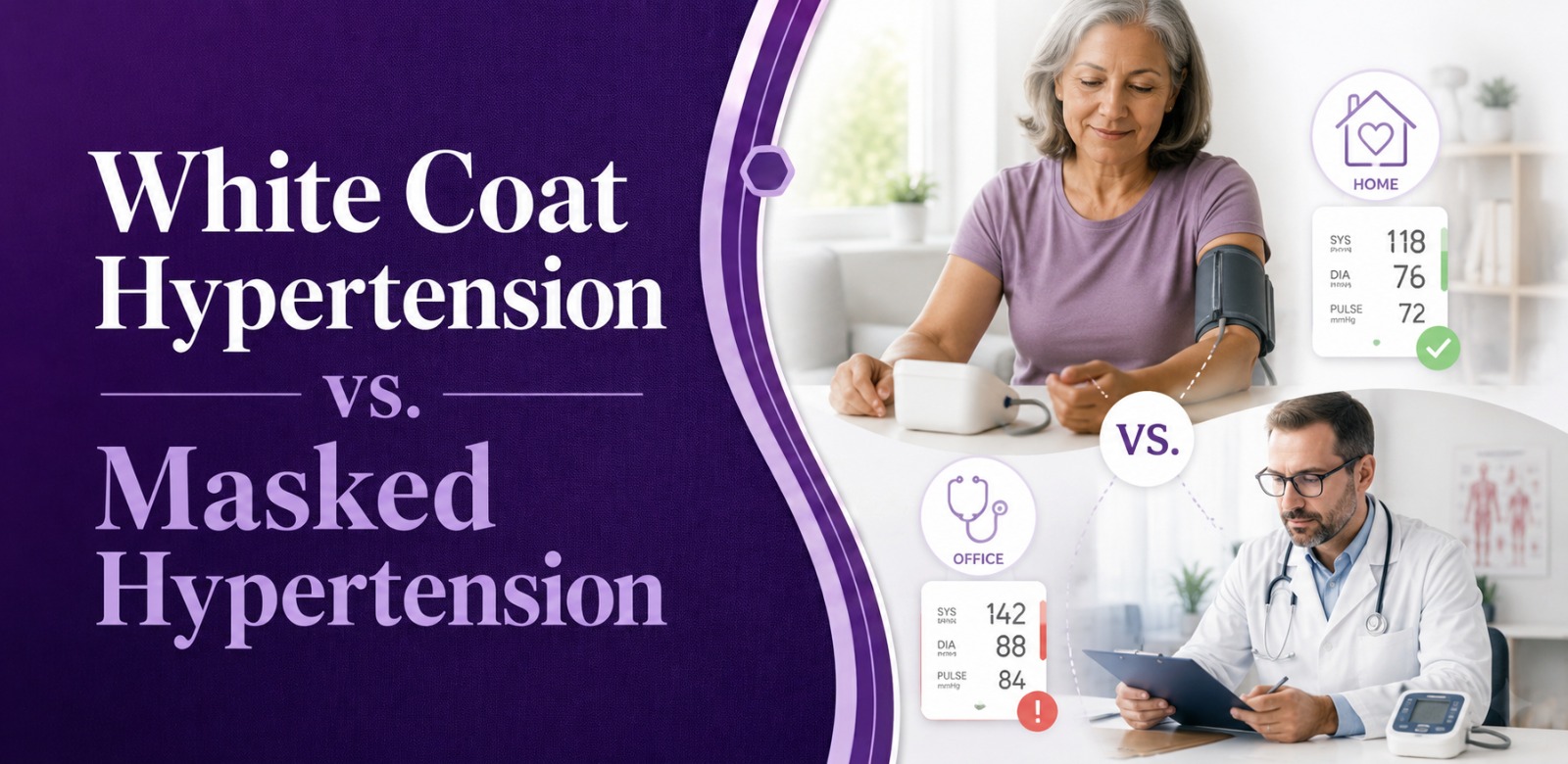
A higher office reading with lower home numbers may suggest white coat hypertension. In contrast, a normal clinic reading with higher home numbers may point to masked hypertension.
Understanding White Coat Hypertension vs. Masked Hypertension can help uncover hidden blood pressure risks and prevent decisions based on one measurement.
Your blood pressure pattern matters more than a single number. Consistent home readings, accurate measurement, and professional review can provide a clearer picture of your heart and blood vessel health.
What Is White Coat Hypertension?
White coat hypertension happens when blood pressure rises in a medical setting but stays lower outside the clinic. Some people experience this even when they do not feel noticeably anxious.
A white coat effect and white coat hypertension do not mean exactly the same thing. A white coat effect describes a higher office reading, while white coat hypertension describes a recurring office-versus-home pattern that needs evaluation.
Quick Pattern
Doctor’s office: Higher reading
Home: Lower reading
Possible pattern: White coat hypertension
One high office reading does not confirm the condition. Your provider may compare several office readings with home measurements or 24-hour monitoring before concluding.
What Is Masked Hypertension?
Masked hypertension shows the reverse pattern. Your blood pressure may look normal during an appointment while readings at home, work, or during daily activities stay higher.
This matters because a normal clinic number can hide ongoing high blood pressure. Your heart and blood vessels still experience the higher pressure outside the office.
Quick Pattern
Doctor’s office: Normal or lower
Home or daily life: Higher
Possible pattern: Masked hypertension
White Coat Hypertension vs. Masked Hypertension
The main difference comes down to where the higher reading appears.
Blood Pressure Pattern | Office Reading | Home or Daily Reading |
White coat hypertension | Higher | Lower |
Masked hypertension | Normal or lower | Higher |
Your provider needs reliable readings, your medical history, and current medications to understand the difference.
Why Do Blood Pressure Readings Change?
Blood pressure naturally rises and falls throughout the day. Physical activity, emotions, pain, meals, hydration, sleep, stress, and medication can all influence the result.
Small technique problems matter too. Crossing your legs, talking, using the wrong cuff size, or checking immediately after exercise may raise a reading.
Common Factors That Can Affect a Reading
Stress or anxiety
Caffeine or nicotine
Recent exercise
Medication timing
Wrong cuff size
Talking during measurement
Simple Home Monitoring Guide
Before: Rest, avoid recent exercise or caffeine, and empty your bladder.
During: Sit still, support your arm, and avoid talking.
After: Record the result and note anything unusual.
Why Home Blood Pressure Monitoring Matters
An office reading gives useful information, but it only captures one moment. Home readings add context and show how your blood pressure behaves during everyday life.
For possible white coat hypertension, home measurements may show that pressure falls outside the clinic. For possible masked hypertension, they may uncover higher readings that an office check misses.
This information can guide decisions about monitoring, lifestyle changes, medication, or additional testing.
When 24-Hour Blood Pressure Monitoring May Help
Ambulatory blood pressure monitoring, often called ABPM, uses a portable device that checks blood pressure repeatedly over about 24 hours.
It records readings during normal activities and sleep. This wider view can help your provider identify daytime and nighttime patterns that one clinic reading cannot capture.
Research comparing office readings with 24-hour measurements highlights why this broader view matters. Blood pressure patterns can change according to a person’s underlying pressure level and the time of measurement.
How Primary Care and RPM Can Help
Primary care brings your readings into a larger health picture. Your provider can review medications, diet, activity, sleep, stress, family history, and other cardiovascular risk factors.
Some patients may also benefit from remote patient monitoring, or RPM. RPM can help a healthcare team follow blood pressure readings between visits and identify meaningful trends.
Think Beyond One Number
One reading → Snapshot
Several readings → Trend
Trend + clinical review → Better-informed care
This approach can prove especially helpful when white coat hypertension or masked hypertension makes clinic readings difficult to interpret.
Why Blood Pressure Patterns Matter
High blood pressure often causes no obvious warning signs. That makes accurate measurement especially important for long-term heart, kidney, and blood vessel health.
A normal office reading should not automatically dismiss repeatedly high home measurements. Likewise, one high clinic number does not always mean your blood pressure stays high throughout the day.
Your healthcare provider can compare patterns instead of relying on a single result. That approach may reduce unnecessary concern while also helping uncover blood pressure that needs closer attention.
When Should You Get Urgent Help?
If you get one unusually high reading, sit quietly, check your technique, and measure again after a short rest.
If your blood pressure remains above 180/120 mmHg, contact a healthcare professional promptly. If you also have chest pain, shortness of breath, weakness, numbness, vision changes, or difficulty speaking,
Never stop or change prescribed blood pressure medicine because of one home reading unless your healthcare provider gives you that instruction.
The Final Takeaway
White coat hypertension and masked hypertension show why blood pressure care should focus on patterns rather than one number. Office and home readings can each provide important information.
Consistent measurements and professional review can help explain why your numbers change.
If your blood pressure readings vary between home and the clinic
Schedule an evaluation at Passion Health Advanced Primary Care to discuss possible causes and receive personalized next steps.
Frequently Asked Questions
1. Can white coat hypertension happen without anxiety?
Yes. Some people experience higher clinic readings without obvious nervousness. Repeated home and office readings can help identify the pattern.
2. Is masked hypertension important?
Yes. Higher blood pressure outside the clinic can matter even when an office reading looks normal. Discuss repeated high home readings with your provider.
3. Should I trust my home or office blood pressure reading?
Both can offer useful information. Your provider can compare accurate readings from different settings and evaluate the overall pattern.
4. How often should I check my blood pressure at home?
The right schedule depends on your health and treatment plan. Ask your provider when and how often to measure.
5. Can remote patient monitoring help with blood pressure care?
For some patients, yes. Remote patient monitoring can help a care team follow trends between appointments and support ongoing blood pressure management.

About the Author
Dr. Anantha Chentha is a board-certified internal medicine physician with extensive experience in primary care and chronic disease management. He provides comprehensive, patient-centered care with a focus on prevention, accurate diagnosis, and long-term health management.
View Provider Profile →