
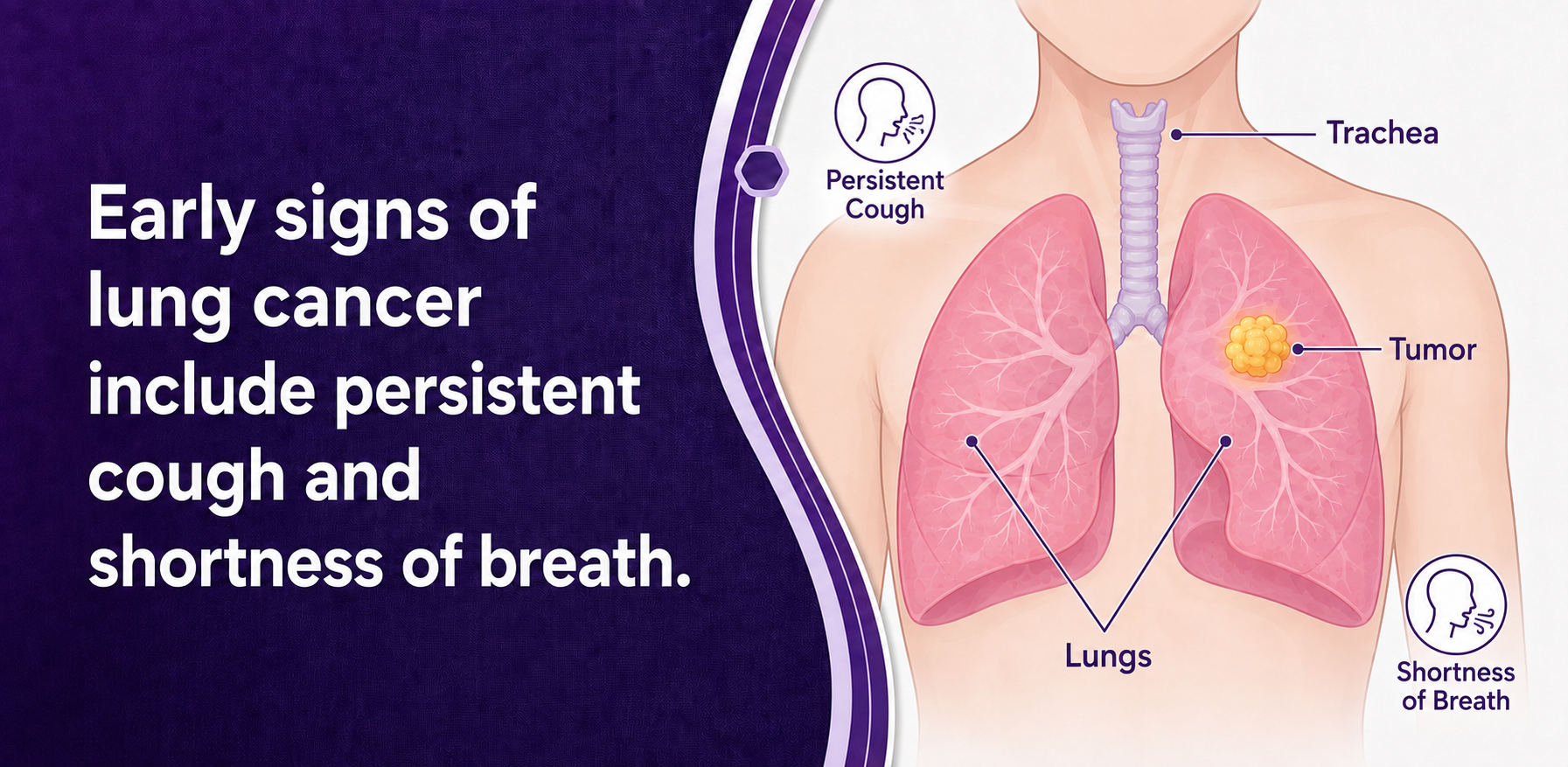
Lung cancer can develop without causing obvious symptoms during its early stages. When warning signs appear, many people mistake them for asthma, allergies, bronchitis, pneumonia, or the effects of smoking. A cough often has a harmless cause, but a persistent or changing cough deserves medical attention.
Early evaluation does not mean a doctor suspects cancer. It helps identify the actual cause, begin appropriate treatment, and determine whether additional testing makes sense.
Persistent Cough or Breathing Changes?
Concerned about a persistent cough, chest discomfort, or breathing changes? Book an appointment at Passion Health Advanced Primary Care for a personalized evaluation.
✓ Key Takeaways
A persistent or changing cough deserves medical evaluation, especially for smokers and former smokers.
Coughing up blood, severe breathing difficulty, or sudden chest pain requires prompt medical attention.
Lung cancer can affect nonsmokers through radon, secondhand smoke, workplace exposure, and other risks.
Eligible adults may benefit from annual low-dose CT screening after discussing the benefits and risks.
What Is Lung Cancer?
Lung cancer starts when abnormal cells multiply uncontrollably inside lung tissue. These cells may form a tumor, damage healthy tissue, and travel to lymph nodes or other organs.
Doctors generally divide lung cancer into two main categories:
Non-small cell lung cancer: NSCLC represents the most common category. It includes adenocarcinoma, squamous cell carcinoma, and other subtypes.
Small cell lung cancer: SCLC occurs less often but usually grows and spreads more rapidly.
Doctors identify the cancer type and stage before recommending treatment. The cancer’s location, molecular characteristics, spread, and the patient’s general health also influence treatment decisions.
What Are the Early Warning Signs of Lung Cancer?
Lung cancer often causes no noticeable symptoms at first. According to the Cleveland Clinic and Mayo Clinic, possible warning signs include a persistent cough, coughing up blood, chest pain, shortness of breath, wheezing, hoarseness, fatigue, and unexplained weight loss.
These symptoms do not confirm lung cancer. Many common and treatable conditions cause similar problems. A healthcare professional must evaluate persistent symptoms and determine the cause.
1. A cough that does not improve
A cold or respiratory infection can cause a cough for several days or weeks. However, contact a doctor when a new cough continues, worsens, or returns after treatment.
People with a chronic cough should watch for changes in its frequency, depth, sound, or mucus production. A smoker or former smoker should also report any noticeable change from the usual coughing pattern.
2. Coughing up blood
Blood may appear as bright-red streaks, rust-colored mucus, or a larger amount of bleeding. Even a small amount requires prompt medical attention because lung infections, blood clots, airway damage, and lung cancer can cause it.
Seek emergency care for heavy bleeding, severe breathlessness, fainting, or chest pain.
3. Shortness of breath
A lung tumor may narrow an airway or contribute to fluid around a lung. Both problems can make breathing difficult. However, asthma, infections, heart disease, anemia, and other medical conditions can also cause breathlessness.
Schedule an evaluation when shortness of breath starts without a clear explanation, becomes worse, or interferes with normal activities.
4. Persistent chest pain
Lung cancer-related chest discomfort may become worse during coughing, laughing, or deep breathing. Pain may also reach the shoulder or back.
Chest pain has many possible causes, including conditions that require immediate treatment. Call 911 for sudden, severe, crushing, or pressure-like chest pain, especially when it occurs with sweating, nausea, dizziness, or breathing difficulty.
5. New wheezing or hoarseness
Airway narrowing can produce wheezing. A tumor that affects nerves connected to the voice box may cause hoarseness. Respiratory infections often cause these symptoms temporarily, but persistent or unexplained changes require a medical examination.
6. Unexplained weight or appetite loss
Cancer can affect appetite, metabolism, and the body’s use of energy. Contact a doctor if weight drops without changes to diet or physical activity.
Thyroid disorders, digestive diseases, infections, depression, and medication effects can also cause unintentional weight loss.
7. Persistent fatigue
Lung cancer may cause exhaustion that does not improve after adequate rest. Fatigue alone rarely identifies a specific disease, but fatigue combined with a persistent cough, weight loss, or breathlessness needs attention.
8. Repeated respiratory infections
Pneumonia or bronchitis that repeatedly affects the same lung area may require further investigation. A growth can sometimes partially block an airway and make an infection difficult to clear.
A doctor may recommend chest imaging based on the symptoms, examination, and medical history.
Should You Get Checked for Lung Cancer?
A primary care provider can review your symptoms, smoking history and environmental risks to determine whether imaging, screening or specialist care may help.
Book an Appointment →Can Nonsmokers Develop Lung Cancer?
Yes. Lung cancer can affect people who have never smoked. Smoking remains the most significant risk factor, but it does not explain every diagnosis.
Other risk factors include:
Secondhand tobacco smoke
Radon inside homes or buildings
Air pollution
Asbestos, diesel exhaust, arsenic, chromium, or nickel exposure
Previous radiation treatment involving the chest
A family history of lung cancer
Increasing age
Nonsmokers should not dismiss persistent respiratory symptoms. The symptoms generally remain similar regardless of smoking history.
Who Should Receive Lung Cancer Screening?
Screening looks for lung cancer before symptoms begin. A diagnostic test, in contrast, investigates a symptom or abnormal finding.
The U.S. Preventive Services Task Force recommends annual low-dose CT screening for adults who meet all three conditions:
Age 50 to 80
At least a 20 pack-year smoking history
Current smoking or quitting within the past 15 years
The recommendation generally advises stopping screening after 15 smoke-free years or when a serious health condition limits life expectancy or the ability to undergo curative lung surgery. A standard chest X-ray does not replace recommended low-dose CT screening.
What Are the Benefits and Limitations of Screening?
Low-dose CT may detect certain lung cancers at an earlier and potentially more treatable stage. However, the scan can also find harmless lung nodules. These findings may lead to repeat imaging, anxiety, or invasive testing.
Screening also exposes the patient to a small radiation dose and cannot identify every cancer. A shared decision-making appointment helps compare the possible benefits and harms based on smoking history, current health, and personal preferences.
How Do Doctors Diagnose Lung Cancer?
A primary care doctor may review symptoms, tobacco exposure, workplace risks, family history, and previous medical conditions. The examination may lead to chest imaging or a specialist referral.
Diagnostic testing may include:
Chest X-ray or CT scan
PET scan
Brain MRI when appropriate
Bronchoscopy
Needle or surgical biopsy
Molecular or biomarker testing
Imaging can locate a suspicious area, but a biopsy usually confirms the diagnosis and identifies the cancer type. Biomarker testing may help the oncology team select targeted treatments.
How Do Doctors Treat Lung Cancer?
Treatment depends on the cancer type, stage, molecular features, location, and patient’s health. The care team may recommend surgery. chemotherapy, radiation therapy, immunotherapy, targeted therapy, or a combination of treatments.
Some procedures relieve airway blockage or drain fluid from around a lung. Supportive and palliative care can control symptoms, reduce pain, and protect quality of life at any stage.
Early detection may provide more treatment choices, but doctors can also treat advanced lung cancer. Each patient needs an individualized treatment plan.
How Can Someone Lower Lung Cancer Risk?
No strategy prevents every case. However, several actions can reduce risk:
Stop smoking and avoid tobacco products.
Avoid secondhand smoke.
Test homes for radon.
Follow workplace safety requirements.
Use recommended protective equipment around hazardous substances.
Discuss low-dose CT screening eligibility with a doctor.
Seek care for persistent or changing respiratory symptoms.
A primary care doctor can also recommend counseling, nicotine replacement, or prescription medication to support smoking cessation.
When Should Someone Contact a Doctor?
Schedule an evaluation for a persistent or worsening cough, unexplained breathlessness, new wheezing, repeated pneumonia, ongoing hoarseness, unexplained fatigue, weight loss, or a change in a chronic smoker’s cough.
Seek urgent medical attention for coughing up blood, severe breathing difficulty, blue lips, fainting, confusion, or sudden and intense chest pain.
Do Not Wait for Symptoms to Become Severe
Most coughs and breathing problems do not result from lung cancer. Still, persistent or unusual symptoms need proper evaluation. Prompt care can identify infections, asthma, heart conditions, or other treatable causes and support timely specialist referral when necessary.
Do Not Ignore Persistent Breathing Symptoms
Schedule a visit to discuss a persistent cough, chest discomfort, breathing changes, smoking history or lung cancer screening eligibility.
Passion Health Advanced Primary Care Locations
Frequently Asked Questions
1. What usually appears as the first sign of lung cancer?
No single symptom always appears first. A persistent or changing cough represents one of the most commonly reported warning signs.
2. Can lung cancer occur without a cough?
Yes. Some people experience breathlessness, chest pain, fatigue, or weight loss, while others notice no early symptoms.
3. Does coughing up blood always mean lung cancer?
No. Infections and other lung conditions can cause blood in mucus, but the symptom requires prompt medical evaluation.
4. Can a chest X-ray rule out lung cancer?
No. A chest X-ray may miss some lung cancers. A doctor may recommend a diagnostic CT scan based on symptoms and risk.
5. Can quitting smoking still reduce the risk?
Yes. Quitting smoking lowers lung cancer risk even after many years of tobacco use.

About the Author
Dr. Anantha Chentha is a board-certified internal medicine physician with extensive experience in primary care and chronic disease management. He provides comprehensive, patient-centered care with a focus on prevention, accurate diagnosis, and long-term health management.
View Provider Profile →