Passion Health Primary Care Blog Hemorrhoid Symptoms: When Should You See a Primary Care Doctor?

Hemorrhoid Symptoms: When Should You See a Primary Care Doctor?

Medically reviewed by Dr. Anantha Chentha, MD, FACP, CHCQM-PHY ADV Internal Medicine

Is Rectal Bleeding or Anal Pain a Sign of Hemorrhoids?

Key takeaways

  • Bright-red bleeding is common with hemorrhoids, but it should still be evaluated.
  • Hemorrhoid symptoms often improve with fiber, fluids, and bowel habit changes.
  • Repeated or unexplained rectal bleeding needs evaluation rather than assumptions.
  • A sudden painful lump or heavy bleeding requires prompt medical attention.
  • Primary care can examine you, start treatment, and refer you when procedures are needed.

Bright-red blood after a bowel movement can feel alarming. Anal itching, swelling, or a painful lump can also cause discomfort. Hemorrhoids often cause these symptoms, but other conditions can look similar.

A primary care visit can help confirm the cause and guide safe treatment. Not sure whether your symptoms are hemorrhoids? Book an appointment with Passion Health Advanced Primary Care for a private, respectful evaluation.

Patients looking for primary care in Frisco, Irving, Plano, Prosper, , Aubrey, Flower Mound, Ennis, Kaufman, Kemp, , McKinney, TX

What Are Hemorrhoids?

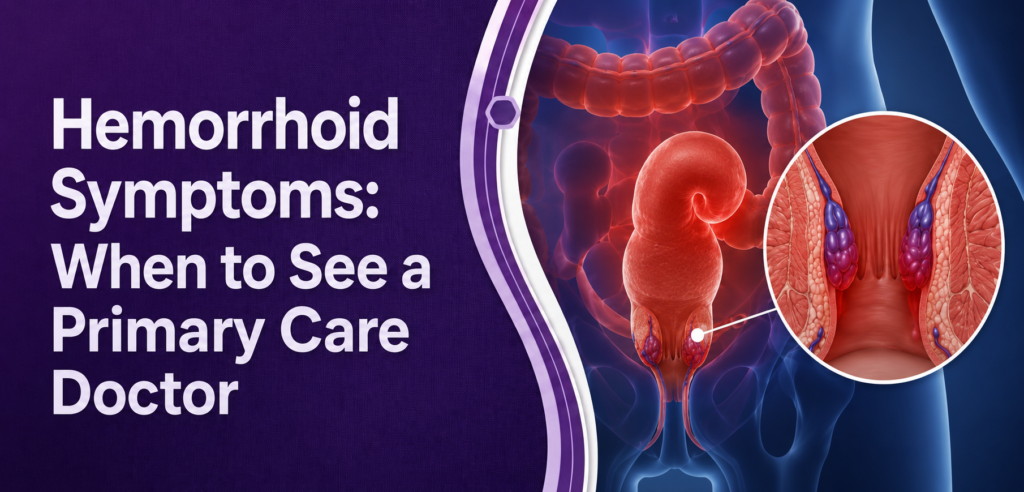
Hemorrhoids, sometimes called piles, are swollen veins in the anus or lower rectum. They may form inside the rectum or under the skin around the anus. Their location affects the symptoms they cause.

Internal hemorrhoids often cause painless, bright-red bleeding. External hemorrhoids may cause itching, swelling, tenderness, pain, or bleeding. A prolapsed internal hemorrhoid may extend through the anal opening and cause irritation.

Common Hemorrhoid Symptoms

Symptoms can range from mild irritation to sudden pain. Some people notice blood once, while others have repeated discomfort.

  • Bright-red blood on toilet paper, stool, or in the toilet
  • Itching or irritation around the anus
  • Swelling or a tender lump near the anus
  • Pain while sitting or passing stool
  • A bulge through the anal opening

A hard, discolored lump with sudden, intense pain may point to a thrombosed external hemorrhoid. This happens when blood collects and forms a clot inside an external hemorrhoid.

Internal, External, and Thrombosed Hemorrhoids

Type

Location

Common signs

Internal

Inside the rectum

Usually painless bleeding; possible prolapse

External

Under the skin around the anus

Itching, swelling, soreness, pain, or bleeding

Thrombosed

Clotted external hemorrhoid

Sudden severe pain and a firm, discolored lump

Prolapsed

Internal hemorrhoid extending outside

Bulging, irritation, bleeding, or discomfort

This table cannot confirm a diagnosis. Anal fissures, infections, polyps, and other digestive conditions may cause similar symptoms.

What Causes Hemorrhoids?

Hemorrhoids develop when pressure stretches and irritates veins in the lower rectum or anus. Repeated straining can increase that pressure and make swollen veins more likely.

Common contributors include constipation, ongoing diarrhea, prolonged toilet sitting, a low-fiber diet, pregnancy, excess body weight, anal intercourse, and heavy lifting. Risk also rises with age.

  • Do not ignore the urge to have a bowel movement.
  • Avoid holding your breath and pushing hard.
  • Limit unnecessary time on the toilet.
  • Get help for ongoing constipation or diarrhea.
HEMORRHOID SYMPTOM EVALUATION

Rectal Bleeding, Pain, or
Swelling That Won’t Improve?

A primary care doctor can evaluate your symptoms, identify the likely cause, recommend treatment, and arrange specialist care when needed.

Book an Appointment

Hemorrhoid Symptoms and When to See a Primary Care Doctor

Contact a primary care doctor for rectal bleeding, even when you suspect hemorrhoids. A clinician should consider other possible causes.

Schedule a visit when symptoms do not improve after about one week, keep returning, disturb sleep, or affect daily life. Changes in bowel habits or stool appearance also need attention.

Arrange a prompt evaluation for:

  • Repeated or unexplained rectal bleeding
  • A painful or enlarging anal lump
  • Symptoms lasting longer than one week
  • Ongoing constipation or diarrhea
  • New changes in bowel habits
  • Fever, vomiting, or abdominal pain

Seek emergency care for heavy rectal bleeding, severe pain with significant bleeding, dizziness, lightheadedness, or fainting. These signs may require urgent assessment.

What Happens During a Primary Care Visit?

Your doctor will ask when symptoms started, how often bleeding occurs, whether bowel habits changed, and what treatments you tried.

The examination may include an external check and digital rectal exam. Depending on your history, the clinician may recommend anoscopy, sigmoidoscopy, colon evaluation, tests, or a specialist referral.

Your doctor can also review medicines or conditions that affect constipation, diarrhea, or bleeding.

Home Care for Mild Hemorrhoid Symptoms

Many mild hemorrhoids improve with fiber, fluids, better toilet habits, and time. Pain and bleeding may last about a week or slightly longer.

  • Soak in a warm sitz bath for 10 to 20 minutes.
  • Drink enough fluids to support softer stools.
  • Add fruits, vegetables, beans, and whole grains gradually.
  • Stay active to encourage regular bowel movements.
  • Clean gently and avoid aggressive wiping.

Short-term over-the-counter products may ease itching. Ask a clinician or pharmacist which product fits your health history, especially with ongoing bleeding.

A Simple Daily Fiber Calculation

Generally, the daily fiber range is about 25 to 38 grams for most adults. Increase fiber gradually because a sudden jump may cause gas or bloating, and drink enough fluid when adding fiber.

Three meals × about 7 grams = 21 grams

Two snacks × about 3 grams = 6 grams

Estimated daily total = 27 grams

This example shows how fiber can add up. Ask your doctor for personal advice if you have digestive disease, fluid restrictions, or prior bowel blockage.

Which Symptoms Need a Prompt Appointment?

See a primary care doctor if hemorrhoid symptoms last longer than one week, repeatedly return, disturb sleep, or affect daily activities. Rectal bleeding should always be evaluated, even when you think hemorrhoids are the cause.

Schedule an appointment for:

  • Repeated or unexplained rectal bleeding

  • A painful, swollen, or enlarging anal lump

  • Persistent itching, swelling, or discomfort

  • Ongoing constipation or diarrhea

  • New changes in bowel habits or stool appearance

  • Abdominal pain, fever, or vomiting

Seek emergency care for heavy bleeding, fainting, dizziness, lightheadedness, or severe pain accompanied by significant bleeding.

How Primary Care Helps Treat Hemorrhoids?

Persistent, prolapsed, bleeding, or very painful hemorrhoids may need an office procedure. Options include rubber band ligation, infrared coagulation, electrocoagulation, or sclerotherapy.

Large external or severe prolapsed hemorrhoids may require surgery. The right option depends on type, severity, health, and response to home care.

A primary care doctor can identify the likely cause, start conservative treatment, and refer you to a gastroenterologist or colorectal specialist when advanced care becomes necessary.

How to Reduce Future Hemorrhoid Flare-Ups

Prevention focuses on making stools easier to pass and reducing pressure on rectal veins. Small, consistent changes often work better than extreme diet changes.

  • Eat fiber-rich foods throughout the day.
  • Drink fluids according to your healthcare needs.
  • Exercise regularly and break up long sitting periods.
  • Go when you feel the urge.
  • Avoid straining and prolonged toilet sitting.

Why a Proper Diagnosis Matters

Clinicians evaluate hemorrhoid symptoms routinely. A respectful visit can reduce uncertainty and help you avoid the wrong treatment.

Most hemorrhoids do not cause serious complications. Still, ongoing blood loss can rarely cause anemia, while thrombosed or strangulated hemorrhoids may cause intense pain.

More importantly, do not automatically assume that rectal bleeding comes from hemorrhoids. Colorectal conditions, anal conditions, digestive inflammation, and other health problems may cause similar signs.

Your primary care doctor can assess your symptoms in the context of your age, health history, medicines, family history, and recent bowel changes. This complete evaluation supports a safer diagnosis.

Final Takeaway

Hemorrhoid symptoms can feel uncomfortable to discuss, but early evaluation can provide answers. Do not ignore rectal bleeding, persistent pain, or a new lump.

Our Primary Care Locations

Need care for this?

A Passion Health clinician can see you in person or online.

In person

Request an in-person visit at any Passion Health location to review your cholesterol numbers and heart risk.

Choose your clinic and clinician across North Texas

Book an appointment in person at Passion Health clinics

Online

Answer a few questions online to find the right next step, whether that is a visit, lab work, or a referral. For non-emergency questions, you can get care online through Passion Health Online Care.

Adults 18 and older in Texas · Texas-licensed clinicians

Get the right care in a few steps

Blood work

Your clinician can order a lipid panel and any other labs recommended for you during your visit.

Essential Blood Work · $59

Get Passion Health Blood Work

Frequently Asked Questions

Can hemorrhoids heal on their own?

Mild hemorrhoids often improve with fiber, fluids, warm baths, and less straining. Seek care when symptoms continue beyond one week.

Is bright-red blood always from hemorrhoids?

No. Hemorrhoids commonly cause bright-red bleeding, but other digestive or colorectal conditions can also cause it.

Can a primary care doctor diagnose hemorrhoids?

Yes. A primary care doctor can examine you, begin treatment, and arrange specialist testing when needed.

What does a thrombosed hemorrhoid feel like?

It often causes sudden, severe pain with swelling and a firm, dark, or discolored lump near the anus.

When is hemorrhoid bleeding an emergency?

Seek emergency care for heavy bleeding, dizziness, lightheadedness, fainting, or severe pain with significant bleeding.

Dr. Anantha Chentha, internal medicine physician
Physician Author

About the Author

Dr. Anantha Chentha
MD, FACP, CHCQM-PHY ADV | Internal Medicine

Dr. Anantha Chentha is a board-certified internal medicine physician with extensive experience in primary care and chronic disease management. He provides comprehensive, patient-centered care with a focus on prevention, accurate diagnosis, and long-term health management.

View Provider Profile

Related Post

Learn how primary care for multiple chronic conditions can help you review medications, coordinate with specialists, and plan follow-up visits.

Several Chronic Conditions, One Care Plan: Can Your Primary Care Doctor Help?Several Chronic Conditions, One Care Plan: Can Your Primary Care Doctor Help?

Medically reviewed by Dr. Anantha Chentha, MD, FACP, CHCQM-PHY ADV Internal Medicine Managing diabetes, high blood pressure, and another ongoing condition can feel like a full-time job. Different appointments, prescriptions,