
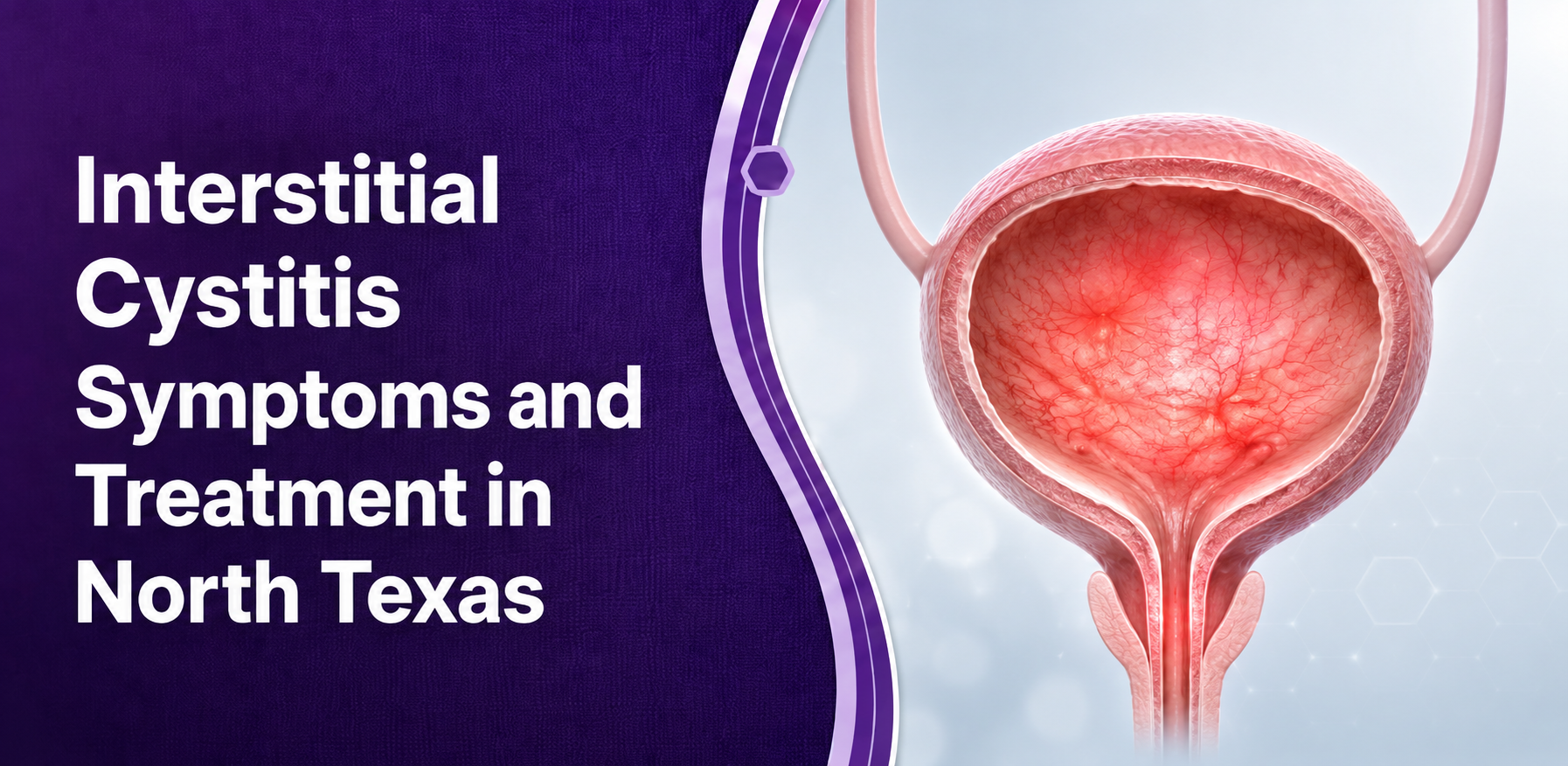
Interstitial Cystitis Symptoms and Treatment
Interstitial cystitis can cause ongoing bladder pain, pelvic pressure, frequent urination, and urinary urgency. Learn about common symptoms, possible triggers, diagnosis, treatment options, and when to contact a primary care doctor in North Texas.
Bladder Pain, Urgency, and Frequent Urination Deserve a Clear Answer
Ongoing bladder pressure, pelvic discomfort, frequent urination, or a sudden need to use the restroom can disrupt your entire day. Although these symptoms may feel like a urinary tract infection, an infection does not always cause them.
Interstitial cystitis can produce recurring bladder pain and urinary symptoms that affect sleep, work, exercise, travel, and personal relationships.
However, the symptoms often resemble several other urinary conditions. Therefore, a complete medical evaluation offers a safer approach than trying to diagnose the condition at home.
At Passion Health Advanced Primary Care, our team can evaluate ongoing bladder symptoms, check for common causes, and help you understand the next step. Depending on your results, your provider may recommend initial symptom management, follow-up care, or a referral to a urologist.
Experiencing recurring bladder pain or urinary urgency? Book an appointment with Passion Health Advanced Primary Care.
Patients looking for primary care in Frisco, Irving, Plano, Prosper, Anna, Aubrey, Flower Mound, Ennis, Kaufman, Kemp, Mesquite, McKinney, TX
What Is Interstitial Cystitis?
Interstitial cystitis, also called bladder pain syndrome, causes long-term bladder pressure, discomfort, or pain. Some people experience mild irritation, while others develop pain that interferes with daily activities.
The bladder normally expands as it fills with urine. Next, nerves send signals to the brain when the body needs to urinate. Interstitial cystitis may disrupt these signals, so a person may feel urgency before the bladder becomes full. As a result, they may urinate frequently and pass only small amounts.
Symptoms may improve for a period and return during a flare. Because the pattern can change over time, patients should track their symptoms and discuss recurring problems with a healthcare provider.
Common Interstitial Cystitis Symptoms
Interstitial cystitis symptoms can vary widely. Nevertheless, many patients report a combination of bladder pain, urinary urgency, and frequent urination.
Common symptoms include:
Bladder pain, aching, pressure, or tenderness
Persistent urinary urgency
Frequent urination during the day or night
Pelvic or lower abdominal discomfort
Pain that increases as the bladder fills
Temporary relief after urination
Pain during sexual activity
Symptoms that return despite negative UTI tests
Some people experience mild symptoms, while others may urinate many times throughout the day and night. In addition, symptom-free periods may occur between flares.
Stress, exercise, prolonged sitting, sexual activity, and menstruation can trigger symptoms in some people.
Persistent urinary symptoms deserve medical attention, especially when they interrupt sleep or limit normal activities.
Interstitial Cystitis or a UTI: What Is the Difference?
Interstitial cystitis and a urinary tract infection can cause similar symptoms. For example, both conditions may cause urinary urgency, frequent urination, pelvic discomfort, or burning sensations.
A UTI usually develops when bacteria enter the urinary tract. Therefore, a urine culture may identify the bacteria, and antibiotics may treat the infection. Interstitial cystitis, however, usually causes symptoms without a bacterial infection. Antibiotics do not treat interstitial cystitis itself.
Someone with interstitial cystitis can still develop a separate UTI. Consequently, patients should not assume that every new flare comes from the same cause. A provider may order urinalysis or a urine culture to look for infection, blood, white blood cells, or other findings.
Seek prompt medical care when urinary symptoms occur with fever, vomiting, visible blood in the urine, severe back or side pain, or difficulty passing urine.
What Causes Interstitial Cystitis?
Researchers have not identified one clear cause of interstitial cystitis. Instead, several factors may contribute to bladder pain and sensitivity.
For instance, some researchers have studied problems with the bladder’s protective lining. When that barrier does not work properly, substances in urine may irritate the bladder wall.
Other possible factors include immune reactions, inflammation, nerve sensitivity, inherited traits, allergies, or previous infections. Still, current evidence does not prove one cause for every patient.
Because no single cause explains every case, treatment often focuses on each person’s symptoms, triggers, health history, and test results.
What Can Trigger an Interstitial Cystitis Flare?
Different people notice different triggers. Therefore, a food or activity that affects one patient may not cause problems for another.
Some patients report symptom flares after consuming:
Coffee, tea, or soda
Alcohol
Citrus fruits or juices
Tomatoes and tomato-based sauces
Spicy foods
Chocolate
Artificial sweeteners
Foods containing monosodium glutamate
However, patients should not remove many foods at once without guidance. A restricted diet can make balanced nutrition more difficult.
Instead, keep a food and bladder diary. Record what you eat and drink, when symptoms start, how often you urinate, and how intense the pain feels. Over time, the diary may reveal patterns and help your provider recommend realistic changes.
Stress, dehydration, poor sleep, certain exercises, and prolonged sitting may also contribute to flares. Consequently, tracking daily activities can provide additional clues.
Bladder Health Evaluation & Primary Care Guidance
Get Help for Interstitial Cystitis Symptoms
Passion Health Advanced Primary Care can evaluate ongoing bladder pain, pelvic pressure, urinary urgency, and frequent urination. Our providers can check for common causes, recommend initial care, and coordinate a urology referral when needed.
How Doctors Diagnose Interstitial Cystitis
No single test confirms every case of interstitial cystitis. Instead, healthcare providers review symptoms and rule out other conditions that can cause similar problems.
During your appointment, your provider may ask about:
When the symptoms started
How often you urinate
Where you feel pain or pressure
Previous urinary infections
Medicines and supplements
Foods or activities that trigger symptoms
Other health conditions
Your provider may also recommend a bladder diary, physical examination, urinalysis, or urine culture. These steps can help identify infection and other urinary problems.
Furthermore, a provider may recommend specialist testing, such as cystoscopy or urodynamic testing, when symptoms or examination findings require a closer look.
Conditions such as overactive bladder, kidney stones, diabetes, pelvic floor problems, prostate conditions, and gynecologic disorders can produce similar symptoms. For that reason, a professional evaluation matters.
How Passion Health Advanced Primary Care Can Help
Primary care provides a practical starting point for recurring bladder symptoms. At Passion Health Advanced Primary Care, your visit can focus on identifying possible causes and creating a clear care plan.
Depending on your symptoms, your appointment may include the following:
A detailed review of bladder pain and urinary habits
Medical and medication history
Evaluation of previous UTI symptoms or treatments
Urine testing when clinically appropriate
Review of hydration, foods, and lifestyle triggers
Guidance for tracking symptoms
Initial treatment recommendations
Follow-up monitoring
Coordination with a urologist when needed
Early evaluation can also help identify conditions that require a different treatment approach. Moreover, primary care can connect urinary symptoms with other concerns, such as diabetes, medication effects, sleep disruption, or chronic pain.
Interstitial Cystitis Treatment Options
Interstitial cystitis treatment does not follow one plan for every patient. Instead, providers often combine several approaches and adjust the plan according to the patient’s response.
Initial treatment may include lifestyle changes, bladder training, pelvic floor physical therapy, medicines, or stress-management strategies. Some patients need to try more than one option before they find meaningful relief.
Lifestyle and trigger management
First, a provider may help you identify foods, drinks, or habits that worsen symptoms. A gradual approach works better than removing several food groups at once.
Consistent hydration may also help, although the right amount depends on your health, activity level, and environment. Therefore, ask your provider how much fluid fits your needs.
Bladder training
Bladder training uses a planned schedule to gradually increase the time between restroom visits. Over time, this strategy may reduce urgency and frequent urination. However, patients should follow professional guidance, especially when pain makes delaying urination difficult.
Pelvic floor physical therapy
Tight or painful pelvic floor muscles may contribute to bladder symptoms. In that case, a trained physical therapist can teach relaxation, stretching, and muscle-release techniques.
Standard Kegel exercises may worsen symptoms for some patients with tight pelvic floor muscles. Consequently, patients should avoid starting pelvic strengthening exercises without guidance from a qualified provider or pelvic floor therapist.
Medicines and specialist treatments
A healthcare provider may recommend medicines when lifestyle changes and other initial steps do not provide enough relief. Because medicines can cause side effects or interact with other treatments, discuss over-the-counter products and supplements with your provider first.
A urologist may offer advanced options such as bladder instillation, nerve stimulation, treatment for specific bladder lesions, or other bladder procedures. Surgery rarely becomes necessary, and specialists generally consider it only after other options fail.
When Should You See a Primary Care Provider?
Schedule an appointment when bladder pain, urgency, or frequent urination continues, returns repeatedly, or affects your daily life.
You should also seek an evaluation when:
Urinary symptoms interrupt your sleep
Bladder pain affects work or exercise
Symptoms continue after UTI treatment
Urine tests repeatedly show no infection
Certain foods seem to trigger discomfort
Pelvic pain affects sexual activity
You need help deciding whether to see a urologist
Mayo Clinic recommends contacting a healthcare provider when chronic bladder pain, urinary urgency, or frequent urination develops.
Take Away: Get Help for Persistent Bladder Pain and Urgency
Recurring bladder pain can feel frustrating, especially when UTI tests do not explain the symptoms. However, you do not have to keep guessing about the cause.
Passion Health Advanced Primary Care can evaluate your urinary symptoms, discuss possible triggers, and recommend appropriate next steps. When necessary, our team can also coordinate care with a urology specialist.
Our Primary Care Locations
Frequently Asked Questions
1. Is interstitial cystitis the same as a UTI?
No. The two conditions can cause similar symptoms, but a bacterial infection usually causes a UTI. Interstitial cystitis generally causes recurring symptoms without an infection.
2. Can primary care evaluate interstitial cystitis symptoms?
Yes. A primary care provider can review your symptoms, check for common urinary conditions, order appropriate initial tests, and coordinate specialist care when necessary.
3. What foods may worsen interstitial cystitis?
Coffee, alcohol, soda, citrus, tomatoes, spicy foods, chocolate, and artificial sweeteners may trigger symptoms in some people. However, individual reactions vary.
4. Can interstitial cystitis go away?
Symptoms may improve, disappear for a period, or return during flares. Although no single treatment works for everyone, a personalized plan can help many patients manage symptoms.
5. How long does diagnosis take?
The timeline depends on your symptoms, medical history, test results, and response to initial care. Some patients also need a urology evaluation before their care team confirms the diagnosis.