
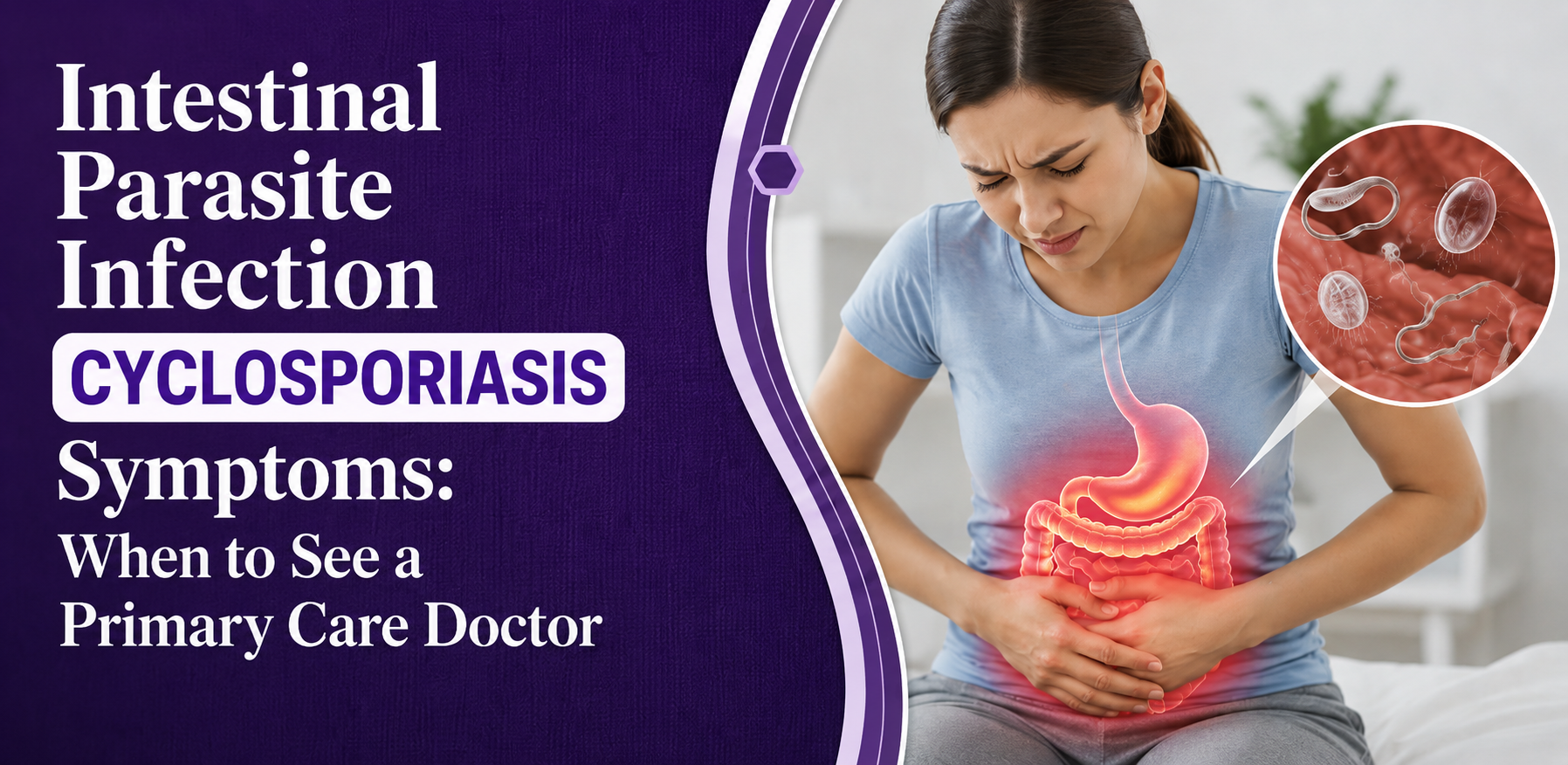
Intestinal Parasite Infection Cyclosporiasis Symptoms: When to See a Primary Care Doctor
Persistent diarrhea, stomach cramps, bloating, nausea, or unexplained fatigue may raise concerns about an intestinal parasite infection. Learn about possible symptoms, common exposures, stool testing, treatment, and when to visit a primary care doctor in North Texas.
What Is Cyclosporiasis and How Does This Intestinal Parasite Infection Affect the Body?
Persistent diarrhea, stomach cramps, gas, bloating, nausea, or unexplained fatigue can make you wonder whether you have an intestinal parasite. Symptoms may begin after travel, untreated water exposure, contaminated food, swimming, or close contact with an infected person.
Intestinal Parasite infection: Cyclosporiasis symptoms are not the only possible cause. Food poisoning, medication side effects, food intolerance, viral infections, and other digestive conditions can create similar problems. A primary care doctor can review your Cyclosporiosis symptoms, check your hydration, and decide whether stool testing is appropriate.
Experiencing ongoing diarrhea, bloating, or stomach pain? Schedule a visit with Passion Health Advanced Primary Care at a convenient North Texas location.
Patients looking for primary care in Frisco, Irving, Plano, Prosper, Anna, Aubrey, Flower Mound, Ennis, Kaufman, Kemp, Mesquite, McKinney, TX
Can a Primary Care Doctor Diagnose an Intestinal Parasite Infection?
Yes. A primary care doctor can review your symptoms, recent travel, food and water exposure, medications, and medical history. When a parasite seems possible, the doctor may order stool testing. Results can help identify the cause and guide treatment instead of relying on symptoms alone.
What Symptoms Can an Intestinal Parasite Cause?
Common symptoms may include:
• Watery or persistent diarrhea
• Greasy or foul-smelling stool
• Stomach cramps
• Gas and bloating
• Nausea or vomiting
• Reduced appetite
• Fatigue or weakness
• Unexplained weight loss
• Anal itching
• Dehydration
Giardia commonly causes diarrhea, gas, greasy stool, cramps, nausea, and dehydration. Cyclospora often causes prolonged watery diarrhea, appetite loss, bloating, fatigue, and weight loss. Symptoms alone cannot confirm which parasite is responsible.
Frequently Asked Questions
1. What are the first symptoms of an intestinal parasite infection Cyclosporiasis?
Early symptoms may include loose stool, stomach cramps, gas, bloating, nausea, appetite changes, and unusual tiredness. Some people develop watery diarrhea, while others notice greasy or foul-smelling stool. Timing depends on the type of parasite.
2. How do people get intestinal parasites?
People may become infected after swallowing contaminated food or water. Exposure can also occur through unwashed hands, poorly washed produce, untreated water, recreational water, contaminated surfaces, undercooked food, or close household contact.
Giardia can spread through contaminated water, food, objects, and direct contact.
3. Can intestinal parasites cause watery diarrhea?
Yes. Giardia, Cryptosporidium, and Cyclospora can cause watery diarrhea. Giardia may also cause greasy stool, gas, and nausea.
Cyclosporiasis symptoms may last for weeks and can improve before returning when the infection remains untreated.
4. Can I visit a primary care doctor for suspected intestinal parasites?
Yes. Primary care is a reasonable starting point when symptoms remain stable but do not improve. Your doctor can assess dehydration, review possible exposures, order tests, and recommend treatment.
A specialist referral may be needed when symptoms continue, become severe, or testing does not explain the problem.
5. How does a doctor test for intestinal parasites?
Testing usually begins with one or more stool samples. A laboratory may look for parasites, eggs, cysts, antigens, or genetic material.
The CDC recommends examining three or more samples collected on separate days for some suspected parasitic infections because a parasite may not appear in every sample.
6. What should I tell my primary care doctor?
Explain when symptoms started and how often diarrhea occurs. Mention whether the stool looks watery, greasy, bloody, or unusually dark.
Also discuss recent travel, camping, untreated water, swimming, possible food exposure, sick household members, new medications, recent antibiotics, and any condition or treatment that affects your immune system.
7. How are intestinal parasite infections treated?
Treatment depends on the organism causing the infection. Some infections improve with hydration and monitoring, while many require prescription antiparasitic medicine.
Avoid unproven “parasite cleanses.” These products may cause side effects, worsen diarrhea, contribute to dehydration, or delay the correct diagnosis.
8. Can an intestinal parasite go away without treatment?
Some mild infections may clear without medication, but many need targeted treatment. Untreated symptoms may continue, return, or lead to dehydration and poor nutrient absorption.
Testing helps determine whether a parasite is actually present. It also reduces the chance of taking medication for the wrong condition.
9. Can intestinal parasites cause weight loss or dehydration?
Yes. Ongoing diarrhea, appetite loss, nausea, and reduced nutrient absorption may lead to weight loss. Diarrhea and vomiting can also remove water and electrolytes from the body.
Watch for thirst, dry mouth, dark urine, reduced urination, dizziness, or unusual weakness.
10. Can contaminated fruits and vegetables carry parasites?
Yes. Produce may become contaminated during growing, washing, processing, transportation, or food preparation. Cyclospora infections have been linked to contaminated food and water, including fresh produce.
Washing produce and following safe food-handling practices can lower the risk, although washing may not remove every organism.
11. Are intestinal parasites contagious?
Some parasites spread from person to person, while others usually do not. Giardia can spread through contaminated hands, bathroom surfaces, food, water, diapers, or close contact.
Cyclospora generally does not spread directly between people because it must mature outside the body before it becomes infectious.
12. How long do intestinal parasite symptoms last?
Symptoms may last days, weeks, or longer. Duration depends on the parasite, infection severity, immune health, hydration, and treatment.
Untreated Cyclospora illness may last from a few days to more than a month. Symptoms may temporarily improve and then return.
13. Can patients in Prosper receive care for possible parasite exposure?
Yes. Patients who develop symptoms after travel, camping, swimming, drinking untreated water, or eating potentially contaminated food can discuss the exposure with a primary care doctor. The doctor can determine whether stool testing or another evaluation is appropriate.
14. Can North Texas patients get help for diarrhea after international travel?
Yes. Tell your doctor where you traveled, when you returned, what you ate and drank, and when symptoms began. The location and timing can help the doctor choose more specific tests and decide whether you need treatment or referral.
Digestive Symptom Support
Concerned About an Intestinal Parasite Infection?
Passion Health Advanced Primary Care can review your symptoms, travel history, food or water exposure, and hydration status. Your provider can also determine whether stool testing, blood work, treatment, or specialist care may be appropriate.
Common Parasite Symptoms and Exposures
Possible infection | Common symptoms | Possible exposure |
Giardia | Diarrhea, gas, greasy stool, cramps and nausea | Untreated water, pools, childcare or contaminated surfaces |
Cyclospora | Prolonged watery diarrhea, fatigue, bloating and appetite loss | Contaminated food or water |
Cryptosporidium | Watery diarrhea, nausea and stomach cramps | Pools, recreational water or close contact |
Pinworm | Anal itching, especially at night, and disturbed sleep | Household, school or childcare contact |
Tapeworm infection | Abdominal discomfort, appetite changes or weight loss | Certain raw or undercooked foods |
When Should I See a Primary Care Doctor for Diarrhea?
Schedule a primary care visit when diarrhea lasts more than a few days, keeps returning, or develops after travel, camping, untreated water exposure, swimming, or possible food contamination.
Arrange an evaluation sooner when diarrhea occurs with:
• Persistent abdominal pain
• Fever
• Repeated vomiting
• Appetite loss
• Unexplained weight loss
• Weakness or fatigue
• Signs of dehydration
Seek prompt medical attention for bloody or black stool, severe abdominal pain, fainting, confusion, very little urination, or an inability to keep fluids down.
Where Can I Get Evaluated in North Texas?
Patients with persistent diarrhea, stomach cramps, nausea, bloating, fatigue, or possible parasite exposure can begin with a primary care appointment.
Passion Health Advanced Primary Care Frisco, Irving, Plano, Prosper, Anna, Aubrey, Flower Mound, Ennis, Kaufman, Kemp, Mesquite, McKinney, TX
The care team can review your symptoms and exposure history, assess your hydration, and determine whether stool studies, blood work, or another evaluation makes sense.
How Can I Prevent an Intestinal Parasite Infection?
You can lower your risk by practicing careful hand, water, and food hygiene. Take extra precautions during travel, camping, swimming, food preparation, and childcare activities.
• Wash your hands with soap and water before eating and after using the bathroom
• Wash your hands after changing diapers or helping a child use the toilet
• Drink treated or properly bottled water while traveling
• Avoid swallowing water from pools, lakes, rivers, or splash areas
• Wash fruits and vegetables under clean running water
• Cook food thoroughly
• Clean food-preparation surfaces
• Follow travel-specific food and water precautions
• Avoid preparing food for others while you have active diarrhea
Prevention steps vary because intestinal parasites spread in different ways.
Take Away
Intestinal parasites can cause diarrhea, cramps, gas, bloating, nausea, fatigue, and weight loss. However, many other digestive conditions cause similar symptoms.
A primary care doctor can review your exposure history, check for dehydration, and order targeted testing when needed. Accurate testing helps identify the cause and guides the right treatment.
Persistent digestive symptoms deserve a clear answer.
Book an appointment with Passion Health Advanced Primary Care at a convenient North Texas location for evaluation and appropriate testing. →
Our Primary Care Locations