Can Eczema Go Away Permanently? What Patients Should Know
Eczema can feel calm one week and suddenly flare the next.
Your skin may itch after a hot shower. A new soap may burn. Cold air may dry your skin overnight. Stress, sweat, allergies, or harsh laundry detergent may also make the rash worse.
Many patients ask the same question: what causes eczema flare-ups?
The answer usually involves more than one trigger. Eczema often flares when the skin barrier loses moisture, the immune system reacts strongly, and something in daily life irritates the skin. Cleveland Clinic explains that eczema can cause dry, itchy patches, and symptoms can flare after contact with an irritant or allergen.
When eczema keeps itching, cracking, or burning, it can interrupt sleep and make simple daily tasks feel harder.
Passion Health Advanced Primary Care can evaluate your symptoms and help guide the next step.
Patients looking for primary care in Frisco, Irving, Plano, Prosper, Anna, Aubrey, Flower Mound, Ennis, Kaufman, Kemp, Mesquite, McKinney, TX
What Is Eczema?
Eczema refers to skin inflammation that causes itching, dryness, rash, bumps, scaling, or cracked skin.
Atopic dermatitis ranks as one of the most common forms. Some people first notice it in childhood. Others develop symptoms later as adults. Atopic dermatitis can last a long time and may flare from time to time.
Eczema does not look the same on every person. One patient may get dry patches behind the knees. Another may have cracked hands, itchy eyelids, rough elbows, or a rash on the neck.
What Does Eczema Look Like?
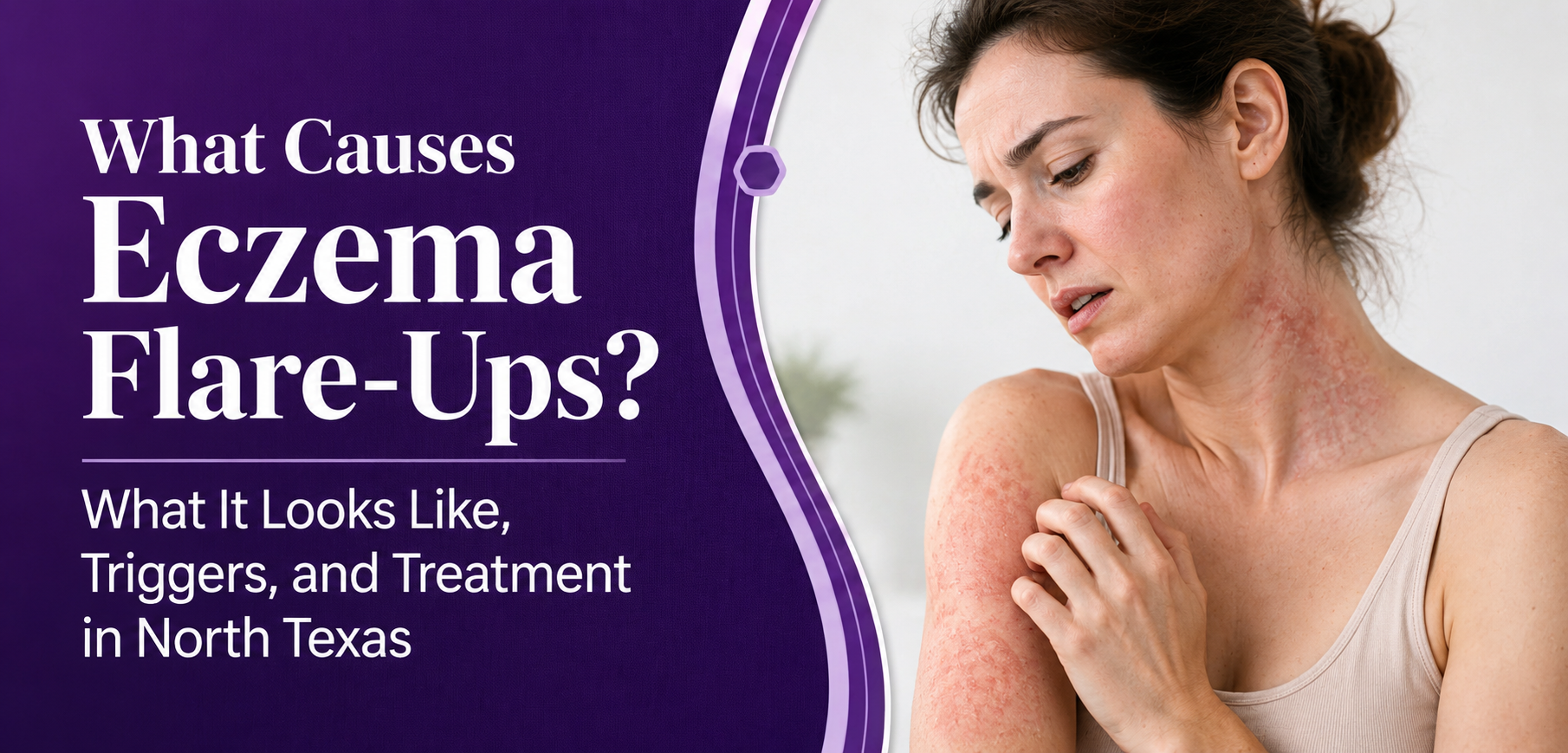
Eczema can show up as dry, rough patches that itch, crack, flake, or look darker or more irritated than nearby skin.
Common eczema signs include:
Dry or cracked skin
Intense itching
Rash on irritated skin
Small bumps
Flaking or scaling
Oozing during a flare
Crusting
Thick skin from scratching
Raw or sensitive areas
Eczema can show up on the hands, face, neck, eyelids, elbows, knees, ankles, feet, ears, lips, or other areas. Hand eczema often bothers people who wash often, clean frequently, use gloves, or handle chemicals.
What Causes Eczema Flare Ups?
Eczema often flares when something irritates already sensitive skin. That trigger may not start eczema on its own, but it can make itching, dryness, redness, or swelling worse.
The skin barrier matters here. When it works well, it helps keep moisture in and irritants out.
When it becomes weak or dry, the skin loses moisture faster, and everyday things like soap, sweat, weather, or allergens can bother it more easily.
The immune system may respond with itching, redness, swelling, and inflammation.
Immune response, genes, environment, and emotional triggers are eczema-related factors.
Common reasons eczema flares include:
Dry skin
Harsh soaps
Fragranced lotions
Laundry detergents
Sweat
Heat
Cold, dry air
Dust mites
Pet dander
Pollen
Mold
Smoke
Rough clothing
Cleaning products
Texas weather can also make eczema harder to control. Hot days can increase sweating. Indoor air conditioning can dry the skin. Seasonal pollen may also bother people with allergies or sensitive skin.
Why Does Eczema Keep Coming Back?
Even when the rash looks better, the skin can stay sensitive. A small trigger, like dry air, sweat, or a harsh soap, may bring the itching and irritation back.
A flare may calm down with moisturizer or medicine. Then another trigger may restart the cycle. For example, a patient may improve during mild weather but flare again after heat, sweat, stress, or a new skin product.
Scratching can make this cycle worse. It may feel good for a moment, but it can break the skin barrier. Broken skin loses more moisture and may allow germs to enter.
That is why eczema care should focus on more than the rash. A good plan should also protect the skin barrier, reduce triggers, calm itching, and watch for infection.
Is Eczema Contagious?
No. Eczema does not spread from person to person.
You cannot catch eczema by touching someone’s rash, sharing a room, shaking hands, or hugging. Eczema is not contagious.
However, scratched eczema can crack or open the skin. Open skin can develop an infection. That problem needs medical attention, especially when pain, warmth, pus, yellow crusting, swelling, or fever appears.
Can Eczema Go Away Permanently?
Eczema can improve for weeks, months, or even years. Some patients have long quiet periods with few symptoms.
Still, eczema can return when triggers affect the skin again. Eczema has treatments, but no treatment removes symptoms 100% of the time.
The goal should not focus only on a “permanent cure.” A safer goal includes fewer flare-ups, better itch control, stronger skin protection, and early care when symptoms worsen.
How Doctors Treat Eczema Flare Ups
Treatment depends on the rash location, severity, age, skin type, infection signs, allergies, and past response to care.
A provider may recommend:
Fragrance-free moisturizer
Gentle cleanser
Short warm showers
Trigger avoidance
Prescription creams or ointments
Itch-control treatment
Infection treatment when needed
Allergy review if symptoms suggest it
Dermatology referral for severe or stubborn eczema
Eczema treatment may include moisturizer, topical medicine, oral medicine, light therapy, and trigger avoidance.
Patients should avoid using strong steroid creams on the face, eyelids, groin, or children’s skin without medical guidance. These areas need careful treatment choices.
When to See a Primary Care Doctor for Eczema
Primary care can help when eczema keeps coming back, spreads, affects sleep, cracks, bleeds, or does not improve with gentle skin care.
A primary care provider can look at the rash and ask practical questions:
When did the flare start?
Where did the rash appear first?
What makes it worse?
Which soaps, lotions, or detergents do you use?
Do you have allergies, asthma, or hay fever?
Does itching affect sleep?
Do you see crusting, oozing, pain, or swelling?
This matters because not every itchy rash comes from eczema. Ringworm, psoriasis, allergic contact dermatitis, scabies, shingles, drug reactions, and skin infections can sometimes look similar.
A primary care visit can help identify the likely cause, treat mild to moderate flares, check for infection, review medicines, and decide whether a dermatologist or allergy specialist should join your care.
Eczema Treatment Near Me in North Texas
Patients looking for primary care in Frisco, Irving, Plano, Prosper, Anna, Aubrey, Flower Mound, Ennis, Kaufman, Kemp, Mesquite, McKinney, TX, and nearby North Texas areas can visit Passion Health Advanced Primary Care for eczema evaluation.
A primary care provider can look at the rash, ask about recent changes, and review things that may be irritating your skin, such as soaps, detergents, weather, sweating, allergies, or new medicines.
This helps narrow down what may be causing your eczema flare-ups and what steps may help calm them.
Final Takeaway: What Causes Eczema Flare-Ups?
Eczema flare-ups often start when already sensitive skin meets a trigger. Dry air, sweat, heat, harsh soaps, fragrances, detergents, allergies, stress, or irritants can make the skin itchy, cracked, scaly, swollen, or bumpy.
Eczema does not spread from one person to another. Still, scratching can break the skin and raise the chance of infection.
Many people feel better with a simple skin care routine, regular moisturizing, trigger control, and medical treatment when symptoms need extra care.
If eczema keeps returning, affects sleep, spreads, cracks, oozes, or does not improve with home care, a primary care visit can help.
Passion Health Advanced Primary Care can evaluate your skin symptoms, check for infection signs, review possible triggers, and guide the next step for treatment in North Texas.
FAQs
1. What causes eczema flare-ups?
Dry skin, harsh soaps, sweat, heat, cold air, allergies, stress, detergents, fragrances, smoke, dust mites, pet dander, and rough clothing can trigger eczema flare-ups.
2. What does eczema look like?
Eczema may look dry, itchy, red, brown, purple, gray, scaly, cracked, bumpy, swollen, crusty, or thickened.
3. Is eczema contagious?
No. Eczema does not spread from person to person.
4. Can eczema go away permanently?
Eczema can improve for long periods, but it can return. Treatment helps reduce flare-ups and control symptoms.
5. When should I see a doctor for eczema?
See a doctor if the rash spreads, hurts, oozes, cracks, affects sleep, shows infection signs, or does not improve with gentle skin care.