
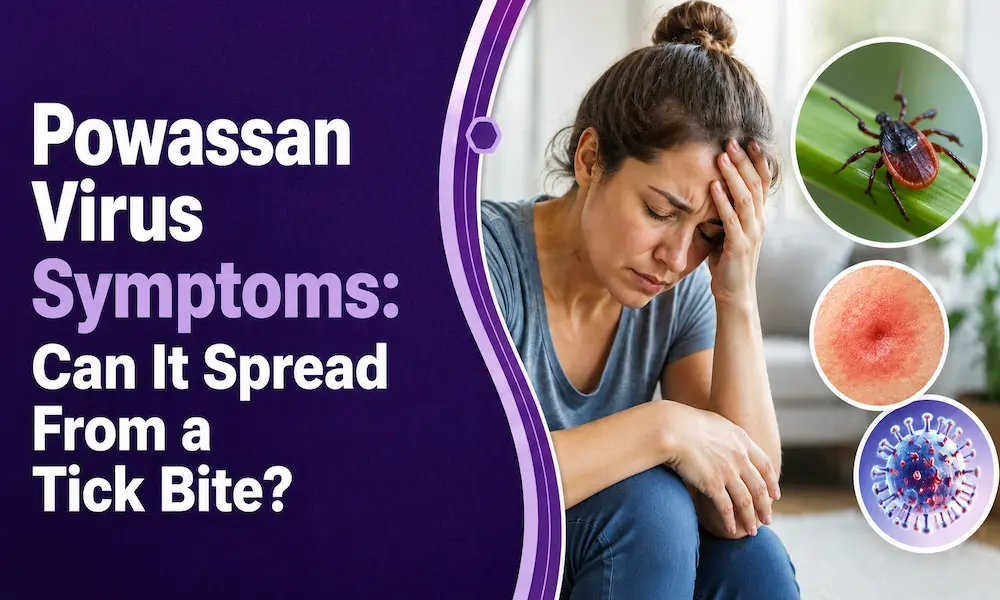
Can Powassan Virus Spread From a Tick Bite?
A tick bite may look small, but it should not always be ignored. Most tick bites do not lead to serious illness, yet some ticks can carry infections that affect the body in dangerous ways.
One rare infection getting more attention is the Powassan virus, a tick-borne illness that can sometimes affect the brain and nervous system.
Many people hear about the Powassan virus after a news story or after finding a tick on their skin.
Then one question becomes common: Can the Powassan virus spread from a tick bite? The answer is yes. The Powassan virus can spread through the bite of an infected tick.
Worried about fever, headache, weakness, or unusual symptoms after a tick bite? Passion Health Advanced Primary Care can help review your symptoms and guide your next step.
What is the Powassan Virus?
The Powassan virus is a rare virus that spreads to people through infected ticks. It belongs to a group of viruses that can affect the nervous system in some cases. Many infections may cause no symptoms, but some can become severe.
According to health experts, the Powassan virus has been reported mostly in parts of the United States such as the Northeast and Great Lakes regions.
Cases often happen during months when ticks are active, especially late spring, early summer, and mid-fall.
Even though it is rare, the Powassan virus matters because severe illness can lead to brain inflammation, meningitis, or long-term nerve problems.
That is why tick bite prevention and early symptom awareness are important.
Can Powassan Virus Spread From a Tick Bite?
Yes. The Powassan virus can spread from a tick bite when the tick carries the virus.
The most common tick linked with human illness is the blacklegged tick, also called the deer tick. This is the same general type of tick that can carry Lyme disease bacteria.
One reason the Powassan virus gets attention is that it may spread faster than some other tick-borne infections.
Some bacterial tick illnesses usually need a tick to stay attached for many hours before spreading. The Powassan virus may spread in a shorter time after an infected tick attaches.
This does not mean every tick bite causes the Powassan virus. Most ticks do not carry it. Still, removing ticks quickly and checking the body after outdoor activity can lower the risk.
Powassan Virus Symptoms to Watch For
Powassan virus symptoms can vary. Some people have no symptoms at all. Others may develop mild illness. In serious cases, the virus can affect the brain or the lining around the brain and spinal cord.
Early Powassan virus symptoms may include:
Fever
Headache
Vomiting
Weakness
Tiredness
Body aches
General feeling of illness
Severe symptoms may include:
Confusion
Loss of coordination
Difficulty speaking
Seizures
Neck stiffness
Weakness in the arms or legs
Changes in alertness
Symptoms may appear about 1 to 5 weeks after a tick bite. That delay can make it hard for patients to connect their illness with outdoor exposure.
If you recently spent time in grassy, wooded, or brushy areas and then develop a fever, headache, weakness, or confusion, tell your healthcare provider about the possible tick exposure.
Why the Powassan Virus Can Be Serious
Powassan virus is rare, but severe cases can be dangerous. The biggest concern is when the virus reaches the central nervous system.
This may cause encephalitis, which means inflammation of the brain, or meningitis, which affects the lining around the brain and spinal cord.
These conditions need urgent medical attention. Severe illness can lead to hospitalization, breathing support, seizure control, IV fluids, and close monitoring.
Some people who recover may still have long-term problems such as memory trouble, weakness, headaches, or balance issues.
This is why patients should not wait too long if neurological symptoms appear after a tick bite. Confusion, seizures, trouble speaking, severe weakness, or loss of coordination should be taken seriously.
Who Has a Higher Risk?
Anyone can get the Powassan virus after the bite of an infected tick. However, some people may have a higher risk for severe illness.
Higher-risk groups may include:
Older adults
Children
People with weakened immune systems
People who spend time in wooded or grassy areas
Hikers, campers, hunters, gardeners, and outdoor workers
People who travel to regions where infected ticks are more common
Patients in Texas may hear about the Powassan virus from national news, even though most reported U.S. cases occur in the Northeast and Great Lakes regions. Still, tick bites can happen after hiking, camping, yard work, travel, or outdoor sports.
A primary care visit can help decide whether symptoms need monitoring, testing, or urgent evaluation.
Is There Treatment for Powassan Virus?
There is no specific antiviral medicine that cures the Powassan virus. Antibiotics do not treat Powassan virus because it is caused by a virus, not bacteria.
Treatment focuses on supportive care. Mild illness may involve rest, fluids, fever control, and monitoring. Severe illness may require hospital care.
Doctors may treat dehydration, seizures, breathing problems, brain swelling, or severe headaches depending on the patient’s condition.
Because there is no specific cure, prevention becomes the most important step.
How to Prevent Powassan Virus and Tick Bites
The best way to prevent the Powassan virus is to prevent tick bites. This is especially important during tick season and during outdoor activities.
Use these prevention steps:
Stay on clear walking paths when hiking.
Avoid tall grass, brush, and wooded edges when possible.
Wear long sleeves and long pants outdoors.
Tuck pants into socks when walking through grassy or wooded areas.
Use EPA-registered insect repellent.
Treat clothing and gear with permethrin when appropriate.
Check your body for ticks after outdoor activity.
Check children, pets, shoes, socks, and clothing.
Shower after being outdoors to help remove loose ticks.
Keep grass short around the home.
Clear leaves and brush near outdoor sitting areas.
Tick checks should include hidden areas such as behind the ears, scalp, armpits, belly button, waistline, groin, behind the knees, and between toes. Ticks can be tiny, so a careful check matters.
How to Remove a Tick Safely
If you find a tick attached to your skin, remove it as soon as possible.
Use fine-tipped tweezers. Hold the tick close to the skin surface. Pull upward with steady pressure.
Do not twist, crush, or squeeze the tick’s body. After removing it, clean the bite area and your hands with soap and water or rubbing alcohol.
Do not use heat, nail polish, petroleum jelly, or other home methods to force the tick out. These methods may delay proper removal.
After removing the tick, watch for symptoms over the next few weeks. A photo of the tick or bite area may help if you need to speak with a healthcare provider later.
When Should You See a Doctor After a Tick Bite?
You should consider medical care if you develop symptoms after a tick bite or after outdoor exposure in a tick-prone area.
See a healthcare provider if you have:
Fever
Vomiting
Weakness
Neck stiffness
Muscle pain
Unusual tiredness
New confusion
Trouble speaking
Trouble walking
Seizures
New numbness or weakness
Some symptoms may come from common viral infections. Others may come from tick-borne illnesses such as Lyme disease, anaplasmosis, babesiosis, Rocky Mountain spotted fever, or Powassan virus. A healthcare provider can review your symptoms, exposure history, travel history, and risk factors.
How Passion Health Advanced Primary Care Can Help
After a tick bite, it can be hard to know whether symptoms are mild or need medical attention.
Some bites cause only minor skin irritation, while others may need a provider’s review if fever, headache, weakness, vomiting, rash, confusion, or unusual tiredness develops.
At Passion Health Advanced Primary Care, patients can schedule a visit for tick bite concerns, symptom review, preventive care guidance, and follow-up care.
A primary care provider can review your symptoms, check your medical history, and guide the next step, including testing, monitoring, urgent care, or specialist referral when needed.
Patients looking for primary care in Frisco, Irving, Plano, Prosper, Aubrey, Flower Mound, Ennis, Kaufman, and Kemp can schedule care.
Final Takeaway
Powassan virus is a rare tick-borne illness, but it can become serious if it affects the brain or nervous system.
It can spread from the bite of an infected tick, and symptoms may include fever, headache, vomiting, weakness, confusion, trouble speaking, loss of coordination, or seizures.
Because there is no vaccine or specific medicine for the Powassan virus, prevention matters most.
Use tick repellent, wear protective clothing, check your body after outdoor activity, remove ticks safely, and watch for symptoms after a bite.
Have symptoms after a tick bite or outdoor exposure? Get checked by a primary care provider at Passion Health Advanced Primary Care. Book an appointment →
FAQs
1. Can the Powassan virus spread from a tick bite?
Yes. The Powassan virus can spread through the bite of an infected tick.
2. What are the early symptoms of the Powassan virus?
Early symptoms may include fever, headache, vomiting, weakness, tiredness, and body aches.
3. Is the Powassan virus dangerous?
Yes. Powassan virus is rare, but severe cases can affect the brain and nervous system.
4. Is there a treatment for the Powassan virus?
There is no specific medicine for the Powassan virus. Treatment focuses on symptom care and hospital support if the illness becomes severe.
5. How can I prevent the Powassan virus?
Prevent tick bites by using repellent, wearing protective clothing, avoiding tall grass, checking your body for ticks, and removing ticks quickly.