
Is Heat Rash Just Itching, or a Warning Your Skin Needs Cooling?
Hot weather can turn a small skin problem into a frustrating day. One minute, the skin feels normal.
Then itching, tiny bumps, prickling, or burning start after sweating. That sudden rash can make sleep, work, walking, or outdoor time uncomfortable.
If you want to know how to get rid of heat rash at home, start with one goal: cool the skin and stop sweat from getting trapped.
Most mild heat rash improves with simple steps, but some cases need medical care. A rash that spreads, hurts, leaks pus, or does not improve can signal a bigger skin problem.
Worried about a rash that will not calm down? Book an appointment with Passion Health Advanced Primary Care for safe skin care guidance.
What Is Heat Rash?
The heat rash happens when sweat gets trapped under the skin. Sweat normally leaves the body through tiny ducts.
When those ducts become blocked, sweat stays under the skin and causes irritation, bumps, itching, or a prickly feeling.
This rash often appears during hot and humid weather. It can also happen after exercise, fever, heavy bedding, long sitting, or tight clothing. People who sweat more may notice it during summer, workouts, or outdoor work.
Why Heat Rash Feels Prickly and Irritating
Heat rash feels prickly because trapped sweat irritates the skin from underneath. The skin may sting, itch, or feel like tiny needles.
That feeling can become worse when clothes rub the area or when the body keeps sweating.
Scratching may feel tempting, but it can damage the skin. Broken skin can allow germs to enter, which may increase the risk of infection.
Is Heat Rash the Same as Prickly Heat?
Yes. Heat rash is also called prickly heat or sweat rash. These names describe the same basic problem: blocked sweat ducts and trapped sweat.
The name may sound mild, but the discomfort can feel serious. Anyone who has dealt with prickly heat knows how distracting the itching and burning can become.
What Does a Heat Rash Look Like?
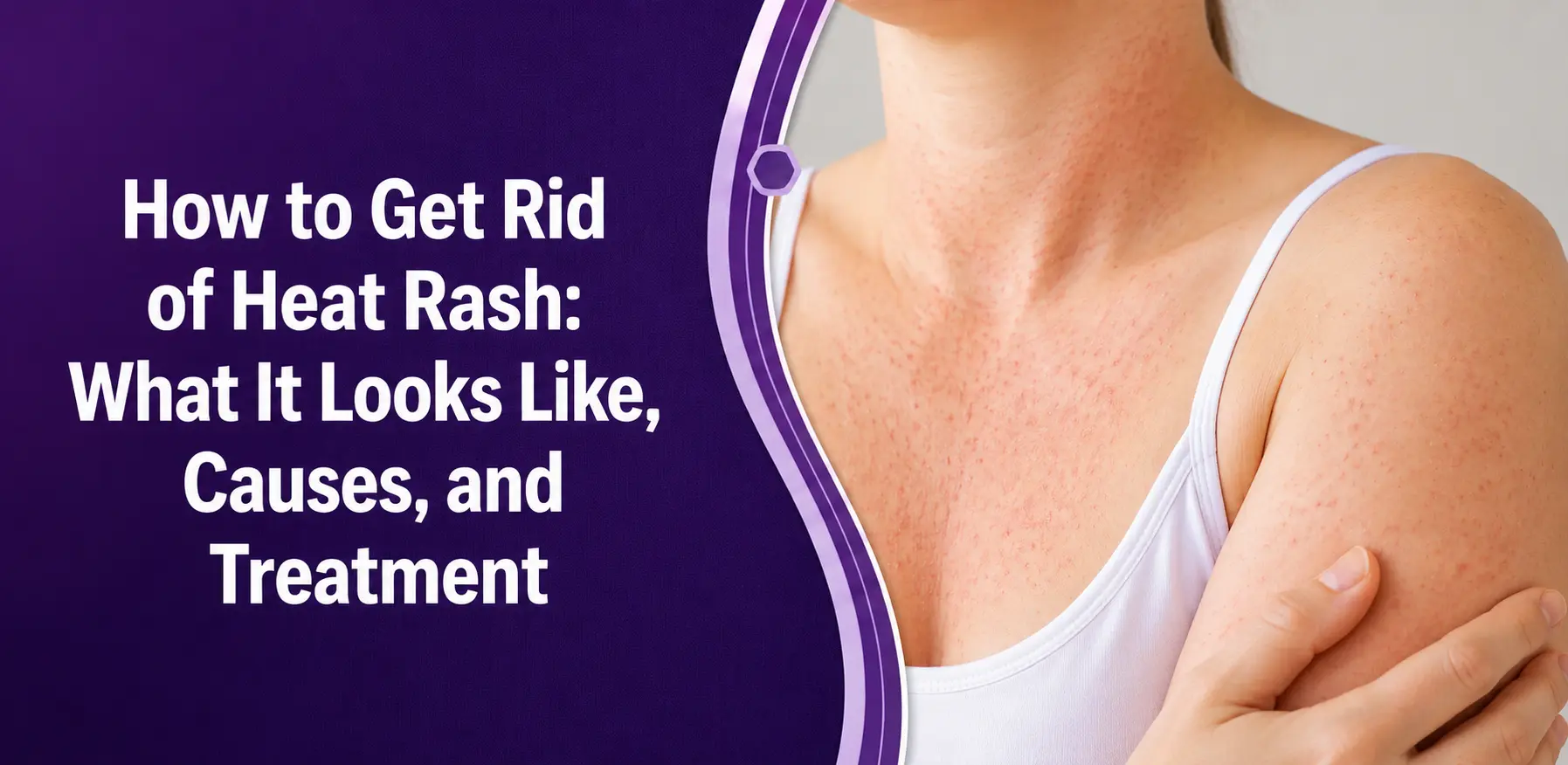
Many people search for ways to get rid of heat rash because they see sudden bumps and wonder if the rash needs urgent care. Heat rash can look different based on skin tone, rash type, and irritation level.
Tiny Bumps, Itching, and Redness
Heat rash may look like small raised bumps, tiny clear blisters, mild swelling, or irritated patches. Some bumps may feel itchy. Others may feel prickly, sore, or warm.
On lighter skin, the rash may look red or pink. On darker skin, it may look grey, white, purple, brown, or darker than the surrounding skin. Good lighting can help you see the texture better than the color.
Common Areas Where Heat Rash Appears
Heat rash often shows up where sweat collects or clothing rubs. Common areas include:
Neck
Chest
Back
Armpits
Waistline
Groin
Under the breasts
Elbow folds
Skin folds
Areas under tight clothes
A rash in these areas often points toward sweat, heat, and friction as triggers.
How Heat Rash May Look on Different Skin Tones
Heat rash may not always look bright red. On brown or black skin, it may look grey, white, purple, or slightly darker. Texture matters.
Small raised spots, tiny blisters, swelling, and prickly itching can help identify it. When the rash hurts, spreads fast, leaks fluid, or feels warm, a clinician should check it.
What Causes Heat Rash?
Heat rash starts when sweat cannot escape properly. Blocked sweat ducts trap sweat under the skin. Then the skin reacts with bumps, itching, swelling, or prickling.
Sweat Trapped Under the Skin
Sweat helps cool the body. When sweat ducts clog, sweat stays inside the skin instead of evaporating. This trapped sweat creates irritation.
That is why cooling the body helps so much. Anyone learning how to get rid of heat rash should focus first on reducing sweat and heat exposure.
Hot Weather, Humidity, and Heavy Sweating
Summer heat can trigger heat rash quickly. Humidity makes it harder for sweat to dry. Exercise, fever, outdoor work, and heavy sweating can also increase risk.
A person may also develop heat rash after traveling to a warmer climate. The skin may need time to adjust to heat and humidity.
Tight Clothes and Skin Friction
Tight clothing can trap sweat and rub the skin. Synthetic fabrics may hold heat close to the body. Waistbands, sportswear, heavy uniforms, and tight undergarments can make the rash worse.
Loose cotton clothing helps the skin breathe and reduces friction.
Why Babies and Active Adults Get Heat Rash More Often
Babies can get heat rash more easily because their sweat ducts are still developing. Overdressing, warm rooms, and heavy blankets can trigger symptoms.
Active adults may get heat rash after workouts, outdoor jobs, or long hours in humid weather. Sweat, friction, and heat combine quickly.
How to Treat Heat Rash at Home
The best way to treat mild heat rash starts with cooling the skin. Do not cover the rash with heavy products. Do not scratch it. Instead, give the skin air, dryness, and relief.
Try these steps:
Cool the Skin Quickly
Move to a cooler room. Use a fan or air conditioning when possible. Stay away from direct heat until the rash settles. A cool shower can also help remove sweat and calm the skin.
Use a Cool Compress
Place a cool, damp cloth on the rash for short periods. This can reduce itching and prickling. Avoid placing ice directly on the skin because it can irritate the area.
Wear Loose Cotton Clothing
Loose cotton lets air move around the skin. It also reduces rubbing. Tight workout clothes, nylon, and polyester can trap heat and sweat, so avoid them while the rash heals.
Keep the Area Dry
After bathing, gently pat the skin dry. Let the area air-dry when possible. Pay extra attention to skin folds, underarms, groin, waistline, and areas under tight clothing.
Avoid Thick Creams and Perfumed Products
Oily lotions, heavy moisturizers, fragranced creams, and perfumed shower gels can make heat rash worse. These products may block pores and trap more sweat.
How to Get Rid of Heat Rash Faster
People often want quick relief, especially when the rash burns or interrupts sleep. To get better faster, stop the trigger and protect the skin.
Simple Do’s That Help Skin Heal
Try these steps:
Stay in a cool room
Keep the rash dry
Drink enough fluids
Wear loose cotton clothing
Shower after sweating
Avoid heavy exercise in heat
Let skin folds air out
Use fragrance-free products
These simple steps support healing and reduce flare-ups.
Mistakes That Can Delay Healing
Some habits can make heat rash last longer. Avoid tight clothing, oily lotions, perfumes, scratching, heavy sweating, and staying outdoors during peak heat.
Do not scrub the rash. Scrubbing can create more irritation and slow recovery.
When Pharmacy Products May Help
Calamine lotion may help calm itching. An antihistamine may help if itching affects sleep. A pharmacist or doctor may suggest mild hydrocortisone cream in some cases.
Children, babies, and people with sensitive skin should get medical advice before using steroid creams.
How to Prevent Heat Rash in Hot Weather
Prevention can save you from repeated itching, burning, and discomfort. Heat rash often comes back when the same triggers continue.
Stay Cool During Peak Heat Hours
Avoid outdoor activity during the hottest part of the day when possible. Choose shade, fans, or air conditioning. Take breaks during workouts or outdoor jobs.
Choose Breathable Clothes and Bedding
Wear loose cotton clothes during hot weather. Pick lightweight bedding at night. Avoid heavy layers that trap heat.
Breathable fabrics help sweat evaporate instead of staying against the skin.
Keep Sweat-Prone Areas Dry
Focus on the neck, armpits, groin, under the breasts, waistline, and skin folds. Gently dry these areas after bathing or sweating.
A clean, dry towel can help reduce moisture. Avoid rubbing hard.
Shower After Sweating
A cool shower removes sweat, salt, and irritation from the skin. Use mild, fragrance-free cleansers. Pat the skin dry instead of rubbing.
Heat Rash vs Sun Rash: What Is the Difference?
The heat rash and sun rash can look similar, but the causes differ.
Heat rash comes from sweat trapped under the skin. It often appears in sweaty areas or places where clothes rub. It can happen even without direct sun exposure.
Sun rash usually appears after sunlight hits the skin. It often affects exposed areas such as the arms, face, chest, or neck. Sun rash may feel itchy, warm, or burning.
Sometimes, a rash does not clearly match one cause. Skin allergies, infections, eczema, medication reactions, or insect bites can also look like heat rash. A clinician can check the rash if it spreads, hurts, blisters, or does not improve.
When Should You See a Doctor for Heat Rash?
Mild heat rash often improves with home care. Still, some signs need a medical visit.
See a doctor if:
The rash lasts more than a few days
It gets worse despite cooling
Pain, swelling, or warmth increases
Pus-filled bumps appear
Fever develops
The rash spreads quickly
A baby seems unwell or uncomfortable
The rash keeps coming back
You cannot tell what caused it
Do not ignore infection signs. Skin infections can worsen when scratching breaks the skin. Early care can reduce discomfort and help prevent complications.
Final Takeaway
Heat rash usually improves when the skin stays cool, dry, and free from irritation. Simple steps like loose cotton clothing, cool showers, cool compresses, and avoiding heavy creams can help.
However, a rash that worsens, lasts several days, hurts, or shows signs of infection needs medical care. Skin problems can look simple at first, but the wrong treatment can delay healing.
Need Help With a Rash That Will Not Go Away?
A lingering rash can cause stress, itching, and discomfort. Passion Health Advanced Primary Care can examine your skin, check warning signs, and guide the right next step.
Book an appointment with Passion Health Advanced Primary Care. →
FAQs
1. How long does heat rash last?
Mild heat rash often improves within a few days when the skin stays cool and dry. A rash that lasts longer needs medical review.
2. Can heat rash go away on its own?
Yes, mild heat rash can go away on its own. Cooling the skin and reducing sweating can help it settle faster.
3. Is heat rash contagious?
No. Heat rash does not spread from person to person.
4. Can heat rash spread on the body?
Heat rash can appear in more areas if sweating and heat continue. It does not spread like an infection from one person to another.

About the Author
Dr. Anantha Chentha is a board-certified internal medicine physician with extensive experience in primary care and chronic disease management. He provides comprehensive, patient-centered care with a focus on prevention, accurate diagnosis, and long-term health management.
View Provider Profile →