Cushing Syndrome Risk Factors and Health Changes to Watch
Cushing Syndrome Symptoms in Adults can start quietly, but they may change the body in ways that feel confusing and frustrating.
At first, an adult may notice weight gain, tiredness, mood changes, or high blood pressure and think stress, aging, or lifestyle caused it. However, when these changes continue or appear together, high cortisol may play a role.
Cortisol helps the body handle stress, control blood sugar, manage blood pressure, and reduce inflammation. However, too much cortisol for too long can create serious health problems.
That is why understanding Cushing Syndrome Symptoms in Adults matters.
If unusual weight gain, facial fullness, skin changes, or fatigue keep getting worse, book an appointment with Passion Health Primary Care for a proper evaluation and guidance.
What Is Cushing Syndrome?
Cushing syndrome happens when the body has high cortisol levels for a long period.
Doctors also call this condition hypercortisolism. Cortisol supports normal body function, but excessive cortisol can affect weight, skin, muscles, bones, blood pressure, and blood sugar.
Cleveland Clinic and NIDDK both describe Cushing syndrome as a condition linked to prolonged high cortisol levels.
Because symptoms develop slowly, many adults may not connect them at first.
For example, weight gain may appear around the belly and upper back, while arms and legs may look thinner. In addition, the face may look rounder over time.
Understanding Cushing Syndrome Symptoms in Adults can help patients recognize warning signs earlier and seek care before complications develop.
Common Cushing Syndrome Symptoms in Adults
Cushing Syndrome Symptoms in Adults often affect appearance, energy, mood, and overall health. Although symptoms can vary, several signs appear more commonly.
Common symptoms may include:
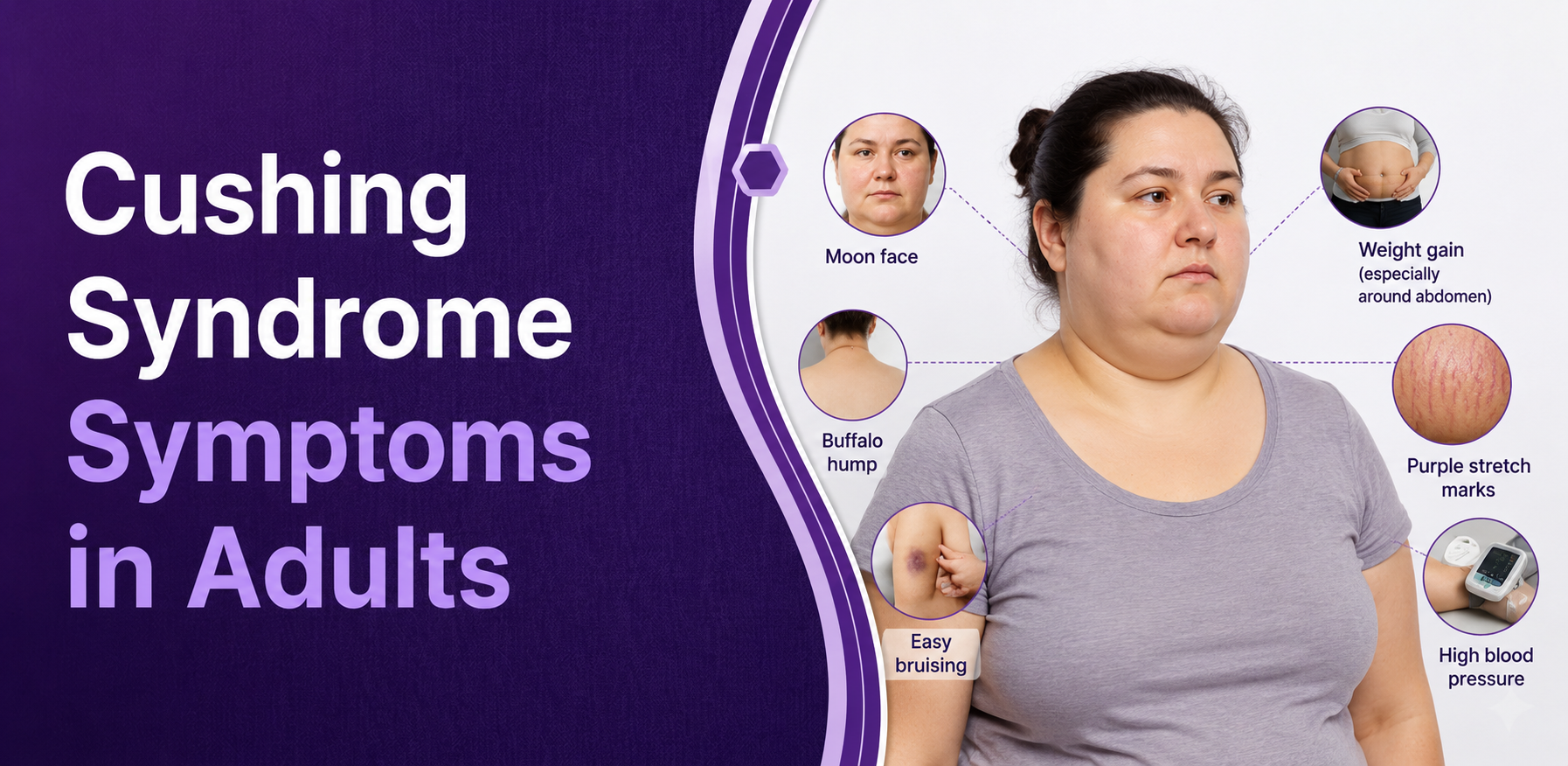
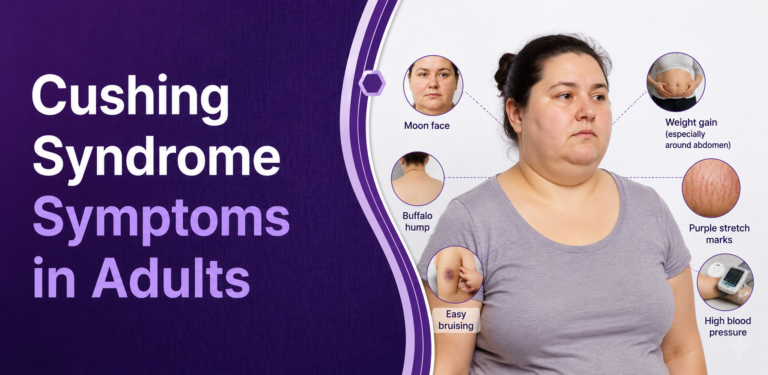
Weight gain around the abdomen, face, upper back, or neck
A round, full face, often called “moon face.”
Fat buildup between the shoulders, sometimes called “buffalo hump.”
Thin arms and legs compared with the upper body
Easy bruising
Slow wound healing
Purple or pink stretch marks on the skin
Muscle weakness
Fatigue
Mood changes, anxiety, or irritability
Bone weakness or fracture risk
NIDDK lists weight gain, thin arms and legs, a round face, fatty hump between the shoulders, easy bruising, purple stretch marks, and weak muscles as clear signs linked with high cortisol.
Early Signs Adults Should Not Ignore
Early Cushing Syndrome Symptoms in Adults may look common, so patients may delay care. However, certain patterns deserve attention.
For example, sudden or steady weight gain around the middle of the body can raise concern, especially when diet and activity have not changed much.
Also, facial rounding may develop gradually and become more noticeable in photos. Meanwhile, skin may bruise easily or show stretch marks that look wider and darker than typical stretch marks.
Fatigue can also become a major clue. An adult may sleep enough but still feel weak, drained, or unable to complete normal tasks. In addition, muscle weakness may make climbing stairs, lifting items, or standing from a chair harder.
When several Cushing Syndrome Symptoms in Adults appear together, a medical evaluation becomes important.
Why High Cortisol Causes Body Changes
Cortisol affects many body systems. Therefore, excess cortisol can create visible and internal changes.
First, high cortisol can change fat distribution. As a result, fat may collect around the face, neck, abdomen, and upper back. At the same time, arms and legs may become thinner because cortisol can affect muscle tissue.
Next, cortisol can weaken skin structure. Because of this, bruises may appear easily, cuts may heal slowly, and stretch marks may become more noticeable. Also, high cortisol can raise blood pressure and blood sugar, which increases long-term health risks.
This explains why Cushing Syndrome Symptoms in Adults can include both appearance changes and medical problems.
Main Causes of Cushing Syndrome
Too much cortisol in the body can lead to Cushing syndrome. The cause usually comes from one of two sources:
Endogenous cause:
The body produces too much cortisol on its own. This often happens because of a growth or tumor in the pituitary gland or adrenal gland.Exogenous cause:
Cortisol levels rise because of long-term use of steroid medications. This is the more common cause of Cushing syndrome.
Factors That Can Increase Cortisol Levels
Long-term steroid medication use:
Medicines such as prednisone, dexamethasone, or hydrocortisone can raise cortisol-like activity in the body when used for a long time.Pituitary gland tumors:
Some pituitary tumors produce too much ACTH. ACTH tells the adrenal glands to make cortisol. When ACTH levels rise, cortisol can also become too high. This condition is called Cushing disease.Adrenal gland tumors:
A tumor in the adrenal gland may produce excess cortisol directly. Most adrenal tumors are non-cancerous, but in rare cases, an adrenal cancer can cause high cortisol levels.Ectopic ACTH-producing tumors:
Sometimes, tumors outside the pituitary gland make ACTH. These tumors can trigger the adrenal glands to produce too much cortisol. Some of these tumors may be cancerous, so doctors need proper testing to find the source.
Risk Factors for Cushing Syndrome
Anyone can develop Cushing syndrome, but some adults have a higher chance of getting it.
The condition appears more often in adults between 25 and 50 years old.
Long-term use of steroid medications can also increase the risk of high cortisol levels.
People with pituitary gland, adrenal gland, or hormone-related tumors may also develop Cushing syndrome.
Possible Complications of Cushing Syndrome
Without proper treatment, high cortisol levels can lead to serious health problems, such as:
Frequent infections because excess cortisol can weaken the immune response
Blood clots, especially in the legs or lungs
Weak bones or fractures due to reduced bone strength
High cholesterol, which can increase the risk of heart-related conditions
Prediabetes or Type 2 diabetes, because cortisol can raise blood sugar
High blood pressure, which puts extra strain on the heart and blood vessels
Mood changes, including irritability, anxiety, or emotional ups and downs
Unusual weight gain, especially around the face, neck, abdomen, or upper back
If Cushing syndrome is not treated, complications can become dangerous. In severe cases, problems related to diabetes, blood clots, infections, or cardiovascular disease can become life-threatening. Therefore, early diagnosis and proper medical care matter.
When to See a Doctor
Adults should see a doctor when Cushing Syndrome Symptoms in Adults continue, worsen, or appear in a pattern. For instance, weight gain with easy bruising, muscle weakness, high blood pressure, and facial rounding should not be ignored.
Also, patients taking steroid medicines should never stop them suddenly.
Stopping steroids too quickly can create serious cortisol problems. Tapering steroid medicines slowly helps the body adjust safely.
A primary care doctor can review symptoms, check medication history, examine blood pressure and blood sugar, and order the right tests or specialist referral.
How Doctors Diagnose Cushing Syndrome
Diagnosis starts with a detailed medical history and physical exam. Then, doctors may order hormone tests to check cortisol levels.
Common tests include:
24-hour urine cortisol test
Late-night salivary cortisol test
Low-dose dexamethasone suppression test
ACTH blood test
CT scan or MRI when doctors need to look for a tumor
Cleveland Clinic lists urine cortisol testing, midnight saliva testing, dexamethasone suppression testing, ACTH blood testing, and imaging tests as part of the diagnosis.
Because Cushing Syndrome Symptoms in Adults can look like other health conditions, testing helps confirm the cause instead of guessing.
Treatment Options for Adults
Treatment depends on the cause. Therefore, no single plan fits every patient.
When steroid medicine causes symptoms, doctors may reduce the dose slowly or change the treatment plan. However, patients must follow medical guidance because sudden stopping can harm the body.
When a tumor causes high cortisol, treatment may include surgery, radiation, or medicine that lowers cortisol production. In addition, regular follow-up helps track recovery and prevent recurrence.
With the right care, many adults improve. However, untreated Cushing syndrome can raise the risk of high blood pressure, diabetes, blood clots, infections, bone loss, and heart-related complications.
NIDDK lists several complications, including heart attack, stroke, blood clots, infections, bone loss, high blood pressure, unhealthy cholesterol, mood changes, insulin resistance, and type 2 diabetes.
Lifestyle Support During Medical Care
Lifestyle changes cannot cure Cushing syndrome by themselves, but they can support treatment.
For example, balanced meals can help manage blood sugar and cholesterol. Also, gentle physical activity may support muscle strength when a doctor approves it.
In addition, patients should track symptoms, blood pressure readings, blood sugar numbers, if advised, and medication use. This information helps doctors understand the pattern clearly.
Most importantly, adults should not ignore Cushing Syndrome Symptoms in Adults just because symptoms develop slowly. Early medical care can reduce risk and improve quality of life.
Final Takeaway
Cushing Syndrome Symptoms in Adults can affect the face, weight, skin, muscles, mood, blood pressure, and blood sugar. Although these signs may seem unrelated at first, a pattern can point toward high cortisol.
If weight gain, moon face, easy bruising, purple stretch marks, muscle weakness, fatigue, or high blood pressure continue without a clear reason, do not delay care.
A proper medical evaluation can identify the cause and guide safe treatment.
Book an appointment with Passion Health Primary Care today for a complete evaluation, symptom review, and personalized care plan.
Thought for a couple of seconds
FAQs: Cushing Syndrome Symptoms in Adults
1. What are the most common Cushing Syndrome Symptoms in Adults?
The most common Cushing Syndrome Symptoms in Adults include weight gain around the belly, a round face, fat buildup between the shoulders, thin arms and legs, easy bruising, purple stretch marks, fatigue, muscle weakness, high blood pressure, and high blood sugar.
2. What causes Cushing syndrome in adults?
Cushing syndrome usually happens when cortisol stays too high for a long time. Long-term steroid medicine use can cause it. In some cases, the body makes too much cortisol because of a pituitary gland tumor, adrenal gland tumor, or another hormone-related problem.
3. Is weight gain always a sign of Cushing syndrome?
No. Weight gain can happen for many reasons, including diet, stress, sleep problems, thyroid issues, and lifestyle changes. However, weight gain with facial rounding, easy bruising, purple stretch marks, muscle weakness, and high blood pressure may need medical evaluation.
4. How do doctors test for Cushing syndrome?
Doctors may use urine, saliva, and blood tests to check cortisol levels. Common tests include a 24-hour urine cortisol test, late-night salivary cortisol test, dexamethasone suppression test, and ACTH blood test. In some cases, doctors may order a CT scan or an MRI.
5. Can Cushing syndrome symptoms go away?
Yes, symptoms can improve with the right treatment. Recovery depends on the cause, how long cortisol stayed high, and the treatment plan. Some adults improve after medicine changes, surgery, radiation, or cortisol-lowering treatment.
6. When should an adult see a doctor for possible Cushing syndrome?
An adult should see a doctor when Cushing Syndrome Symptoms in Adults continue or appear together. Warning signs include unexplained weight gain, moon face, easy bruising, purple stretch marks, muscle weakness, fatigue, high blood pressure, or high blood sugar.