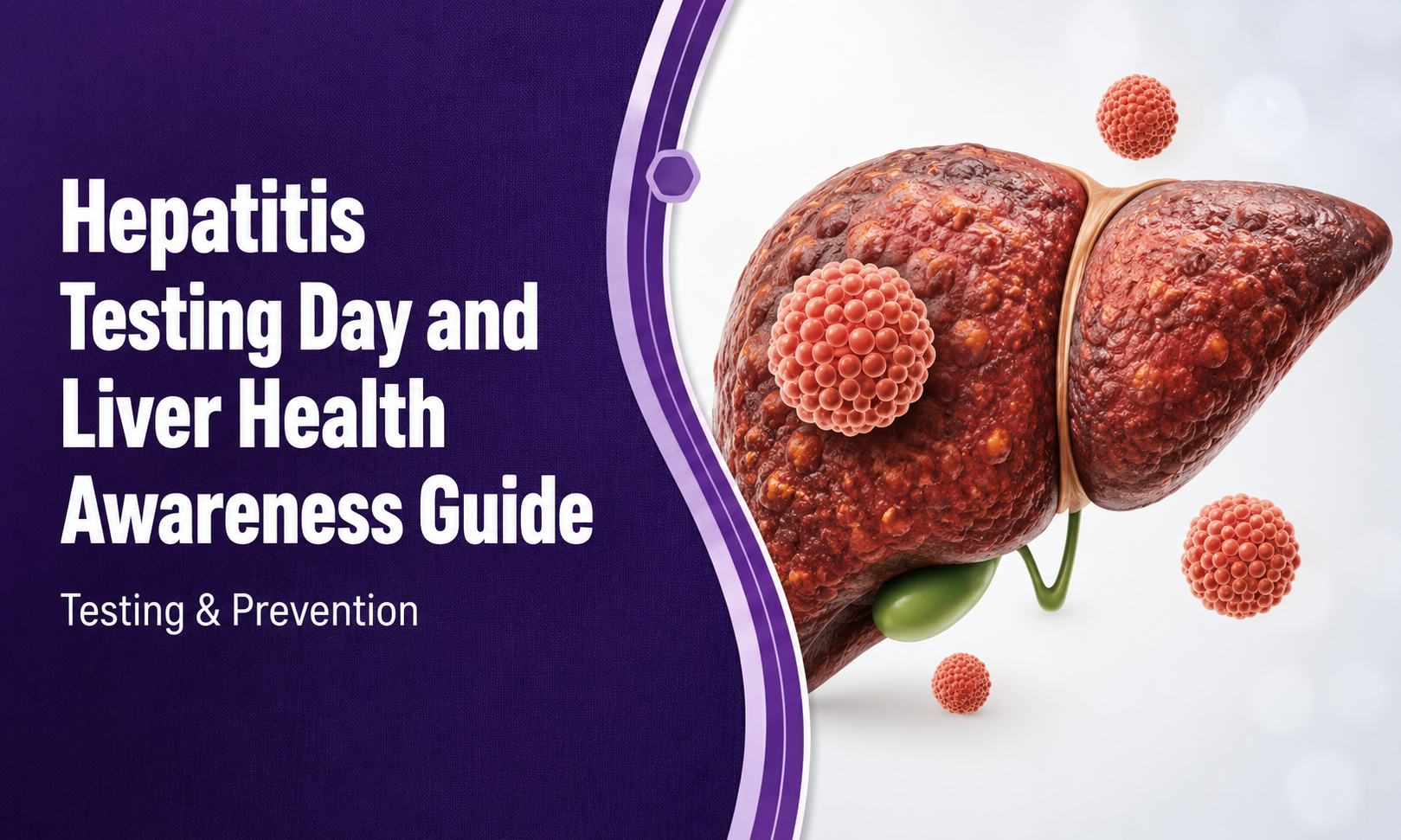
Hepatitis Testing Day and Liver Health Awareness: Why Early Testing Matters
A silent liver infection can stay hidden for years, yet it can still damage the body every day. That is why Hepatitis Testing Day and liver health awareness matter so much.
Many adults wait for pain, yellow eyes, or severe weakness before they think about liver disease. However, hepatitis B and hepatitis C often show no early warning signs.
Because of that, one simple blood test can become the turning point between silent risk and timely care.
Hepatitis Testing Day and liver health awareness encourage patients to act before liver damage becomes serious. Hepatitis Testing Day falls on May 19 in the United States during Hepatitis Awareness Month.
The day reminds adults to know their hepatitis status, understand liver health, and speak with a primary care doctor about screening.
CDC recommends that all adults ages 18 and older get screened at least once for hepatitis B and hepatitis C.
If you have never had a hepatitis test, do not wait for symptoms. Book an appointment with Passion Health Primary Care and take a proactive step toward better liver health.
What Is Hepatitis?
Hepatitis means inflammation of the liver. The liver works hard every day. It filters blood, supports digestion, stores nutrients, processes medicines, and removes harmful substances.
Therefore, when inflammation affects the liver, the whole body can feel the impact.
Viral hepatitis comes from hepatitis viruses. The most common types in the United States include hepatitis A, hepatitis B, and hepatitis C.
Hepatitis A usually causes a short-term infection. Meanwhile, hepatitis B and hepatitis C can become chronic and may lead to serious liver problems without proper care.
Because symptoms may not appear early, Hepatitis Testing Day and liver health awareness focus strongly on testing.
A person may look healthy while the virus continues to affect the liver. Although symptoms can appear, testing gives the clearest answer.
Why Hepatitis Testing Day Matters
May 19 gives healthcare teams, clinics, and communities a chance to talk openly about hepatitis testing.
More importantly, it reminds patients that liver disease does not always begin with obvious symptoms. For that reason, Hepatitis Testing Day and liver health awareness should not feel like a one-day message.
Instead, the day should push adults to ask one important question: “Have I ever been tested?”
CDC highlights May as Hepatitis Awareness Month and May 19 as National Hepatitis Testing Day. The goal centers on awareness, testing, prevention, vaccination, and early diagnosis.
Primary care clinics play a major role here. A primary care doctor can review health history, order hepatitis blood tests, check liver enzymes, explain results, and guide the next step. As a result, patients do not need to feel confused about where to begin.
Common Types of Hepatitis
Hepatitis A spreads mainly through contaminated food, water, or close contact with an infected person. Usually, it causes a short-term illness. Fortunately, vaccination can help prevent hepatitis A.
Hepatitis B spreads through blood, sexual contact, or from mother to baby during birth. Some adults clear the infection, yet others develop chronic hepatitis B. However, vaccination can prevent hepatitis B.
Hepatitis C spreads mostly through blood exposure. Many chronic infections come from past or current injection drug use, unsafe needle contact, or blood exposure before modern screening improved. Unlike hepatitis A and B, hepatitis C has no vaccine. Still, modern treatment can cure most patients.
Since each type spreads differently, Hepatitis Testing Day and liver health awareness help patients understand personal risk without fear or confusion.
Hepatitis Symptoms to Watch For
Hepatitis does not always cause symptoms at the beginning. Even so, some patients notice body changes that should not be ignored.
Common hepatitis symptoms may include:
Unusual tiredness or weakness
Fever
Nausea or vomiting
Loss of appetite
Pain or discomfort in the upper right abdomen
Pale or clay-colored stool
Yellow skin or yellow eyes
Itchy skin
Unexplained weight loss
However, symptoms alone cannot confirm hepatitis. The same signs can appear with other liver, stomach, or viral conditions. Therefore, a blood test offers the safest way to know what is happening.
Who Should Get Tested for Hepatitis?
Hepatitis Testing Day and liver health awareness especially matter for adults who have never had hepatitis screening.
CDC recommends one-time screening for hepatitis B and hepatitis C for all adults ages 18 and older.
Testing becomes even more important for people with possible blood exposure, abnormal liver tests, a history of injection drug use, multiple sexual partners, HIV, past dialysis, or a family history of hepatitis B.
In addition, anyone born in or connected to regions where hepatitis B is more common should ask a doctor about screening.
A patient does not need to feel embarrassed about testing. Doctors order these tests every day, and the purpose is protection, not judgment.
Hepatitis Testing: What to Expect
A hepatitis test usually starts with a simple blood draw. The lab can check for current infection, past infection, immunity, or the need for vaccination, depending on the test ordered.
For hepatitis B, doctors may order a panel that checks surface antigen, surface antibody, and core antibody.
For hepatitis C, testing often starts with an antibody test. If the antibody test comes back positive, another test checks for the current virus in the blood.
After the results come back, the primary care doctor explains them in plain language. If the test shows no infection and no immunity, vaccination may help for hepatitis A or hepatitis B.
If the test shows current infection, the doctor may order more labs, check liver health, and refer to a liver specialist when needed.
Hepatitis Treatment Guide
Treatment depends on the hepatitis type and whether the infection is short-term or chronic.
For hepatitis A, care usually focuses on rest, fluids, nutrition, and symptom relief. Most people recover without long-term liver problems. Still, severe symptoms need medical attention.
For acute hepatitis B, doctors often recommend rest, fluids, good nutrition, and close monitoring.
Chronic hepatitis B may need antiviral medicine, regular blood tests, and liver monitoring. Although not every patient needs medicine right away, every chronic hepatitis B patient needs medical follow-up.
For hepatitis C, treatment has improved greatly. Most hepatitis C treatments use oral medication for 8 to 12 weeks, and treatment cures more than 95% of patients in many cases.
Since there is no vaccine for hepatitis C, early testing and treatment are especially important.
When to See a Doctor
Schedule a primary care visit if fatigue, nausea, abdominal pain, dark urine, yellow eyes, or unexplained appetite loss continue.
Also, seek care if a previous blood test showed high liver enzymes. In addition, ask for testing if a partner, household member, or family member has hepatitis B or hepatitis C.
Urgent medical care becomes important when severe vomiting, confusion, heavy weakness, severe abdominal pain, bleeding, or deep yellowing of the eyes appear. These signs can suggest serious liver stress.
Hepatitis Testing Day and liver health awareness give patients a clear reason to act early. Early testing can reduce fear by replacing guesswork with facts.
Hepatitis Testing Day and Primary Care: What Doctors Do
Primary care supports liver health before, during, and after hepatitis testing. First, the doctor reviews risk factors and vaccination history. Next, the clinic orders the right hepatitis tests.
Then, the care team explains results, recommends vaccines when needed, and creates a follow-up plan.
Primary care also helps with liver-friendly habits. Patients may receive guidance about alcohol reduction, safe medication use, weight management, diabetes control, cholesterol care, and routine liver blood tests. These steps matter because liver health depends on more than one test.
For local patients, Passion Health Primary Care can help with screening conversations, preventive care visits, lab orders, vaccine guidance, and follow-up support.
Therefore, Hepatitis Testing Day and liver health awareness fit naturally into a complete primary care plan.
How to Protect Your Liver Health
Start with testing if you have never been screened. Then, ask about hepatitis A and hepatitis B vaccines.
Also, avoid sharing needles, razors, toothbrushes, or any item that may carry blood. Practice safer sex, use medicines only as directed, and limit alcohol because alcohol can increase liver stress.
In addition, maintain a healthy weight, manage blood sugar, and keep regular checkups. Small steps can protect the liver for years.
Conclusion
Hepatitis Testing Day and liver health awareness carry a powerful message: do not wait for liver disease to announce itself.
Hepatitis can stay quiet, but testing can uncover risk early. Once patients know their status, they can choose prevention, treatment, and follow-up with confidence.
The liver protects the body every day. Now it deserves the same attention.
Book an appointment with Passion Health Primary Care today for hepatitis testing guidance, liver health screening, and preventive primary care support.
FAQs: Hepatitis Testing Day and Liver Health Awareness
1. What is Hepatitis Testing Day?
Hepatitis Testing Day is observed on May 19 in the United States. It encourages people to get tested for hepatitis B and hepatitis C, learn their status, and take early action to protect liver health. The CDC recommends all adults aged 18 and older get screened at least once for hepatitis B and hepatitis C.
2. Why is hepatitis testing important even without symptoms?
Hepatitis B and hepatitis C can stay silent for years. A person may feel normal while the virus slowly affects the liver. Therefore, testing helps detect infection early before serious liver problems develop.
3. What are the common symptoms of hepatitis?
Common symptoms may include tiredness, nausea, loss of appetite, fever, dark urine, pale stool, upper right abdominal pain, yellow skin, or yellow eyes. However, many people do not notice symptoms early, so testing gives a clearer answer.
4. Who should get tested for hepatitis?
Adults aged 18 and older should ask for hepatitis B and hepatitis C screening at least once in their lifetime. Testing also matters for people with abnormal liver tests, possible blood exposure, a family history of hepatitis, or other risk factors.
5. Can hepatitis be treated?
Yes. Treatment depends on the type of hepatitis. Hepatitis A usually improves with supportive care. For hepatitis B, doctors may recommend monitoring or antiviral medicine. In many hepatitis C cases, oral medicine can cure the infection, so early testing can lead to timely treatment.
6. How can primary care help with hepatitis testing?
A primary care doctor can review risk factors, order hepatitis blood tests, explain results, check liver health, recommend vaccines for hepatitis A or B when needed, and guide treatment or specialist referral. For testing guidance, book an appointment with Passion Health Primary Care.