What Is Kidney Dialysis and Why Do Patients Need It?
Most people ignore their kidneys — until the kidneys start failing them.
That is the quiet danger of kidney disease. It does not scream. It whispers. Fatigue you blame on stress.
You dismiss swollen ankles as a long day. Nausea is linked to something you ate. By the time a doctor says the word “dialysis,” the damage is often serious and years in the making.
Kidney dialysis and life expectancy are directly connected. The sooner you catch the warning signs, the more control you keep over your outcome.
This post breaks down exactly what dialysis is, who needs it, how long people live on it, and what you can do right now to protect your kidneys before you ever reach that point.
Do not wait for symptoms to get worse. Book a kidney health screening at Passion Health Primary Care today.
What Is Kidney Dialysis — And Why Do Kidneys Fail?
Your kidneys do more than filter waste. They remove waste and fluid from your body, regulate blood pressure, keep your bones strong, and ensure you have the right balance of minerals like potassium and sodium in your blood.
When kidneys shut down, toxins build up fast. That buildup becomes life-threatening without intervention. Dialysis is the intervention.
Dialysis is a treatment that takes over kidney functions when those organs stop doing their job. It filters your blood artificially — a job your kidneys can no longer handle.
The leading causes of kidney failure include:
Diabetes — the single biggest driver of end-stage renal disease
High blood pressure — damages kidney vessels over the years
Lupus and autoimmune conditions
Chronic kidney disease left unmanaged
Repeated infections or blockages
Warning Signs of Kidney Failure You Should Never Ignore
The body sends signals long before complete kidney failure. Most people miss them. Knowing what to look for could add years to your life.
Watch for these red flags:
Persistent fatigue that sleep does not fix
Swelling in your legs, ankles, or feet from fluid retention
Nausea and vomiting without a clear cause
Changes in urination — more at night, foamy urine, reduced output
Shortness of breath from fluid buildup around the lungs
Metallic taste in the mouth or loss of appetite
Muscle cramps, especially at night
Difficulty concentrating or brain fog
You typically start dialysis when you have symptoms or when lab tests show toxic levels of waste in your blood. Symptoms of kidney failure include nausea, fatigue, swelling, and vomiting.
These symptoms do not always appear at once. Many people feel only mildly unwell for months, and that delay costs them kidney function they cannot get back.
The Two Main Types of Kidney Dialysis
Understanding your treatment options matters. Not all dialysis is the same, and the right type affects both your daily life and your long-term outcomes.
There are two main types of dialysis:
Hemodialysis
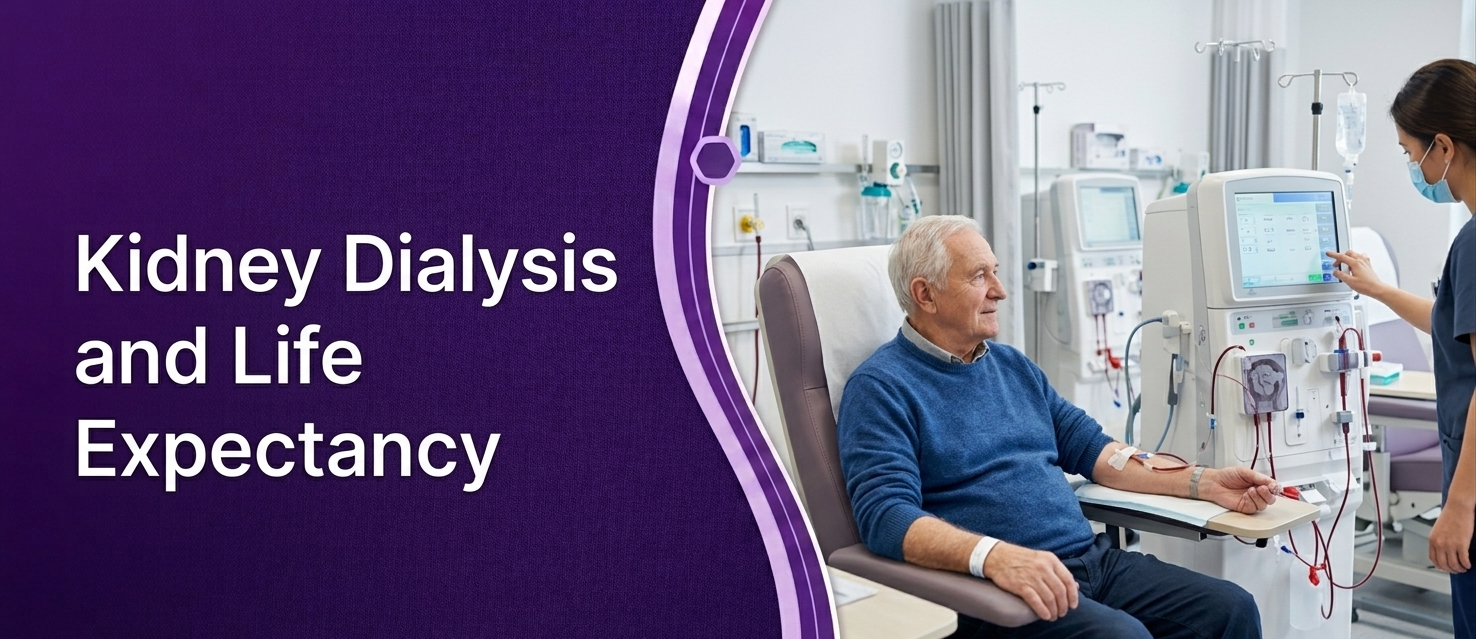
Hemodialysis uses a machine called a dialyzer to clean the blood outside the body. Most patients receive treatment three times per week for several hours per session.
Peritoneal Dialysis
Peritoneal dialysis uses the lining of the abdomen to filter waste and fluid inside the body. Many patients perform this treatment at home, often overnight.
Both methods can prolong life, reduce symptoms, and improve stability. However, choosing the right treatment depends on age, overall health, heart condition, lifestyle, and kidney damage severity.
Which Type Is Better for Life Expectancy?
The adjusted five-year survival rate for hemodialysis patients stands at 42 percent, while peritoneal dialysis patients show a five-year survival rate of 52 percent. However, patient selection and individual health factors influence these numbers significantly.
The best dialysis is the one you follow consistently and start early.
Kidney Dialysis and Life Expectancy: The Real Numbers
Here is where things get serious — and why early action matters so much.
The average life expectancy for patients on hemodialysis is estimated at 8.8 years, with an expected 11.5 years of life lost compared to the general population.
The overall five-year survival rate for dialysis patients runs approximately 35 to 40 percent — meaning about four out of ten people on dialysis remain alive five years after starting treatment.
Age dramatically changes this picture:
Ages 45 to 64: Five-year survival drops to approximately 60 percent
Older patients face a steeper decline, especially when heart disease or diabetes is also present
Why Some Patients Start Dialysis Too Late
Many people avoid dialysis because they fear the treatment itself. Others hope symptoms will improve naturally. Some simply do not realize how advanced their kidney disease has become.
Unfortunately, waiting too long can trigger medical emergencies.
When kidney function falls dangerously low, patients may suddenly experience:
Severe breathing difficulty
Confusion
Chest pain
Dangerous fluid retention
Irregular heartbeat
Extreme weakness
Emergency dialysis often becomes necessary during hospitalization.
Can Someone Live Without Dialysis?
When kidney failure reaches the final stage, dialysis or a kidney transplant usually becomes necessary for survival.
Without treatment, toxins and fluid continue building inside the body.
According to kidney organizations, patients who stop dialysis may survive from several days to a few weeks or months, depending on remaining kidney function, heart health, and other medical conditions.
This topic creates fear for many families because dialysis represents both life extension and lifestyle disruption.
Some patients choose conservative care instead of dialysis due to age, severe illness, or personal preferences. Doctors evaluate these situations carefully because quality of life matters alongside survival.
How Dialysis Changes Daily Life
Dialysis can improve survival, but patients must adjust to major routine changes.
Common challenges include:
Strict dialysis schedules
Dietary restrictions
Fluid intake limits
Fatigue after treatment
Medication management
Emotional stress
Transportation issues
Some patients also experience muscle cramps, headaches, low blood pressure, itching, or sleep problems during treatment.
Can Kidney Dialysis Improve Life Expectancy?
Yes, dialysis can significantly extend survival for people with end-stage kidney disease.
Without treatment, advanced kidney failure becomes fatal. Dialysis removes dangerous waste products and stabilizes the body enough to prolong life.
However, outcomes improve most when patients:
Follow dialysis schedules consistently
Control diabetes carefully
Manage blood pressure
Avoid smoking
Stay physically active
Follow kidney-friendly nutrition plans
Attend regular medical visits
Kidney transplant may offer longer survival and better quality of life for eligible patients.
Still, many patients live productive lives for years on dialysis with proper care and monitoring
How to Protect Kidney Health Before Dialysis Becomes Necessary
The best strategy is prevention.
Many kidney disease cases worsen slowly over the years due to uncontrolled diabetes or high blood pressure.
These steps may help reduce risk:
Monitor blood pressure regularly
Control blood sugar carefully
Drink adequate water
Limit excess salt intake
Avoid smoking
Maintain a healthy weight
Exercise consistently
Avoid unnecessary painkiller overuse
Schedule routine lab testing
Early kidney disease often responds better to treatment before permanent damage develops.
The Bottom Line on Kidney Dialysis and Life Expectancy
Kidney dialysis saves lives. But reaching dialysis means kidney damage has already become severe. The real opportunity — the one that adds the most years to your life — lies in what you do before that point.
Catch kidney disease early. Manage diabetes and blood pressure aggressively. Get annual kidney function panels if you have any risk factors. Know your numbers.
Kidney dialysis and life expectancy statistics show a hard truth: the later you act, the fewer options you have. But they also show something else — people who engage actively with their care live longer, and some live decades on dialysis with a strong quality of life.
You have more control than you think. Use it now.
Schedule Your Appointment at Passion Health Primary Care
Frequently Asked Questions
How long can someone live on kidney dialysis?
Many patients live 5–10 years on dialysis, while some survive much longer, depending on age, heart health, diabetes control, and treatment consistency.
Is dialysis painful?
Dialysis itself usually does not cause severe pain, although needle insertion and muscle cramps may create discomfort for some patients.
Can the kidneys recover after dialysis?
Acute kidney injury sometimes improves temporarily after dialysis. However, end-stage kidney disease usually requires lifelong dialysis or transplant.
What happens if dialysis stops?
Waste and fluid quickly build up inside the body. Survival after stopping dialysis varies depending on overall health and remaining kidney function.