Can a Hernia Feel Like Sore Muscles? When Hernia Pain Gets Serious
You lift something heavy, finish a hard workout, or move awkwardly for a second. Later, a strange soreness appears in your lower abdomen or groin.
At first, it feels like a pulled muscle. Many people ignore it for days or even weeks.
However, what if it is not muscle soreness at all?
One of the most common early signs of a hernia feels surprisingly similar to sore muscles. That confusion causes many people to delay treatment until the pain becomes worse or a visible bulge appears.
In some cases, waiting too long can lead to dangerous complications that require emergency surgery.
So, can a hernia feel like sore muscles? Yes — especially in the early stages. Yet there are important differences you should never ignore.
Still unsure what’s causing your pain? Book an appointment with Passion Health Primary Care today and get a clear, professional diagnosis.
Can a Hernia Feel Like Sore Muscles? Here’s the Fact
Yes, a hernia can absolutely feel like sore muscles in the beginning.
Many people describe hernia pain as:
A dull ache
Tightness in the abdomen
Burning discomfort
Pulling sensation
Pressure after movement
Soreness after lifting
Because those symptoms closely resemble muscle strain, people often assume they simply overworked their bodies. Unfortunately, hernia discomfort usually does not fully disappear like normal muscle soreness.
Over time, it sends signals that ordinary muscle soreness simply does not. Understanding those signals could save you from a dangerous complication.
Why Hernia Pain Feels Similar to Muscle Soreness?
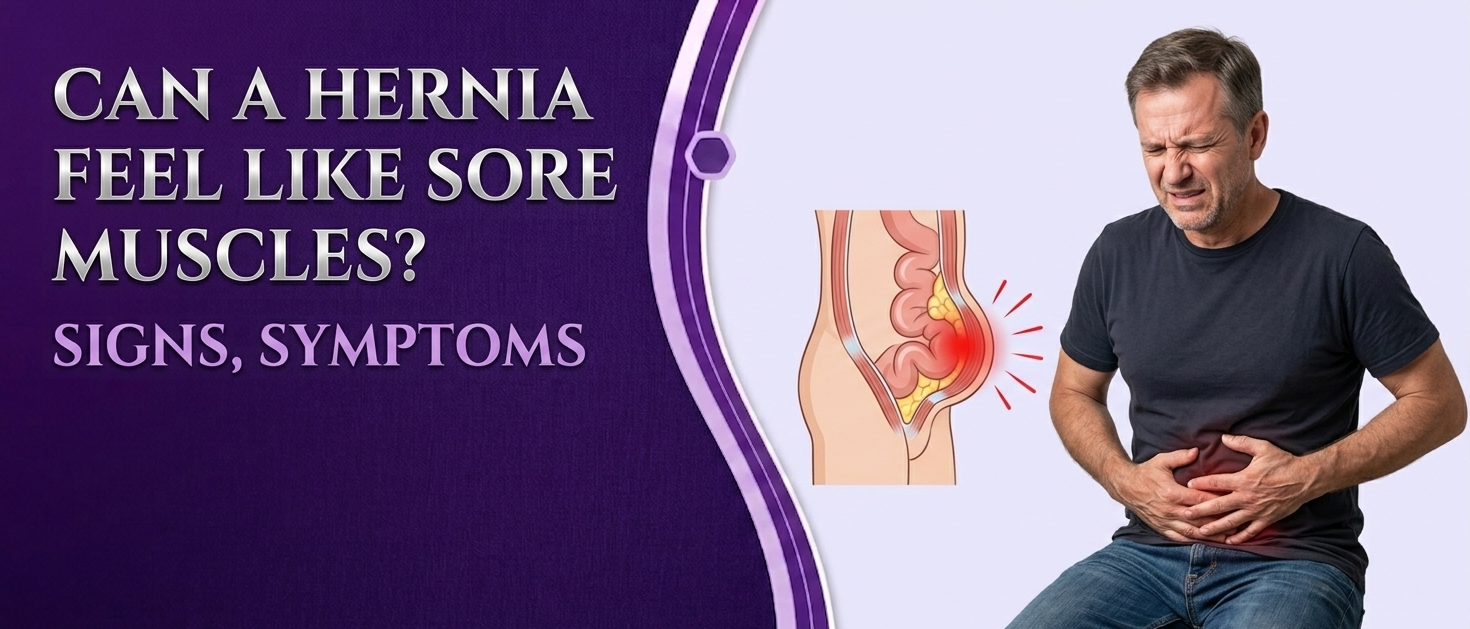
A hernia develops when tissue or part of an organ pushes through a weak spot in muscle or connective tissue.
The surrounding muscles become irritated and inflamed, which creates soreness similar to a strain.
At first, the discomfort may feel mild. Some people only notice pressure or tenderness after physical activity. Others feel a strange pulling sensation while bending or twisting.
Unlike normal sore muscles, though, a hernia usually creates ongoing pressure inside the abdomen or groin.
Over time, symptoms often become more noticeable.
Early Hernia Symptoms People Often Ignore
Many hernias begin quietly. The symptoms may come and go, which makes them easy to dismiss.
Watch for these early warning signs:
Mild Bulge or Swelling
A small lump near the groin, belly button, or abdomen is one of the clearest signs of a hernia. The bulge may disappear while lying down and return when standing.
Pain After Lifting
Pain that appears after carrying heavy objects or intense workouts may signal abdominal weakness rather than muscle fatigue.
Burning or Pressure Sensation
Muscle soreness usually feels tender. Hernia pain often feels like pressure, heaviness, or internal burning.
Pain That Returns Repeatedly
A strained muscle improves steadily with rest. Hernia pain often returns during activity.
Weakness in the Lower Abdomen
Some people notice weakness while walking, exercising, or coughing.
Hernia vs Muscle Strain: Key Differences
Many people struggle to tell the difference between hernia pain and muscle soreness. Understanding the symptoms can help you decide when to seek medical care.
Hernia | Muscle Strain |
May cause a visible bulge | No bulge |
Pain worsens with coughing or lifting | Pain mainly with movement |
Pressure or burning feeling | Muscle tenderness |
Symptoms return repeatedly | Gradual improvement |
May improve while lying down | Position changes rarely matter |
May improve while lying down | Usually heals naturally |
A muscle strain normally heals within days or weeks. Hernia symptoms usually continue or slowly worsen.
Types of Hernias That May Feel Like Sore Muscles
Different hernias create different symptoms depending on location.
Inguinal Hernia
An inguinal hernia appears in the groin area and commonly affects men.
Symptoms include:
Groin soreness
Pressure while standing
Bulge near the groin
Pain during lifting
Pulling sensation
Many people mistake it for a groin strain.
Umbilical Hernia
This type appears near the belly button.
Common signs include:
Swelling around the navel
Abdominal soreness
Pressure after movement
Bulge during coughing
Hiatal Hernia
A hiatal hernia affects the upper stomach area and may not cause a visible lump.
Symptoms include:
Acid reflux
Chest pressure
Heart burn
Trouble swallowing
Upper abdominal discomfort
Incisional Hernia
This develops near a previous surgery scar where muscle tissue weakened.
Symptoms often include:
Swelling near the scar
Pain while moving
Pulling sensation
Bulge around the incision
Warning Signs That Need Immediate Medical Attention
Some hernia symptoms signal a genuine emergency. Act immediately if you experience any of these:
Sudden, severe pain in the abdomen or groin that comes on sharply
A bulge that turns red, dark, or purple
Nausea or vomiting alongside abdominal pain
Fever combined with swelling or rigidity
Inability to pass gas or have a bowel movement
Why So Many People Miss Early Hernia Warning Signs
Many people wait because the symptoms seem minor at first. Others assume the soreness will disappear naturally.
Delaying care increases the risk of serious complications. A hernia can become incarcerated, meaning the trapped tissue cannot return to its normal position.
Worse, it can become strangulated, cutting off the blood supply entirely. That situation demands emergency surgery and carries real health risks.
Early diagnosis creates more options and a faster recovery. Catching a hernia early means simpler treatment, shorter downtime, and less disruption to your daily life.
Can a Hernia Heal Without Surgery?
Most hernias do not disappear without treatment.
Small hernias may stay stable temporarily, especially with activity changes and weight management. However, the weak muscle opening usually remains.
Doctors may recommend monitoring mild cases, but larger or painful hernias often require surgical repair.
Ignoring symptoms may increase the risk of:
Severe pain
Intestinal blockage
Strangulation
Emergency surgery
How to Reduce Hernia Pain
Although treatment depends on severity, several lifestyle adjustments may reduce discomfort temporarily.
Avoid Heavy Lifting
Heavy strain increases abdominal pressure and worsens symptoms.
Prevent Constipation
Straining during bowel movements places pressure on weakened muscles.
Maintain a Healthy Weight
Excess body weight increases stress on abdominal tissue.
Stop Smoking
Chronic coughing can worsen hernias over time.
Wear Supportive Clothing
Loose support garments sometimes reduce discomfort temporarily.
Still, home remedies cannot repair the weakened muscle.
Who Has a Higher Risk for Hernias?
Several factors increase risk.
These include:
Heavy lifting
Chronic coughing
Obesity
Previous abdominal surgery
Aging
Family history
Frequent constipation
Intense exercise
People involved in physical labor or weightlifting often notice symptoms earlier.
Take away: Sore Muscles Don’t Come With a Lump
So, can a hernia feel like sore muscles? Yes — and that similarity is exactly what makes hernias easy to dismiss and dangerous to ignore. The longer you wait, the higher the risk of something going seriously wrong.
Your body is sending you a message. A persistent bulge, recurring pressure, or pain that reliably worsens with activity deserves professional attention — not another day of hoping it disappears.
Passion Health Primary Care makes it simple to get the answers you need. Book your appointment today, take control of your health, and stop letting uncertainty run your life.
FAQ
Can a hernia feel like muscle soreness after working out?
Yes. Many hernias initially feel like post-workout soreness, especially after heavy lifting or abdominal exercises.
Does hernia pain come and go?
Yes. Hernia symptoms often appear during activity and improve with rest or lying down.
Can a hernia exist without a bulge?
Yes. Some small hernias may not create an obvious lump early on.
Is hernia pain sharp or dull?
It can feel dull, burning, heavy, or sharp depending on severity and activity.
When should I worry about hernia symptoms?
Seek medical care if pain worsens, a bulge appears, or symptoms return repeatedly during lifting or coughing.