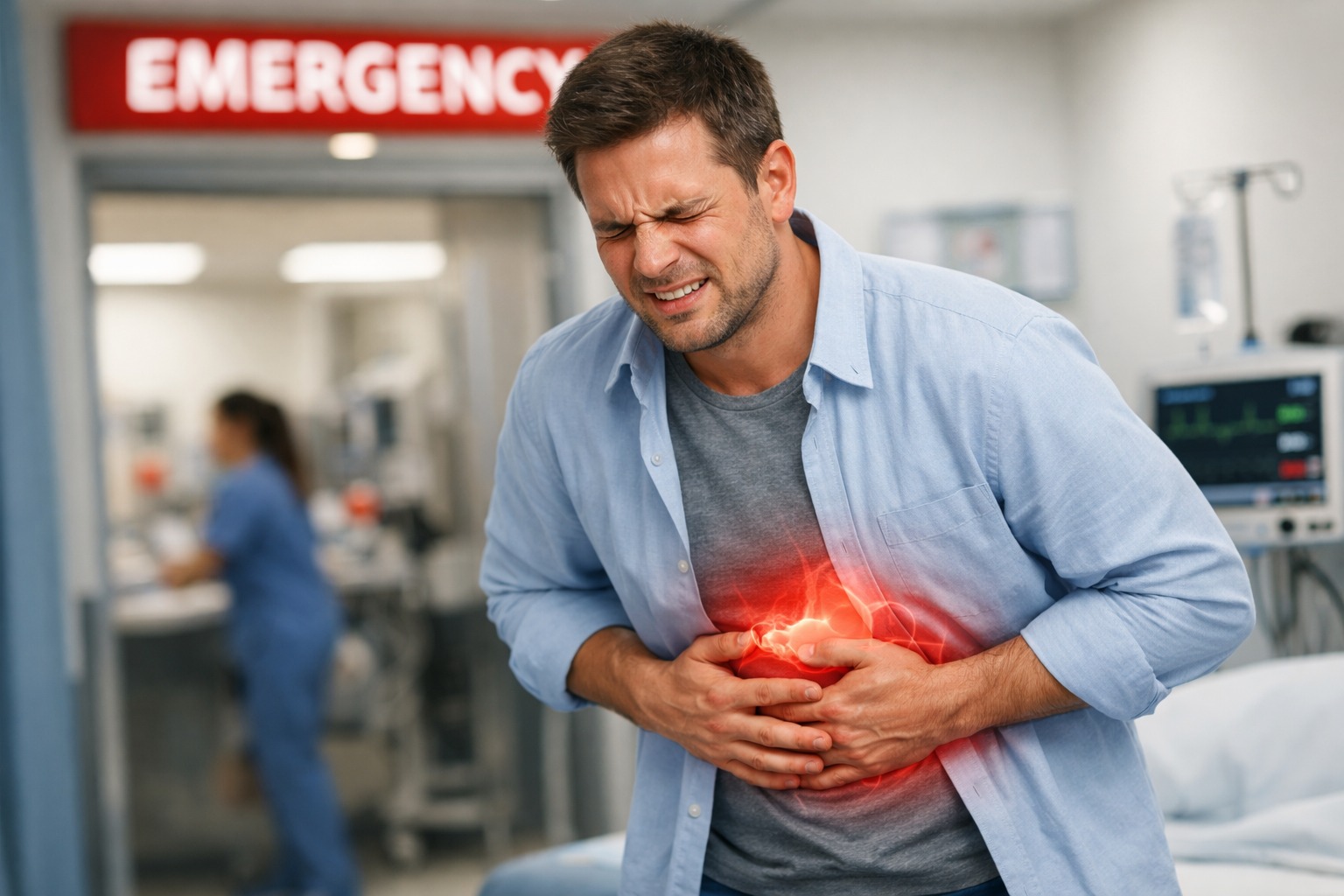
Emergency Abdominal Pain: Signs You Need Immediate Care
Abdominal pain is common—but some types are medical emergencies. Severe, sudden, or worsening stomach pain may signal life-threatening conditions that require immediate treatment.
This guide explains how to recognize emergency abdominal pain, what causes it, warning signs to watch for, and when to go to the ER.
What Is Emergency Abdominal Pain?
Emergency abdominal pain is pain that:
Starts suddenly
Becomes severe quickly
Gets worse over time
Comes with serious symptoms
Interferes with movement or breathing
It is often caused by organ inflammation, blockage, bleeding, or infection.
Delaying care in these cases can be dangerous.
Common Causes of Emergency Abdominal Pain
Several serious conditions can cause sudden, intense abdominal pain.
1) Appendicitis
Starts near belly button, moves to right lower abdomen
Worsens with movement
Fever, nausea, loss of appetite
Needs urgent surgery
2) Bowel Obstruction
Severe bloating
Vomiting
No bowel movement
Intense cramping
Can cause tissue death if untreated.
3) Perforated (Ruptured) Ulcer or Organ
Sudden, sharp “knife-like” pain
Rigid abdomen
This is life-threatening.
4) Pancreatitis (Severe Cases)
Severe upper abdominal pain
Pain spreads to back
Vomiting
Rapid heartbeat
Often requires hospitalization.
5) Ectopic Pregnancy (Women)
Pregnancy outside uterus
Dizziness or fainting
Medical emergency.
6) Internal Bleeding
From injury, ulcers, or ruptures
Dizziness
Pale skin
Low blood pressure
Needs immediate treatment.
7) Abdominal Aortic Aneurysm (AAA)
Rupture of major blood vessel
Sudden severe pain in abdomen/back
Collapse or shock
Rare but often fatal without emergency care.
Warning Signs: Go to the ER Immediately If You Have
Seek emergency care right away if abdominal pain comes with any of these symptoms:
Severe Pain
Sudden, intense pain
“Worst pain of my life” feeling
Pain that keeps worsening
Fever & Infection Signs
Chills
Confusion
Bleeding
Digestive Shutdown
Green or yellow vomit
No bowel movement with pain
Circulation Problems
Dizziness
Weak pulse
Pale or clammy skin
Pregnancy-Related Pain
Pain during pregnancy
Shoulder pain with dizziness
Do NOT Ignore These Pain Patterns
Certain pain patterns are especially dangerous:
Pain that wakes you from sleep
Pain with stiff, hard abdomen
Pain that prevents walking upright
Pain after injury or accident
Pain with rapid heart rate
These often indicate internal emergencies.
What Happens in the Emergency Room?
If you arrive at the ER with severe abdominal pain, doctors act quickly.
1) Rapid Assessment
They check:
Oxygen levels
Pain severity
2) Physical Examination
Doctors look for:
Tenderness
Guarding
Swelling
Rigid abdomen
3) Emergency Tests
May include:
Urine tests
Pregnancy test
CT scan
Ultrasound
X-rays
These help find the cause fast.
4) Immediate Treatment
Depending on the diagnosis:
IV fluids
Pain control
Surgery
Blood transfusion
Intensive care
Fast treatment saves lives.
What NOT to Do During Emergency Abdominal Pain
If you suspect an emergency:
Do not ignore the pain
Do not take strong painkillers without advice
Do not eat or drink
Do not “wait it out”
Do not drive if dizzy (call for help)
Call emergency services or go to the ER.
Special Risk Groups
Some people should be extra cautious.
Children
Emergency signs:
Refusing to walk
Severe crying
Lethargy
Appendicitis is common in kids.
Older Adults
Higher risk for:
Bowel obstruction
Circulation problems
Pain may be milder but more dangerous.
Pregnant Women
Pain may indicate:
Placental problems
Infection
Always seek urgent care.
When It’s NOT an Emergency (Usually)
These are often less serious (but still see a doctor if persistent):
Mild gas pain
Occasional cramps
Mild indigestion
Temporary constipation
Short-term stomach flu
If symptoms worsen, seek care.
How to Decide: ER or Doctor Visit?
Go to ER If:
Pain is severe or sudden
You have fever + vomiting
There is bleeding
You feel faint
You are pregnant
Call Doctor If:
Pain is mild/moderate
Lasts more than 2–3 days
Keeps returning
No emergency symptoms
When in doubt, choose safety.
How Primary Care Helps After an Emergency
After ER treatment, your primary care provider can:
Review hospital reports
Adjust medications
Prevent recurrence
Coordinate specialist care
Follow-up is important for long-term health.
Frequently Asked Questions (FAQs)
Can gas pain feel like an emergency?
Yes, gas can be painful—but it should improve. Severe, worsening pain is not normal.
Should I go to ER for stomach pain at night?
Yes, if pain is severe, waking you from sleep, or worsening.
Is vomiting with pain always serious?
Not always, but persistent vomiting with pain needs urgent evaluation.
Can painkillers hide dangerous symptoms?
Yes. They may delay diagnosis. Avoid strong painkillers before evaluation.
Final Thoughts
Emergency abdominal pain is rare—but when it happens, every minute matters.
Never ignore:
Sudden severe pain
Pain with fever
Trust your instincts. If something feels wrong, seek immediate medical care. Early treatment saves lives and prevents serious complications.
Our Commitment to North Texas Families
At Passion Health Primary Care, we help patients across DFW recognize early warning signs and get timely treatment. Our providers evaluate abdominal pain carefully to rule out serious conditions and guide you to the right level of care.