Broken Heart Syndrome: Facts & Risk Explained
A painful emotional shock can feel heavy, but can it actually affect the heart? The answer may surprise many patients. Broken Heart Syndrome Symptoms and causes matter because this condition can feel almost exactly like a heart attack. Sudden chest pain, shortness of breath, fainting, or a racing heartbeat should never be ignored.
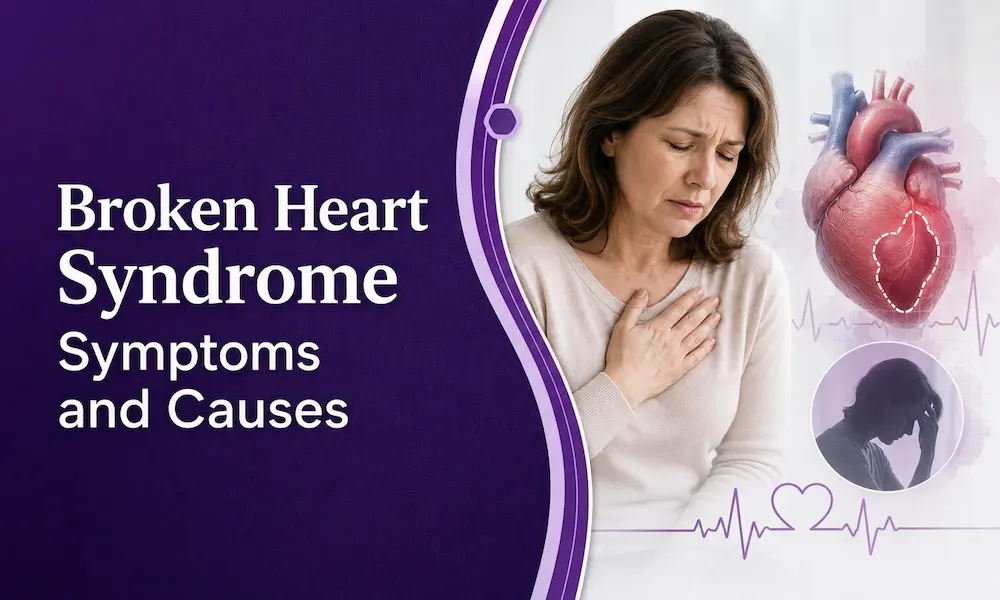
Broken heart syndrome, also called Takotsubo cardiomyopathy or stress cardiomyopathy, happens when sudden emotional or physical stress weakens part of the heart muscle for a short time.
Most people recover with treatment, although serious complications can happen in some cases.
If stress, chest discomfort, blood pressure concerns, or heart health worries affect daily life, book an appointment with Passion Health Advanced Primary Care for preventive support, risk review, and the right next step.
What Is Broken Heart Syndrome?
Stress cardiomyopathy, or Broken heart syndrome, is a temporary heart condition where part of the heart muscle suddenly becomes weak.
It often appears after a sudden stressful event, such as grief, fear, severe pain, illness, surgery, or another intense physical or emotional trigger.
This condition can confuse patients because the symptoms often look like a heart attack. However, broken heart syndrome usually does not involve blocked coronary arteries, while a heart attack often does. Even so, only medical testing can tell the difference.
That is why Broken Heart Syndrome Symptoms and Causes deserve serious attention. It sounds emotional, but it creates real physical changes in the heart.
Broken Heart Syndrome Symptoms and Causes Explained
The main symptoms often appear within minutes or hours after a sudden stressful event. Sudden severe chest pain, shortness of breath, fainting, heart palpitations, abnormal heart rhythm, and low blood pressure are possible symptoms.
Common broken heart syndrome warning signs include:
Sudden chest pain
Shortness of breath
Fainting or near-fainting
Fast, slow, or irregular heartbeat
Heart palpitations
Weakness after intense stress
Low blood pressure symptoms, such as dizziness
The cause usually involves a sudden surge of stress hormones. During emotional or physical stress, the body releases chemicals such as adrenaline. Researchers believe these stress chemicals can stun or injure the heart muscle for a short time.
Because of this, Broken Heart Syndrome Symptoms and Causes often connect with emotional stress and chest pain symptoms. However, the condition can also happen after physical illness, surgery, asthma attacks, seizures, stroke, high fever, blood loss, or severe pain.
Can Stress Cause Broken Heart Syndrome?
Yes, severe stress can trigger broken heart syndrome. However, day-to-day stress usually does not cause it. The Symptoms are most often start after sudden or extreme emotional or physical stress, not ordinary daily tension.
Possible emotional triggers include:
Sudden grief
Divorce or relationship loss
Intense fear
Extreme anger
Traumatic news
Major financial or personal shock
Even sudden good news in rare cases
Physical triggers may include:
Surgery
Severe pain
High fever
Seizures
Major blood loss
Critical illness
So, can stress cause broken heart syndrome? Yes, but the stress usually feels sudden, intense, and overwhelming. That makes Broken Heart Syndrome Symptoms and Causes an important topic for heart health awareness.
Broken Heart Syndrome Symptoms vs. Heart Attack Symptoms
These two heart problems cause chest pain and shortness of breath. As a result, patients should never try to self-diagnose at home.
Broken heart syndrome may get misdiagnosed as a heart attack because symptoms and test results can look similar.
However, broken heart syndrome usually does not show blocked heart arteries, while a heart attack often involves blocked blood flow.
Key difference
A heart attack usually comes from blocked arteries. Broken heart syndrome usually comes from sudden stress-related heart muscle weakness.
Similar symptoms
Both may cause:
Shortness of breath
Sweating
Dizziness
Nausea
Palpitations
Fainting
Because the symptoms overlap, emergency evaluation matters. Tests such as an EKG, blood tests, an echocardiogram, an angiogram, a chest X-ray, or a cardiac MRI may help doctors identify the cause.
Broken Heart Syndrome Symptoms in Women
This condition in women deserves special attention because women, especially those over age 50, have a higher risk. Takotsubo cardiomyopathy appears more likely in women, people older than 50, and people with a history of certain psychiatric or neurologic conditions.
Women may notice sudden chest pain, shortness of breath, fainting, palpitations, dizziness, or unusual weakness after emotional stress. However, symptoms should not get dismissed as anxiety, panic, sadness, or “just stress.”
This point matters for organic patient education. Many people search for broken heart syndrome symptoms in women because they want to know whether stress can create real heart symptoms. The answer is yes. However, urgent symptoms need medical evaluation first.
What Causes Broken Heart Syndrome?
Doctors do not know every detail yet, but the stress hormone surge plays a major role. Adrenaline and other stress chemicals may stun or injure the heart muscle after sudden stress.
Common causes and triggers include:
Emotional stress
Grief, fear, anger, shock, breakup, divorce, job loss, or sudden traumatic news can trigger symptoms.
Physical stress
Severe illness, surgery, stroke, seizures, asthma attacks, high fever, or blood loss may also trigger the condition.
Hormonal response
The body releases stress hormones during intense events. In some people, that sudden hormone surge affects the heart muscle.
Unknown trigger
Some patients cannot identify a clear trigger. Cleveland Clinic notes that a small percentage of people with Takotsubo cardiomyopathy cannot name a specific stressor.
This makes Broken Heart Syndrome Symptoms and Causes a strong evergreen blog topic because it answers a real patient question: “Can emotional pain turn into physical heart symptoms?”
Can You Die from Broken Heart Syndrome?
Most people recover, but broken heart syndrome can become serious. The American Heart Association says the condition can lead to severe short-term heart muscle failure and, in rare cases, can be fatal.
The American Heart Association report also highlighted that hospitalized Takotsubo cardiomyopathy cases had notable risks of complications such as heart failure, atrial fibrillation, cardiogenic shock, stroke, and cardiac arrest.
So, is broken heart syndrome dangerous? It can be. However, many patients improve with proper care. The key is fast evaluation, correct diagnosis, close monitoring, and follow-up.
Do not wait until symptoms feel sudden, severe, or unusual.
Broken Heart Syndrome Treatment and Recovery
Doctors usually treat broken heart syndrome like a heart attack at first because the symptoms can look similar. Treatment often stays similar to heart attack care until doctors confirm the diagnosis.
Treatment may include medicines that reduce strain on the heart. ACE inhibitors, ARBs, beta blockers, diuretics, and blood thinners when a clot exists.
Many people recover within weeks. Mayo Clinic says many patients fully recover within about a month, and doctors may order an echocardiogram around four to six weeks after symptoms to check heart recovery.
Recovery support may include:
Taking prescribed medicine as directed
Keeping follow-up visits
Checking blood pressure
Managing stress triggers
Improving sleep
Avoiding tobacco
Following heart-healthy lifestyle habits
Asking a provider about safe activity levels
This is where primary care plays a helpful role. After emergency care or hospital treatment, a primary care provider can help monitor blood pressure, review risk factors, manage stress-related health concerns, and coordinate referrals if needed.
World’s First Trial Brings New Hope for Broken Heart Syndrome Treatment
The University of Aberdeen 2026 has started the world’s first clinical trial focused on long-term medication treatment for broken heart syndrome, also called Takotsubo cardiomyopathy.
The seven-year study will include nearly 1,000 patients across 40 UK hospitals and will test whether RAS inhibitor medicines can reduce future risks such as repeat attacks, heart failure, stroke, heart attack, and death.
This research is important because broken heart syndrome can look like a heart attack, often starts after sudden emotional stress, and currently has no proven treatment specifically designed for long-term care.
When to Seek Emergency Care
Seek emergency care right away for sudden chest pain, shortness of breath, fainting, severe dizziness, heart palpitations, or an unusually fast, slow, or irregular heartbeat.
Call emergency services for heart attack-like symptoms because only tests can confirm whether symptoms come from broken heart syndrome, a heart attack, or another medical issue.
Call 911 immediately if symptoms include:
Sudden severe chest pain
Chest pressure or tightness
Shortness of breath
Fainting
Pain spreading to the arm, jaw, neck, back, or shoulder
Confusion, sweating, or severe weakness
A heartbeat that feels very fast, very slow, or irregular
Do not drive during severe symptoms. Do not wait to see whether stress “calms down.” Chest pain after emotional stress still needs urgent medical attention.
Final Takeaway
Broken Heart Syndrome Symptoms and Causes is more than an emotional phrase. It is a real heart condition that can happen after sudden emotional or physical stress.
Most people recover, but the symptoms can look like a heart attack, and serious complications can happen.
Therefore, sudden chest pain, shortness of breath, fainting, or heart rhythm changes need emergency care first.
After that, ongoing primary care can help with heart health monitoring, blood pressure checks, stress management, and preventive wellness.
Protect your heart before stress becomes a bigger health concern. Book an appointment with Passion Health Advanced Primary Care for a personalised heart health and preventive care visit.
FAQs
1. What is broken heart syndrome?
Broken heart syndrome is a temporary heart condition that can happen after sudden emotional or physical stress. It can cause part of the heart muscle to weaken for a short time. Because symptoms often look like a heart attack, medical testing is needed to confirm the cause.
2. What are the main symptoms of broken heart syndrome?
Common symptoms include sudden chest pain, shortness of breath, fainting, dizziness, heart palpitations, weakness, and an irregular heartbeat. These symptoms can appear quickly after intense stress, grief, fear, illness, or another serious trigger.
3. Can stress cause broken heart syndrome?
Yes. Severe emotional or physical stress can trigger broken heart syndrome. A sudden surge of stress hormones may affect the heart muscle and cause temporary weakness. However, not every stressful event causes this condition.
4. Is broken heart syndrome the same as a heart attack?
No. Broken heart syndrome and heart attack can feel very similar, but they are not the same. A heart attack usually happens because of blocked blood flow to the heart. Broken heart syndrome often happens because sudden stress temporarily affects the heart muscle. Only medical tests can tell the difference.
5. Can broken heart syndrome be dangerous?
Yes, it can be dangerous in some cases. Many people recover with proper care, but broken heart syndrome may sometimes lead to complications such as heart failure, abnormal heart rhythm, low blood pressure, or shock. Sudden chest pain, shortness of breath, or fainting needs emergency medical attention.