
6 Key Takeaways
- Recognize differences: Small blood pressure differences between arms are common, but repeated differences deserve attention.
- Know when to worry: A persistent systolic difference of 10–15 mmHg or more may warrant medical evaluation.
- Check both arms correctly: Use a properly fitting cuff, support your arm at heart level, and repeat measurements after resting.
- Understand possible causes: Measurement errors, normal fluctuations, or narrowed arteries may explain different readings.
- Recognize emergency symptoms: Call 911 for chest pain, severe breathing difficulty, or sudden stroke symptoms. Do not delay emergency care.
- Seek professional guidance: A Passion Health primary care clinician can review persistent differences, assess cardiovascular risk factors, and recommend appropriate next steps.
A blood pressure reading of 138/82 in one arm and 122/80 in the other can raise an important question: Is something wrong? Small differences often reflect normal fluctuations or measurement technique. However, repeated differences may signal circulation problems that deserve medical attention.
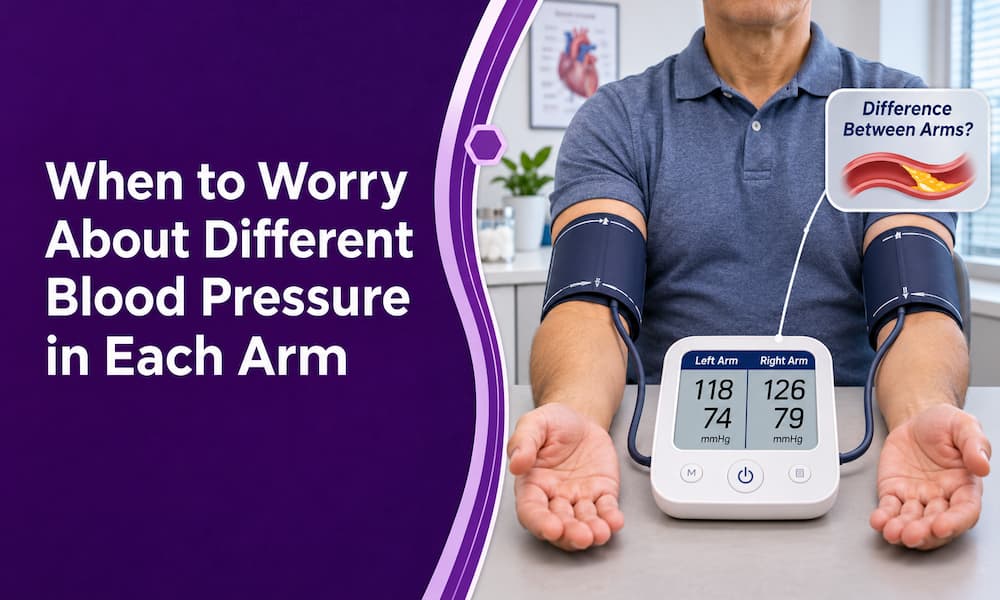
Knowing when to worry about different blood pressure in each arm helps prevent unnecessary concern while identifying changes that need evaluation. A persistent systolic difference of 10–15 mmHg or more deserves discussion with a healthcare professional, especially when other cardiovascular risk factors exist.
Concerned about different blood pressure readings? Schedule a primary care appointment with Passion Health for blood pressure evaluation and personalized guidance across North Texas.
Why Is My Blood Pressure Different in Each Arm?
Blood pressure measures the force of blood against artery walls. The systolic number represents pressure during a heartbeat, while the diastolic number reflects pressure between beats.
Each arm receives blood through separate arterial pathways. Small changes in circulation, body position, and measurement timing can produce different readings.
Common explanations include:
Incorrect cuff size: A poorly fitting cuff can distort results.
Arm positioning: An unsupported arm or incorrect cuff height can change measurements.
Natural fluctuations: Blood pressure changes throughout the day.
Measurement timing: Anxiety or movement during the first reading may affect the comparison.
Arterial narrowing: Reduced blood flow through an artery may create a persistent difference.
One unusual reading rarely explains the complete picture. Repeated measurements provide more useful information.
When to Worry About Different Blood Pressure in Each Arm
The size, consistency, and circumstances of the difference matter more than one isolated result.
A small difference may occur without an underlying health problem. However, a repeated gap between systolic readings deserves attention.
What Does a 10–15 mmHg Difference Mean?
The following table offers practical guidance.
Swipe sideways to view the full table.
| Systolic Difference | What It May Mean |
|---|---|
| Less than 10 mmHg | Often reflects normal variation, particularly with occasional readings. |
| 10–15 mmHg | A repeated difference deserves discussion with a clinician. |
| More than 15 mmHg | Repeat measurements and arrange clinical evaluation if the difference persists. |
| 20 mmHg or greater | Seek prompt medical advice if the difference continues, particularly with symptoms. |
These ranges guide further evaluation; they do not establish a diagnosis.
For example, a right-arm reading of 145/85 and a left-arm reading of 128/83 shows a 17 mmHg systolic difference.
If repeated checks confirm this pattern, a healthcare professional can investigate potential causes.
Can Different Blood Pressure Readings Indicate Blocked Arteries?
Sometimes, yes.
Arteries carry oxygen-rich blood from the heart throughout the body. When plaque builds inside an artery, the available space for blood flow may narrow.
This process, called atherosclerosis, can affect arteries supplying the arms.
A persistent difference may also occur with subclavian artery stenosis, which involves narrowing in an artery supplying the arm.
However, different arm readings alone cannot confirm arterial disease. A clinician must consider symptoms, medical history, physical findings, and additional testing.
Other cardiovascular risk factors include diabetes, smoking, high cholesterol, and existing hypertension.
How to Measure Blood Pressure in Both Arms Correctly
Accurate measurements help distinguish temporary fluctuations from persistent differences.
Follow these steps:
- Avoid caffeine, smoking, and exercise for at least 30 minutes before testing.
- Sit quietly for five minutes before starting.
- Keep both feet flat on the floor and support your back.
- Position the cuff on bare upper-arm skin at heart level.
- Measure each arm using the same validated monitor and appropriate cuff.
- Repeat the measurements after a short rest and record both results.
- Share the readings with a healthcare professional.
Because blood pressure changes between measurements, alternating the arm order can help reveal whether timing affects the results.
For routine monitoring, clinicians generally recommend using the arm that consistently produces the higher reading.
Which Symptoms Require Immediate Medical Attention?
Different arm readings alone rarely indicate an emergency. However, sudden circulation changes or serious accompanying symptoms require urgent action.
Call 911 for sudden chest pain, severe breathing difficulty, fainting, or possible stroke symptoms such as facial drooping, arm weakness, or difficulty speaking.
A blood pressure reading above 180 systolic or 120 diastolic also requires attention. If no emergency symptoms occur, repeat the reading after at least one minute and contact a healthcare professional promptly if it remains extremely high.
Do not delay emergency care to repeat measurements when serious symptoms develop.
How Can a Primary Care Doctor Evaluate Different Arm Readings?
A primary care visit begins with a review of blood pressure patterns, symptoms, medications, and cardiovascular risk factors.
The clinician may:
Compare readings in both arms using proper technique.
Review home blood pressure records.
Check pulses and circulation in the arms.
Assess diabetes, cholesterol, and hypertension history.
Recommend further vascular testing when clinical findings justify it.
Depending on the results, additional testing may include vascular ultrasound or consultation with a specialist.
The purpose involves finding the cause rather than treating a difference between readings as a separate disease.
Can Lifestyle Changes Help Protect Blood Vessel Health?
Healthy habits can support cardiovascular health, although lifestyle changes cannot reverse every cause of an inter-arm blood pressure difference.
Helpful steps include limiting excess sodium, eating balanced meals, maintaining regular physical activity, avoiding tobacco, and following prescribed treatment plans.
People with diabetes or high cholesterol should also maintain routine follow-up appointments.
Importantly, do not adjust blood pressure medication based only on a lower reading from one arm.
Book a Blood Pressure Evaluation at Passion Health
Knowing when to worry about differences between arms starts with accurate measurements and appropriate medical guidance.
A persistent difference does not automatically mean serious disease, but ignoring a consistent pattern can delay identification of circulation problems.
Passion Health offers primary care, blood pressure monitoring, preventive health services, and chronic condition management across 10 North Texas locations, including Frisco, Plano, Prosper, Irving, Aubrey, McKinney, Flower Mound, Kaufman, Ennis, and Kemp/Seven Points.
Discuss blood pressure concerns with a primary care professional and receive guidance based on individual health needs.
Book an Appointment at Passion Health
Call: (214) 666-6259
Website: https://passionhealthphysicians.com/
Concerned About Different Blood Pressure Readings?
A small difference between arms may be harmless. However, repeated differences deserve attention. Passion Health provides primary care evaluations and ongoing blood pressure management across North Texas.
In-Person Blood Pressure Evaluation
Notice higher blood pressure in one arm? Visit a Passion Health clinician for an accurate blood pressure assessment and a review of possible causes.
Compare readings in both arms and discuss your cardiovascular risk factors.
Book a Blood Pressure EvaluationHome Blood Pressure Monitoring
Learn how to measure blood pressure correctly, compare both arms, and track repeated differences using a home monitor.
Bring your recorded readings and home monitor to your next primary care visit.
Explore Our Blood Pressure GuideHeart & Vascular Health Follow-Up
A persistent difference of 10–15 mmHg or more between arms may warrant further evaluation. Passion Health clinicians can assess blood pressure patterns, review cardiovascular risk factors, and recommend additional testing or specialist care when appropriate.
Primary care and chronic condition management across 10 North Texas locations.
Frequently Asked Questions
1. Is it normal for blood pressure to differ between arms?
Yes. Small differences often occur due to normal fluctuations or measurement technique.
2. When should I worry about different blood pressure in each arm?
Repeated systolic differences of 10–15 mmHg or more warrant medical evaluation.
3. Why is blood pressure higher in my right arm?
Cuff placement, arm position, natural fluctuations, or differences in circulation may cause higher readings.
4. Is a 15-point blood pressure difference dangerous?
Not always. However, a persistent 15 mmHg systolic difference may indicate increased cardiovascular risk.
5. Which arm should I use to check blood pressure?
Use the arm that consistently shows higher readings, unless your healthcare professional advises otherwise.

About the Author
Dr. Anantha Chentha is a board-certified internal medicine physician with extensive experience in primary care and chronic disease management. He provides comprehensive, patient-centered care with a focus on prevention, accurate diagnosis, and long-term health management.
View Provider Profile →