Key Takeaways
- Recognize changes: Pulmonary hypertension symptoms can develop gradually.
- Notice your stamina: Familiar activities may become harder.
- Avoid assumptions: Similar symptoms have several possible causes.
- Act on emergencies: Chest pain with breathlessness needs emergency help. Call 911.
- Seek evaluation: Medical testing determines the diagnosis.
- Follow individualized care: Treatment depends on the cause.
Does climbing stairs leave you unusually breathless? Do everyday tasks drain your energy more than before? Although several conditions can explain these changes, persistent symptoms deserve attention.
Pulmonary hypertension symptoms often develop gradually, which can make them easy to overlook. However, recognizing changes in your breathing and stamina can help you explain your concerns to a clinician.
Here’s what to watch for, when to seek help, and how medical evaluation can clarify your next steps.
What Are the Main Pulmonary Hypertension Symptoms?
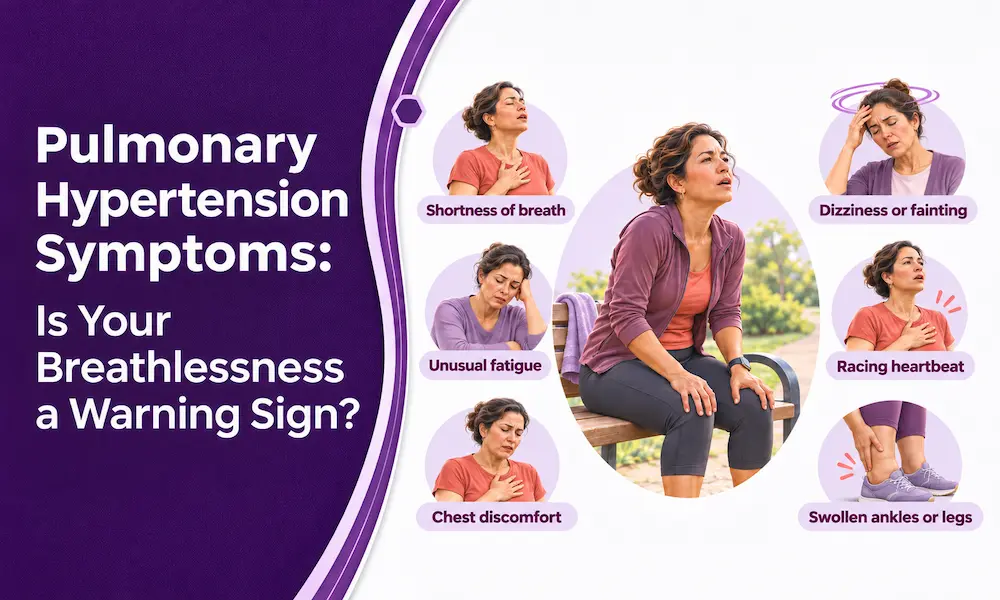
Common symptoms include shortness of breath, unusual tiredness, chest discomfort, dizziness, fainting, a pounding heartbeat, and swelling in the legs or abdomen. Initially, you may notice problems only during activity. Later, symptoms may interfere with easier tasks or occur at rest.
However, this symptom pattern does not establish a diagnosis. Heart, lung, and other health conditions can cause similar complaints. Therefore, a clinician needs to investigate the underlying cause. www.mayoclinic.org
What Is Pulmonary Hypertension?
Pulmonary hypertension, or PH, means higher-than-normal pressure in the blood vessels of the lungs. Consequently, the right side of your heart must work harder to push blood through them.
Over time, that extra workload can damage the heart. However, the cause and course of the condition differ among individuals.
Unlike the blood pressure reading from an arm cuff, PH concerns the circulation between your heart and lungs. Therefore, a routine blood pressure measurement cannot establish whether you have PH.
Early Signs You Might Overlook
Early signs of pulmonary hypertension can feel like a gradual change in your usual abilities. Instead of focusing on one difficult day, describe what has changed over time.
Breathlessness during familiar activities
For example, you might need more breaks while walking your usual route. Similarly, carrying groceries or climbing stairs may require more effort.
Consider whether the activity has become harder than it previously felt. Also, note when the change began and whether it continues.
Fatigue that interrupts your routine
Unusual tiredness may accompany breathlessness. As a result, you might shorten errands or avoid activities you previously enjoyed.
Rather than describing fatigue only as “feeling tired,” explain its practical effect: “I now stop halfway through my grocery shopping.”
Dizziness or lightheadedness
Some people experience dizziness, and others faint. However, these symptoms have multiple possible explanations.
Therefore, report recurring episodes and describe their timing. Seek emergency help for fainting rather than waiting for a routine appointment.
How Symptoms Can Change Over Time
Pulmonary hypertension symptoms may become more disruptive as the condition progresses. Nevertheless, people do not necessarily develop every symptom or follow an identical timeline.
Swipe sideways to view the full table.
| Symptom | What you might notice | What to explain to your clinician |
|---|---|---|
| Breathlessness | More pauses during familiar activities | Which tasks trigger it |
| Fatigue | Less stamina for everyday responsibilities | How your routine has changed |
| Chest discomfort | Pressure or pain | Timing, duration, and accompanying symptoms |
| Palpitations | A racing or pounding heartbeat | Whether dizziness occurs too |
| Swelling | Changes around the ankles, legs, or abdomen | When it started and whether it increases |
This table can help organize your observations. However, it cannot tell you whether PH causes them. In addition, new or worsening symptoms deserve attention even when they do not match every item.
When Should You Seek Emergency Care?
Call 911 for chest pain with shortness of breath. These symptoms can signal a heart attack or a blood clot in the lungs, so do not assume PH explains them.
Also, seek emergency help for:
Sudden, severe chest pain.
Fainting or blacking out.
Breathlessness that does not improve with rest.
Meanwhile, contact a healthcare professional about persistent breathlessness, increasing swelling, or declining ability to manage normal activities. If symptoms suddenly become severe, choose emergency care instead of an appointment request.
Notice an ongoing change in your breathing or energy? Schedule a visit with Passion Health to discuss your symptoms and appropriate next steps.
What Causes Pulmonary Hypertension?
Pulmonary hypertension causes fall into five groups. First, pulmonary arterial hypertension, or PAH, affects the small lung arteries. Certain inherited changes, medical conditions, and drugs can contribute; sometimes, doctors find no clear cause.
Second, left-sided heart disease can raise pressure in the lung circulation. Third, lung disease or low oxygen can contribute. Fourth, chronic blood clots or other obstructions can block pulmonary arteries.
Finally, other conditions can contribute through complex or multiple mechanisms. Therefore, identifying the cause matters as much as recognizing pulmonary hypertension symptoms. PAH represents one type of PH, rather than every form of the condition.
How Do Doctors Investigate These Symptoms?
Pulmonary hypertension diagnosis begins with your history and a physical examination. Your clinician may review existing conditions, medicines, family history, and changes in activity.
Next, the examination may include checking oxygen levels, listening to your heart and lungs, and looking for swelling. Depending on the findings, your clinician may recommend cardiology or pulmonology evaluation.
Which tests might you need?
An echocardiogram helps assess heart function and estimate pressure. However, right-heart catheterization directly measures pressure and confirms PH.
Additionally, blood tests and imaging can help investigate contributing conditions. Your care team selects tests according to your circumstances; everyone does not need an identical testing sequence.
Before your visit, prepare a short symptom timeline. Also, bring your medication list and relevant reports. This preparation gives your clinician a clearer starting point for discussion.
Need care for this?
A Passion Health clinician can see you in person or online.
In person
See a Passion Health clinician at one of our clinics for a skin exam, with blood work when needed.
Choose your clinic and clinician across North Texas
Book an appointment in person at Passion Health clinicsOnline
A Texas-licensed clinician reviews photos of your red spots or rash through Passion Health Online Care, can arrange blood work when needed, and sends treatment to your pharmacy if appropriate.
Adults 18 and older in Texas · $59, or use insurance
Skin rash treatment online in TexasBlood work
Order clinician-reviewed blood work to check what red spots may reflect — including a complete blood count and platelet level when relevant.
Essential Blood Work · 33 markers · from $59
Can Treatment Improve Symptoms?
Pulmonary hypertension treatment depends on the type, cause, and individual needs. For example, some people need treatment for underlying heart or lung disease. Others may benefit from specialized medicines.
Additionally, clinicians may recommend oxygen when blood oxygen levels run too low. Certain chronic clot-related cases may require procedures or surgery.
Most forms require ongoing management. Nevertheless, treatment can help control symptoms and support daily functioning. Your specialist should explain the expected benefits and limitations of your particular plan.
Take the Next Step Toward Answers
You do not need to know the diagnosis before asking for help. Instead, start with a clear description of what feels different.
For persistent, nonemergency concerns in North Texas, book a Passion Health appointment. Discuss your symptoms, ask questions, and understand whether you need further testing or specialist care.
This article provides general education and does not replace individual medical advice.
References
Frequently Asked Questions
1. Can you have pulmonary hypertension without noticeable symptoms?
Yes. Some people initially notice little change. Consequently, symptoms alone cannot reliably confirm or exclude the condition. Discuss concerns with a clinician, especially when your medical history raises questions.
2. Does breathlessness automatically mean pulmonary hypertension?
No. Several conditions cause breathlessness. Therefore, avoid diagnosing yourself from a symptom list. Instead, explain when it happens, how long it lasts, and what has changed.
3. Which doctor should I see first?
For ongoing, nonemergency concerns, primary care can provide an initial assessment. Then, your clinician may recommend a cardiologist or pulmonologist according to your history and findings.
4. Can lifestyle changes replace medical treatment?
Lifestyle measures may support care, but your clinician should guide them alongside appropriate treatment. For instance, your care team may recommend an individualized activity program or dietary changes. Avoid choosing a treatment plan solely from online advice.

About the Author
Dr. Anantha Chentha is a board-certified internal medicine physician with extensive experience in primary care and chronic disease management. He provides comprehensive, patient-centered care with a focus on prevention, accurate diagnosis, and long-term health management.
View Provider Profile →