Key Takeaways
- Newborns naturally have low vitamin K levels, which can increase their risk of bleeding.
- Vitamin K deficiency bleeding (VKDB) can occur during a baby's first six months.
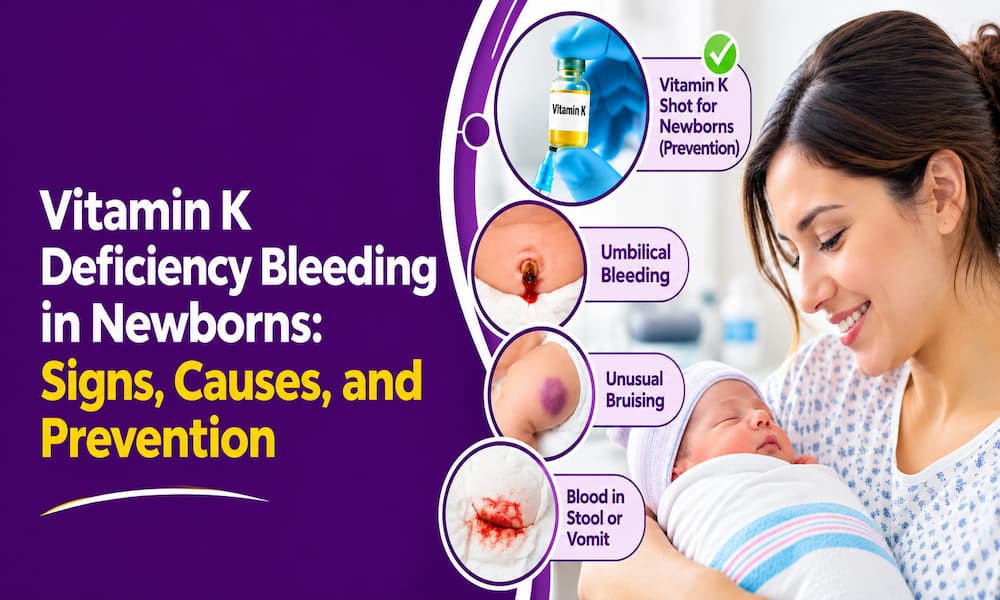
- Warning signs may include unusual bruising, umbilical bleeding, or blood in the stool.
- Severe VKDB can cause dangerous internal bleeding, including bleeding in the brain.
- A vitamin K injection shortly after birth helps prevent serious bleeding complications.
- Routine pediatric visits support newborn health, while suspected VKDB requires urgent medical care.
Your baby looks peaceful, feeds well, and seems perfectly healthy. So why do doctors recommend a vitamin K injection shortly after birth?
The answer involves a hidden risk that many parents have never heard about.
Vitamin K deficiency bleeding in newborns can develop when a baby’s blood lacks the clotting support it needs. Although the condition remains uncommon, severe cases can threaten a baby’s health without much warning.
The good news? Families can take an effective preventive step right after delivery.
Understanding how vitamin K works, what symptoms deserve attention, and why early protection matters can help you feel more prepared.
Why Does Vitamin K Matter During a Baby’s First Months?
Think about what happens when someone gets a small cut. The body activates clotting proteins that help stop the bleeding.
Vitamin K supports several of those proteins.
Adults usually obtain vitamin K through food, and intestinal bacteria also contribute to vitamin K availability. Newborns, however, begin life with much smaller reserves.
As a result, some babies cannot form blood clots effectively if they do not receive additional vitamin K.
Doctors call this condition vitamin K deficiency bleeding, or VKDB.
Unlike an ordinary surface wound, VKDB can cause bleeding in places parents cannot easily see, including the digestive system or brain.
Why Do Some Babies Have Too Little Vitamin K?
A newborn’s vitamin K supply depends on several factors that begin before delivery.
First, the placenta transfers only small quantities of this nutrient during pregnancy. Therefore, babies arrive with limited stores.
Next, their digestive systems need time to develop the bacteria that contribute to vitamin K production.
Breast milk also contains relatively little vitamin K, despite its many nutritional and developmental benefits.
Finally, some infants experience additional challenges because liver problems or digestive conditions interfere with normal vitamin K absorption.
These circumstances explain why healthcare professionals recommend vitamin K protection for newborns rather than waiting for symptoms.
When Can Vitamin K Deficiency Bleeding Develop?
Not every baby develops VKDB at the same age. Doctors recognize three patterns.
VKDB Pattern | Typical Timing | What Parents Should Know |
Early | During the first 24 hours | Certain medicines taken during pregnancy may increase the risk. |
Classical | During the first week, usually days 2–7 | Bleeding may affect the umbilical area, skin, or digestive tract |
Late | From the second week through six months | Internal bleeding, particularly in the brain, poses a serious concern. |
Late vitamin K deficiency bleeding often affects infants who never received vitamin K protection after delivery.
Some babies seem well until complications suddenly appear.
Which Newborn Bleeding Symptoms Need Attention?
Parents should pay attention to unexplained changes rather than assume every bruise or feeding problem has a harmless cause.
Possible vitamin K deficiency bleeding symptoms include:
Blood around the belly button
Unexpected bruising
Blood in diapers or vomit
Bleeding that continues longer than expected
Unusual paleness
Yellow-looking skin or eyes
Poor feeding or unusual irritability
Excessive sleepiness
These symptoms do not always indicate VKDB. Other newborn health conditions can cause similar changes.
However, bleeding problems in young infants deserve prompt medical evaluation.
Can Vitamin K Deficiency Affect a Baby’s Brain?
Yes. Severe vitamin K deficiency can lead to bleeding inside the skull.
Parents may notice seizures, repeated vomiting, unusual drowsiness, or difficulty waking their baby. Sometimes internal bleeding develops before obvious warning signs appear.
Call emergency services or seek emergency care immediately for unexplained bleeding, seizures, or major changes in alertness. A routine office appointment cannot replace emergency treatment.
Does Breastfeeding Increase the Risk of VKDB?
Breastfeeding provides valuable nutrition and supports infant development. Parents should not view it as something they need to avoid.
However, human milk naturally contains low amounts of vitamin K.
Without appropriate protection after birth, exclusively breastfed babies face a greater risk of late VKDB.
A vitamin K injection addresses this concern without requiring families to change their feeding preferences.
For babies with underlying liver or absorption disorders, pediatricians may recommend additional evaluation and follow-up.
What Makes the Newborn Vitamin K Shot Important?
A newborn’s first days involve many medical decisions. The vitamin K injection stands out because it prevents a rare but potentially devastating complication.
Healthcare professionals typically give the injection into the thigh shortly after birth.
The medicine supplies vitamin K while the baby’s own reserves remain limited.
According to the CDC, babies who skip this injection face approximately 81 times the risk of late VKDB compared with babies who receive it.
Unlike oral vitamin K regimens, the recommended intramuscular injection provides dependable protection against late-onset bleeding.
What About Safety and Side Effects?
Parents naturally want to understand anything their newborn receives.
The American Academy of Pediatrics supports routine vitamin K injections because their protective benefits are substantial.
A baby may briefly cry during the injection or experience mild discomfort near the injection site.
Serious reactions are rare.
Families who have questions can speak with their maternity team before delivery and review the recommended newborn care plan.
How Do Healthcare Providers Identify a Bleeding Problem?
When doctors suspect VKDB, they first assess the baby’s condition and ask about recent symptoms.
They also review birth records, feeding history, medical conditions, and whether the baby received vitamin K.
Blood tests help measure how quickly clotting occurs.
For example, prothrombin time and INR can reveal abnormal clotting activity.
Doctors may order additional tests or imaging when symptoms suggest internal bleeding.
Because several conditions can affect clotting, a complete medical evaluation matters.
What Happens When a Baby Needs Treatment?
Treatment focuses on correcting the vitamin K deficiency and managing any bleeding complications.
Doctors administer vitamin K and monitor the baby’s response.
A baby with significant blood loss may need plasma, other blood products, or intensive hospital care.
Specialists may also investigate liver disease or digestive conditions when they suspect an underlying problem.
Prompt treatment can save lives. However, severe brain bleeding may cause lasting complications, making prevention especially valuable.
How Can Families Protect Their Newborn?
Newborn bleeding prevention does not require a complicated routine.
A few informed choices can make a meaningful difference.
Discuss vitamin K protection with your maternity care team before delivery.
Confirm your baby receives the recommended injection after birth.
Keep newborn discharge records and medication information.
Attend routine pediatric visits to review feeding, growth, and development.
Contact a healthcare professional promptly about concerning symptoms.
Remember that ordinary dietary changes cannot replace the recommended newborn vitamin K injection.
Pediatric and Newborn Care at Passion Health in Frisco and Aubrey, TX
Early pediatric visits give families an opportunity to ask questions that may not come up during the hospital stay.
At Passion Health, families across Frisco, Aubrey, and nearby North Texas communities can discuss infant development, feeding concerns, and preventive healthcare.
Dr. Nishath Farhad, DO, FAAP, provides pediatric services at the Frisco and Aubrey locations.
Whether you need a newborn wellness visit or guidance about routine childhood healthcare, the team can help you understand appropriate next steps.
For urgent bleeding symptoms, always seek emergency care rather than waiting for an office visit.
Final Takeaway: A Small Preventive Step Can Make a Big Difference
Most parents never expect a blood-clotting problem to affect their newborn. Yet vitamin K deficiency bleeding in newborns shows why preventive care matters even when babies appear healthy.
The recommended vitamin K injection offers strong protection against a serious, largely preventable condition.
Lorem ipsum dolor sit amet, consectetur adipiscing elit. Ut elit tellus, luctus nec ullamcorper mattis, pulvinar dapibus leo.
discuss your baby's wellness?
Book a pediatric or primary care appointment with Passion Health in Frisco or Aubrey, TX, to discuss your baby's wellness, development, and preventive healthcare needs.
Frequently Asked Questions
1. Can a newborn develop VKDB without warning?
Yes. Some babies experience internal bleeding before caregivers notice clear symptoms.
2. How long can VKDB remain a concern?
The condition can occur during the first six months, although timing varies by type.
3. Can breast milk alone prevent VKDB?
No. Breast milk does not contain enough vitamin K to reliably protect newborns against VKDB.
4. Does every newborn need vitamin K protection?
Medical organizations recommend routine vitamin K injection for newborns to prevent dangerous bleeding.
5. Can babies recover from vitamin K deficiency bleeding?
Many babies improve with prompt treatment. Severe internal bleeding, however, may cause lasting damage.
Lorem ipsum dolor sit amet, consectetur adipiscing elit. Ut elit tellus, luctus nec ullamcorper mattis, pulvinar dapibus leo.

About the Author
Dr. Anantha Chentha is a board-certified internal medicine physician with extensive experience in primary care and chronic disease management. He provides comprehensive, patient-centered care with a focus on prevention, accurate diagnosis, and long-term health management.
View Provider Profile →