Key Takeaways
- Dementia describes cognitive symptoms, not one specific disease.
- Alzheimer’s is a progressive brain disorder that can cause dementia.
- Other causes include vascular, Lewy body and frontotemporal dementia.
- Memory, communication, judgment and behavior may change.
- A medical evaluation can identify causes and rule out treatable problems.
- Managing blood pressure, diabetes and smoking may support brain health.
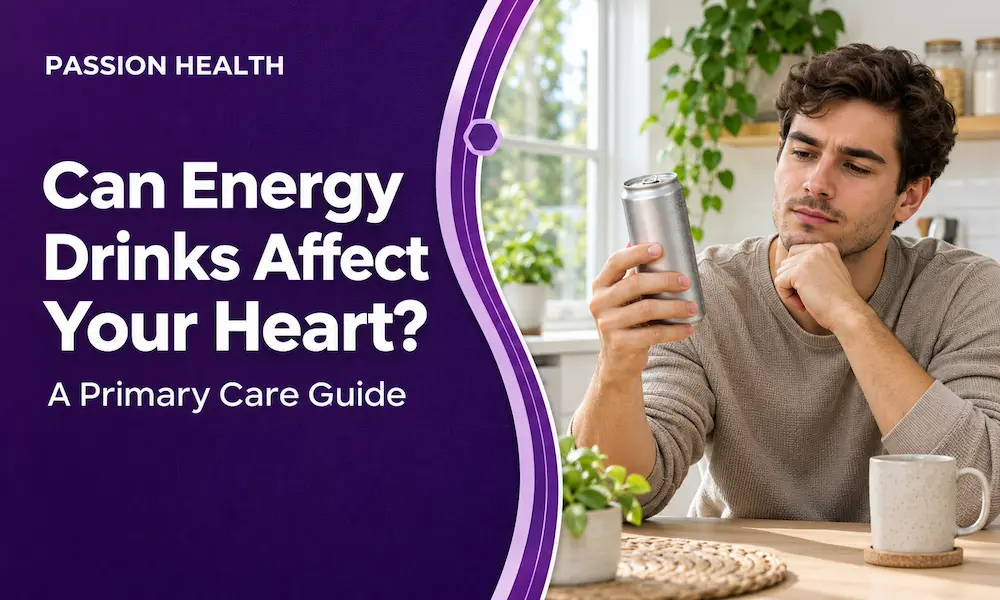
Your workout ends, but your heart keeps pounding. Or you finish an energy drink at your desk and notice an unfamiliar flutter in your chest. Should you ignore it, cut back on caffeine, or call a doctor?
Can energy drinks affect your heart? Yes. Caffeine and other stimulants can influence heart rate and blood pressure, and some people experience palpitations. However, symptoms alone cannot tell you whether caffeine or another condition caused the problem. [medlineplus.gov]
How Can Energy Drinks Affect Your Heart?
Caffeine stimulates the nervous system. Although it can increase alertness, excessive intake can also cause a fast heartbeat, nervousness, sleep problems, and elevated blood pressure. People respond differently to the same amount.
Palpitations describe a noticeable heartbeat. You might feel a pounding, fluttering, racing, or skipped beat. That feeling does not identify the underlying heart rhythm.
Meanwhile, poor sleep, stress, medicines, and medical conditions can complicate the picture. Therefore, avoid diagnosing yourself solely because symptoms followed a drink.
Energy drinks also differ from sports drinks. Sports drinks typically emphasize fluid and electrolyte replacement; energy drinks emphasize stimulation. Always check the label rather than judging a product by its packaging.
What Does the New Research Actually Show?
A November 2026 American Heart Association release describes preliminary research involving 28,345 FDA adverse-event reports. Researchers compared reports involving caffeine or stimulant products with reports involving other foods and supplements.
Cardiac arrest appeared approximately 11 times more often in stimulant-related reports. Heart attacks appeared about 4.5 times more often. Adults ages 18–34 accounted for approximately 45% of stimulant-associated cardiovascular reports.
These findings deserve attention, particularly because younger adults may overlook heart symptoms.
However, dramatic numbers need careful explanation.
Does the Study Prove Energy Drinks Cause Heart Attacks?
No. The analysis identifies associations within submitted reports. It cannot establish that a product caused an event or calculate the actual risk among everyone who consumes energy drinks.
Researchers lacked reliable counts of consumers who experienced no problems. Other exposures and underlying conditions could also influence the findings.
As of November 4, 2026, this research remains a preliminary conference abstract rather than a full peer-reviewed journal publication. [newsroom.heart.org]
The findings support thoughtful conversations—not predictions about what will happen after one drink.
Which Ingredients Should You Check?
Start with caffeine, then examine the serving size and other stimulant ingredients. Guarana, for example, also contains caffeine.
Consider everything you consume throughout the day. Morning coffee, afternoon energy drinks, and pre-workout supplements can add up.
For context, the FDA cites 400 milligrams daily as an amount that generally does not cause negative effects for most adults. Nevertheless, that figure does not guarantee individual safety or establish a recommended target. Sensitivity, medicines, and health conditions can change your response.
Ask these practical questions:
How much caffeine does the entire container contain?
How much did you actually drink?
Did you also take a supplement?
Did symptoms follow a particular amount or combination?
Who Should Discuss Energy Drinks With a Doctor?
Ask for individual guidance if you have a heart rhythm condition, blood pressure concerns, significant caffeine sensitivity, or medicines that may interact with stimulants. Pregnancy and breastfeeding also warrant a conversation about caffeine intake. [medlineplus.gov]
Children and teens need age-specific guidance. Do not apply adult caffeine figures to them. The FDA notes that medical experts advise against energy drinks for children and teenagers.
Also mention a family history of unexplained sudden death or inherited heart conditions. Your clinician can decide how that history affects the evaluation.
What Symptoms Should You Take Seriously?
A new or recurring racing heartbeat deserves attention. Describe any accompanying dizziness, breathing difficulty, chest discomfort, or symptoms during exercise.
Do not dismiss an episode because you feel healthy or exercise regularly. Equally, do not assume that every flutter signals a dangerous condition. A medical evaluation helps clarify what happened.
Write down the timing and duration when possible. However, never delay urgent help while collecting information.
When Should You Call 911?
Call 911 for possible heart attack symptoms. Warning signs include chest pressure or discomfort, shortness of breath, or discomfort extending into the arm, back, neck, jaw, or stomach. Cold sweating, nausea, and lightheadedness can also occur.
Symptoms may start mildly, disappear, and return. Even uncertainty should not delay emergency evaluation. Do not drive yourself or wait for a routine appointment. [www.heart.org]
How Can a Primary Care Doctor Help?
A primary care visit looks beyond a single drink. Your clinician can review symptoms, check vital signs, examine you, and discuss sleep, stress, medicines, and supplement use.
Depending on the findings, the next step may involve an electrocardiogram, laboratory testing, heart rhythm monitoring, or specialist referral. Your history and examination guide those decisions; every patient does not need every test.
Additionally, discuss persistent fatigue. If you need several stimulants simply to manage an ordinary day, ask whether your sleep or another health concern needs attention.
Could Energy Drinks Affect Your Heart Alongside Other Stimulants?
Combining products makes your exposure harder to judge. Include pre-workout powders, energy shots, nonprescription products, and prescription medicines in the discussion.
Bring labels rather than relying on memory. Also, avoid stopping prescribed treatment on your own. Ask your clinician or pharmacist about the specific combination.
What Should You Bring to Your Appointment?
Prepare a short record of:
Product names, labels, and amounts.
Other daily caffeine sources.
Symptom timing, duration, and frequency.
Medicines and supplements.
Relevant personal and family heart history.
A clear example helps: “My heart raced for several minutes after my afternoon drink on two separate days.”
Talk About Your Caffeine Habits With Passion Health
Understanding how energy drinks affect your heart starts with your symptoms, daily intake, and health history. You do not need to wait for another unsettling episode to ask questions.
Book a primary care visit with Passion Health
for personalized guidance about caffeine, supplements, and ongoing health concerns.
Frequently Asked Questions
1. Can energy drinks affect your heart even if you are young?
Yes, young adults can experience stimulant-related symptoms. Age alone cannot explain a racing heartbeat or rule out another cause. Discuss recurring episodes with a clinician.
2. Can energy drinks cause heart palpitations?
Caffeine can contribute to palpitations in some people. However, symptoms after a drink do not establish the cause. An evaluation may help identify other contributing factors.
3. Are sugar-free energy drinks safer for your heart?
Removing sugar does not remove caffeine. Check stimulant ingredients and amounts separately. A sugar-free label cannot establish whether a product suits your health needs.
4. What should you do if your heart races after an energy drink?
Avoid additional caffeine and seek medical advice. Call 911 if you also have possible heart attack warning signs. Do not deliberately repeat the exposure to test your reaction.
5. When should you discuss caffeine with a primary care doctor?
Bring it up when symptoms recur, caffeine disrupts sleep, or you have questions about medicines and supplements. You can also discuss it during a preventive visit.

About the Author
Dr. Anantha Chentha is a board-certified internal medicine physician with extensive experience in primary care and chronic disease management. He provides comprehensive, patient-centered care with a focus on prevention, accurate diagnosis, and long-term health management.
View Provider Profile →