
Key Takeaways
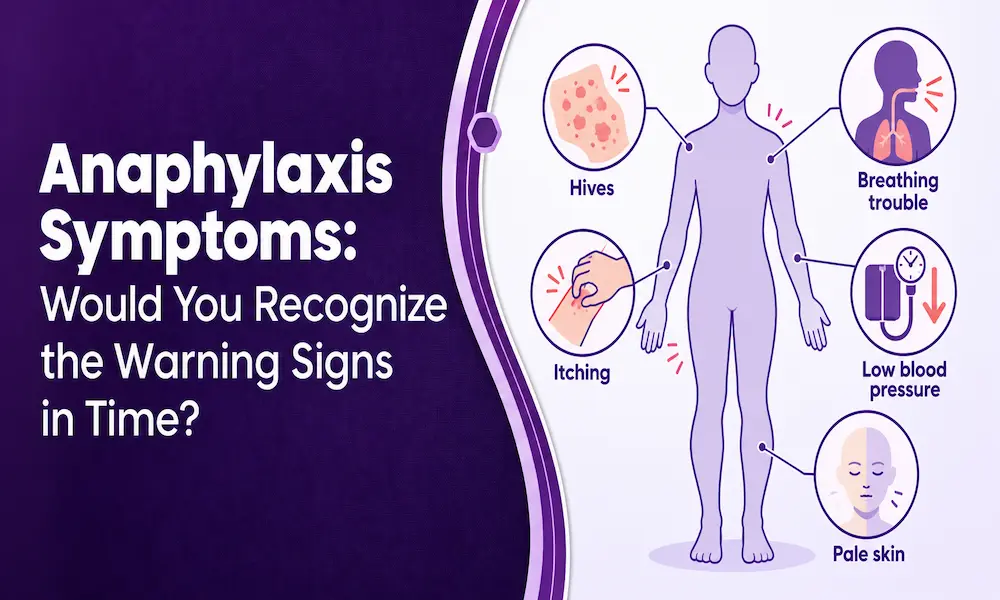
- Anaphylaxis symptoms can affect the skin, breathing, circulation and gut.
- Hives may not appear. Sudden breathing trouble after allergen exposure needs immediate action.
- For suspected anaphylaxis, use your prescribed epinephrine immediately, then call 911.
- Seek emergency care after epinephrine, even if you improve, because symptoms can return.
- Avoid known triggers and carry your prescribed, unexpired epinephrine auto-injectors.
- After emergency care, book a Passion Health visit to review your action plan and allergy referral.
Could a Simple Meal or Bee Sting Turn Into a Medical Emergency?
Imagine enjoying a shrimp dinner when suddenly your lips swell, your throat tightens, and breathing becomes difficult. Is it a mild allergy or something life-threatening?
These could be anaphylaxis symptoms, signaling a severe allergic reaction within minutes. Would you know what to do?
For Dallas-Fort Worth families, recognizing the warning signs and acting quickly can save lives. Learn the symptoms, triggers, and emergency steps.
Emergency Warning: If anaphylaxis is suspected, use epinephrine immediately if available and call 911. Never wait for symptoms to worsen.
What Is Anaphylaxis?
Anaphylaxis is a severe, potentially life-threatening allergic reaction that can develop within minutes after exposure to an allergen, such as certain foods, insect stings, medications, or latex.
It can cause throat swelling, difficulty breathing, hives, dizziness, or a sudden drop in blood pressure. Without immediate treatment, anaphylaxis can become fatal.
What Are the Symptoms of Anaphylaxis?
Anaphylaxis is a severe allergic reaction that affects several organ systems simultaneously. Therefore, providers look for a pattern rather than a single clue. For example, hives plus vomiting count, and so does wheezing plus dizziness. Watch for these signs by body system:
Skin: itching, hives, and flushing
Mouth and throat: swollen lips, tongue, or throat, plus a tight or tingling throat
Lungs: wheezing and shortness of breath
Heart and circulation: fast heartbeat, dizziness, low blood pressure, and fainting
Gut: nausea, vomiting, cramps, and diarrhea
However, a rash does not always appear. In fact, 10% to 20% of people with anaphylaxis never develop hives. Therefore, treat breathing difficulty or throat swelling as an emergency, even when the skin looks normal.
What is anaphylactic shock?
Anaphylactic shock means blood pressure drops dangerously low during anaphylaxis. However, normal blood pressure does not prove a mild reaction. Consequently, act on the symptoms you see, not on a number.
What Are the Most Common Anaphylaxis Triggers?
Anaphylaxis can occur when the immune system reacts severely to certain foods, medications, or other substances. Common triggers include:
Insect Stings: Bees, wasps, and fire ants.
Medications: Antibiotics like penicillin and pain relievers such as ibuprofen.
Latex: Latex gloves and other latex-containing products.
Exercise-Related Reactions: Physical activity after eating certain foods can trigger anaphylaxis in some people.
Important: If you experience an unexplained allergic reaction, consult a healthcare provider to identify potential triggers and discuss an emergency action plan.
What to Do During Anaphylaxis
The following steps were performed in order:
Inject epinephrine into the outer thigh immediately and follow the device instructions.
Call 911, even if the symptoms ease.
Lay the person flat and raise the legs. However, sit them up if breathing is difficult or vomiting starts.
The trigger, such as a bee stinger, should be removed. It was scraped out instead of being squeezed with tweezers.
Administer a second dose after 5–15 min if symptoms persist and another injector is available.
Stay with the person until the paramedics arrive.
Follow your prescription and the device label because doses vary. Likewise, check your injector today for damage or a raised safety cap.
Why You Still Need the ER After Epinephrine
Epinephrine works fast, but its effects wear off within approximately 20 minutes. Moreover, a biphasic reaction can return hours later, sometimes up to 72 hours after the first episode.
Therefore, ER teams monitor patients for approximately 4–12 hours. Meanwhile, they can administer oxygen, albuterol, steroids, antihistamines, or more epinephrine if symptoms worsen.
→ Had a reaction recently? [Schedule a follow-up at a Passion Health clinic near you.]
When to See a Primary Care Doctor
Call 911 for any suspected anaphylaxis. After the ER visit, book a primary care visit within a few days. In addition, see a provider if you notice any of the following:
Repeated hives, swelling, or stomach upset after the same food
More than local swelling after an insect sting
Asthma along with allergies, since asthma raises the risk of severe reactions
An expired or missing auto-injector
An expired injector may still help in an emergency when nothing else is available. Still, replace it promptly.
How Can Passion Health Help You Prepare for Anaphylaxis?
At Passion Health Advanced Primary Care, our healthcare providers help patients manage severe allergies and prepare for emergencies through:
Allergy Risk Assessment: Review symptoms, medical history, and possible triggers.
Epinephrine Prescription: Prescribe auto-injectors when medically appropriate.
Emergency Action Plan: Provide clear steps for managing allergic reactions at home, school, or work.
Allergy Specialist Referrals: Recommend allergist testing when triggers are unclear.
Ongoing Care: Offer follow-up guidance to help prevent and manage future reactions.
Act Fast, Then Get Follow-Up Care
Anaphylaxis moves quickly, but you can move faster with a plan. First, learn the signs. Next, keep an unexpired auto-injector within reach. Finally, build an action plan with a provider you trust. Because every minute counts, do not wait for the next reaction to get ready.
Ready for your action plan?
Book your Passion Health appointment now.
FAQs
1. How quickly do anaphylactic symptoms start?
Most reactions develop over 30–60 minutes. However, fatal cases can develop within minutes, especially after stings or medications.
2. Can anaphylaxis happen without hives?
Yes. Approximately 10%–25% of people skip the rash. Therefore, watch for breathing trouble, swelling, and dizziness.
3. Do I need the ER if I feel fine after epinephrine?
Yes. Symptoms can return, so ER monitoring protects you.

About the Author
Dr. Anantha Chentha is a board-certified internal medicine physician with extensive experience in primary care and chronic disease management. He provides comprehensive, patient-centered care with a focus on prevention, accurate diagnosis, and long-term health management.
View Provider Profile →