Key Takeaways
- Pneumonic plague affects the lungs and can worsen quickly.
- Symptoms include fever, cough, chest discomfort, weakness and difficulty breathing.
- Mucus may contain blood, but do not wait for this sign before seeking care.
- Close contact with infectious respiratory droplets can spread the infection.
- Tell clinicians about recent travel, animal contact and possible flea exposure.
- Symptoms after suspected plague exposure require immediate emergency evaluation.
Understanding pneumonic plague symptoms starts with noticing breathing changes, considering possible exposure, and recognizing how quickly an illness worsens.
For pneumonic plague, the important questions involve breathing symptoms, possible exposure, and how quickly an illness changes.
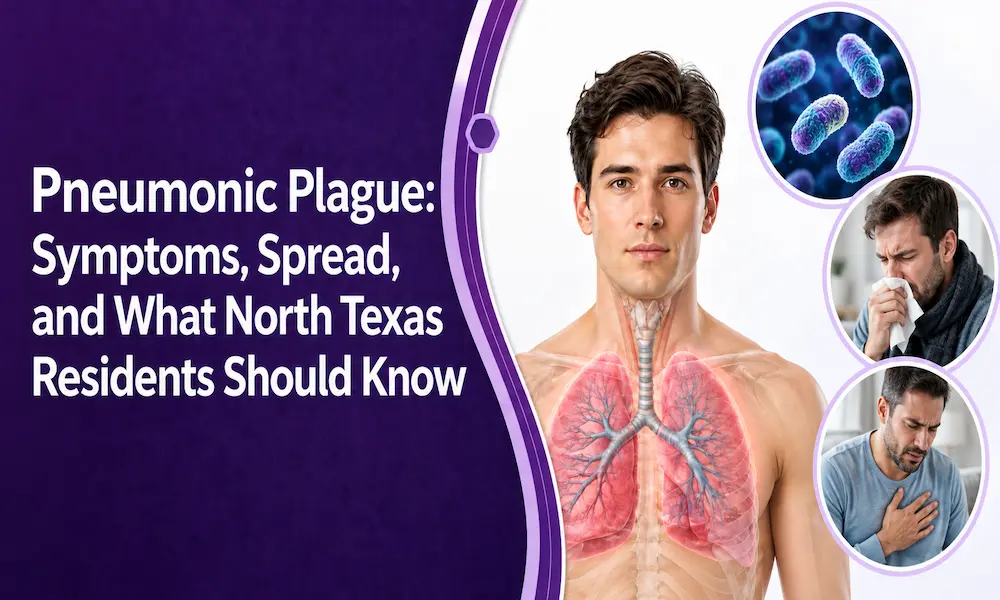
If you have searched “What are the symptoms of pneumonic plague?”, look for fever, a worsening cough, chest discomfort, unusual weakness, and trouble breathing. Blood may appear in the mucus, although that symptom is not always present.
For everyday health concerns, book an appointment at Passion Health Advanced Primary Care. If illness follows suspected plague exposure, seek immediate emergency evaluation rather than waiting for a scheduled visit.
Understanding the Infection Behind the Name
The word “pneumonic” refers to the lungs. In this form of plague, bacteria called Yersinia pestis cause a dangerous lung infection.
There are two ways the lungs can become involved. A person may inhale infectious droplets from an affected animal or person. Alternatively, bacteria from an existing plague infection elsewhere in the body may reach the lungs.
Recognizing this distinction helps explain why doctors ask about both respiratory contact and animal exposure. The same disease can begin through different routes.
What Are the Symptoms of Pneumonic Plague?
Pneumonic plague symptoms may include the following:
A cough that becomes more troublesome
Breathing that feels difficult
Marked tiredness or weakness
Mucus that looks watery or contains blood
A symptom list is a starting point, not a diagnosis. Other infections can produce similar complaints, and a doctor needs additional information to identify the cause.
Pay particular attention when symptoms worsen after a plausible exposure. You do not need to experience every sign before seeking care. Waiting for blood in the mucus could delay evaluation unnecessarily. www.cdc.gov
Why the Timing of Symptoms Matters
Pneumonic plague symptoms commonly appear within one to three days after a person inhales the bacteria. The infection can deteriorate quickly once illness develops.
When speaking with a medical team, describe the order of events: where you traveled, when an animal contact happened, when the fever started, and whether breathing has changed.
Specific details are more useful than simply saying you feel unwell. Even an activity that seemed routine, such as handling an animal during a trip, may help clinicians assess risk.
How Exposure Can Happen
Wild rodents and their fleas help maintain plague bacteria in certain environments. An infected flea can pass bacteria to a person, usually causing bubonic or septicemic plague initially.
Contact with infected animal tissues or fluids offers another route. Pneumonic infection can follow if bacteria spread to the lungs.
Direct inhalation is different. A person or animal with plague pneumonia may cough out droplets containing the bacteria. Close contact can allow another person to inhale those droplets.
Cats can become infected after encountering infected rodents. A cat with plague pneumonia may expose an owner or veterinarian through respiratory secretions.
Having pets or spending time outdoors does not establish exposure. Doctors assess pneumonic plague symptoms alongside the location and circumstances of contact.
How the Main Forms Differ
Plague names describe the main site of infection:
Type | Where infection develops | Signs that may stand out |
Bubonic | Tender swelling with fever | |
Septicemic | Bloodstream | Severe illness, abdominal symptoms, bleeding, or shock |
Pneumonic | Lungs | Cough, chest symptoms, and breathing problems |
These categories are not completely separate. Infection may move from one area to another. Pneumonic plague is the form that can be transmitted between people through respiratory droplets.
Putting North Texas in Context
CDC identifies the rural western United States as the main setting for naturally acquired human plague in this country. Reported cases have concentrated in parts of states such as New Mexico, Arizona, and Colorado.
For North Texas residents, understanding pneumonic plague symptoms can help explain concerns clearly when seeking medical care. Tell clinicians about recent visits to areas where plague occurs, especially if the trip involved wildlife or fleas.
Your home address alone cannot explain an exposure. This article offers local readers educational information, not evidence of a North Texas outbreak. Consult Texas DSHS and local health authorities for current alerts.
When the Next Step Should Be Emergency Care
Possible pneumonic plague symptoms after suspected exposure require immediate medical assessment.
Call 911 if breathing becomes severely difficult, the person collapses, or confusion develops. Explain both the symptoms and the possible exposure.
When possible, notify the receiving medical team before arriving. Its staff can advise you about masks and contact precautions. Follow those instructions while arranging help; protecting others should not delay treatment. www.mayoclinic.org
What Happens During Medical Evaluation?
Clinicians combine an examination with your symptom timeline and exposure history. They may arrange testing of blood or respiratory samples and contact public-health officials.
When plague is strongly suspected, treatment begins before laboratory confirmation. Doctors choose antibiotics according to the patient’s needs and illness severity.
Some patients need hospital support, including oxygen, fluids through a vein, or assistance with breathing. Appropriate precautions reduce the chance of transmission during care.
Home treatment and leftover prescriptions cannot replace this assessment.
Practical Ways to Limit Risk
Keep a safe distance from sick wildlife and animal carcasses. Contact local authorities for advice about removal rather than handling them yourself.
Discuss flea prevention with your veterinarian. Limit pets’ opportunities to hunt rodents, and arrange veterinary evaluation if an animal becomes ill.
In areas where plague occurs, follow local outdoor-safety advice and repellent label instructions. Remove clutter and food sources that attract rodents around buildings.
If health officials identify a significant exposure, contact a clinician immediately. Preventive antibiotics may be necessary even before symptoms appear.
Keep Routine Care Part of Your Health Plan
For preventive visits and nonemergency questions, book an appointment at Passion Health Advanced Primary Care.
Bring your questions and relevant health history to the visit. For suspected plague or serious breathing symptoms, use emergency care immediately.
For routine care,
Book a visit with Passion Health. For suspected plague, seek emergency care immediately.
FAQs
1. Can people pass pneumonic plague to others?
Yes. Close contact with infectious respiratory droplets can transmit the infection.
2. Can doctors diagnose pneumonic plague symptoms without testing?
Symptoms alone cannot confirm the infection. Doctors assess exposure history and arrange testing while starting treatment promptly when they strongly suspect plague.
3. Can treatment help?
Yes. Prompt antibiotics are essential, and hospital support may be needed.
4. What if I was exposed but feel well?
Seek medical advice immediately. A clinician can determine whether preventive medication is appropriate.
5. Should I wait for my primary care appointment?
No, if plague exposure is suspected. Arrange immediate evaluation and explain the exposure concern.

About the Author
Dr. Anantha Chentha is a board-certified internal medicine physician with extensive experience in primary care and chronic disease management. He provides comprehensive, patient-centered care with a focus on prevention, accurate diagnosis, and long-term health management.
View Provider Profile →