
Key Takeaways
- Autumn anxiety describes seasonal worry, not a separate medical diagnosis.
- Changing routines and approaching holidays may increase stress.
- Poor sleep and excess caffeine can make anxiety harder to manage.
- Regular movement, consistent sleep and social connection support well-being.
- Seasonal anxiety and seasonal depression differ; symptoms alone cannot confirm either.
- Talk to a primary care provider when worry disrupts sleep or daily life.
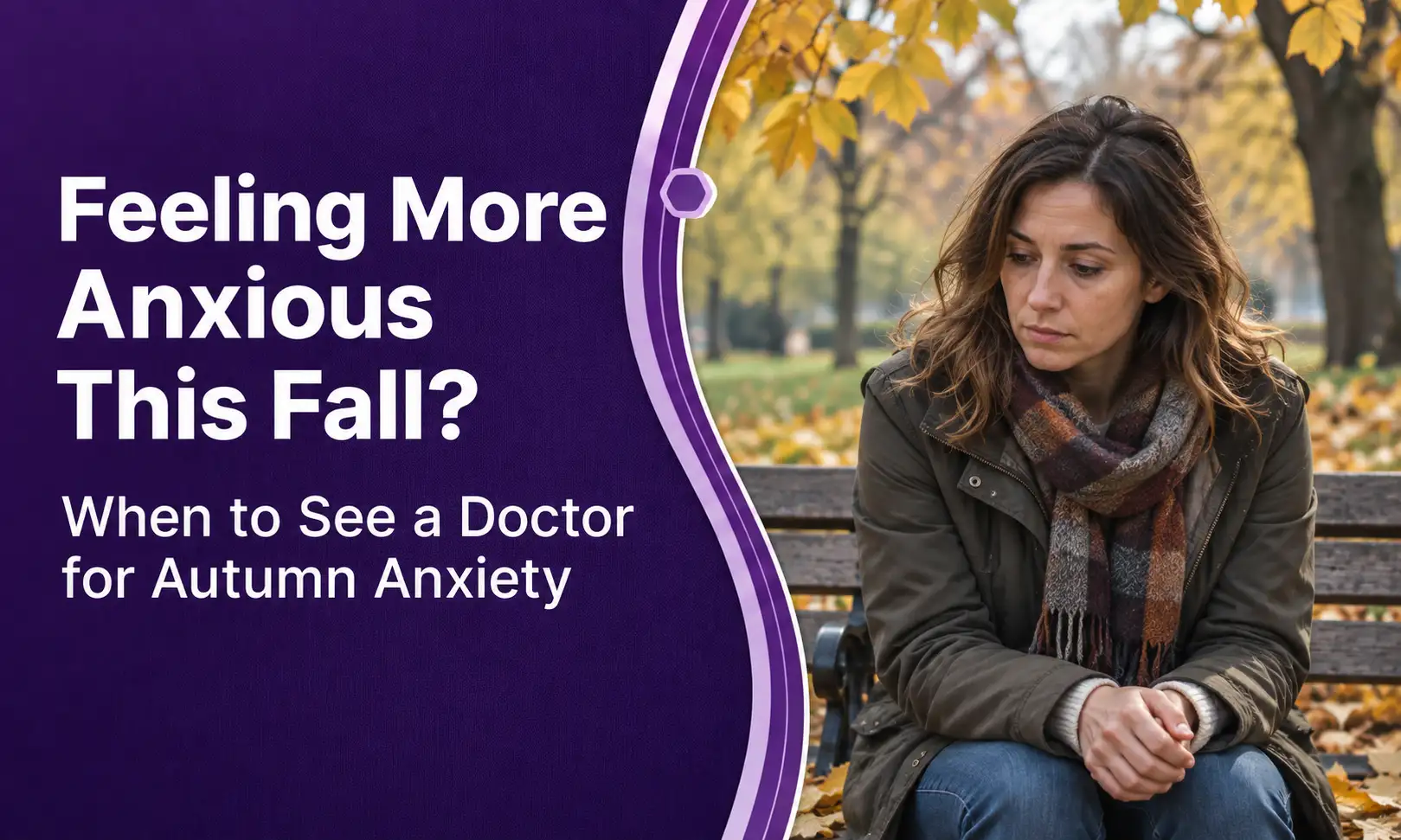
Autumn anxiety might describe the uneasiness you notice as fall begins. Your thoughts keep circling tomorrow’s responsibilities, bedtime brings more worrying than resting, and small tasks suddenly feel overwhelming. Is a busier schedule behind the change, or should you talk to someone?
Although you may blame the season, pay attention to how you feel and how your symptoms affect your day. You do not need to explain everything perfectly before asking for help.
This guide explores possible seasonal triggers, practical ways to support your well-being, and when a primary care appointment makes sense.
What Is Autumn Anxiety?
“Autumn anxiety” is an informal term for increased worry, nervousness, or low mood during fall. However, clinicians do not recognize it as a separate medical diagnosis.
Some people notice a recurring seasonal pattern. Others experience stress around changing schedules or approaching holidays. Therefore, the timing offers useful context, but it does not explain the cause on its own. Healthline’s overview of autumn anxiety explores these experiences and possible triggers.
Why Might You Feel More Anxious This Fall?
Several changes can arrive together during autumn. For example, school commitments, work deadlines, and holiday planning may leave little room to pause.
Changes in Daily Routines
Earlier mornings and additional responsibilities can disrupt familiar habits. Consequently, you may struggle to protect time for rest, exercise, or social activities.
Shorter Daylight Hours
Seasonal daylight changes can influence sleep and mood in susceptible people. However, shorter days do not automatically mean that anxiety has a seasonal cause.
Holiday Expectations and Personal Memories
Financial concerns, family obligations, or memories of difficult experiences may make the coming months feel demanding. Meanwhile, pressure to enjoy the season can make it harder to acknowledge uncomfortable feelings.
These are possible influences rather than a checklist that identifies a disorder.
What Symptoms Deserve Attention?
Autumn Anxiety can involve persistent worry, restlessness, irritability, poor concentration, muscle tension, fatigue, and trouble sleeping. However, these symptoms do not prove that you have an anxiety disorder.
Consider what has changed:
Do worries interrupt tasks you usually manage comfortably?
Have you started avoiding everyday responsibilities?
Does nervousness interfere with sleep or relationships?
Are symptoms becoming harder to manage?
If anxiety begins disrupting everyday life, seek professional support. [National Institute of Mental Health anxiety guidance].
Is Autumn Anxiety the Same as Seasonal Depression?
No. Autumn anxiety describes an experience, while seasonal affective disorder, or SAD, is a form of depression with a recurring seasonal pattern.
Winter-pattern SAD often begins during late fall or early winter. Symptoms may include persistent low mood, loss of interest, oversleeping, appetite changes, and social withdrawal.
However, holiday stress alone does not establish SAD. A clinician considers your symptoms and their pattern over time before making a diagnosis. [NIMH guidance on seasonal affective disorder].
Can Poor Sleep and Daily Habits Make Anxiety Worse?
Poor sleep can make anxiety harder to manage. Meanwhile, worry at bedtime may interrupt your rest, creating a frustrating cycle. Caffeine can also increase nervousness and interfere with sleep, especially if you consume it later in the day.
Additionally, a busy fall schedule may leave less time for movement, relaxation, and connection. Notice which habits coincide with changes in how you feel. Small adjustments can support your well-being, although they do not replace care for persistent symptoms.
What Can You Do to Support Your Mood This Fall?
Small, realistic changes can support your well-being. However, healthy habits do not replace professional care when symptoms disrupt your life.
Protect your sleep routine. Aim for consistent bedtimes and wake-up times. For example, choose a manageable evening wind-down routine rather than trying to change everything at once.
Review your caffeine intake. Notice whether coffee or energy drinks coincide with increased nervousness or difficulty sleeping.
Include regular movement. Choose an activity that suits your abilities and schedule. Additionally, make room for relaxation practices such as mindfulness.
These habits can complement anxiety treatment.
Make space for connection. Consider a daytime walk with a friend or a brief check-in with someone you trust. Rather than filling every free hour, leave some flexibility in your fall schedule.
When Should You See a Doctor for Autumn Anxiety?
Consider an appointment when worry persists, becomes difficult to manage, or interferes with work, sleep, or relationships. You can also raise concerns before they reach that point.
For example, you might say: “I’ve noticed more worry this fall, and I’m having trouble switching off at night.”
That gives your clinician a starting point. You do not need to arrive with a diagnosis or wait for symptoms to become severe.
How Can a Primary Care Doctor Help?
A primary care clinician can ask about symptom timing, frequency, and impact. Additionally, they may perform a physical examination to investigate possible physical contributors.
Depending on the assessment, next steps may include treatment discussions or referral to a mental health professional.
Before your visit, consider writing down:
When you first noticed the change.
What makes symptoms better or worse.
How your sleep and daily activities have changed.
Which medications and supplements you take.
What you most want help understanding.
Also, mention whether similar symptoms occurred during previous autumns. These notes can help you explain your experience clearly.
Find Support at Passion Health Advanced Primary Care
If you live in North Texas, you can start the conversation with a primary care provider at Passion Health Advanced Primary Care. The appointment page lets you explore clinic locations and providers before requesting a visit.
When booking, mention your concerns about worry, mood, or sleep so the team understands the reason for your appointment.
Choose a location and request an appointment, or call (214) 666-6259.
Final Takeaway
Autumn anxiety offers a way to describe seasonal uneasiness, but the label cannot explain every change in mood or behavior. Pay attention to your experience, make room for supportive habits, and recognize when worry starts taking up too much of your day.
Have concerns about how you feel this fall?
Schedule an evaluation at Passion Health Advanced Primary Care to discuss possible causes and receive personalized next steps.
Frequently Asked Questions
1. Does autumn anxiety always return every year?
No. People use the term to describe different experiences. However, tell your clinician if you notice a repeated seasonal pattern.
2. Should I try light therapy or vitamin D?
Discuss these options with your clinician first. Light therapy can help some people with winter-pattern SAD, but it does not suit everyone. Additionally, research on vitamin D as a SAD treatment shows mixed results. NIMH treatment guidance.
3. What if I cannot explain why I feel anxious?
Start with what you notice. For example, describe changes in your thoughts, sleep, or ability to handle daily tasks. You can discuss possible explanations during the appointment.

About the Author
Dr. Anantha Chentha is a board-certified internal medicine physician with extensive experience in primary care and chronic disease management. He provides comprehensive, patient-centered care with a focus on prevention, accurate diagnosis, and long-term health management.
View Provider Profile →