Breast Cancer Risk Factors Every Woman Should Know
Breast changes can feel scary, especially when a lump, nipple change, skin change, or unusual pain appears suddenly. Many breast changes do not mean cancer. However, some changes need a medical check instead of waiting, guessing, or searching online for days.
Early signs of breast cancer symptoms and causes in women usually start with a visible or felt change in the breast, nipple, skin, or underarm area. Doctors often remind patients that early detection can make treatment choices easier and improve outcomes. Mayo Clinic advises making an appointment with a healthcare professional when any new breast or nipple change appears.
If a breast change feels new, unusual, or concerning, talk to a provider at Passion Health Advanced Primary Care. A timely visit can help you understand the next step.
What Is Breast Cancer?
Breast cancer starts when cells in the breast change and grow abnormally. These cells may form a tumor, and some tumors may spread into nearby tissue or other parts of the body. Cleveland Clinic explains that breast cancer happens when cancerous cells multiply and form tumors in breast tissue.
Breast cancer affects women most often, especially as age increases. The CDC states that the main factors linked with breast cancer risk include being a woman and getting older, and most breast cancers occur in women aged 50 or older.
Still, age alone does not tell the full story. A younger woman can also notice breast changes. A woman with no family history can still develop breast cancer. That is why breast awareness matters. Knowing what feels normal makes it easier to notice something different.
Early Signs of Breast Cancer Symptoms and Causes in Women
The phrase early signs of breast cancer symptoms and causes in women includes three important areas: what a woman may notice, why cancer may develop, and when a medical visit becomes important.
Breast cancer may not cause pain at first. In fact, some women discover a change during a mammogram before they feel anything. Breast cancer screening as checking the breasts for cancer before signs or symptoms appear.
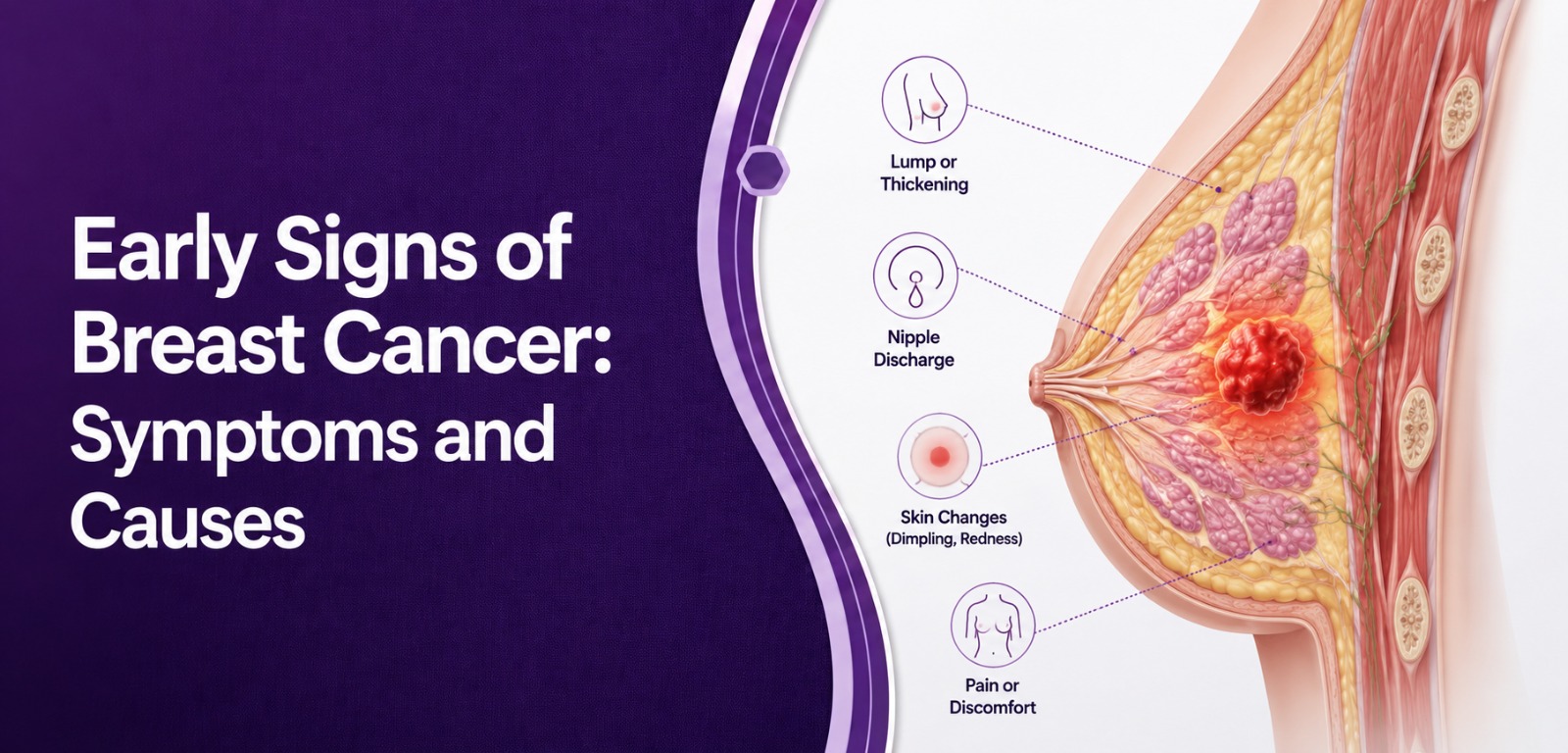
However, symptoms can still appear. A woman may feel a lump, notice thickening, see skin dimpling, or find nipple discharge. These changes do not always mean cancer, but a provider should check them.
1. A New Breast Lump or Thickening
A new lump remains one of the most common warning signs. The lump may feel hard, firm, painless, or different from nearby breast tissue. Some women describe it as a small pea, marble, knot, or thick area.
A new lump in the breast or underarm as one possible warning sign of breast cancer. It also lists thickening or swelling in part of the breast as another sign.
A lump can also happen because of cysts, hormonal changes, infection, or benign breast conditions. Still, do not try to diagnose it by touch. A provider may recommend a breast exam, imaging, or further testing based on age, symptoms, and risk level.
2. Changes in Breast Size or Shape
A woman may notice that one breast looks larger, lower, swollen, or differently shaped than before. Natural breast asymmetry is common, but a new change warrants attention.
Mayo Clinic lists changes in the size, shape, or appearance of a breast as possible breast cancer symptoms.
Look for changes while showering, dressing, or standing in front of a mirror. A sudden difference in breast contour, fullness, or position may need a clinical breast exam.
3. Skin Dimpling, Puckering, or Texture Changes
Breast skin can show early warning signs. Some women notice dimpling, puckering, thickening, redness, or a texture that looks like an orange peel.
These changes may happen when abnormal tissue affects the skin or tissue underneath. Irritation or dimpling of breast skin among possible warning signs.
Do not ignore a skin change just because no lump appears. Breast cancer does not always start with a lump that a woman can feel. A provider can examine the area and decide whether imaging makes sense.
4. Nipple Changes
Nipple changes can include pulling inward, changing direction, becoming painful, crusting, scaling, or developing new discharge. Some women notice blood or clear fluid from one nipple.
Nipple turning inward, skin scaling, peeling, crusting, and breast skin changes as possible symptoms.
pulling in of the nipple, nipple pain, and nipple discharge other than breast milk, including blood, as possible warning signs.
A nipple can change because of infection, irritation, hormones, breastfeeding, or benign conditions. However, new one-sided nipple discharge, bloody discharge, or nipple pulling should prompt a medical visit.
5. Breast Pain That Feels Different
Many women experience breast tenderness around periods, pregnancy, breastfeeding, or hormone changes. This type of soreness often affects both breasts and comes and goes.
Breast cancer does not always cause pain, especially early. Still, the pain in any area of the breast as a possible warning sign.
A provider should check pain that stays in one spot, continues after a period, comes with a lump, or appears with nipple or skin changes.
6. Swelling or Lump in the Underarm
Breast tissue extends toward the underarm. Lymph nodes in the armpit can also swell because of infection, vaccines, inflammation, or cancer spread.
A new underarm lump or thickening can become an important clue. A new lump in the breast or underarm as a possible breast cancer symptom.
A provider can check whether the swelling feels like a lymph node, skin cyst, infection, or another condition.
What Causes Breast Cancer in Women?
Many women ask, “What caused this?” The answer usually involves more than one factor.
Breast cancer starts when breast cells develop DNA changes that affect growth and cell control. Breast cancer happens when cells begin growing and dividing faster than healthy cells.
Doctors cannot always identify one exact cause. Instead, they look at risk factors. A risk factor does not guarantee cancer. It only means the chance may increase.
Common Risk Factors for Breast Cancer
Age
Risk rises with age. Most breast cancers occur in women aged 50 or older.
Family History
A mother, sister, daughter, or close relative with breast cancer can raise concern, especially when cancer occurs at a younger age. Family history does not mean a woman will definitely develop breast cancer, but it may change screening recommendations.
Inherited Gene Changes
Some women inherit gene changes such as BRCA1 or BRCA2. These changes can raise breast cancer risk. Women with strong family history or certain inherited gene changes may benefit from risk-reducing steps and genetic counseling.
Dense Breast Tissue
Dense breasts can make mammograms harder to read and may increase breast cancer risk. A provider can explain mammogram results and whether additional imaging may help.
Previous Breast Conditions
Some noncancerous breast conditions can raise future risk. A provider may review biopsy results, past mammograms, and family history to guide screening.
Hormone Exposure
Early periods, later menopause, and some hormone therapies may affect lifetime estrogen exposure. Mayo Clinic includes hormone-related factors among breast cancer risk factors.
Alcohol, Weight, and Activity Level
No lifestyle choice prevents every case. However, risk may change with alcohol use, body weight after menopause, and physical activity. The American Cancer Society states that no sure way exists to prevent breast cancer, but some controllable risk factors may lower the risk.
Symptoms That Need Faster Medical Attention
A woman should schedule a medical visit when she notices:
How Doctors Check Breast Cancer Symptoms
A provider usually starts with a conversation and a physical exam. The visit may include questions about:
When the change started
Whether the lump or pain changed
Menstrual cycle pattern
Pregnancy or breastfeeding status
Family history of breast or ovarian cancer
Previous mammograms or biopsies
Medicines and hormone therapy use
Next, the provider may recommend imaging. A mammogram, breast ultrasound, or breast MRI may help depending on age, breast density, symptoms, and risk level. If imaging shows concern, a specialist may recommend a biopsy.
A biopsy checks a tissue sample and confirms whether cancer cells exist. No provider can diagnose breast cancer by touch alone.
Why Early Detection Matters
Early detection gives doctors more time and more treatment options. Screening can find breast cancer before symptoms appear, and symptom awareness can help a woman seek care before a problem grows.
Screening checks for cancer before signs or symptoms appear, and a healthcare provider can help decide which screening option fits.
A woman at average risk may follow standard mammogram guidance. A woman with a family history, previous high-risk biopsy, dense breasts, or inherited gene changes may need earlier or additional screening.
Can Breast Cancer Be Prevented?
No plan prevents every case of breast cancer. Still, some habits may support breast health and lower risk.
The American Cancer Society states that there is no sure way to prevent breast cancer, but some actions may help lower risk, especially for women with controllable risk factors.
Helpful steps may include:
Keep a healthy weight, especially after menopause
Stay physically active
Limit or avoid alcohol
Discuss hormone therapy risks with a provider
Know family history
Follow recommended mammogram screening
Ask about genetic counseling if breast or ovarian cancer runs in the family
These steps do not replace screening. They support overall health and may reduce risk.
Common Myths About Early Breast Cancer
“If there is no pain, it cannot be cancer.”
Many breast cancers do not hurt at first. A painless lump still needs attention.
“A normal mammogram means I can ignore a new lump.”
A mammogram helps, but a new lump or visible change still needs a provider’s exam. Mayo Clinic advises checking new breast changes even after a normal mammogram.
“Only family history matters.”
Family history matters, but many women with breast cancer do not have a strong family history. Age, breast density, hormones, lifestyle factors, and gene changes can all play a role.
“Young women do not need to worry.”
Breast cancer occurs more often after age 50, but younger women can still develop symptoms. Any new breast change deserves proper care.
What to Do If You Notice a Breast Change
First, do not panic. Many breast symptoms come from noncancerous causes. However, do not delay care because of fear.
Take these steps:
Write down when the change started.
Check whether it changes with the menstrual cycle.
Avoid squeezing nipple discharge repeatedly.
Do not massage or press a lump every day.
Schedule a visit with a healthcare provider.
Bring previous mammogram or biopsy reports if available.
A primary care provider can examine the concern, order appropriate imaging, and refer to a breast specialist when needed.
Final Thoughts
Early signs of breast cancer symptoms and causes in women can include a new lump, underarm swelling, nipple pulling, nipple discharge, skin dimpling, breast shape changes, redness, scaling, or pain in one area. These symptoms do not always mean cancer, but they do deserve medical attention.
Breast cancer risk can come from age, family history, inherited gene changes, dense breasts, hormone exposure, lifestyle factors, and other personal health details.
The best action is simple: notice changes early, avoid self-diagnosis, and speak with a healthcare professional.
Concerned about a breast change, lump, nipple symptom, or screening question? Book an appointment → Passion Health Advanced Primary Care for a timely visit and personalized guidance.
FAQs
1. What are the early signs of breast cancer symptoms and causes in women?
Early signs may include a new breast lump, nipple changes, breast skin dimpling, breast swelling, underarm lump, nipple discharge, or breast shape changes. Causes may involve abnormal cell changes, age, family history, inherited genes, hormones, dense breasts, alcohol use, obesity, and other risk factors.
2. Is breast pain an early sign of breast cancer?
Breast pain does not always mean cancer. Hormones, periods, cysts, or infection can also cause pain. However, pain in one area that does not go away, especially with a lump or skin change, needs a visit to a provider.
3. What does a breast cancer lump feel like?
A breast cancer lump may feel hard, firm, fixed, painless, or different from nearby breast tissue. Some lumps feel like a pea, a knot, or a thick area. A provider should check any new lump.
4. Can breast cancer start without a lump?
Yes. Breast cancer can start with nipple changes, skin dimpling, redness, swelling, discharge, or breast shape changes. Some cases show no symptoms and appear only on a mammogram.
5. When should I see a doctor for breast changes?
See a doctor if you notice a new lump, nipple discharge, nipple pulling inward, skin dimpling, breast swelling, underarm lump, or a breast change that does not go away.