Energy Drinks Side Effects: 10 Hidden Dangers You Can’t Ignore
Energy drinks promise instant focus, sharp concentration, and nonstop energy.
That is exactly why brands like Red Bull®, Monster®, 5-hour ENERGY®, and Celsius® dominate the market today. With billions in yearly sales, their popularity keeps growing fast.
But popularity does not mean safety. These drinks may give a quick boost, yet the long-term effects can quietly harm your body.
High caffeine and sugar levels often do more damage than most people realize
Types of energy drinks
Coffee remains the most common source of caffeine. With an estimated 154 million adults, or 75% of the population, Millions depend on it daily, and in moderate amounts, it is generally safe. The problem starts when intake increases beyond limits.
A large coffee can contain over 400 mg of caffeine, slightly exceeding the safe daily limit recommended by the U.S. Food and Drug Administration (FDA). Regularly crossing this line can lead to health issues.
Many people switch to energy drinks for a faster and stronger effect. Some believe one can is equal to a cup of coffee. On the surface, it looks similar—around 80 mg of caffeine in an energy drink versus 95 mg in coffee.
What Makes Energy Drinks So Harmful?
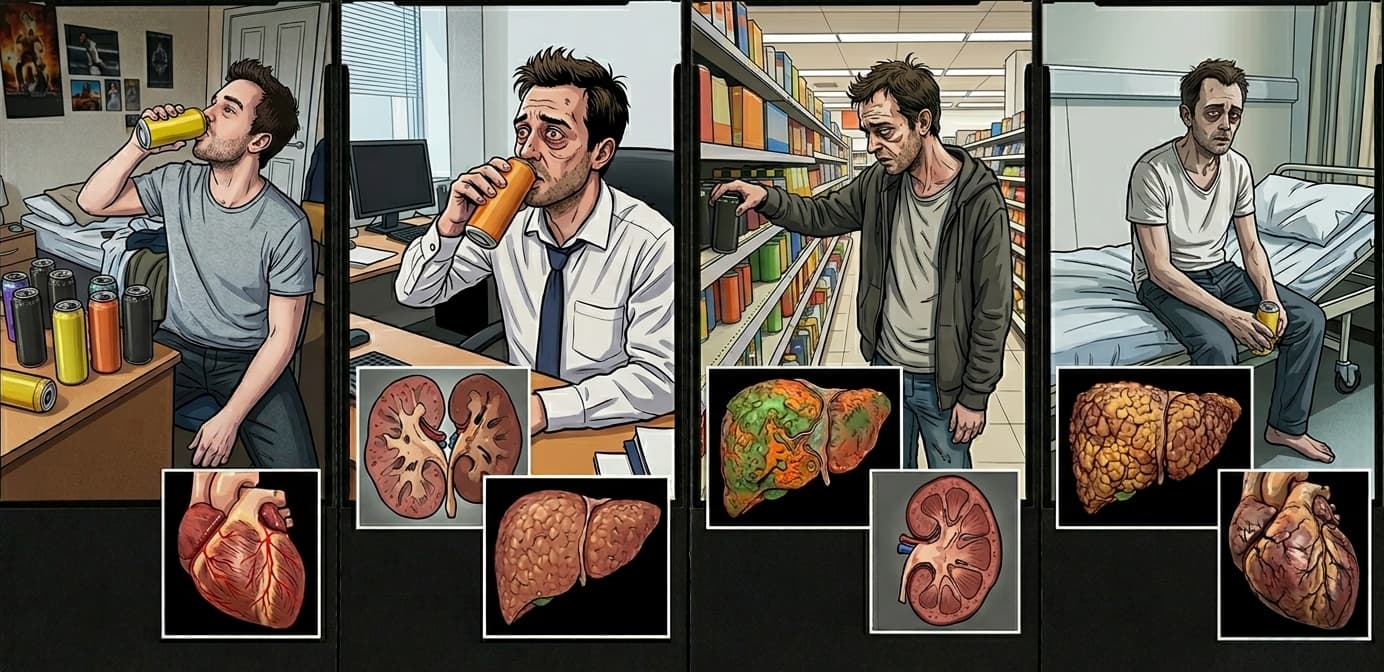
Energy drinks are more than just sugary beverages. They contain a powerful mix of caffeine, artificial sweeteners, preservatives, and stimulants like taurine and guarana. This combination delivers a fast high followed by a hard crash — leaving your body struggling to recover.
The Hidden Danger of Too Much Caffeine
One can of a popular energy drink contains 80mg to 300mg of caffeine.
Compare that to a standard cup of coffee at 95mg. Drinking two or three cans daily pushes you past the safe caffeine limit.
Excess caffeine spikes cortisol and adrenaline. You feel alert at first, but soon after comes the crash — anxiety, shaky hands, a racing heart, and poor sleep.
Over time, this cycle weakens your body’s natural stress response.
High Sugar Levels Open the Door to Disease
Most energy drinks pack 27g to 54g of sugar per can — more than three chocolate chip cookies.
That sudden sugar surge forces your insulin to spike repeatedly. Over months, insulin resistance develops.Insulin resistance often leads to type 2 diabetes. Research consistently links sugary drink consumption to a higher diabetes risk.
Excess sugar also turns into fat that surrounds your organs, raising your risk of obesity, fatty liver, and heart strain.
How Energy Drinks Harm Your Heart, Brain, and Gut
Cardiovascular Damage
Cardiologists warn that energy drink side effects on the heart include high blood pressure, irregular heartbeat, and increased stroke risk — even in young, healthy people.
Cardiac arrest cases in teenagers and adults under 30 tied to energy drinks have made global news.
Caffeine and stimulants narrow blood vessels quickly. Your heart pumps harder to compensate.
Over time, this strain damages artery walls and the heart muscle itself.
Brain Function and Mental Health Suffer
Many people use energy drinks to focus better. But long-term use does the opposite.
Caffeine dependency disrupts dopamine signaling, so your brain needs more stimulation just to feel normal alertness.
Research also links regular energy drink intake to higher rates of anxiety, panic attacks, and depression.
The caffeine rollercoaster destabilizes mood-regulating hormones, leaving you more emotionally drained.
Your Gut Pays a Silent Price
The high acidity of energy drinks eats away at the protective lining of your stomach and gut.
Frequent consumption also throws off your gut microbiome — the bacteria that control digestion, immunity, and mood. When gut health declines, your immune system weakens, making you more vulnerable to infections and chronic illness.
Visible Damage: Teeth, Skin, and Weight
Tooth Erosion Is Permanent
Tooth enamel never grows back. Energy drinks are highly acidic — some near battery acid levels.
Sipping them throughout the day bathes your teeth in acid, leading to sensitivity, discoloration, and costly dental work.
Skin Ages Faster
Too much sugar triggers glycation — a process where sugar molecules attach to collagen and break it down. Collagen keeps your skin firm and youthful.
High sugar intake accelerates collagen loss, causing premature wrinkles, dull skin, and slower healing.
Weight Gain Happens Without Overeating
Liquid calories are deceptive. Your brain doesn’t register fullness from drinks as it does from solid food. A large soda can add 300 calories without reducing hunger.
That daily surplus leads to steady weight gain, joint stress, hormonal issues, and higher cancer risk.
Do not ignore these signs. Schedule a consultation with Passion Health Primary Care to assess your health before problems escalate.
Who Is Most at Risk?
Certain groups face urgent danger:
Children and teenagers – Their developing nervous and cardiovascular systems are highly vulnerable. Yet marketing targets them aggressively.
Pregnant women – Caffeine increases risks of preterm delivery, low birth weight, and developmental problems. No amount is considered safe.
People with existing conditions – Heart disease, anxiety, high blood pressure, or diabetes all worsen with each energy drink.
Healthier Alternatives That Actually Work
You don’t have to live with constant fatigue. Try these natural energy boosters:
Coconut water – Provides natural electrolytes, hydration, and potassium for heart health.
Green tea – Contains L-theanine for calm, focused alertness without the crash. Its antioxidants protect your heart.
Water with lemon and sea salt – Replenishes electrolytes, improves cellular hydration, and supports gut health.
Balanced meals + good sleep – No drink can replace proper nutrition and rest.
Is Your Habit Already Affecting You?
If you get headaches when skipping your morning soda, feel anxious for no clear reason, sleep poorly, or notice irregular heartbeats — these are early signs that energy drink side effects are already active in your body.
Don’t wait for a crisis. Schedule a consultation at Passion Health Primary Care today.
A simple checkup can catch early cardiovascular strain, blood sugar issues, or gut problems before they turn chronic.
How to Quit Energy Drinks Safely
Quitting cold turkey often causes withdrawal headaches and fatigue, pushing you back to the can within days. Instead, reduce gradually over two to three weeks.
Replace one drink at a time with a healthier option. Support the transition with consistent sleep, exercise, and water.
Work With a Doctor
If you drink three or more cans daily, medical supervision helps. A primary care provider can monitor your blood pressure, check heart function, and offer nutritional support for a smoother recovery.
Track Your Progress
Write down your energy, sleep quality, mood, and physical symptoms each week. Most people report better sleep within two weeks, less anxiety in three weeks, and clearer skin after one month without energy drinks.
Final Takeaway
Every energy drink comes with a hidden price. The side effects accumulate quietly — leading to heart disease, metabolic disorders, brain fog, and faster aging. That temporary focus boost is real, but so is the long-term harm.
Your body thrives on whole foods, clean water, and rest — not lab-made stimulants.
Making the switch protects not just your physical health but also your mental clarity, emotional balance, and future quality of life.
Take the first step today. Book your appointment at Passion Health Primary Care and find out exactly where your health stands — and how to safeguard it moving forward.